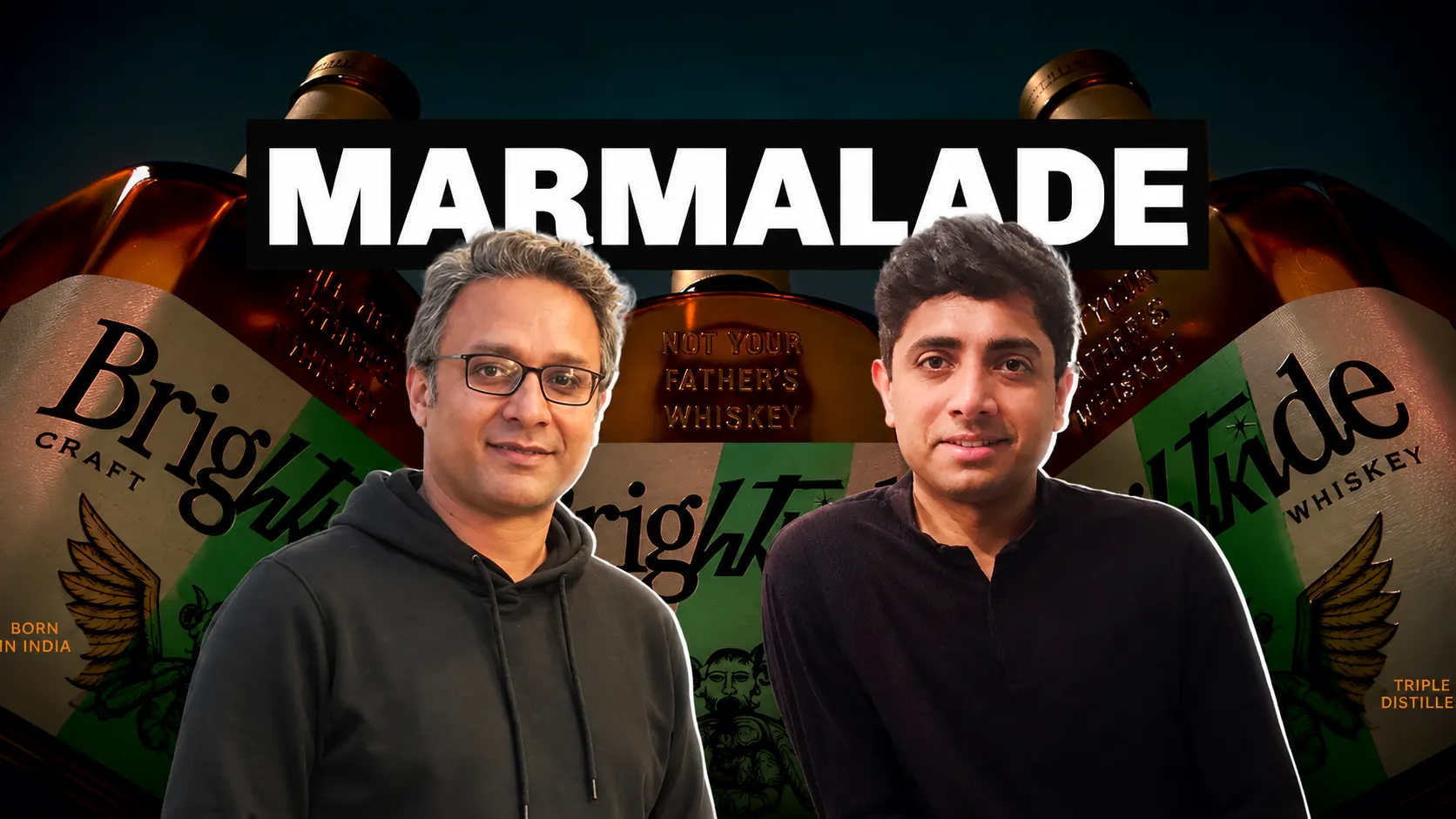
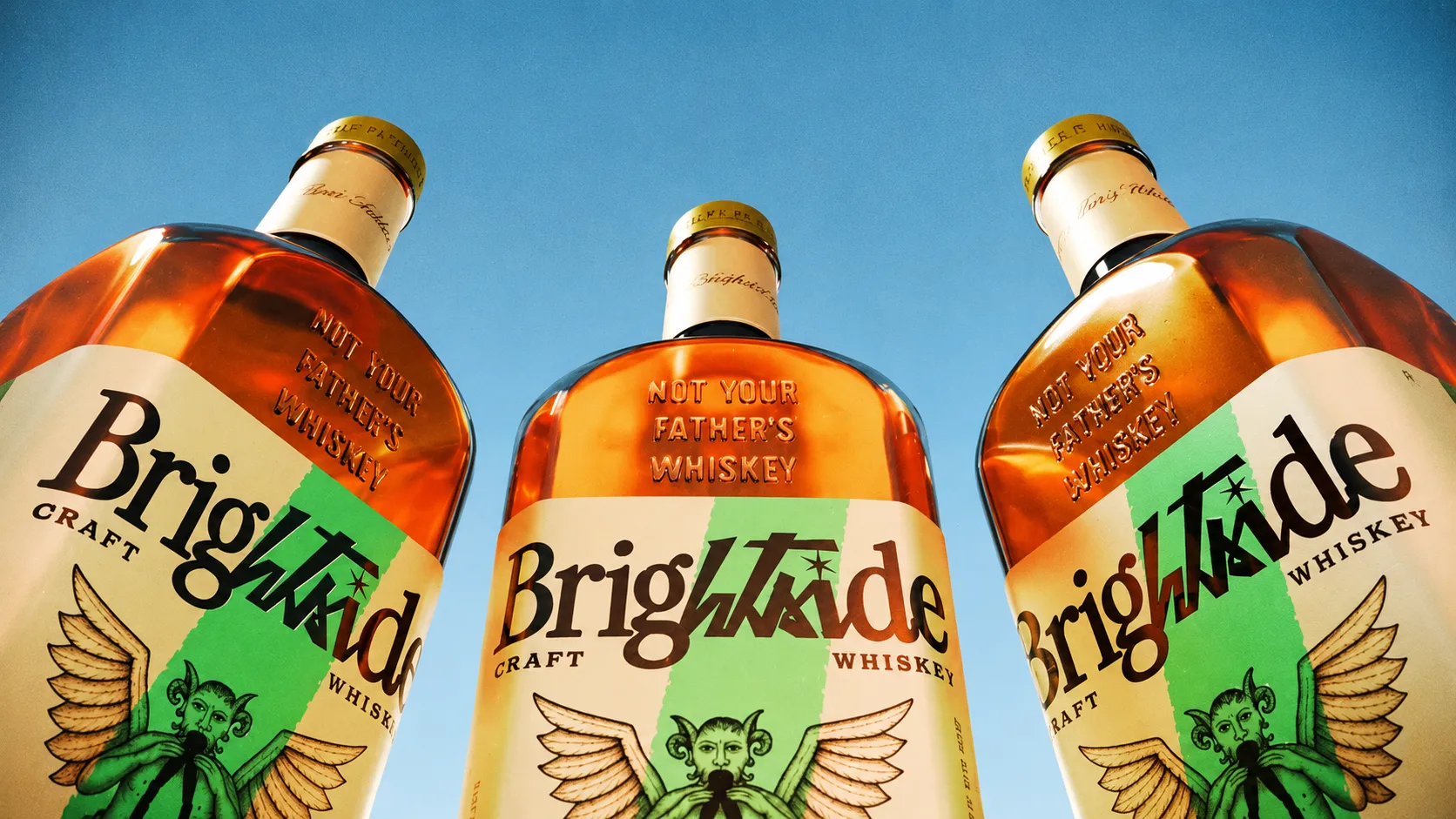
Marmalade, a Delhi-based alcoholic beverages startup co-founded in 2025 by Udit Mediratta and Surojit Bhattacharya, is expanding the market footprint of its flagship brand Brightside, an Indian craft whiskey developed in collaboration with Amrut Distilleries. The company, which surfaced in startup funding trackers on September 9 as part of a broader roundup of Indian consumer brand activity, is targeting Rs 15 crore in annual recurring revenue by December 2026 as it pushes beyond its initial Maharashtra base into new state markets.
India's alcoholic beverages sector has increasingly attracted entrepreneurial attention as younger, more affluent consumers move away from mass-market spirits toward craft and premium positioning, a shift that mirrors trends already well established in craft beer and specialty coffee. Brightside's positioning as a flavour-forward Indian craft whiskey, developed alongside an established distillery partner in Amrut, allows Marmalade to combine credible production quality with the agility of a founder-led consumer brand — a hybrid model increasingly common in India's D2C alcohol space.
The regulatory complexity of India's alcoholic beverages industry, where excise policy, distribution licensing and marketing restrictions vary sharply by state, has historically been one of the biggest barriers to scaling a spirits brand nationally. Marmalade's state-by-state expansion strategy, moving deliberately from its Maharashtra base into additional markets rather than attempting a simultaneous national rollout, reflects the operational caution that has become standard practice among newer entrants navigating this fragmented compliance landscape.
Distilling partnerships, such as the one between Marmalade and Amrut, have become an increasingly common route for founder-led spirits brands to access production capacity and quality assurance without the capital burden of building distillation infrastructure from the ground up. This capital-efficient model allows early-stage alco-bev startups to focus resources on brand building, distribution partnerships and retail presence rather than manufacturing, a structure that has parallels in how many D2C food and beverage brands operate through contract manufacturing arrangements across categories.
Marmalade's targeted revenue trajectory, while modest in absolute terms compared with established spirits conglomerates, reflects the broader reality of India's craft alcohol category: it remains a collection of early-stage, high-growth-potential brands rather than a sector with entrenched large-scale challengers, leaving room for well-executed newcomers to carve out meaningful regional footholds before national incumbents respond.
As the company pushes into new states over the coming months, its ability to navigate excise and distribution regulation efficiently, alongside maintaining product consistency at scale, will likely determine whether Brightside can move from a promising regional craft brand into a nationally recognised name within India's fast-evolving premium spirits landscape.
Marmalade's approach also reflects a broader generational shift in how young Indian entrepreneurs are approaching heavily regulated consumer categories that were once considered the exclusive domain of large, established conglomerates. By pairing founder-led brand building with an established distillery's production credibility, newer entrants are finding a viable middle path between the capital intensity of building manufacturing from scratch and the brand dilution risk of purely white-labelling an existing product.
For India's wider D2C investing community, alco-bev remains a comparatively under-penetrated category relative to food, beauty and personal care, where venture capital has already flowed in significant volume over the past several years. Should Marmalade's state-by-state expansion prove successful, it could encourage a fresh wave of investor interest in founder-led spirits brands navigating India's famously fragmented excise landscape.
Marmalade's founders have not disclosed detailed plans for a formal institutional fundraising round, though industry observers expect the company's ARR trajectory over the coming quarters to shape both the timing and scale of any future capital raise as it seeks to fund expansion into additional Indian states beyond its current footprint.