TechArtificial Intelligence5 MIN READ

MeitY Questions Home-Services Platforms Over Workers' First-Person Videos Being Collected to Train Robots, as Physical AI's Data Hunt Reaches Indian Homes

India's Ministry of Electronics and IT has raised concerns about home-services platforms collecting first-person video and sensor data from gig workers inside customers' homes to train physical AI and robotics models, Entrackr and Inc42 reported on November 13. Pronto, which has begun in-home recording, was asked to submit details of its data practices, while Snabbit and Urban Company said they would not adopt the practice.

By Aravind Kumar · Author14 November 2026New
MeitY Questions Home-Services Platforms Over Workers' First-Person Videos Being Collected to Train Robots, as Physical AI's Data Hunt Reaches Indian Homes

The race to build robots that can fold laundry, wash dishes and tidy rooms has created an unusual demand: video footage of real people doing household chores in real homes. In India, that demand has now drawn the attention of the government.

The Ministry of Electronics and Information Technology (MeitY) has raised concerns about home-services platforms collecting first-person video and sensor data from gig workers to train physical AI models, according to Entrackr, which reported on Thursday, November 13, citing the Economic Times. Inc42 also reported the review on the same day.

Physical AI refers to artificial intelligence systems that interact with the physical world, such as robots. Training them requires large amounts of real-world data showing how tasks are performed.

The platforms involved

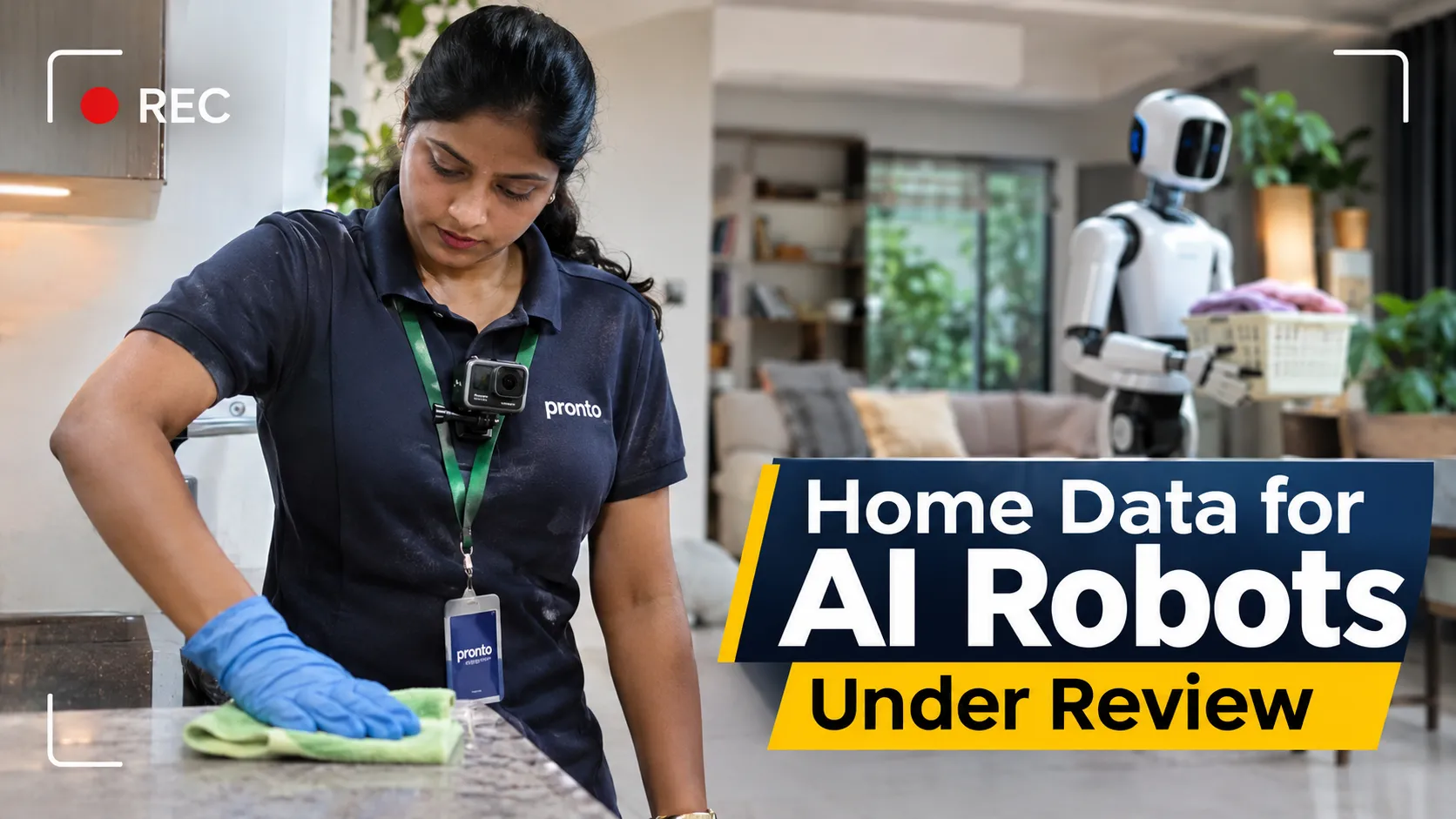
Pronto, a Bengaluru-based quick home-services startup, has started in-home video recording through a service called Verified, according to Entrackr. MeitY asked Pronto to submit a detailed representation on its data practices and standard operating procedures.

Snabbit and Urban Company, two other major home-services platforms, have decided against adopting the practice, Entrackr reported.

The meeting

A meeting chaired by MeitY secretary S Krishnan brought together the three platforms, technology companies and robotics firms, according to Entrackr. Discussions focused on workers' rights, consumer privacy and data sovereignty.

MeitY's questions included the standard operating procedures for collecting, processing and storing first-person video; safeguards for obtaining workers' consent and protecting household members and others captured in footage; whether the data is sold, shared or transferred to AI developers outside India; and details of data-sharing agreements, vendor contracts, retention policies and the scale of data collected.

Pronto's response

Pronto said it took part in the consultation as part of a broader industry discussion on responsible data practices, according to Entrackr. It said that "data generated through its customer booking journey involves customer consent," and that its practices are designed to comply with applicable regulations.

The company first disclosed its pilot in May. According to MediaNama, cited by IndiaAIPulse, workers carried a small outward-facing camera during jobs, participation was opt-in and chosen per booking, and consent had to be reaffirmed before each booking. Pronto said faces and identifying details were blurred automatically, footage was deleted within 48 hours, and the pilot covered about 0.1% of customers. In a blog post at the time, it said: "We are not the only company in the space doing this."

Pronto was founded by Anjali Sardana and has raised $20 million from investors including Lachy Groom, co-founder of robotics AI company Physical Intelligence, according to Entrackr. Sardana has also set up Provision Labs.

Why robot makers want this data

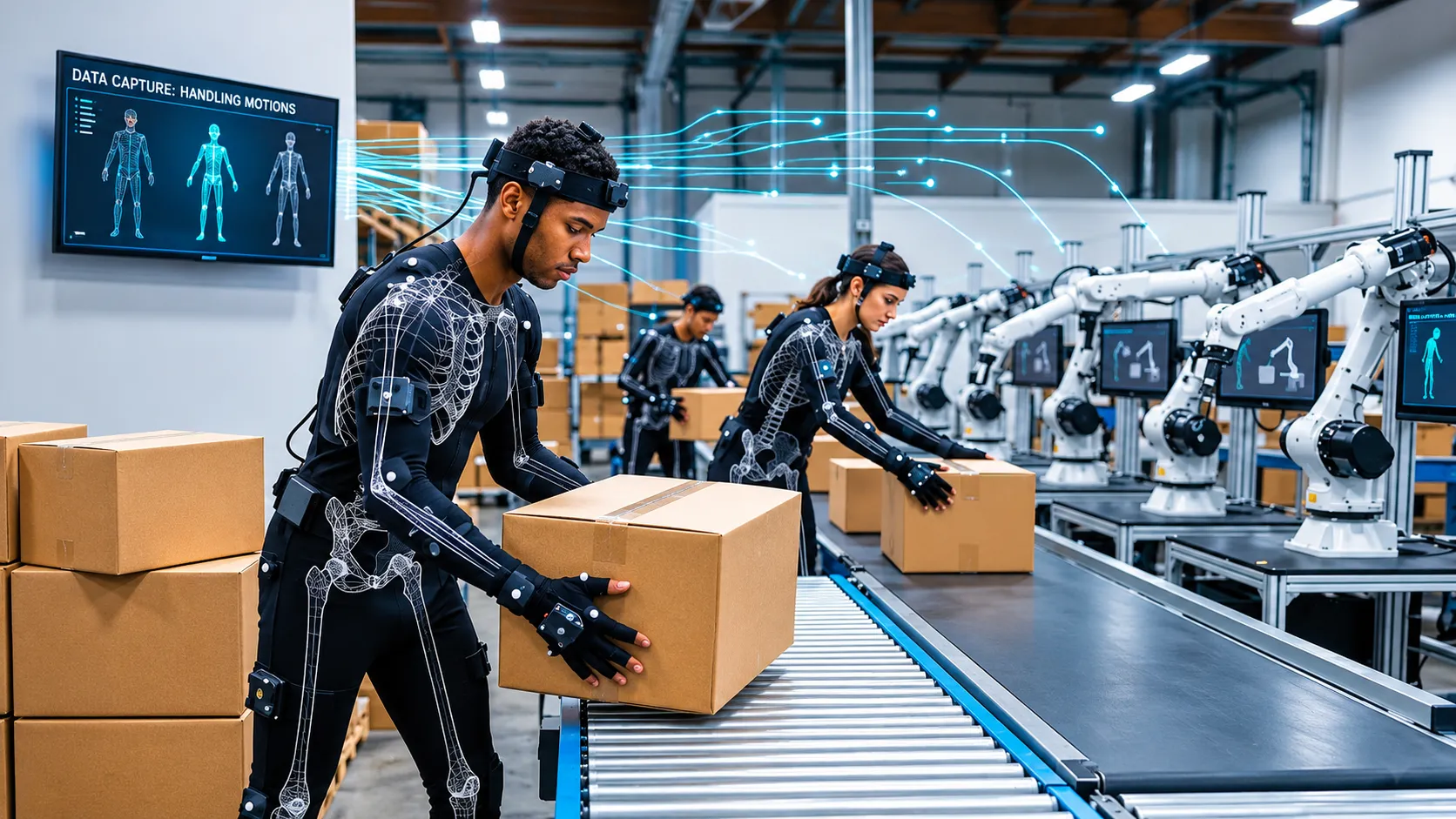
Robots learn to perform tasks by studying examples. Large language models such as ChatGPT were trained on vast amounts of text from the internet, but there is no equivalent internet-scale library of footage showing physical tasks from a first-person perspective. Robotics companies are therefore paying for data collection, including by equipping workers with cameras.

Homes are particularly valuable sources of data, since household robots must learn to work in varied, cluttered environments. India's large workforce of domestic and gig workers, and the rapid growth of on-demand home services, make it an attractive source of such data.

“Data generated through its customer booking journey involves customer consent.”
— Pronto, statement reported by Entrackr

The privacy concerns

Recording inside homes raises serious privacy questions. Footage can capture not only the worker but also household members, children, personal belongings and private information. Legal experts quoted by the Economic Times, as cited by Entrackr, said video recordings, facial images, location traces and sensor data could count as personal data under India's Digital Personal Data Protection Act if they can identify a worker or be linked to one.

The Act requires organisations to give clear notice of the purposes of data collection, obtain consent, and provide grievance mechanisms.

Workers' rights

Gig workers may feel pressure to agree to wear cameras if their earnings or job allocation depend on it, raising questions about whether their consent is truly voluntary. Workers' representatives have called for fair compensation for data collection, clarity on how footage is used and protections against surveillance. Physical AI startups have discussed common standards for worker pay, wellbeing, working hours, safety and legal compliance, according to Entrackr.

cba63b90-1102-4504-8300-17941444b834.png

The data sovereignty debate

Some executives at the meeting worried about data collected in India being sold to overseas physical AI developers, according to Entrackr. Robotics startups urged the government to help build domestic physical AI capabilities rather than simply supplying training data to foreign companies.

India's physical AI startups raised about $155 million across 31 deals as of July 2026, compared with $130 million across 25 deals in all of 2025, according to an earlier Entrackr report.

How physical AI learns

Physical AI systems, such as household and industrial robots, learn to perform tasks by studying large amounts of data showing how humans carry them out. First-person video, recorded from the point of view of a person doing a task, is particularly valuable because it shows hand movements, the sequence of actions and how objects are handled. Robot makers combine such data with simulation and data collected by the robots themselves.

Demand for this kind of data has grown rapidly as investors pour money into humanoid and household robot developers in the United States, China and Europe, many of which need diverse real-world data to train their systems.

Consent and compensation

The questions raised by MeitY reflect broader debates about consent and fair compensation for data used to train AI. Workers who record videos of their tasks may not fully understand how the data will be used, who will own it, or how much value it may generate for technology companies. Clear contracts, informed consent and appropriate payment are likely to be central to any guidelines that emerge.

The privacy of households is a separate concern, since videos recorded inside homes may capture residents, personal belongings and sensitive information, even when the focus is on the worker's hands.

What comes next

MeitY is expected to review the platforms' submissions and may issue guidelines on the collection of physical AI training data. The outcome could shape how India balances its ambitions in AI and robotics with protections for workers and consumers, and whether it becomes a supplier of raw data or a builder of physical AI in its own right.

TagsMeitYphysical AIroboticsAI training dataProntoAnjali SardanaSnabbitUrban Companygig workersdata privacyDPDP Acthome servicesquick helpconsentdata sovereigntyS Krishnanhumanoid robotswomen foundersIndian startupsinvestors

Reader reviews

Sign in to rate and review this article.
Loading reviews…

