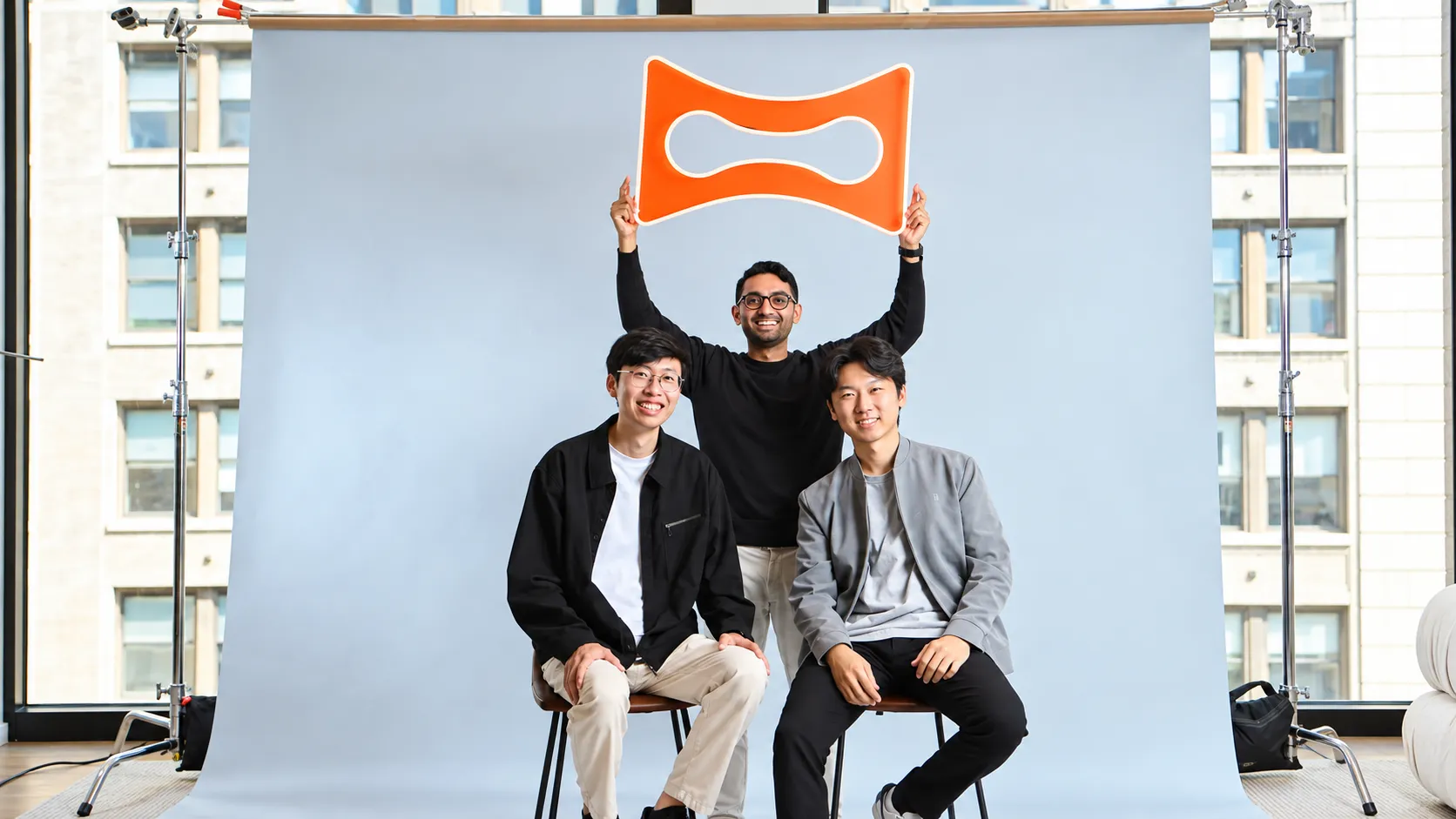
Melius, an artificial intelligence platform that generates advertising campaigns, images and videos, has raised a $20 million Series A round led by venture firm CRV, a rapid ascent for a start-up whose founders threw away their entire first product less than a year ago.
The round brings Melius's total funding to $25 million, including a $5 million seed round led by General Catalyst. The company says it reached more than $1 million in annualised revenue within two months of launching its current product in July 2026.
Melius was founded by three former engineers at Ramp, the corporate spending and finance software company: Joowon Kim, Young Kim and Arnav Ramu. TechCrunch, which reported the raise on 6 October, described the company as positioning itself as an "agents lab for creative work".
Burning the codebase
The founders' first product was an AI-powered performance-marketing tool designed to help marketers manage and optimise their advertising spend. After six months, they concluded that the idea lacked the potential to become a large business.
Rather than iterate on the existing product, they started again. "We scrapped the entire codebase; we burned all of it," Joowon Kim told TechCrunch. The team rebuilt around a different idea: instead of helping marketers decide where to spend money on ads, Melius would generate the creative assets themselves.
The pivot reflects a common lesson in start-up building, but one that founders often resist. Teams frequently cling to an initial product long after evidence suggests it will not scale, partly because of sunk costs and partly because investors and employees have been sold on the original vision. A complete reset is expensive in time and morale, but it can be faster than trying to bend a flawed product into something it was not designed to be.
Joowon Kim's own background helped shape the new direction. He describes himself as a social media influencer who has been passionate about creating video since elementary school, giving him first-hand familiarity with the demands of producing content that performs on social platforms.
What Melius does
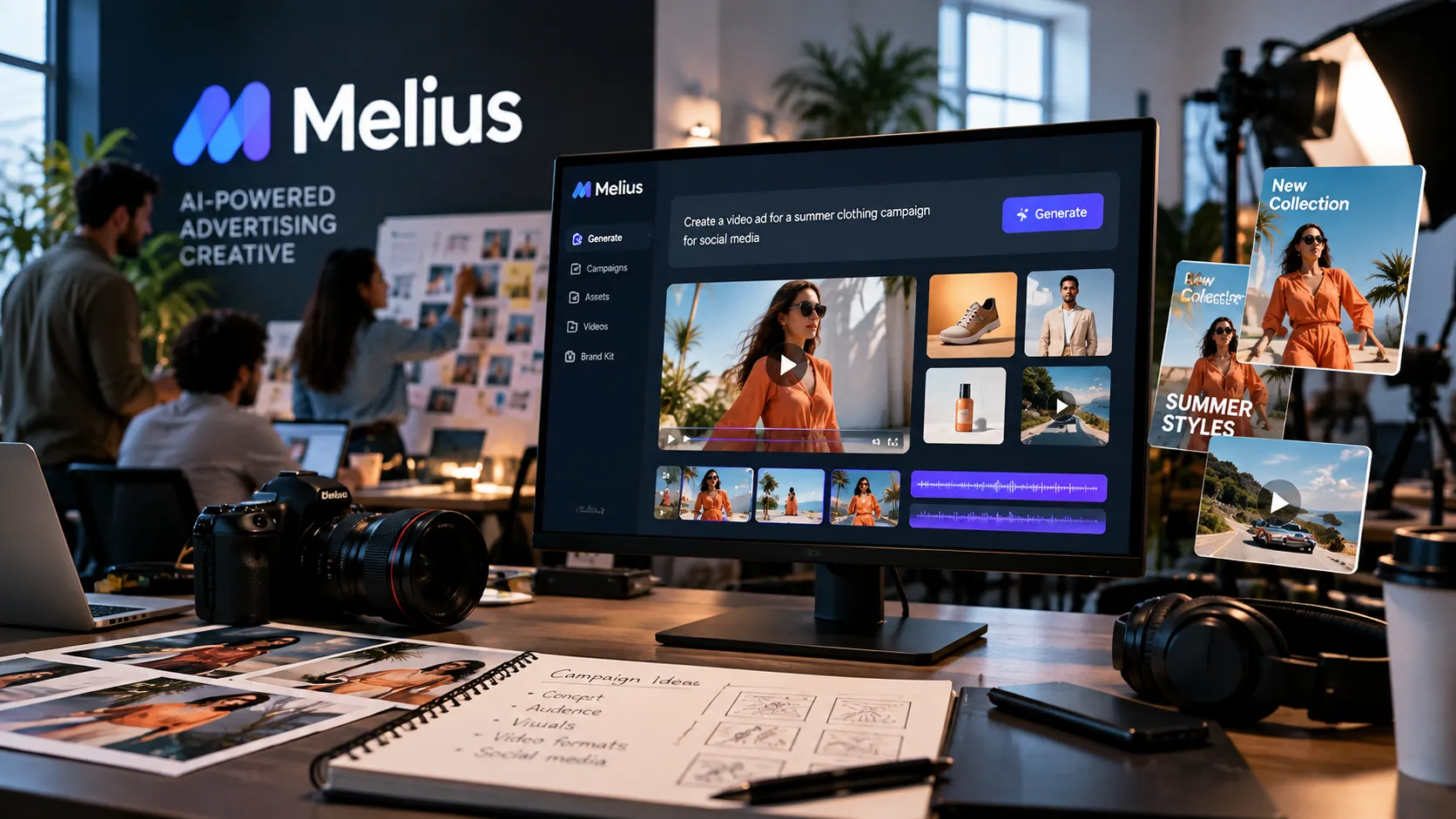
Melius lets users turn ideas into finished creative work using natural language. A marketer can describe a campaign, product or audience, and the platform's AI agents generate ad concepts, images and videos, which can then be refined and adapted for different channels.
The demand for such tools is driven by the economics of digital advertising. Platforms such as Meta, TikTok and YouTube reward advertisers who test many variations of creative content, because performance can vary dramatically between versions. Producing dozens or hundreds of variants with traditional agencies and production teams is slow and expensive. Generative AI promises to collapse that cost, allowing even small businesses to test creative at a scale once reserved for large brands.
Agencies and in-house creative teams are watching such tools closely. Generative platforms do not replace strategy, brand judgement or the craft of a strong campaign idea, but they can take over much of the repetitive production work of resizing, reformatting and producing variants for different audiences and placements. Many agencies are now experimenting with AI tools to cut turnaround times and offer clients more variations at lower cost.
Brand safety and rights are open questions. Advertisers need confidence that AI-generated images and videos do not infringe copyrights, misuse likenesses or produce content that conflicts with brand guidelines. Platforms that can offer controls over style, approved assets and review workflows are likely to win larger customers who cannot afford reputational mistakes.
Reaching $1 million in annualised revenue within two months of launch suggests Melius found demand quickly. Annualised revenue figures at such an early stage can be volatile, particularly for products sold on monthly subscriptions or usage-based pricing, but rapid early traction is precisely what investors look for in a crowded category.
Speed matters in this market because the underlying models improve so quickly. A start-up that can rapidly incorporate the latest image and video models into a polished workflow can offer customers better output without asking them to learn new tools each time the technology moves on.
The company's agent-based framing is also significant. Rather than offering a single image or video generator, Melius coordinates multiple AI steps, from concept to script to visual production, into a workflow. That approach mirrors a broader shift in generative AI from standalone models towards systems that chain tasks together to produce complete outputs.
Richly valued rivals
Melius is entering one of the most competitive corners of generative AI. Its rivals include Higgsfield, which was valued at $5.4 billion in August 2026 and reports more than $700 million in annualised revenue, as well as Krea and Flora AI. Large technology companies, including the advertising platforms themselves, are also building creative-generation tools directly into their products.
That competition raises a strategic question for start-ups in the space: whether they can build durable businesses on top of models they do not own, or whether value will accrue to the model developers and the advertising platforms. Melius's bet appears to be on workflow and user experience, making it easier for marketers to go from idea to campaign than with general-purpose tools.
The founders' Ramp pedigree is likely to have helped with fundraising. Ramp has become one of the most valuable fintech start-ups in the United States, raising $750 million at a $44 billion valuation in June 2026, and its alumni have developed a reputation for speed and product discipline. Former employees of fast-growing companies often bring both operating playbooks and networks that ease early hiring and sales.
CRV, which led the Series A, is a long-established venture firm with a portfolio spanning enterprise software and consumer technology. General Catalyst's earlier backing of the seed round gives Melius two prominent investors at a stage when many AI start-ups are competing for attention and capital.
The $20 million will give Melius room to hire, expand its product and invest in the computing power that generative video in particular demands. The next test will be whether its early revenue holds up as customers compare it with better-funded rivals, and whether it can turn rapid adoption into lasting relationships with marketing teams and agencies.
For founders elsewhere, including India's growing community of AI builders, Melius offers a case study in the value of decisiveness: recognising quickly that a product is not working, and having the conviction to start again rather than incrementally patch a weak idea.