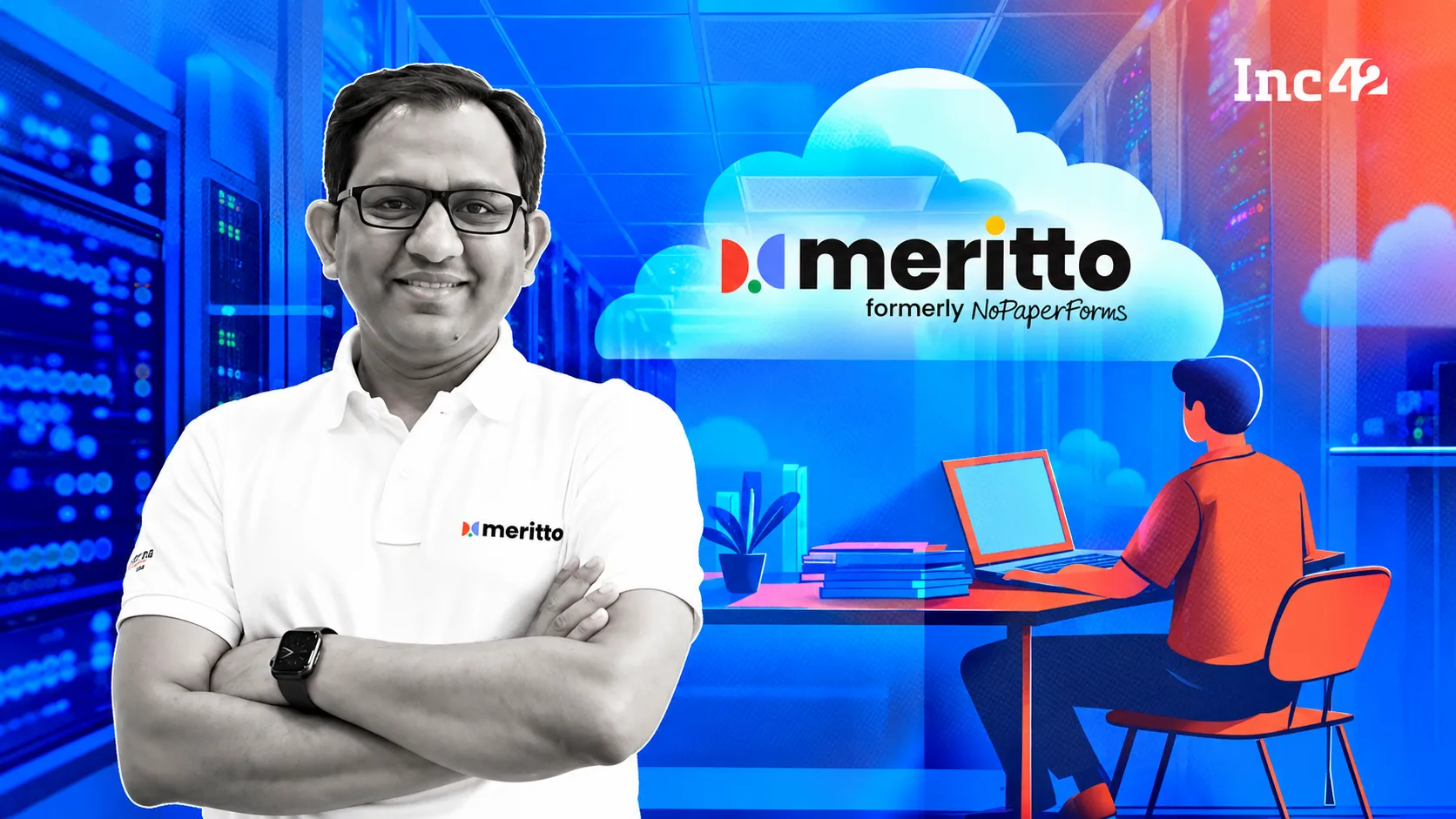
NoPaperForms, the parent company behind admissions and enrolment management platform Meritto, has filed an updated draft red herring prospectus with regulators for an initial public offering sized at more than INR 375 crore. The filing adds Meritto to a growing list of enterprise software and education-technology companies testing India's public markets, at a time when investor appetite for profitable, niche B2B software businesses has strengthened relative to the more speculative consumer-internet listings of previous years.
Meritto's core business, providing admissions and enrolment management software to educational institutions, sits within a category that has grown steadily as Indian universities, colleges and coaching institutes increasingly digitise student acquisition and onboarding processes, a shift accelerated significantly since the pandemic reshaped how educational institutions engage with prospective students.
The filing also comes at a moment when India's capital markets regulator has progressively tightened disclosure and governance requirements for technology companies seeking public listings, a regulatory evolution that has generally lengthened the time between initial filing and actual listing as companies work through additional rounds of regulatory queries and documentation requirements.
Financial professionals reviewing India's education technology public listings note that investor sentiment toward the broader edtech category has remained considerably more cautious than toward most other technology verticals following well-documented difficulties at several large, previously highly valued consumer education companies, making Meritto's business-to-business orientation and reported profitability an important differentiator likely to shape how the offering is ultimately priced and received by institutional subscribers.
The updated filing suggests the company has addressed regulatory feedback on its original draft prospectus and is moving closer to a formal listing timeline, though the exact date for the offering has not been finalised. For India's broader edtech sector, which has faced a difficult few years following the sharp correction in consumer-facing education startup valuations, Meritto's approach represents a somewhat different path: a B2B software business serving institutions directly rather than competing for individual student subscriptions in an increasingly crowded consumer edtech market.
That distinction matters to public market investors, who have grown considerably more cautious about consumer edtech business models following well-publicised difficulties at several large, venture-backed education companies over the past two years, making enterprise-focused software providers a comparatively more attractive proposition within the broader education technology category.
Meritto's positioning within the admissions and enrolment management category places it alongside a small but growing group of India-based enterprise software companies that have built defensible, recurring-revenue businesses by solving specific, well-defined operational problems for institutional customers, a business model archetype that has generally proven more resilient through funding market cycles than consumer-facing subscription or advertising-driven models.
India's higher education sector has continued expanding its enrolment base steadily even through a period of broader macroeconomic uncertainty, with institutions increasingly competing for students through more sophisticated digital marketing and admissions processes, a structural tailwind that has underpinned steady demand growth for the kind of admissions management software Meritto provides across its institutional customer base.
The IPO filing also reflects a broader trend of India's enterprise software companies increasingly viewing public listings as a viable path to liquidity, rather than relying exclusively on strategic acquisitions or continued private fundraising rounds. As more B2B software companies mature into profitability, the public markets are becoming a more realistic destination for businesses that may lack the explosive growth curves that attract late-stage venture capital but offer steadier, more predictable revenue profiles that public market investors often favour.
Institutional investor interest in the offering will likely hinge on Meritto's revenue growth trajectory, customer retention metrics within its institutional client base, and its ability to demonstrate a credible path toward expanding its total addressable market beyond admissions software into adjacent categories of the education technology stack.
Institutional education clients, including universities, colleges and large coaching institutions, typically represent sticky, long-duration customer relationships once a software platform becomes embedded into core admissions workflows, since switching costs associated with migrating student data and retraining administrative staff on new systems tend to be substantial, a dynamic that can support the kind of predictable, high-margin recurring revenue that public market investors generally favour.
For business leaders and investors evaluating India's enterprise software sector more broadly, Meritto's path toward listing offers a useful data point on how public markets are likely to value profitable, niche B2B software companies relative to the higher-growth but often loss-making consumer technology businesses that have historically dominated India's new-age listing cohort.
Should the offering proceed successfully, it would mark a notable moment for India's enterprise education technology segment, potentially encouraging other B2B-focused edtech companies to consider similar public listing paths rather than waiting indefinitely for acquisition interest or additional private funding rounds in a market that has grown considerably more selective.
More broadly, the filing adds to a steady drumbeat of India's technology companies moving toward public markets in 2026, a trend that reflects both maturing revenue profiles across the sector and a public market environment that has shown a growing willingness to absorb new technology listings, provided the underlying businesses can demonstrate disciplined unit economics alongside their growth narratives.
As more of India's profitable, niche enterprise software companies weigh public listings against continued private fundraising or strategic acquisition, Meritto's path through the regulatory filing process will offer a useful reference point for founders and investors assessing whether India's public markets have matured sufficiently to fairly value specialised, institution-focused software businesses that lack the explosive growth narratives typically associated with consumer technology listings.
As the offering moves toward completion, entrepreneurs building similarly focused enterprise software businesses elsewhere in India's education and adjacent sectors will be watching closely to assess whether public markets can offer a genuinely attractive liquidity path for founders who have built durable, profitable niche software companies without pursuing the explosive, capital-intensive growth trajectories more commonly associated with venture-backed technology listings.
The bottom line for TIGI's readers: Meritto's filing represents a quieter but potentially more sustainable path for India's enterprise edtech companies, one built on profitable institutional software rather than the consumer growth narratives that defined the sector's earlier boom.
Institutional software investors evaluating the offering will likely place particular weight on net revenue retention among Meritto's existing institutional clients, a metric that tends to reveal more about long-term business durability than new customer acquisition figures alone.