Mesa School of Business, a three-year-old Bengaluru institution that trains students to build and run startups, has raised ₹110 crore to expand its programmes and rebuild its curriculum around artificial intelligence. It is one of the larger private funding rounds for a new-age Indian business school.
The round combines about ₹85 crore in Series A equity, co-led by Dharana Capital and existing investor Elevation Capital, with ₹25 crore in venture debt from InnoVen Capital and Alteria Capital. Mesa said the money will be used to embed AI across its existing courses, launch and scale new on-campus programmes, and build strategic partnerships across India’s startup ecosystem.
The fundraise comes as Indian employers, from consumer internet companies to global capability centres, rethink what entry-level talent should look like when generative AI tools can already handle much of the analytical and administrative work once given to new graduates.
From one cohort to 550 students
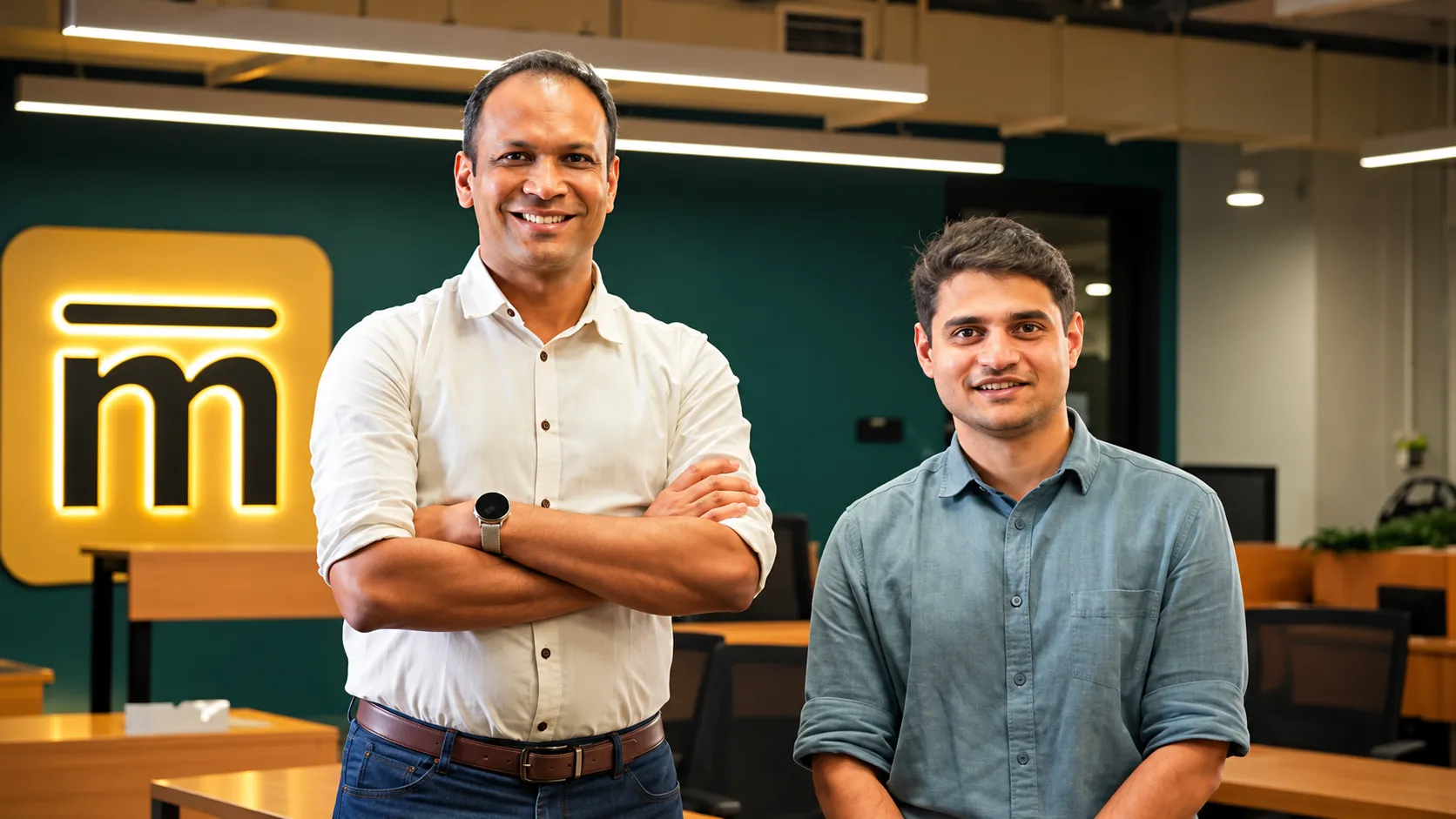
Mesa was founded in 2023 by Ankit Agarwal and Varun Limaye. Agarwal studied at IIT Bombay and Harvard Business School and worked at Boston Consulting Group and Urban Company. Limaye is a Kellogg School of Management graduate who previously worked at Amazon. The founders describe their ambition as building “India’s Stanford”, a school tightly connected to the companies and founders shaping the economy.
The school began with a single cohort of its one-year Post Graduate Programme in Startup Leadership, built around live projects with founders instead of case studies. In April 2023 it raised about ₹34 crore from Elevation Capital and a group of founder-investors, including CRED’s Kunal Shah, Meesho’s Vidit Aatrey and Urban Company’s Abhiraj Bhal. Paytm founder Vijay Shekhar Sharma is also among its backers.
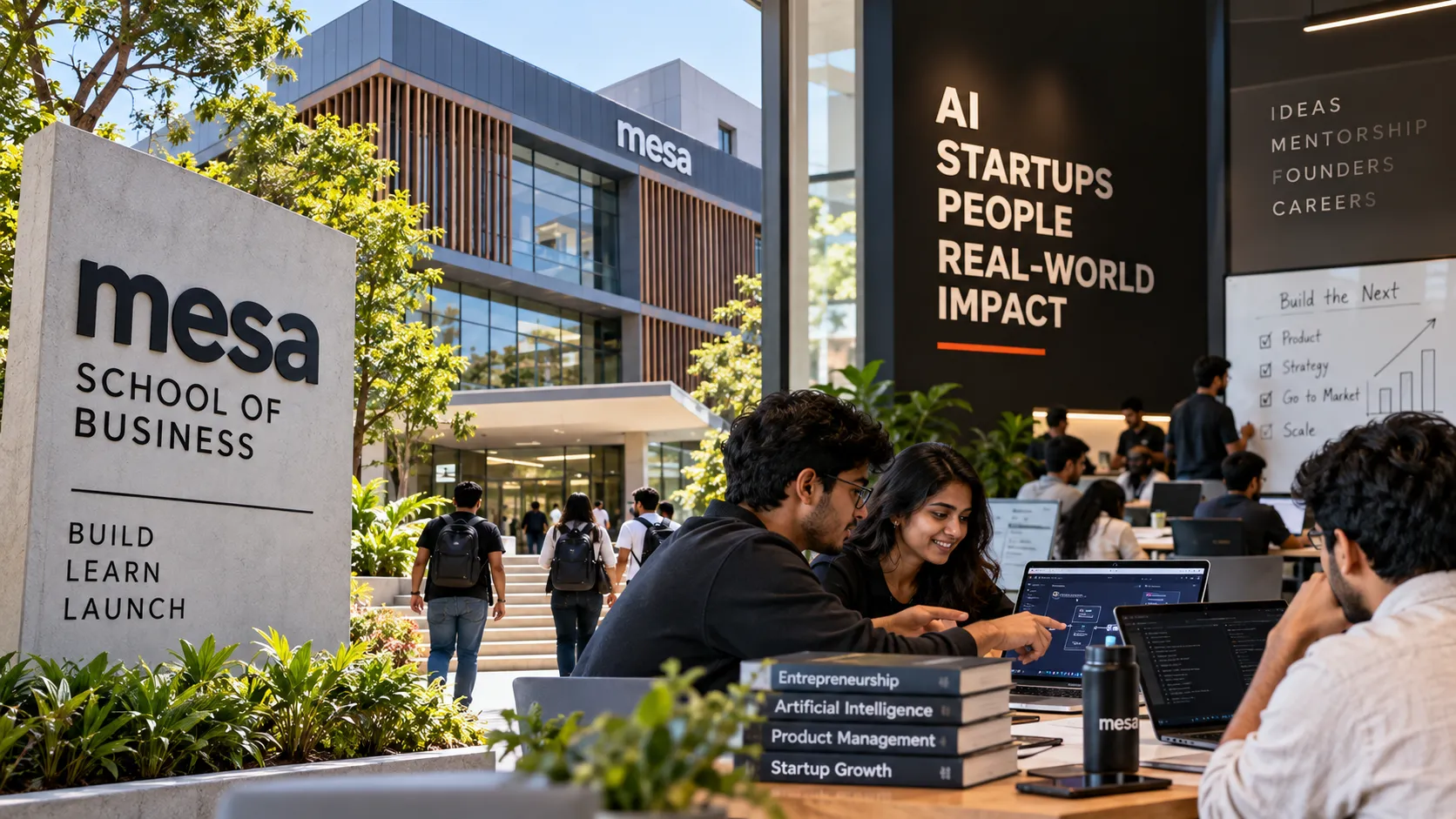
Three years later, Mesa has more than 550 students across three programmes. Alongside the postgraduate course, it runs a four-year undergraduate programme in business and entrepreneurship and Forge, a one-year programme for fresh graduates. More than 100 founders have taught on campus, and students have worked on over 200 projects with startups.
Outcomes as the selling point
Mesa’s pitch rests heavily on placement and venture-building outcomes. The school says graduates of its first two postgraduate cohorts received an average annual cost-to-company of ₹26 lakh, with the top quarter averaging ₹36.5 lakh. Graduates have joined companies including Zomato, Zepto, Urban Company, Scapia and Comet, and 58% work in founder-facing roles such as chief-of-staff, growth and strategy positions.
Nearly 20% of graduates have gone on to start their own companies. The Mesa Startup Lab incubates more than 50 student startups, which the school says have collectively raised over ₹25 crore in funding and grants and have a combined annual revenue run-rate above ₹50 crore. One of them, Mumbai Pav Co., has raised ₹9 crore, and two student founders have appeared on Shark Tank India. Student ventures have drawn backing from investors including Nikhil Kamath, Ronnie Screwvala, Campus Fund and i-Venture@ISB.
The AI argument
The investors frame the deal as a bet that traditional management education is not adapting fast enough. “Higher education in India needs to be rebuilt for the AI era, not patched,” said Mukul Arora, co-managing partner at Elevation Capital, adding that the firm intends to deepen its commitment to founder-led institutions such as Mesa.
Vamsi Duvvuri, founder and managing partner of Dharana Capital, pointed to the gap between what students learn and what employers need. “Mesa is bridging that gap by rethinking business education for an AI-first world,” he said.
The founders argue that the answer is hands-on building. Under the model Agarwal describes, “every student builds a real business with real revenue, uses AI on live problems”, which he says is why startups recruit Mesa graduates. Limaye put the stakes more bluntly: “Young people shouldn’t spend their early careers in roles that are disappearing.”
Disrupting the MBA, carefully
Mesa is part of a wave of alternative business schools in India that position themselves against the two-year MBA. Unlike established institutions, which compete on rankings, faculty research and accreditation, these newer schools compete on speed, cost relative to outcomes, and access to working founders and operators.
The model has limits. Startup hiring is cyclical, and placement outcomes that look strong in a funding upswing can weaken quickly in a downturn. A curriculum built around founders also depends on continued goodwill from the ecosystem. Regulators have tightened scrutiny of private education providers’ claims on placements and degrees, and Mesa’s undergraduate expansion will invite closer attention to accreditation and academic quality.
What the money will build
Mesa has outlined three priorities for the new capital. The first is to make its curriculum AI-first across existing programmes, so that students learn to use AI tools on live business problems as a default, not as an elective. The second is to launch and scale new programmes on campus, extending a model that has already grown from one course to three in as many years. The third is to deepen partnerships with startups and investors, which supply Mesa’s projects, faculty and placements.
The undergraduate programme is the most consequential bet. A four-year course competes for students at the moment they choose between engineering, commerce and traditional management degrees, and it asks families to back an alternative route at a significant cost. Success would give Mesa a pipeline of graduates trained in building businesses from the age of eighteen, a proposition no established Indian business school currently offers at scale.
Forge, the one-year programme for fresh graduates, targets another gap: young people with degrees but few job-ready skills, a group that has struggled most as employers cut entry-level hiring and turn to automation.
Why investors are backing it now
For Dharana and Elevation, the investment is effectively a bet on India’s demographic and economic trajectory. India has one of the world’s largest young workforces and the world’s third-largest startup ecosystem, yet employers routinely complain that graduates lack practical, commercial skills. If AI automates routine junior tasks, the premium on people who can sell, build and make decisions will only rise.
The mix of equity and venture debt is also notable. Debt from InnoVen and Alteria indicates lenders are comfortable with Mesa’s fee-based revenue visibility, a model closer to a services business than a cash-burning consumer platform.
For India’s startup ecosystem, and for diaspora founders and investors who have long debated how to scale entrepreneurship education at home, Mesa’s raise is a useful test case. If the school can maintain its outcomes as it grows beyond 550 students, it could provide a template for how Indian higher education adapts to the AI era, through rebuilding rather than incremental reform.