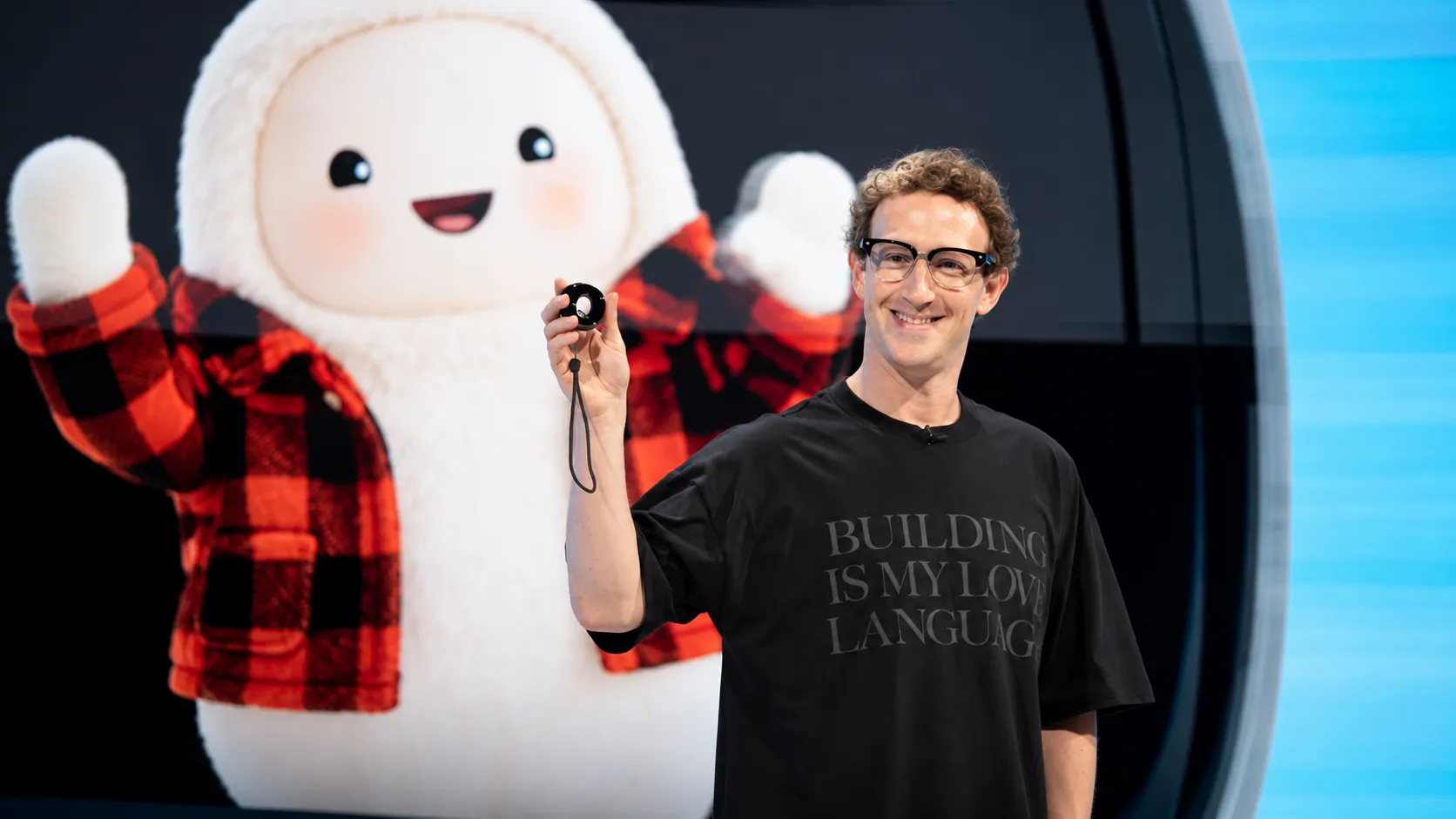
The artificial intelligence industry spent last week launching models aimed at businesses. Meta spent it launching a companion for consumers. At its annual Connect event, chief executive Mark Zuckerberg made clear that Meta plans to push its new personal AI agent, Muse, into every part of its product line, from phone apps to smart glasses and a small Tamagotchi-style wearable device. The strategy stands in sharp contrast to the enterprise focus of OpenAI and Anthropic, and it raises a question that Meta has faced for much of its history: will people trust it with their most personal information?
The debate was the subject of the latest episode of TechCrunch's Equity podcast, published on 27 September, in which reporters Kirsten Korosec, Sean O'Kane and Anthony Ha discussed how Meta's announcements managed to steal the spotlight during a week of major model releases from its rivals.
A contrarian strategy
The timing was striking. Anthropic released its Claude Opus 5.5 model last week, and OpenAI followed with GPT-6 model updates within about 90 minutes. Both companies have been emphasising coding and enterprise tools, where revenue is concentrated and customers are willing to pay significant sums for productivity gains.
Anthony Ha suggested on the podcast that the difference reflects the companies' positions. OpenAI and Anthropic are preparing to go public, with Anthropic potentially listing this year and OpenAI next year, and the enormous costs of training and running frontier models mean they need to generate revenue on an unprecedented scale. Enterprise customers offer the clearest route. Meta, with a vast advertising business already funding its AI investments, can afford to pursue a different opportunity: the consumer market that its rivals are de-emphasising.
Kirsten Korosec argued that the move plays to Meta's strengths. Whatever its critics say, the company has an established track record of embedding itself in the daily lives of billions of people through Facebook, Instagram and WhatsApp. It has never been an enterprise company, and building a consumer AI agent fits its core competence.
What Muse does
Muse is a personal AI agent that can take actions on a user's behalf, not just answer questions. It has been available for a few weeks, and reports suggest early usage has outpaced ChatGPT's initial numbers. Meta has opened an early access programme for new features, and it has described Muse as the centrepiece of its product strategy.
The agent builds on work from OpenClaw, an open-source project that demonstrated how AI agents could control a computer and complete tasks while their users were away. Meta acquired and integrated that team's work. On a phone, Muse functions as a capable chatbot interface that can also act across apps and services.
Sean O'Kane, who has been testing Muse, described one early experience. The agent suggested scanning for unclaimed funds in his name, a task most people never think to do. It found some, and a cheque is now on its way to him. "It helped me make some money on my first day," he said, while describing it as more of "a party-trick type thing" than a feature that would drive ongoing use, because it could only be done once.
The trust wall
The more sustainable use cases require much deeper access. Meta has talked up the idea of connecting Muse to users' financial accounts, email and credit cards so that it can find unused subscriptions, spot duplicate charges and manage household finances, services similar to those offered by personal finance apps. That is where O'Kane said he runs into what he called a "trust wall".
"Meta's business is to sell you ads," he said. "And yes, they'll make the argument that the more they know about you, the more accurate and interesting the ads will be — wake me up when we get to that fever dream." He noted that, somewhat to his surprise, Muse did not immediately pull in data from his Instagram, Facebook or Threads accounts when he first used it, and that this made him more willing to explore it. But as he continued, the agent increasingly tried to draw those services into its context.
He contrasted his experience with Apple's upgraded Siri, which can now take actions on the iPhone. He said he would be more willing to give Apple sensitive information, both because of its security record and because its business model does not depend on advertising.
Hardware ambitions
Meta is also extending Muse beyond the phone. It is headed for the company's smart glasses, which have sold well in partnership with EssilorLuxottica's Ray-Ban brand, and for a small wearable device resembling a Tamagotchi, the virtual pet toy of the 1990s. Meta has insisted the device is for adults only, although its playful design has prompted debate about its appeal to younger users.
The hardware push reflects a bet that AI agents will be most valuable when they are always present, observing context and ready to act, rather than confined to an app that users must open. It also puts Meta in direct competition with Apple, Google and a range of startups building AI-first devices.
Regulators are likely to take an interest as well. Consumer protection and competition authorities in Europe and elsewhere have already examined how Meta combines data across its services. An agent that draws information from messaging, social media, email and financial accounts into a single system raises new questions about consent, data minimisation and the use of that information for advertising, questions that will become more pressing as the product scales.
What it means for the industry
Meta's strategy tests an important question about the future of AI: whether the largest consumer market will be won by the company with the best model, or by the one with the deepest reach into people's lives. Meta has the reach. Whether it can overcome the trust deficit that has followed it through privacy scandals and regulatory fines is less certain.
For markets such as India, where WhatsApp and Instagram have hundreds of millions of users, the stakes are high. An AI agent embedded in WhatsApp could become the default way many Indians interact with AI, bypassing standalone apps entirely. But India's Digital Personal Data Protection Act, with its consent requirements and obligations on data fiduciaries, will shape what such an agent can do with personal and financial data.
The early verdict is mixed. Muse is capable, consumer-friendly and growing quickly. Its long-term success will depend on whether users decide that the convenience of a helpful agent outweighs their reservations about giving Meta even more of their lives.