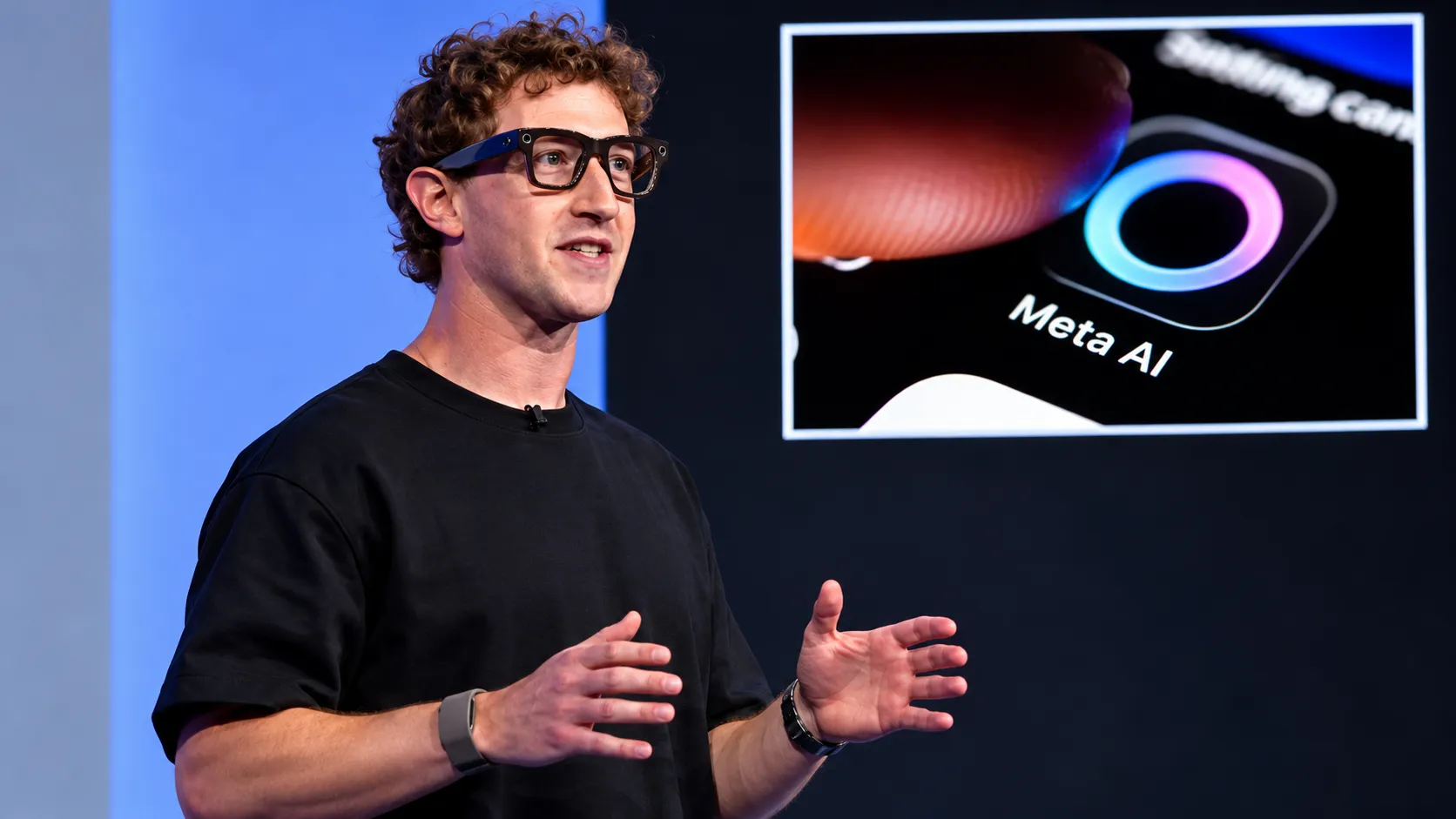
Meta has released Muse Wonder, the first frontier artificial-intelligence model from its Meta Superintelligence Labs (MSL), in a bid to rejoin the front rank of the AI race after more than a year of costly restructuring and talent acquisition.
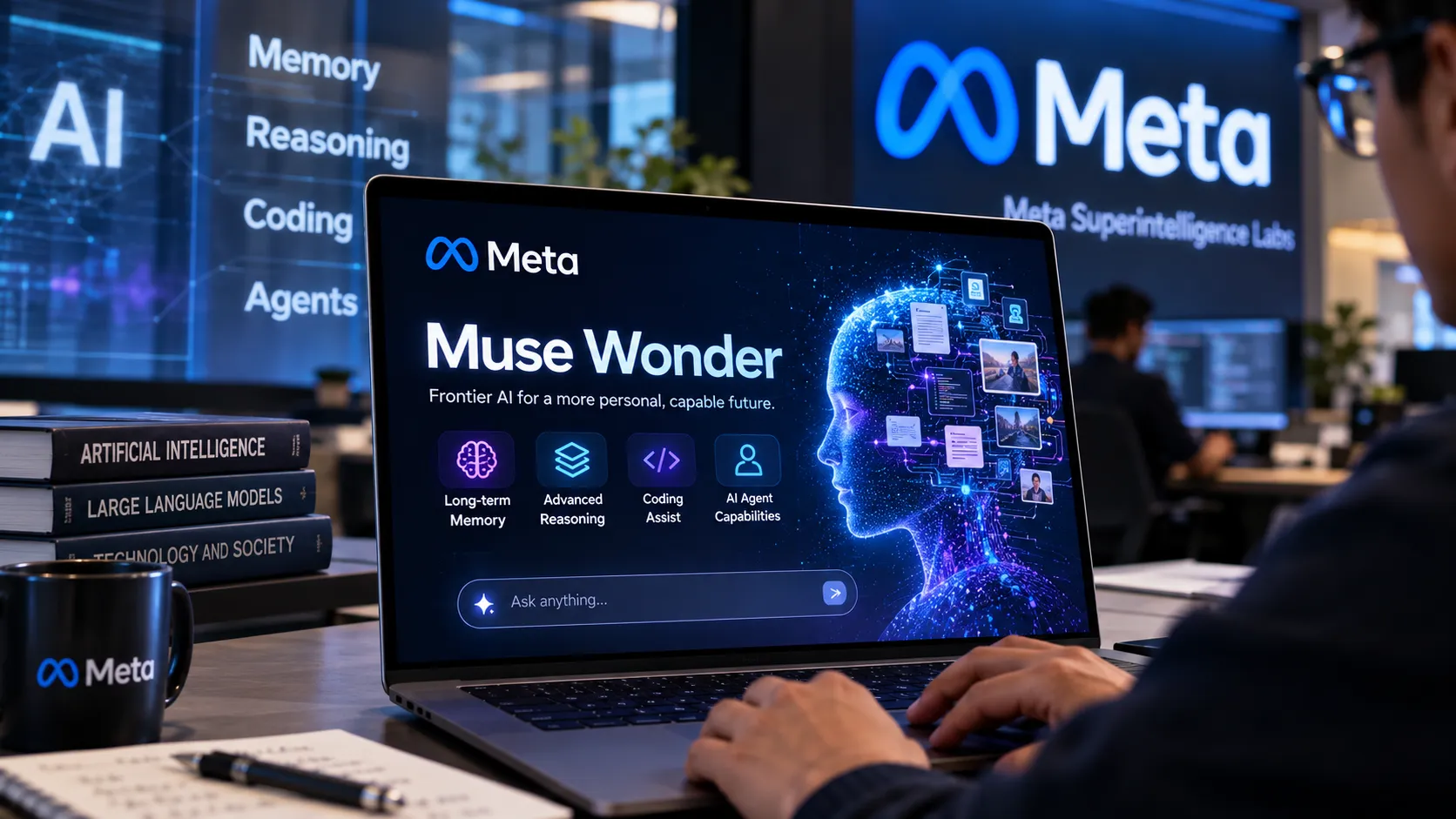
The company launched two versions: Muse Wonder and a larger, more capable Muse Wonder Full. Meta says the models deliver performance comparable to the leading frontier systems on industry benchmarks, including Anthropic’s Claude Fable 5.1 and OpenAI’s GPT-6 Astra. It is pricing access to Muse Wonder at $4 per million input tokens and $20 per million output tokens.
Muse Wonder Full will be available only to subscribers of Muse Code, Meta’s AI coding product, and will not be served through the API, according to details reported by TechCrunch. Both models will also power the Muse agent. “Together, they mark the next step on our scaling ladder and a major leap toward personal superintelligence,” Meta said in a blog post announcing the models. The launch is the first frontier-grade release since Meta reorganised its AI efforts under MSL in August 2025, a restructuring that put former Scale AI chief executive Alexandr Wang at the centre of its strategy.
The memory bet
Meta is positioning Muse Wonder around what it calls “active memory”: the model’s ability to retain, organise and use information across long interactions and multiple sessions, instead of treating each conversation as a fresh start. The company says Muse Wonder leads on MemoryBench, a benchmark designed to measure how well AI systems remember and apply context over time.
Memory has become one of the most important frontiers in AI product design. As chatbots evolve into agents that carry out multi-step tasks such as writing and maintaining code, managing projects or acting on behalf of users, their usefulness depends on remembering past instructions, preferences and progress. Models that forget context force users to repeat themselves and make long-running tasks unreliable.
“We put a tremendous amount of effort into making sure your model can remember what’s important to you over days, weeks, months and beyond,” Meta research scientist Kavya Kopparapu said in a video accompanying the launch. For Meta, which operates social platforms used by more than three billion people, a model that remembers users across sessions has obvious applications in its consumer assistant products, though it also raises privacy questions.
Meta is betting that the next phase of AI competition will be won on memory, not just raw intelligence.
Built on a giant compute bet
Muse Wonder was trained at Prometheus, Meta’s massive data-centre cluster in Ohio, one of several gigawatt-scale computing facilities the company has been building. Chief executive Mark Zuckerberg has committed hundreds of billions of dollars to AI infrastructure over the coming years, making Meta one of the largest spenders on AI compute in the world.
That spending has drawn scrutiny from investors, who have pressed for evidence that the investments will produce competitive models and revenue. Muse Wonder is the first major test of whether Meta’s compute build-out and its aggressive recruitment of AI researchers, often with compensation packages reported to run into the hundreds of millions of dollars, can translate into a product that matches rivals.
A shift in strategy
The launch also marks a change in Meta’s approach. For years, the company championed open-weight models through its Llama family, releasing model weights for developers to download and customise. Llama became a foundation for thousands of startups and researchers worldwide, including many in India, where open models offered a cost-effective way to build local-language and domain-specific applications.
The Muse models signal a more commercial posture. Selling access through an API and tying the most capable version to a paid subscription puts Meta in direct competition with OpenAI, Anthropic and Google on their own terms. Since the restructuring, Meta had released only its lightweight Muse Spark model and the Muse agent. The pricing of $4 and $20 per million tokens, roughly in line with OpenAI’s GPT-6 Sol and Anthropic’s Claude Opus 5.5, places Muse Wonder in the premium tier of frontier models, suggesting Meta believes it can compete on capability instead of undercutting rivals on price.
The competitive stakes
The frontier-model market has become fiercely contested. Anthropic, OpenAI and Google release new models every few months, each claiming benchmark leadership, while Chinese labs have released highly capable open-weight models at low cost. Benchmarks are an imperfect guide; real-world performance on coding, reasoning and agentic tasks often matters more to enterprise buyers than leaderboard scores.
Meta’s challenge is that it enters this market as a challenger rather than an incumbent. Developers and enterprises have already built workflows around competing models, and switching costs are rising as AI becomes embedded in products. Muse Code, Meta’s coding offering, competes with established tools from Anthropic, OpenAI, GitHub and a crowd of startups.
Memory and privacy
Meta’s emphasis on memory carries particular sensitivity given its history. The company has faced repeated regulatory action over its handling of user data, including large fines in Europe, and a model designed to remember personal information over “days, weeks, months and beyond” will attract scrutiny from regulators and privacy advocates. How users can view, edit and delete what the model remembers, and whether memories are used to target advertising, will be closely watched.
There is also a commercial logic. An assistant that accumulates months of context about a user becomes harder to abandon, because switching to a rival means starting from scratch. If Meta can make memory both useful and trustworthy, it could turn that stickiness into a durable advantage across its apps, its Muse agent and the developers who build on its API.
What it means for India and the diaspora
For Indian developers and startups, Meta’s move matters in two ways. A new frontier model adds competition, which tends to push prices down and capabilities up across the market. But Meta’s shift towards closed, paid models could reduce the flow of cutting-edge open weights that many Indian AI companies have relied upon, particularly those building for Indian languages.
Indian-origin researchers and engineers are prominent across Meta’s AI organisation and its rivals, and the competition for their talent has driven compensation to unprecedented levels, a dynamic that also affects India’s domestic AI ecosystem.
The first independent evaluations of Muse Wonder, especially on coding and long-horizon agentic tasks, will determine whether Meta has truly closed the gap. For now, the launch confirms that the race for frontier AI has another heavyweight contender, and that memory has become a central battleground in how the industry defines intelligence.


