Metaview, a recruiting software company that began by capturing and analysing job interviews, has raised $60 million in Series C funding as it expands into AI agents that can carry out much of the hiring process on their own. The round, announced on 30 September 2026, was led by Insight Partners, with participation from GV, Intrepid Growth Partners, Seedcamp, Vertex Ventures US, Plural and Garuda Ventures.
The financing comes about a year after Metaview's previous round and brings its total funding to $110 million. The company, which operates from London and San Francisco, says more than 7,000 companies now hire using its platform.
From interview notes to autonomous agents
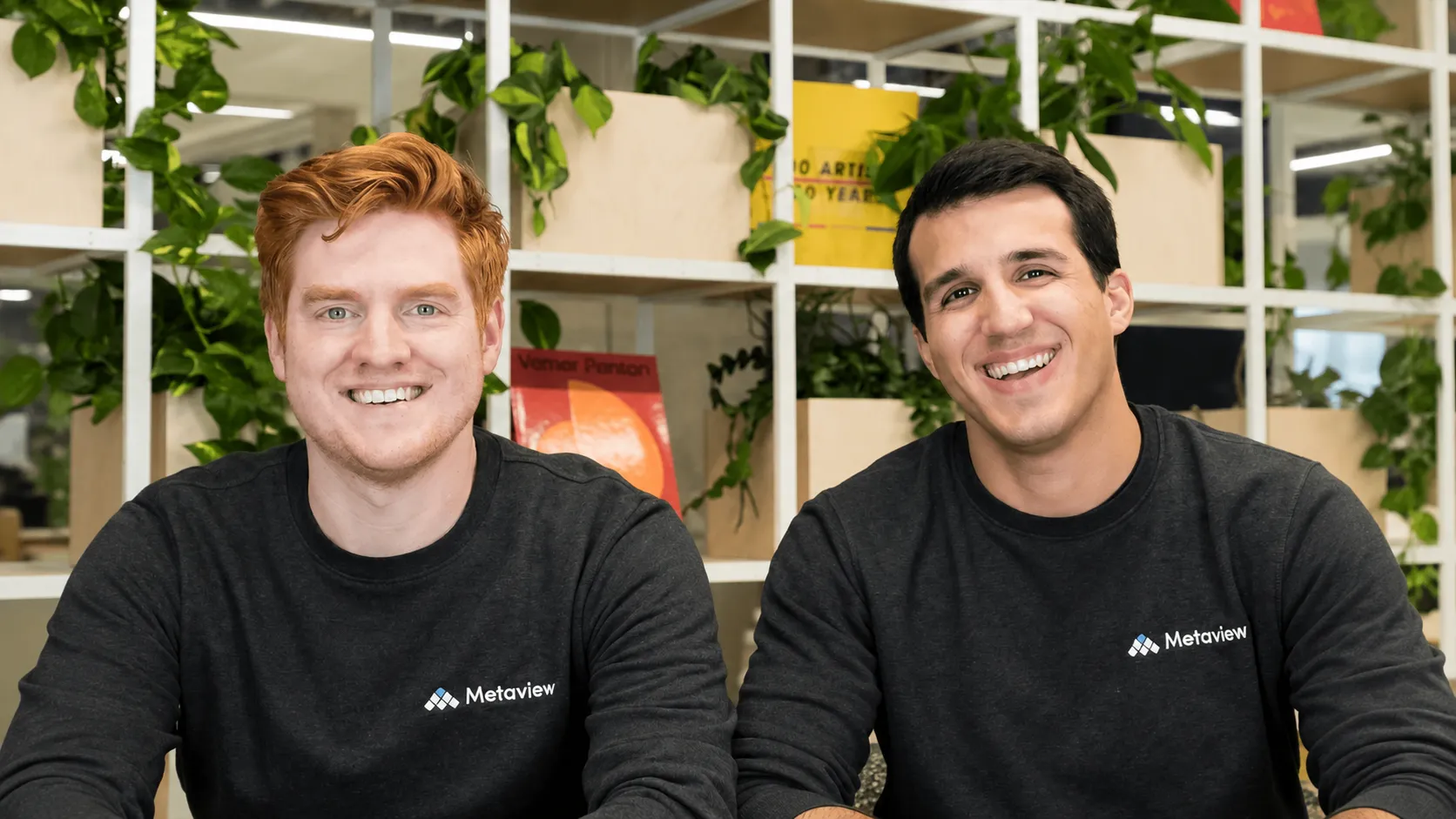
Metaview was founded in 2018 by Siadhal Magos, its chief executive, and Shahriar Tajbakhsh, alumni of Uber and Palantir. Its first product recorded and structured hiring interviews, giving recruiters and hiring managers accurate notes and insights without manual write-ups. The company says it has captured more than six million hiring conversations.
It has since expanded into what it calls an Agentic Recruiting Platform, which deploys AI agents to automate candidate sourcing, application review, structured screening conversations, reporting and hiring workflows. The platform captures context across interviews and integrates with existing recruiting systems.
The centrepiece of the new phase is fillmore, which Metaview describes as an autonomous recruiting coworker. The Series C will take fillmore to general availability alongside new specialist agents, and the company is building additional agents across the recruiting process, including a dedicated AI screening agent.
The application flood
Metaview's growth is driven by a problem that has become acute in many companies: an overwhelming volume of job applications. The company says the average inbound application volume per recruiter has risen by 412%.
Generative AI has made it far easier for candidates to tailor CVs and cover letters and to apply for large numbers of roles quickly. The result is that recruiters are often buried under applications, many of them of uncertain quality, while hiring managers still expect fast and rigorous decisions.
"The recruiting process is generating more candidate volume than most organizations know how to handle," said Ryan Hinkle, managing director at Insight Partners. "Metaview has built a platform that brings more structure and intelligence across each stage of hiring, from sourcing and screening through to the final decision."
Metaview frames the opportunity in broad terms, describing recruiting as an $800 billion industry built on the assumption that hiring is hard, laborious work with little leverage from technology.

Customers and results
Customers named by the company include payroll and HR platform Deel, buy-now-pay-later company Affirm, travel and expense company Navan, and software development platform Replit. Metaview says some customers have reduced their time to hire by more than 75%.
Richard Yan, who leads global people and talent at fintech company Airwallex, said Metaview had helped increase his organisation's recruiting capacity and given hiring teams shared context for faster, better-informed decisions.
Metaview also recently acquired Reval, an AI-native recruiting startup, as it builds out its product range.
Growth plans
The company plans to expand its team from about 80 people to 250 by the end of next year, open an office in New York and invest in its 10x Recruiting community and training programme for recruiters.
That hiring plan is notable at a time when many software companies are using AI to slow headcount growth. Metaview is betting that demand for its products will grow fast enough to justify a much larger team in sales, customer success and engineering.
The rise of agentic HR technology
Metaview's round is part of a wider wave of investment in AI agents for human resources. On the same day, Munich-based Ahron raised €2.2 million for agents that work across existing HR systems. Investors see HR as a natural target for automation because many of its processes, such as screening, scheduling and onboarding, are repetitive, rules-based and supported by large amounts of structured data.
The shift from copilots, which assist humans with tasks, to agents, which complete tasks with limited supervision, is one of the defining trends in enterprise software in 2026. In recruiting, that could mean AI systems that source candidates, conduct initial screening conversations and prepare shortlists, leaving human recruiters to focus on final interviews, relationship-building and decisions.
The economics are compelling for investors. Recruiting software has traditionally been sold per seat, with revenue tied to the number of recruiters using a product. Agents that complete work themselves open the possibility of pricing based on outcomes, such as candidates screened or roles filled, which could allow software companies to capture a larger share of the money employers currently spend on recruitment agencies and internal hiring teams. That potential shift explains why growth investors such as Insight Partners are willing to back companies like Metaview at an early stage of the agent transition.
Fairness and regulation
Automating hiring also raises serious questions. AI systems used in recruitment can reproduce or amplify biases present in historical data, and candidates may be uncomfortable being assessed by software. Regulators have taken note: the European Union's AI Act classifies AI systems used in recruitment as high-risk, subjecting them to strict requirements on transparency, human oversight and data quality. Several US jurisdictions have also introduced rules on automated employment decision tools.
Metaview's emphasis on structured interviews and keeping humans in control of final hiring decisions is designed to address those concerns. Its ability to show that its agents improve both efficiency and fairness will be important as it sells into large enterprises and regulated markets.
What it means for talent markets
For employers, the promise of agentic recruiting is faster hiring at lower cost. For recruiters, it may change the nature of the job, with less time spent screening applications and more on advising hiring managers and engaging candidates. For candidates, the experience could become faster and more consistent, or more impersonal, depending on how the technology is used.
With fresh capital, a growing customer base and a new autonomous product, Metaview is well positioned to shape how that transition unfolds. The next year will show whether companies are ready to hand significant parts of hiring to AI agents.