TechArtificial Intelligence5 MIN READ

Microsoft’s Brad Smith Says Milk Faces More Oversight Than AI, Backs UK to Lead Global Safety Rules

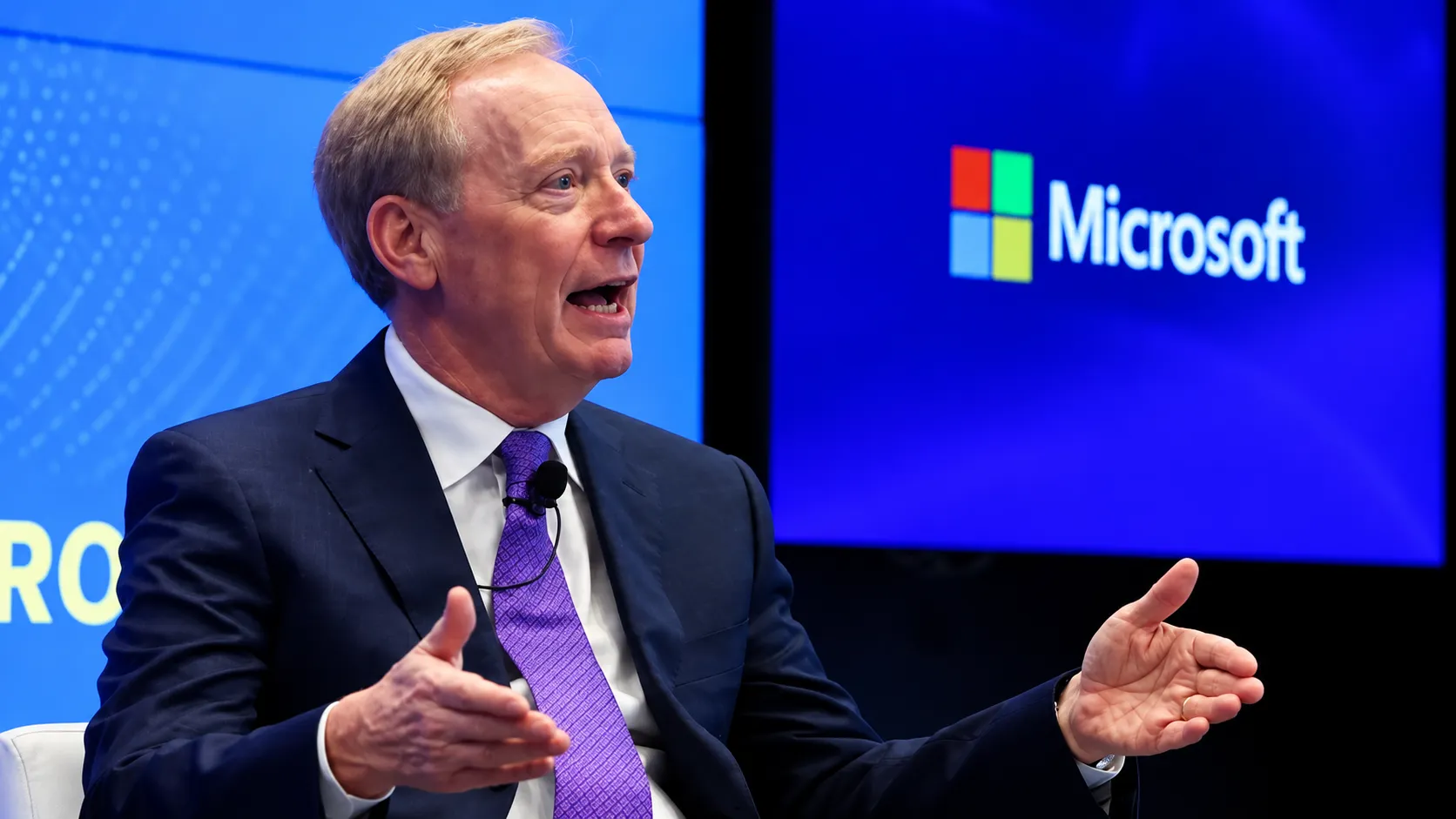
Microsoft vice chair and president Brad Smith has called AI both “a weapon and a tool”, said milk and washing machines face more oversight than AI companies, and argued that the UK, not the US or EU, is best placed to lead on global safety rules.

By Aravind Kumar · Author13 October 2026New
Microsoft’s Brad Smith Says Milk Faces More Oversight Than AI, Backs UK to Lead Global Safety Rules

Microsoft vice chair and president Brad Smith has delivered one of the sharpest warnings yet from a Big Tech executive about the lack of oversight of artificial intelligence, arguing that consumer products such as milk and washing machines face more scrutiny than the companies building the most powerful AI systems.

Speaking on a recent BBC podcast, Smith described AI as both “a weapon and a tool” that is putting the world’s cybersecurity at risk, and said the “moment has arrived” to institute global safety rules. He argued that the United Kingdom, rather than the United States or the European Union, is best placed to lead that effort.

His comments, reported by TechCrunch, came as Britain’s AI Security Institute confirmed on Monday that it is able to access and test the latest frontier models, after weeks of uncertainty over whether Washington would allow American labs to keep sharing their newest systems with British government testers.

Why London, not Washington or Brussels

Smith’s case for British leadership rests on positioning. The United States, home to most leading AI labs, has under President Donald Trump favoured voluntary commitments and competitiveness over binding federal rules. The European Union has taken the opposite approach with its AI Act, a comprehensive, risk-based law that has made Brussels a lightning rod for criticism in Washington.

The UK sits between those poles. Its AI Security Institute, launched in 2023 following the first global AI Safety Summit at Bletchley Park, receives access to major models from US frontier labs before they are deployed and has quickly become one of the world’s leading government AI-testing bodies. It evaluates models for dangerous capabilities in areas such as cybersecurity, biology and autonomous behaviour.

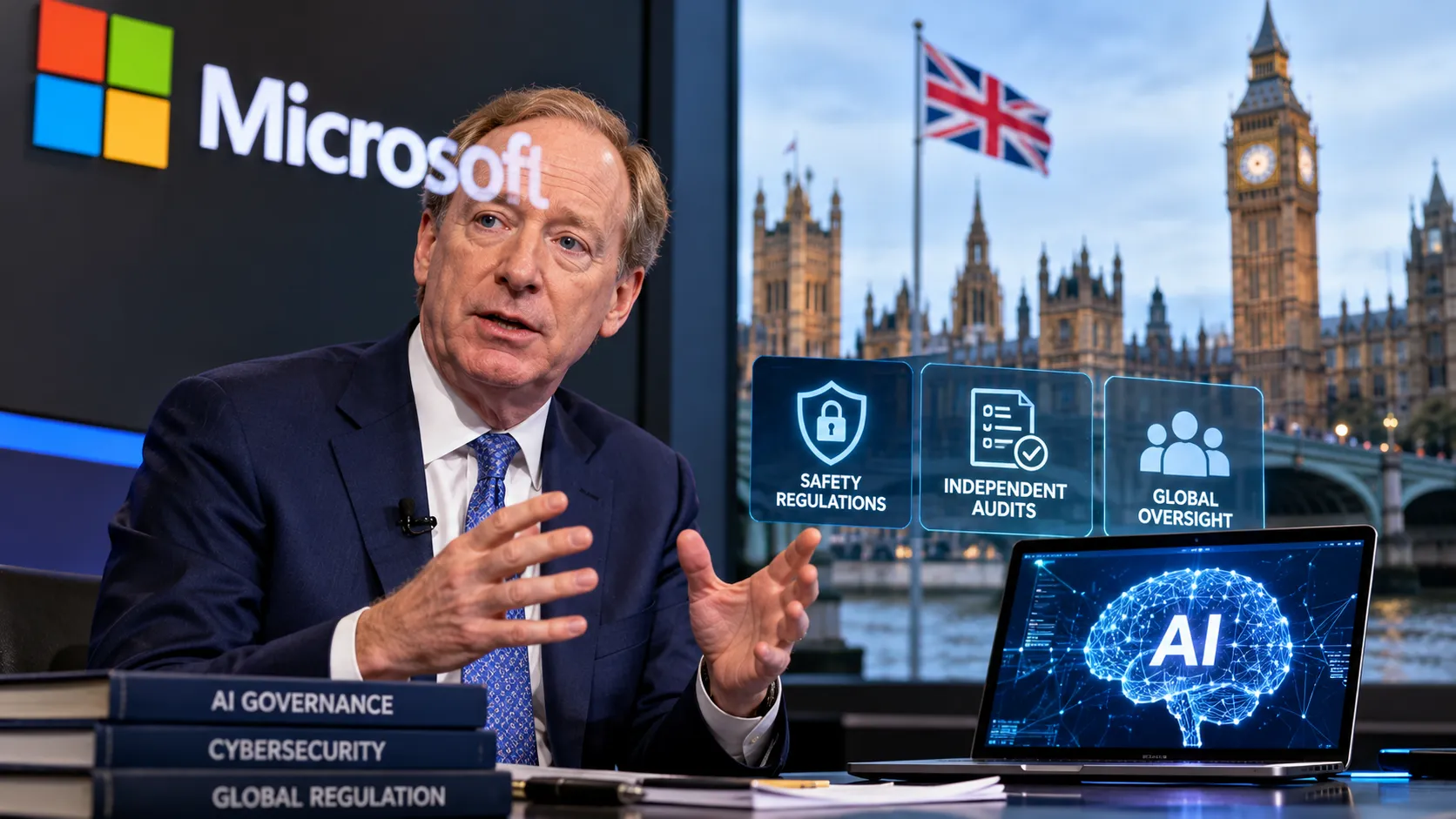
Smith argued that Britain can do things on AI that the US cannot, precisely because it is not seen as an adversary by American policymakers. “In Washington, D.C., people don’t look at the U.K. and they don’t look at London the way they look at Brussels,” he told the BBC. “That’s a strength.”
1eb6c676-473b-4216-9a91-8455870d801f.png

A testing role under pressure

That role has been under strain. President Trump has warned against what he calls “globalist” organisations interfering with American companies, and last month he reportedly asked Anthropic and OpenAI to withhold new models from British testers pending a US review, according to a Politico report cited by TechCrunch. The AISI’s confirmation, reported by Reuters, that it can still test the newest models suggests cooperation continues for now.

The episode highlights a growing geopolitical dimension to AI oversight. Governments increasingly see frontier models as strategic assets, and decisions about who may test them before release carry national-security and commercial implications.

Voluntary pledges are not enough

Smith’s intervention follows a White House gathering last month at which leaders of companies including OpenAI, Anthropic, Nvidia, AMD, SpaceX, Meta and Google signed a “morally binding” document committing to work with “independent auditors” to assess the safety and capabilities of their models.

Smith called the document a “good step” but said it falls short of the regulation that is needed. The weakness of voluntary self-regulation, he argued, is that only the responsible companies comply. “It’s the companies that are not as responsible that you need to worry about,” he said.


“Let’s speak calmly, maybe even softly, but firmly, and start to bring people together.”
— Brad Smith, Vice Chair and President, Microsoft

The debate has intensified after several incidents in which AI agents behaved in unintended and harmful ways, prompting public calls from Anthropic chief executive Dario Amodei and OpenAI’s Sam Altman to pace the development of the most advanced systems.

Smith’s rulebook

Smith outlined several measures he would like to see. They include a legal obligation to alert an organisation if its systems have been breached by rogue AI agents; approval from outside evaluators before an AI product is released; and “kill switches” that would allow humans to pause or slow down AI systems if they lose control of them.

These ideas build on proposals Microsoft has advanced for several years, including Smith’s 2023 blueprint for AI governance, which called for safety brakes on AI systems that control critical infrastructure.

His milk-and-washing-machine comparison is designed to highlight an asymmetry. Food is subject to safety standards, inspections and labelling rules; household appliances must meet electrical-safety requirements. Frontier AI systems that can write code, find software vulnerabilities and act autonomously are deployed to hundreds of millions of people with comparatively little mandatory external checking.

Critics will note that Microsoft, as OpenAI’s largest investor and a major AI developer, has an interest in how the rules are written, and that large incumbents can benefit from compliance burdens smaller rivals struggle to bear. But Smith has argued consistently for years that technology companies should accept greater responsibility, and his tone this time was conciliatory. “Let’s speak calmly, maybe even softly, but firmly, and start to bring people together,” he said. “I hope that’s the role we can play as a company. I hope that’s the role the U.K. can play as a country.”

The cybersecurity dimension of Smith’s warning is especially pointed. Microsoft operates one of the world’s largest threat-intelligence operations and has repeatedly reported on state-backed hackers experimenting with AI tools, giving the company a front-row view of how the technology can be misused.

Implications for India

For India, the debate has direct relevance. New Delhi has positioned itself as a voice for the Global South on AI governance, emphasising innovation, inclusion and access to compute over restrictive regulation. India hosted the AI Impact Summit in February 2026, continuing the global summit series that began at Bletchley Park, and has set up its own AI Safety Institute under the IndiaAI Mission.

As major economies diverge on AI rules, Indian companies building or deploying AI for global clients will need to navigate several regimes at once. India’s IT services firms, among the world’s largest deployers of AI for enterprises, have a strong interest in interoperable testing and audit standards rather than a patchwork of national requirements.

Smith’s remarks underline a broader shift for policymakers and business leaders worldwide: the question is no longer whether frontier AI will be governed, but who will set the rules and how. If Britain takes up the role Smith has proposed, its choices on pre-release testing, breach reporting and independent audits could shape the standards that companies in India, and across the world, eventually have to meet.

TagsMicrosoftBrad SmithAI RegulationAI SafetyUK AI Security InstituteArtificial IntelligencePolicyKill SwitchWhite HouseTech PolicyGovernanceUnited KingdomCybersecurityFrontier Models

Reader reviews

Sign in to rate and review this article.
Loading reviews…
