FundingIPO Watch6 MIN READ

Moneyview's ₹1,092-Crore IPO Is Fully Subscribed on Day One as Retail and HNI Investors Pile In, but Institutions Hold Back

The Bengaluru-based digital lender's IPO was subscribed 1.49 times by the end of its first day, led by non-institutional and retail investors, while qualified institutional buyers bid for just 5% of their quota.

By Nisha Omkumar · Author25 September 2026New
Moneyview's ₹1,092-Crore IPO Is Fully Subscribed on Day One as Retail and HNI Investors Pile In, but Institutions Hold Back

Moneyview, one of India's largest digital personal-loan platforms, drew strong interest from individual investors on the first day of its initial public offering on Thursday, September 24, even as institutional investors largely stayed on the sidelines and the broader market fell sharply.

By 5 pm, the ₹1,092-crore issue had been subscribed 1.49 times, receiving bids for about 33.5 crore shares against 22.5 crore shares on offer, according to exchange data compiled by HDFC Sky.

The demand was concentrated among individuals. The non-institutional investor category, made up largely of high-net-worth individuals, was subscribed 2.53 times. Within it, the portion for smaller applications of under ₹10 lakh was subscribed 3.36 times, while the larger-ticket segment was subscribed 2.12 times. The retail portion was subscribed 1.87 times.

Qualified institutional buyers (QIBs), by contrast, bid for only 5% of the shares reserved for them, excluding the anchor portion. Earlier in the day, figures reported by StartupTalky showed that QIBs had bid for just 41,895 shares against the 6.51 crore shares set aside for them.

That pattern is not unusual. Large institutional investors often place their bids on the final day of an IPO, once they have seen how demand builds. But it also means the real test of institutional appetite for the issue is still to come.

The deal in numbers

The IPO, which closes on September 28, is priced in a band of ₹32 to ₹34 per share. Investors can bid for a minimum of 441 shares, which means a retail investor needs about ₹14,994 to apply at the upper end of the band.

The issue comprises a fresh issue of shares worth ₹750 crore, which will go to the company, and an offer for sale of 10.05 crore shares, worth about ₹342 crore at the top of the band, by existing shareholders. At the upper price, Moneyview would be valued at about ₹5,985 crore.

Allotment is expected on September 29, and the shares are tentatively scheduled to list on the stock exchanges on October 1. Axis Capital, BofA Securities, IIFL Capital and Kotak Mahindra Capital are the book-running lead managers.

A day before the issue opened, Moneyview raised ₹327.5 crore from 20 anchor investors at ₹34 per share, the top of the price band. The anchor book included SBI Mutual Fund, HDFC Mutual Fund and Goldman Sachs. According to Inc42, seven domestic mutual funds accounted for about 72% of the anchor allocation, a sign that some large domestic institutions were willing to commit capital before the public offer.

A profitable lender, at a modest multiple

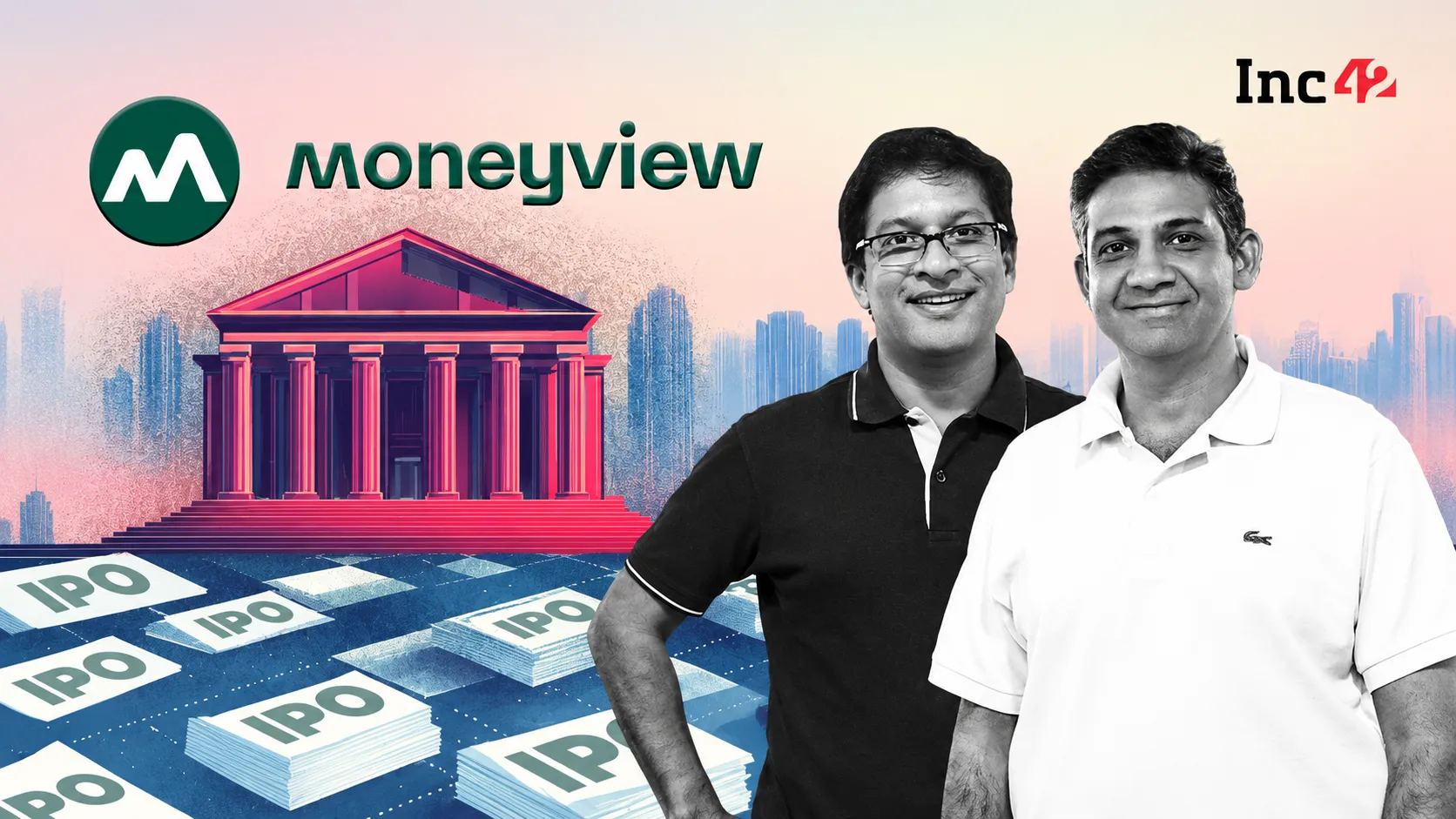
Moneyview was founded in 2014 by Puneet Agarwal and Sanjay Aggarwal, who are named as promoters in the offer documents along with Sushma Abburi. The company started as a personal finance and money-management app before moving into digital lending, which is now its core business.

Today, it uses data analytics to assess the creditworthiness of borrowers, many of whom have limited formal credit histories, and offers personal loans alongside a range of other financial products, including UPI payments, gold savings plans, fixed deposits, home loans and insurance. According to Inc42, the company manages more than ₹19,800 crore in assets and has raised more than $250 million from investors over its life.

Unlike many new-age companies that have come to the market, Moneyview is profitable. In the financial year ended March 2026, it reported revenue of ₹3,404 crore and a profit after tax of ₹242.71 crore. Growth accelerated in the June 2026 quarter, when it earned ₹173.8 crore in profit on revenue of ₹1,065 crore. Net profit for that quarter was about 2.6 times the level of a year earlier.

“Retail investors are buying the growth story. The institutions, for now, are waiting to see whether that growth survives a harder credit cycle.”
— TIGI Analysis

At the top of the price band, the IPO values Moneyview at about 8.6 times its FY26 earnings per share on a post-issue basis. That is a modest multiple for a fast-growing, profitable fintech, and it helps explain the interest from retail and high-net-worth investors.

Why institutions may be cautious

The low early participation from QIBs likely reflects a mix of timing and caution about the sector.

Unsecured personal lending has been under close regulatory watch in India. In late 2023, the Reserve Bank of India raised the risk weights that banks and non-bank lenders must apply to consumer credit, including personal loans, making such lending more capital-intensive. The central bank has also tightened rules for digital lending over the past few years, including requirements on how loans are disbursed and how lending apps work with regulated entities.

Credit quality in small-ticket unsecured loans is another concern. Borrowers with thin credit histories can be more vulnerable in an economic slowdown, and investors will want to understand how Moneyview's underwriting models perform through a full credit cycle.

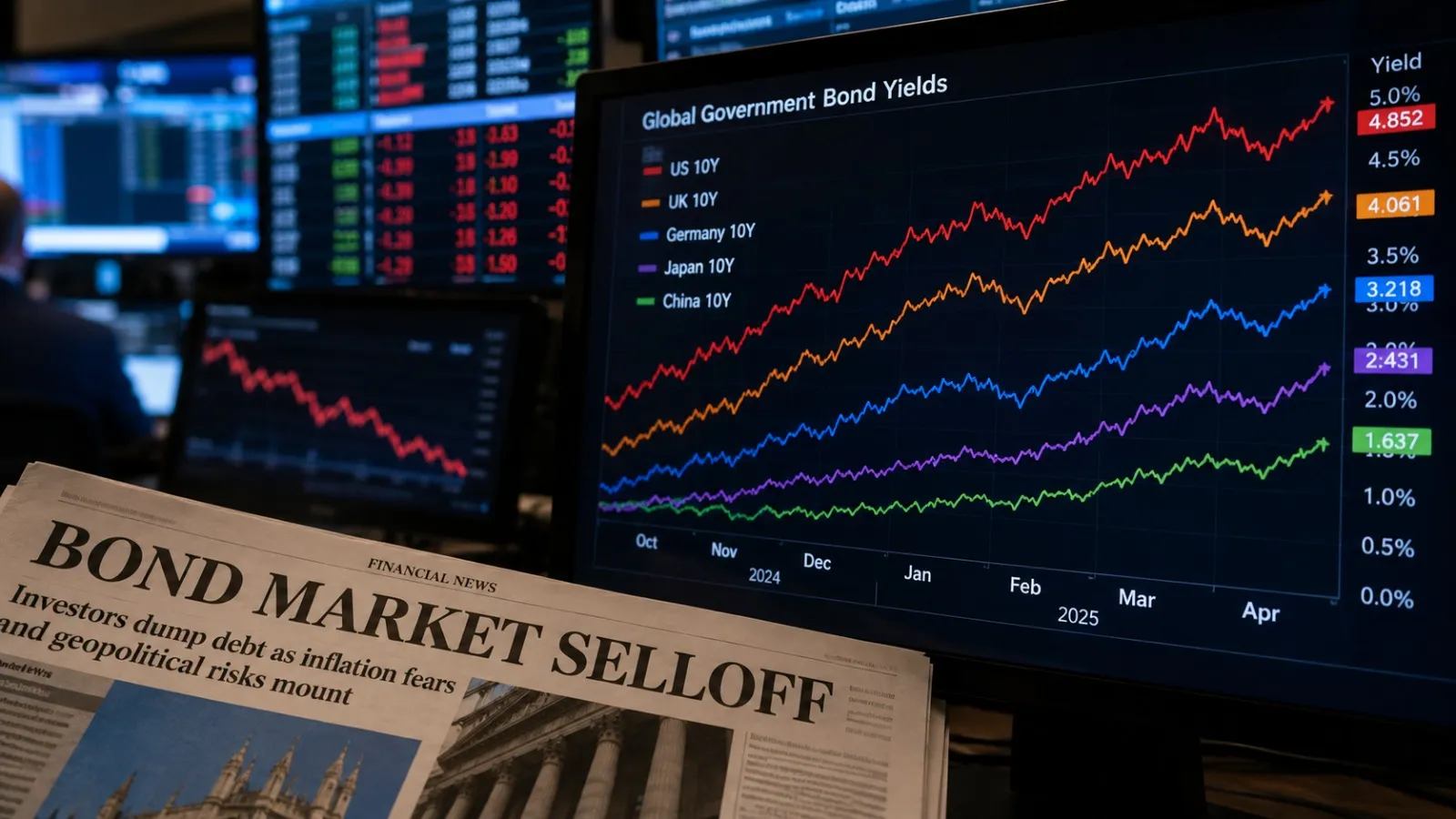
The market backdrop did not help either. The IPO opened on a day when the Sensex fell more than 1,200 points, as US bond yields hit their highest level since 2007 and oil traded near $107 a barrel. Insurance and financial stocks were among the worst hit, after the insurance regulator proposed caps on distributor commissions.

How it compares

Moneyview will join a growing group of listed Indian fintech companies. It competes with platforms such as MobiKwik, which is already listed, as well as IPO-bound Navi and lenders such as MoneyTap.

Its combination of profitability and valuation stands out in that field. Many digital lenders have struggled to balance growth with credit quality, and the market has become more demanding. According to Inc42's IPO tracker, public-market investors have increasingly prioritised strong fundamentals, profitability and low cash burn when backing new-age technology companies.

ChatGPT Image Sep 25, 2026, 01_14_43 PM.png

What to watch before the issue closes

Three factors will determine how the Moneyview IPO ends.

The first is whether QIBs turn up in size on the final day. Their participation is typically the strongest signal of how the stock may perform after listing.

The second is the grey market. Unofficial trading ahead of listing gives some indication of expected listing-day performance, though it is neither regulated nor always reliable.

The third is market sentiment over the next few days. If global bond yields and oil prices stabilise, risk appetite could return quickly. If volatility persists, investors may become more selective.

For India's fintech ecosystem, the Moneyview listing is an important test. It will show whether public markets are willing to reward digital lenders that have proven profitability, even at a time when regulators are watching unsecured credit closely. For the company's founders and early employees, it would also mark the culmination of a 12-year journey from a personal finance app to a listed lender.

Moneyview's early subscription numbers suggest that individual investors are already convinced. The final day will reveal whether India's largest institutional investors agree.

TagsMoneyviewIPODigital LendingFintechNBFCPersonal LoansIPO WatchAnchor InvestorsBengaluruIndian StartupsDalal Street

Reader reviews

Sign in to rate and review this article.
Loading reviews…