Moonshot AI, one of China's most prominent artificial intelligence startups, is building a commercial team in Singapore, in a sign that the developer of the Kimi models is preparing to compete for customers outside its home market.
A job posting on LinkedIn, reported by Reuters on Wednesday, October 21, seeks sales staff in Singapore who can "translate early wins into scalable revenue, strategic partnerships, and market presence." The posting suggests the company has already secured some international customers and now wants to expand them into a sustainable business.
Moonshot did not respond to a request for comment, Reuters said.
From model builder to global business
Founded in Beijing, Moonshot has become known for its Kimi family of large language models. In July, the company released Kimi K3, which it described as the world's largest open-weight AI system. Open-weight models make their underlying parameters available for developers to download, run and modify, unlike closed models offered only through paid interfaces.
Chinese developers, including Moonshot, DeepSeek and Alibaba's Qwen team, have embraced open-weight releases as a way to build global developer communities and challenge US rivals. Their models have been widely adopted by developers and companies around the world, in part because they can be run cheaply and customised.
But open-weight models do not automatically generate revenue. To build a sustainable business, companies need to sell services such as hosted access, enterprise support, customisation and integration. The Singapore hiring indicates Moonshot is moving in that direction.
The Singapore entity
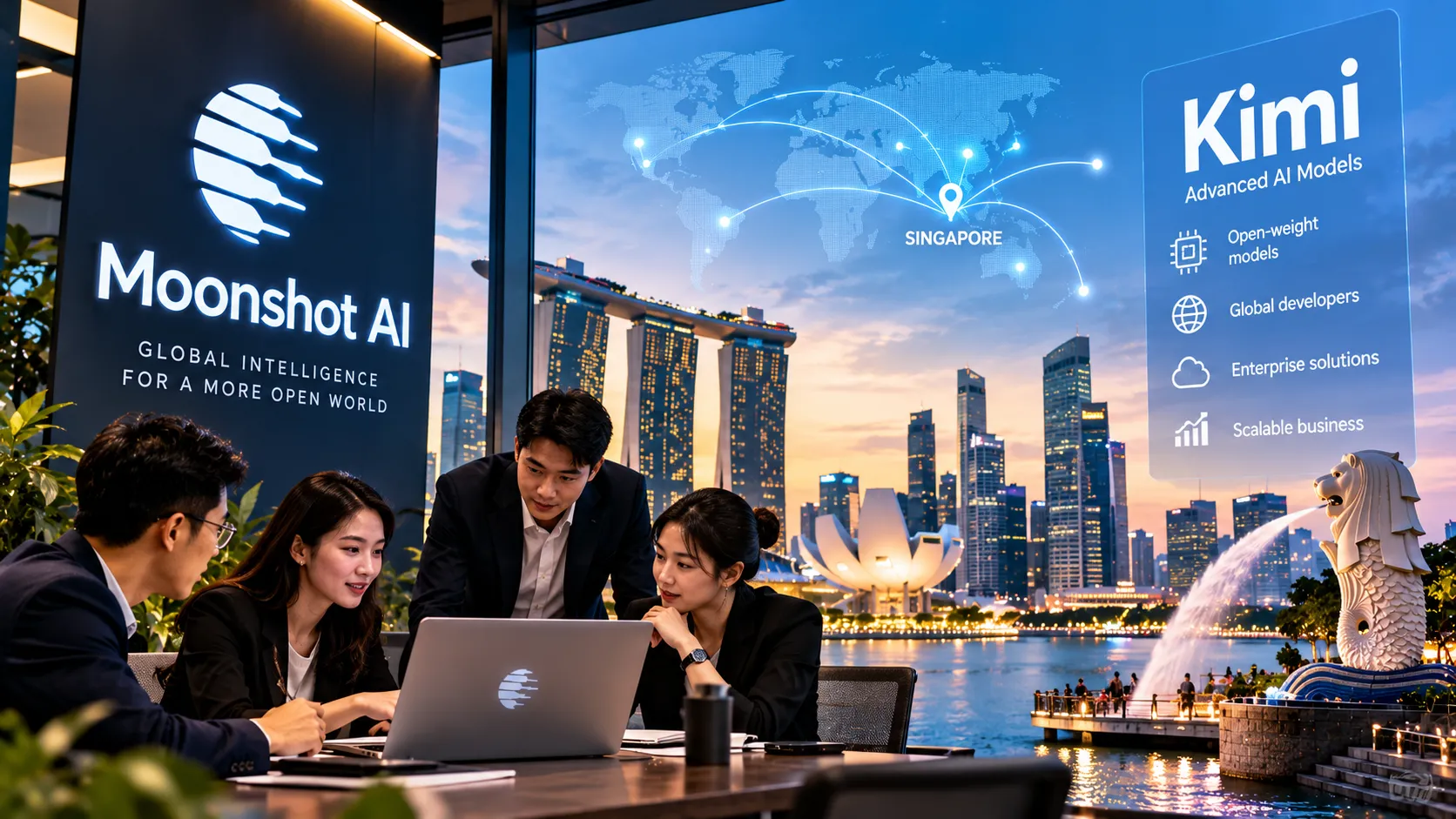
Moonshot's Singapore entity was incorporated in July 2023, according to corporate records cited by Reuters, and was renamed Novascent in June 2026. The renaming fits a pattern among Chinese technology companies that establish international operations under separate brands or entities, partly to ease concerns among overseas customers and regulators.
Singapore has become a favoured hub for Chinese technology firms expanding abroad. Its stable legal system, business-friendly environment and position as a gateway to Southeast Asia make it attractive, and it offers a degree of distance from geopolitical tensions between China and the United States.
Moonshot is backed by some of China's largest technology and telecom companies, including Tencent, Meituan and state-owned China Mobile.
A competitive global market
Moonshot faces formidable competition outside China. US companies, including OpenAI, Anthropic, Google and Meta, dominate the global market for AI models and services, with vast resources, established enterprise relationships and global distribution through cloud platforms. Other Chinese developers are also expanding internationally.
Chinese AI companies also face particular challenges abroad. Some governments and companies are wary of using Chinese AI over data security and national security concerns. US export controls restrict Chinese companies' access to advanced chips, which could constrain their ability to train and deploy the largest models.
Despite these hurdles, Chinese models have gained significant traction. Their strong performance on benchmarks, combined with low costs, has made them attractive to developers and companies in many markets, particularly in the Global South.
Southeast Asia as a starting point
Southeast Asia offers an attractive starting point for international expansion. The region has a fast-growing digital economy, a young and tech-savvy population and businesses eager to adopt AI. Many countries in the region maintain close economic ties with China and may be more open to Chinese technology than Western markets.
Competition for the Southeast Asian AI market is intensifying. US hyperscalers, including Microsoft, Google and Amazon, have announced billions of dollars in investments in data centres and AI infrastructure across the region, while Chinese cloud providers such as Alibaba Cloud and Huawei Cloud are also expanding.
What it means for India
India is one of the world's largest and fastest-growing markets for AI, and a key battleground for global AI companies. However, Chinese AI companies face significant obstacles in India. The government has banned hundreds of Chinese apps since 2020 on security grounds, and Chinese investment faces strict scrutiny.
Indian developers nevertheless use Chinese open-weight models in some applications, given their performance and low cost. At the same time, India is building its own AI capabilities, with government support for domestic foundation models under the IndiaAI Mission. The global expansion of Chinese AI companies adds to the competition facing Indian AI startups seeking international customers.
The bigger picture
Moonshot's move reflects a broader shift in the AI industry. After years of racing to build ever more capable models, AI companies are under growing pressure to generate revenue and demonstrate sustainable business models. Investors in Chinese AI startups, like those in US counterparts, want to see returns on the billions of dollars spent developing models.
For the global AI market, the internationalisation of Chinese AI companies will intensify competition and could put pressure on prices. For users, that could mean more choice and lower costs, but also raise questions about data, security and geopolitical risk.
The rise of Chinese AI labs
Chinese AI developers have made rapid progress in recent years, despite US export controls that restrict their access to the most advanced Nvidia chips. DeepSeek's release of a powerful and low-cost reasoning model in early 2025 shook global markets and challenged assumptions that US companies held an unassailable lead. Since then, a series of Chinese labs, including Moonshot, Alibaba, Zhipu and MiniMax, have released competitive models, many under open-weight licences.
Chinese labs have often focused on efficiency, developing techniques to train and run models with fewer computing resources. That has helped them offer services at lower prices than many US rivals, an advantage that appeals to cost-conscious developers and businesses.
Monetisation pressure at home
Competition in China's domestic AI market is intense, with large technology companies such as Alibaba, Baidu, ByteDance and Tencent offering AI models and chatbots, often at very low prices or for free. Price wars have made it difficult for startups to generate substantial revenue at home. That has pushed several Chinese AI startups to look abroad for growth, where customers may be willing to pay more for enterprise services.
What comes next
Moonshot has not publicly disclosed its international plans, and the scale of its expansion remains unclear. Its progress in Singapore and Southeast Asia will be an early test of whether Chinese AI labs can turn technical achievements into global commercial success. The answer will matter not only for Moonshot but for the wider question of how global the AI industry becomes.