FundingAnalysis5 MIN READ

India Rebases GDP, CPI and IIP as MoSPI Unveils New Data Series, Moving GDP's Base Year to 2022–23 and Introducing Double Deflation

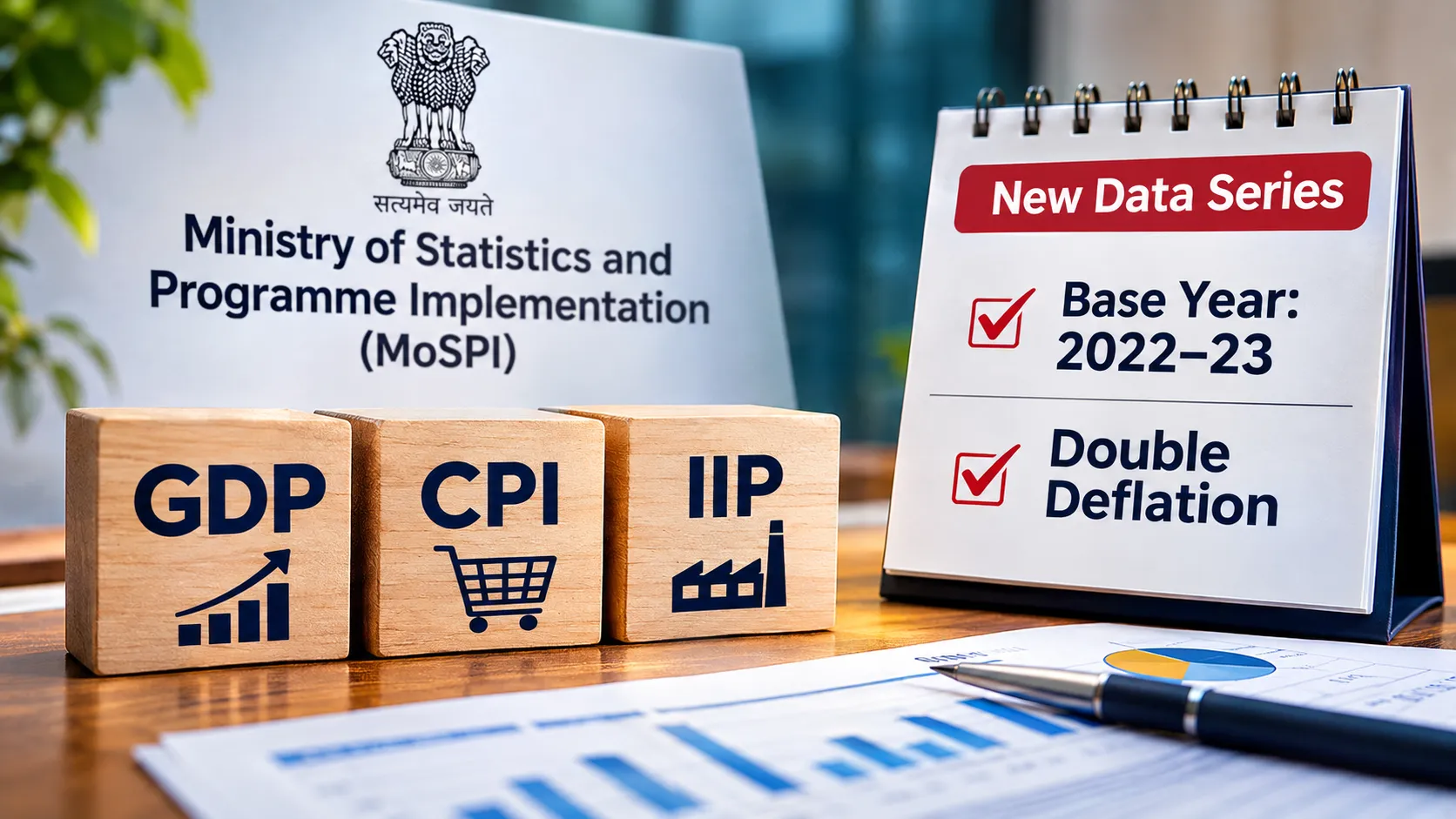
The Ministry of Statistics and Programme Implementation presented India's revised series for GDP, consumer price inflation and industrial production at a data users' conference in Mumbai on November 23. The GDP base year moves from 2011–12 to 2022–23 with double deflation for manufacturing, CPI is rebased to 2024 using new household spending weights, and IIP adds new sectors, changes that will reshape how investors read the economy.

By Shaym Kumar · Author24 November 2026New
India Rebases GDP, CPI and IIP as MoSPI Unveils New Data Series, Moving GDP's Base Year to 2022–23 and Introducing Double Deflation

India is updating the instruments it uses to measure its economy, and the changes will matter to everyone from central bankers to foreign investors.

The Ministry of Statistics and Programme Implementation (MoSPI) held a data users' conference in Mumbai on Monday, November 23, to present the revised series for gross domestic product, the consumer price index and the index of industrial production, according to current affairs reports.

The revisions represent the most significant overhaul of India's core economic statistics in more than a decade.

GDP: a new base year

The base year for GDP calculations moves from 2011–12 to 2022–23. A base year is the reference period against which economic output is measured in real, inflation-adjusted terms. Over time, the structure of an economy changes as new industries emerge, consumption patterns shift and prices change, so base years need to be updated to remain representative.

The 2011–12 base predates many major changes in the Indian economy, including the rise of the digital economy, the introduction of the Goods and Services Tax, the growth of e-commerce and fintech, and the effects of the pandemic. A 2022–23 base should better reflect the current structure of the economy.

Double deflation for manufacturing

The new series introduces double deflation for calculating manufacturing gross value added. Under this method, output and inputs are adjusted for inflation separately, using different price indices, before value added is calculated.

India's previous method used single deflation, adjusting value added using a single price index. Economists had long argued that this could distort real growth estimates, particularly when the prices of inputs, such as commodities, and outputs move differently. Double deflation is considered international best practice and should improve the accuracy of manufacturing growth estimates.

CPI: new weights for a changing consumer

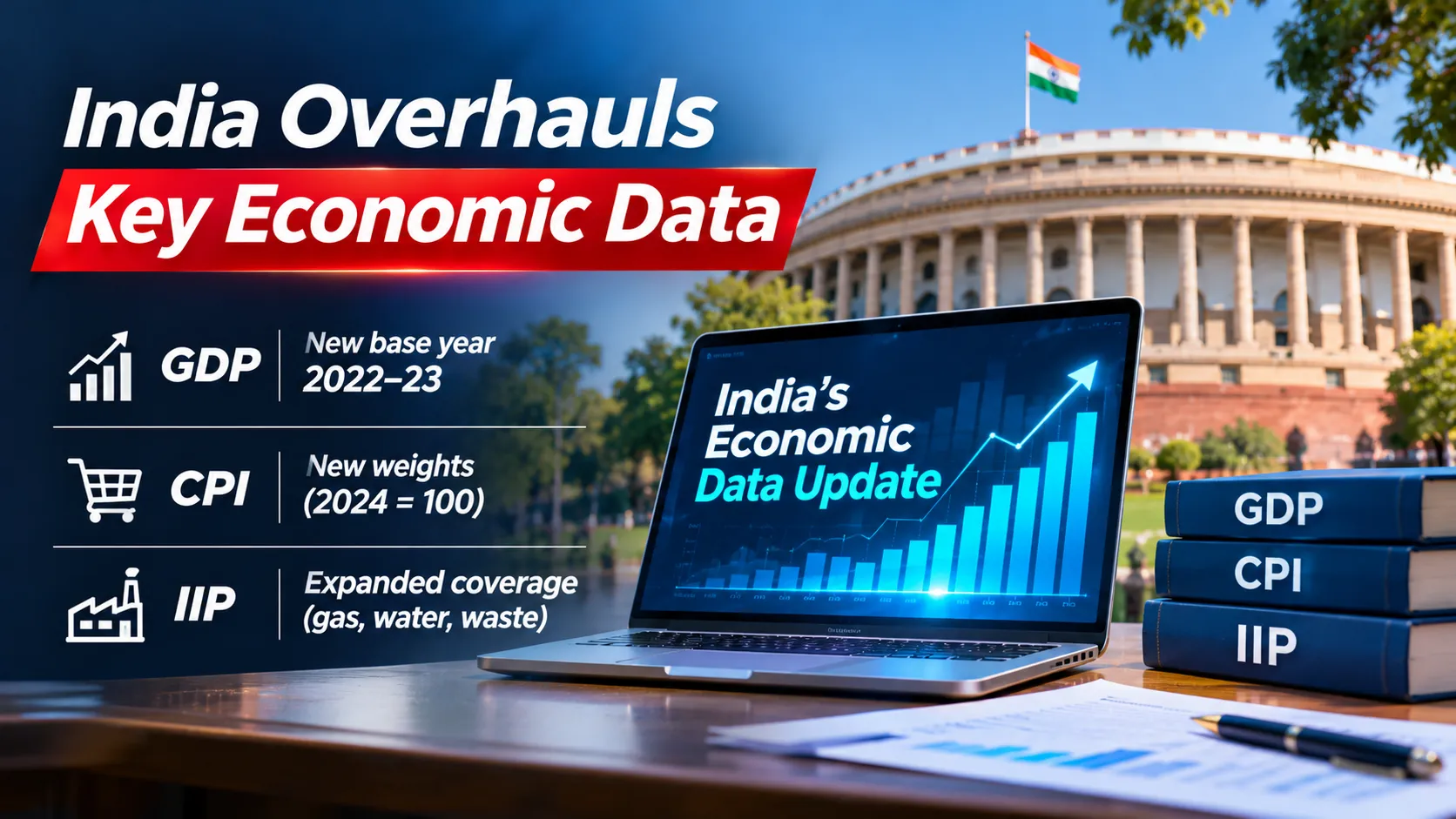
The consumer price index, which measures retail inflation, is rebased to 2024 = 100, with weights drawn from the 2023–24 Household Consumption Expenditure Survey. The weights determine how much each item, such as food, housing, fuel, clothing and services, contributes to the overall inflation rate.

As Indian households have become wealthier, the share of food in their spending has declined while spending on services, transport, communication and other items has risen. Updating the weights to reflect current spending patterns should make the CPI a more accurate measure of the cost of living.

Why CPI weights matter for the RBI

The Reserve Bank of India targets CPI inflation of 4%, within a band of 2% to 6%, under its monetary policy framework. Because food has historically carried a large weight in the CPI, volatile food prices have often driven headline inflation, complicating monetary policy decisions.

A lower weight for food in the new series could make headline inflation less volatile and more reflective of underlying price pressures, which could influence how the RBI sets interest rates.

IIP: new sectors added

The index of industrial production, which tracks output in mining, manufacturing and electricity, is rebased from 2011–12 to 2022–23. The new series adds gas supply and water supply, sewerage and waste management to its coverage.

The IIP is a key monthly indicator of industrial activity. Expanding its coverage should give a broader picture of the economy's industrial base.

State and district data

MoSPI also outlined plans to rebase state GDP to 2022–23 and to prepare district domestic product estimates. District-level data would allow policymakers to better understand regional economic disparities and target development programmes more effectively.

“Better data does not change the economy. It changes how clearly we can see it.”
— TIGI Economy Desk
49d539e1-94e5-4ee8-b726-bc048fab719f.png

Why data quality matters

The credibility of a country's economic statistics affects decisions by investors, rating agencies, international institutions and policymakers. India's GDP data have faced questions in the past, particularly after the last base year revision in 2015, when some economists argued that the new methodology overstated growth.

Transparent, methodologically sound revisions can strengthen confidence in Indian data. Holding conferences with data users, including economists, analysts and businesses, is part of the effort to explain the changes and gather feedback.

What it means for investors

For investors, the revisions mean that historical growth and inflation figures may be restated under the new series, changing the picture of India's economic performance in recent years. Analysts will need to update their models and forecasts, and comparisons between the old and new series will require care.

Foreign investors, who track India's growth closely when making allocation decisions, will watch for any significant changes in reported growth rates.

The global practice

Most countries periodically revise the base years of their national accounts and price indices to keep them representative. International organisations such as the International Monetary Fund and the United Nations recommend updating base years at regular intervals. India's move brings its statistics closer to international standards.

What it means for the diaspora

For members of the Indian diaspora who invest in India or follow its economy, the new data series will provide a more accurate picture of the country's growth, inflation and industrial development. More reliable data can also strengthen the case for long-term investment in India.

Implications for growth comparisons

Base year revisions can change reported growth rates, sometimes significantly. When India last revised its GDP base year, growth rates for some years were revised upwards, sparking debate among economists. Analysts will compare the new and old series closely to understand how the revisions affect the picture of India's economic performance.

International comparisons will also be affected, as institutions such as the IMF and World Bank use official national data in their assessments of global growth and country rankings.

The digital economy challenge

One of the hardest tasks for statisticians is measuring the digital economy, including services delivered through apps, free digital products and the gig economy. These activities have grown rapidly in India since the last base year revision, and capturing them accurately is important for understanding the true size and structure of the economy.

Statisticians are increasingly using new data sources, such as GST filings and digital payment data, to improve the coverage and timeliness of economic statistics.

What economists will watch

Economists will pay particular attention to how the revised series treats the informal sector, which employs a large share of India's workforce but is difficult to measure. The quarterly informal sector bulletins released by MoSPI in recent months suggest a growing effort to capture this part of the economy more accurately.

They will also look at the implied deflators, since the gap between nominal and real growth has been a recurring point of debate in India's national accounts.

What comes next

MoSPI is expected to begin publishing data under the new series according to its release calendar. The first releases will be closely watched by economists, markets and the RBI, which will need to interpret growth and inflation trends under the revised methodology as it sets monetary policy.

TagsMoSPIGDPCPIIIPbase year revisiondouble deflationinflationindustrial productionIndian economyeconomic datastatisticsHousehold Consumption Expenditure SurveyRBImonetary policyinvestorseconomistsdata qualitystate GDPdistrict GDPpolicymakers

Reader reviews

Sign in to rate and review this article.
Loading reviews…

