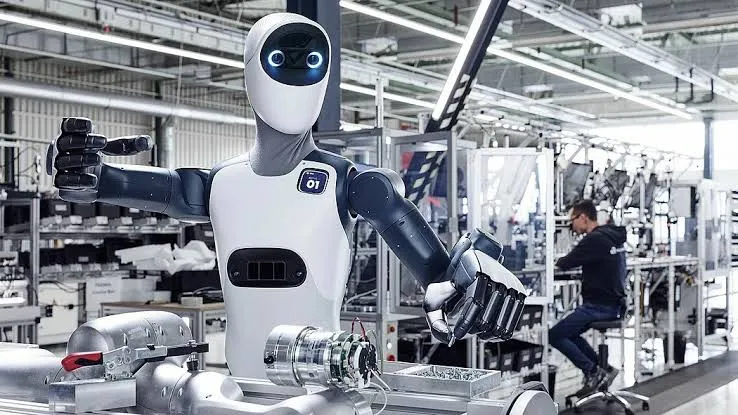
Motion, a Brussels-based robotics startup, has raised €1.7 million — approximately $2 million — in pre-seed funding led by Extantia Capital, with Norrsken Evolve also participating. The company describes itself as a Humanoids-as-a-Service platform, betting that manufacturers do not necessarily want to become robotics experts in order to benefit from humanoid automation, and building a business designed to remove that requirement entirely.
Rather than selling humanoid robots as standalone hardware that customers must independently integrate, train and maintain, Motion bundles robot selection, financing, task-specific training, software integration, insurance, compliance and ongoing maintenance into a single monthly service. That all-in-one structure addresses what has emerged as one of the most persistent barriers to humanoid robotics adoption in industrial settings: even when the underlying hardware functions reliably, manufacturers often lack the specialised in-house expertise required to integrate unfamiliar robotic systems into existing production workflows, creating a substantial gap between technical capability and practical deployment.
The company says it already has five industrial, warehouse and logistics pilots underway, and aims to deploy hundreds of robots across Europe over the coming year — an ambitious scaling target for a company that has, to date, raised a relatively modest pre-seed round. Achieving that trajectory will likely require Motion to demonstrate clear, measurable return on investment from its initial pilot deployments quickly enough to convert early pilot customers into larger, longer-term subscription commitments before its current funding runway is exhausted.
Humanoid robotics has attracted extraordinary levels of global investor and media attention over the past two years, driven substantially by advances in AI-powered perception and control systems that have made general-purpose humanoid platforms considerably more capable than the narrowly task-specific industrial robots that have dominated factory automation for decades. Yet the gap between impressive demonstration videos and reliable, cost-effective commercial deployment remains substantial, and it is precisely that gap Motion's service-oriented business model is designed to bridge.
The subscription, or Robotics-as-a-Service, model mirrors a broader pattern already well established in adjacent categories such as industrial equipment leasing and, more recently, autonomous vehicle fleet operations, where customers have shown greater willingness to pay for guaranteed operational outcomes on a recurring basis than to bear the capital expenditure and integration risk of purchasing and independently managing complex new technology outright.
For manufacturers considering humanoid robot deployment, Motion's bundled insurance and compliance offering addresses a further, less frequently discussed barrier: the liability and regulatory uncertainty that still surrounds humanoid robots operating in close proximity to human workers on factory floors. By assuming responsibility for these considerations as part of its service package, Motion effectively lowers the risk threshold customers must clear before agreeing to pilot the technology, potentially accelerating adoption timelines relative to a pure hardware sales model.
Extantia Capital's climate-tech-adjacent investment focus adds an interesting dimension to its participation in this round, suggesting the firm may view humanoid robotics deployment — potentially reducing energy-intensive manual processes or improving industrial efficiency — through a broader sustainability and industrial decarbonisation lens, alongside the more straightforward productivity and labour-cost arguments that typically drive robotics investment theses.
As Motion scales its pilot deployments toward its stated target of hundreds of robots across Europe, the company's ability to source reliable humanoid hardware from established or emerging manufacturers, while building the software integration and training infrastructure needed to make deployment genuinely turnkey for customers, will determine whether its Humanoids-as-a-Service model can achieve the operational consistency needed to build a durable, recurring-revenue business rather than remaining a series of bespoke pilot engagements.
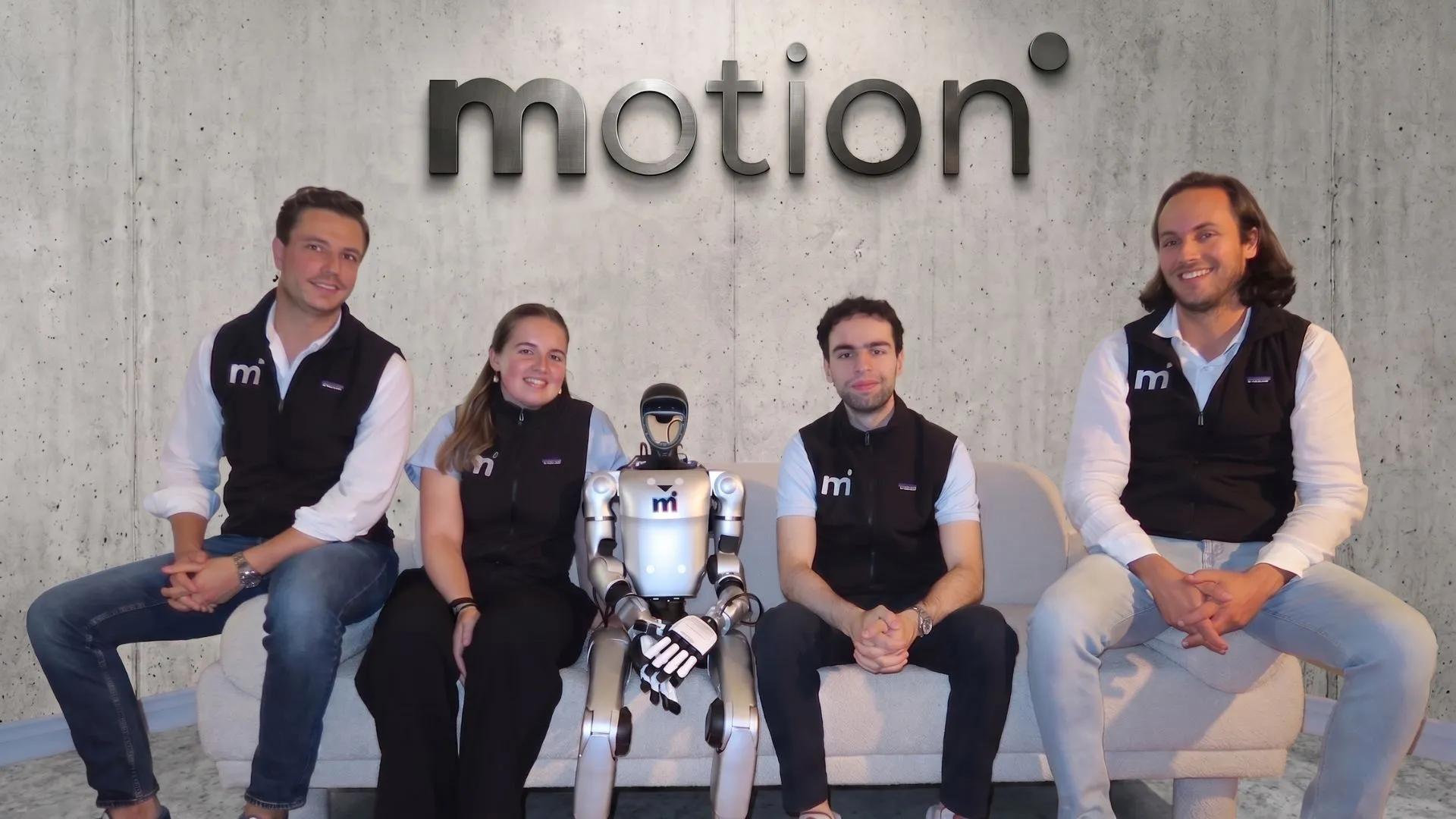
The European humanoid robotics ecosystem remains considerably smaller than its counterparts in the United States and China, where substantial state and private capital has flowed into both humanoid hardware development and deployment infrastructure. Motion's emergence from Brussels adds a notable European entrant to a global race increasingly dominated by well-capitalised competitors, making its service-layer, rather than hardware-first, strategy a potentially differentiated path to relevance within a rapidly consolidating global industry.
Belgium's relatively modest robotics and AI startup ecosystem, compared to larger European hubs in France, Germany or the United Kingdom, means Motion's success could carry outsized significance for the country's broader ambitions to establish itself within Europe's deeptech landscape, particularly if the company's service-oriented model proves more capital-efficient and scalable than the hardware-first strategies pursued by many of its better-funded international competitors.
As industrial customers across Europe increasingly weigh humanoid robotics against more established automation alternatives such as fixed robotic arms and automated guided vehicles, Motion's bundled service model will need to demonstrate not just technical viability but genuine cost competitiveness against these more mature automation categories before humanoid deployment can move meaningfully beyond its current pilot-stage engagements toward the kind of broad industrial adoption the company's growth targets imply.
Norrsken Evolve's participation alongside Extantia Capital brings additional impact-oriented investment perspective to the round, reinforcing a thesis that humanoid robotics deployment, if it can genuinely improve industrial safety and efficiency while reducing physically strenuous manual labour, carries social as well as commercial value — a framing increasingly common among European deeptech investors seeking to align hard-technology bets with broader sustainability and worker-wellbeing considerations. Whether that dual framing proves persuasive to a broader base of institutional investors, beyond the impact-oriented funds already backing Motion's earliest rounds, will likely shape how easily the company can raise the larger capital pools its stated deployment ambitions will eventually require. The next twelve months, during which Motion aims to move from five pilots to hundreds of deployed robots, will serve as the clearest test yet of whether its bundled service model can scale operationally as quickly as its funding round suggests investors expect. Should the Belgian government's own innovation agencies follow the lead of Extantia and Norrsken Evolve in backing the company, that public-sector validation could further accelerate Motion's credibility among the more conservative, risk-averse industrial buyers whose adoption ultimately determines whether the Humanoids-as-a-Service model achieves genuine commercial scale. Investors and customers alike will be watching Motion's first full year of expanded deployment closely, since the gap between a handful of successful pilots and hundreds of reliably operating units across varied industrial settings represents precisely the kind of scaling challenge that has tripped up numerous well-funded robotics startups before it.