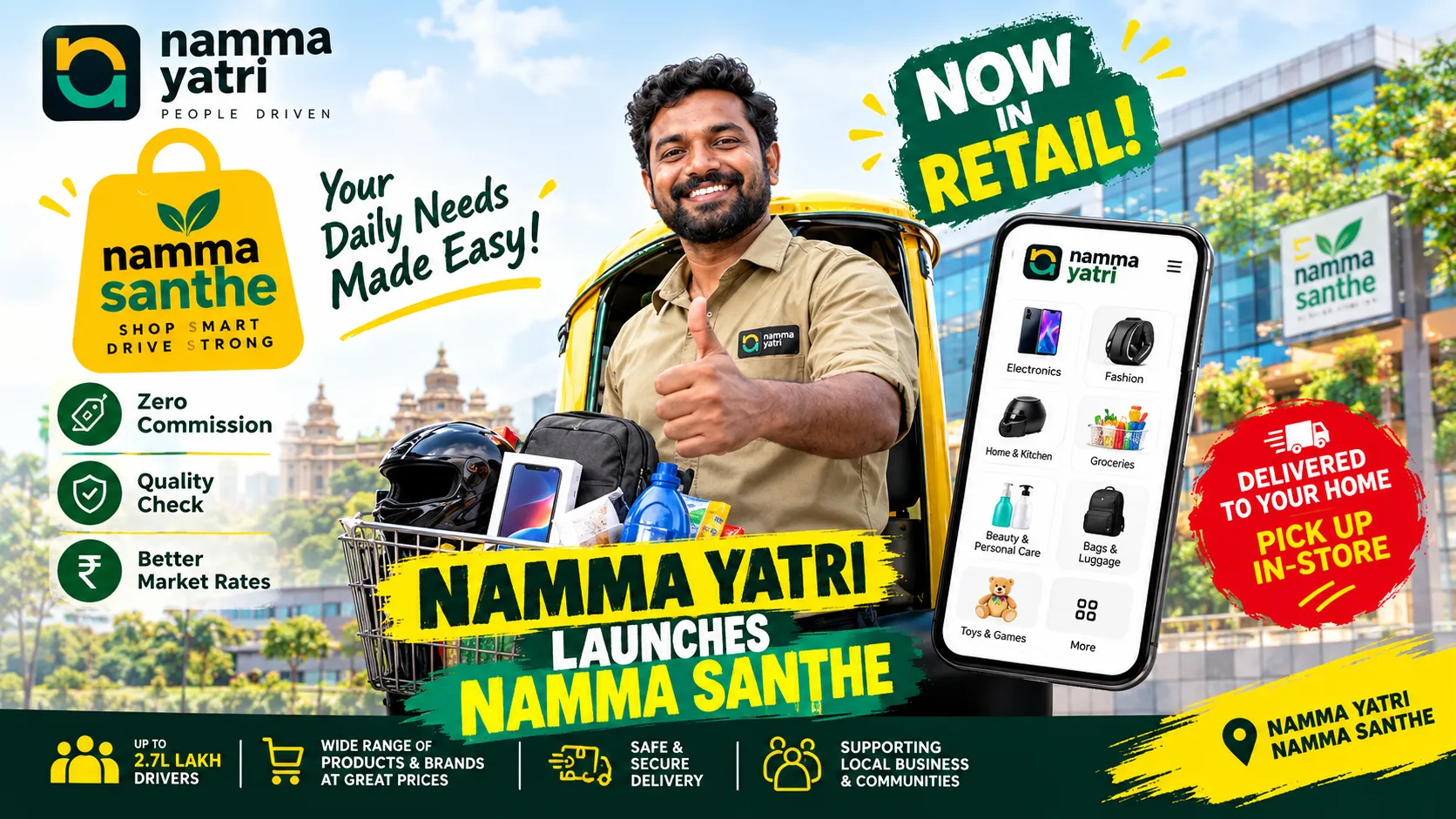
Namma Yatri, the Bengaluru-founded, driver-owned ride-hailing platform that built its reputation on rejecting commission-based fares, has moved into an entirely new category. On September 11, the company confirmed the launch of Namma Santhe, a physical-and-online retail platform designed specifically for its network of auto-rickshaw and cab drivers, developed in partnership with retail-technology firm Keystones.
The platform's defining feature mirrors the ethos that made Namma Yatri a closely watched experiment in India's gig economy: the company says it will not charge a margin on any goods sold through Namma Santhe. Products will be sourced directly from original equipment manufacturers and authorised suppliers, with fulfilment routed through a physical store located at the company's office as well as through in-app ordering for drivers who prefer to browse and buy remotely.
The move extends a pattern that has become central to Namma Yatri's strategy since its 2022 launch: building open, low-margin infrastructure around the daily needs of gig workers rather than extracting revenue from the transactions those workers depend on. The platform originally disrupted Bengaluru's auto-rickshaw aggregation market by charging drivers a flat subscription fee instead of a per-ride commission, a model that proved popular enough to draw replication attempts from larger, better-funded rivals.
Namma Santhe represents a logical, if ambitious, extension of that thesis into retail. Drivers who rely on two-wheelers and three-wheelers for their livelihood have specific and recurring purchasing needs — spare parts, tyres, batteries, mobile accessories, personal essentials — that are typically served by fragmented, margin-heavy local retail chains. By aggregating direct sourcing relationships with OEMs and authorised distributors, Namma Yatri is betting that it can offer meaningfully lower prices while reinforcing the loyalty of the driver base that underpins its core mobility business.
Partner Keystones brings retail-technology infrastructure to the venture, though neither company has disclosed the commercial terms of the collaboration or projected transaction volumes for the new platform. The choice to operate a physical store alongside the digital ordering layer suggests Namma Yatri is prioritising trust and product verification in the early phase — an important consideration for a driver community that has historically been targeted by counterfeit parts and predatory financing schemes tied to vehicle maintenance.
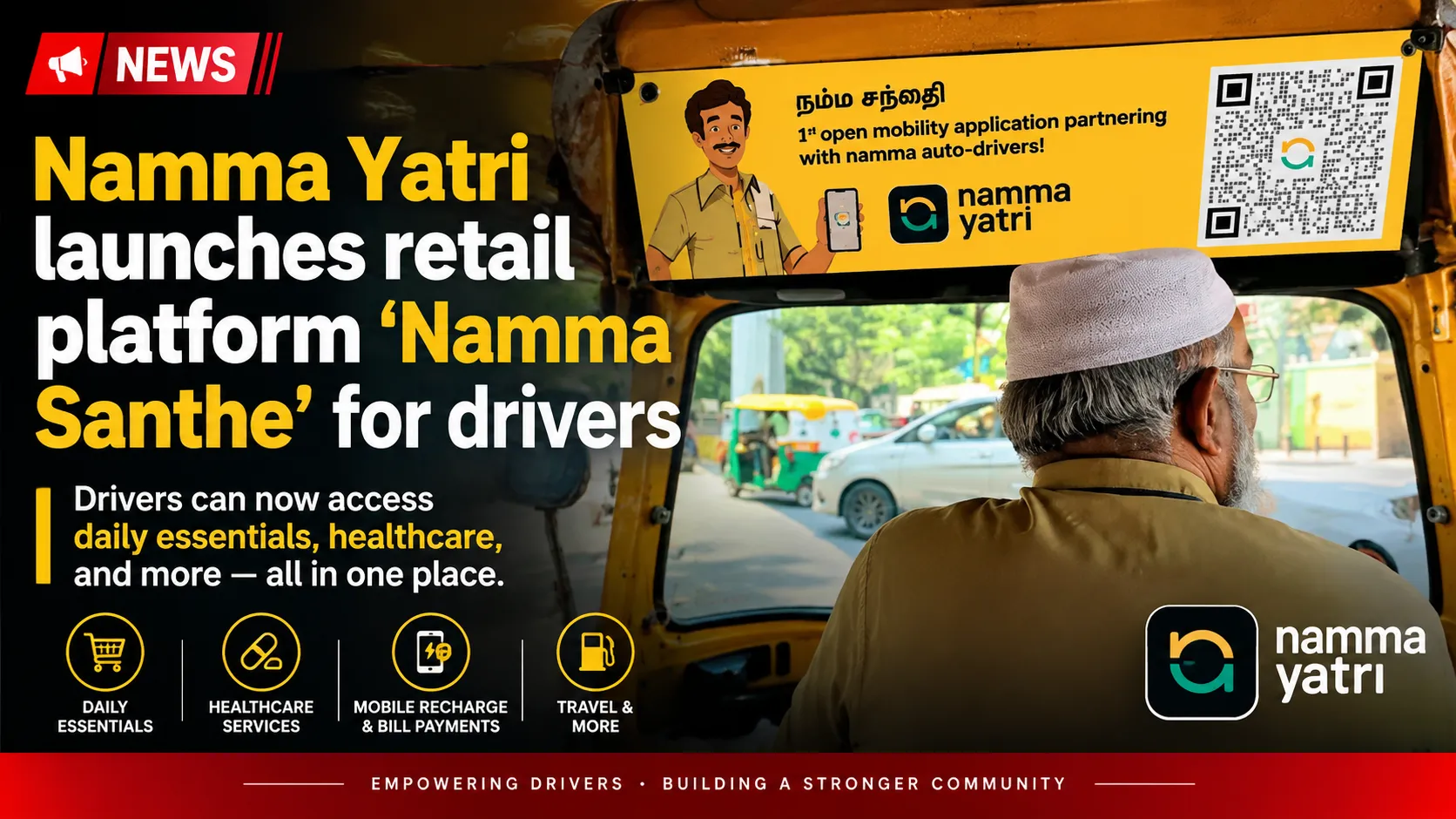
The launch also fits into a broader narrative playing out across India's platform economy in 2026, as companies built around gig and blue-collar workforces increasingly look for ways to build supplementary revenue and loyalty products around their core user base, rather than treating drivers, delivery partners and technicians purely as a labour input. Several ride-hailing and quick-commerce platforms have experimented with financial products, insurance bundles and vehicle-financing tie-ups aimed at the same demographic over the past year.
Namma Yatri operates on the Open Network for Digital Commerce, or ONDC, the government-backed protocol designed to prevent any single platform from monopolising the mobility or commerce layer through proprietary lock-in. That architecture has made the company something of a policy showcase, cited by officials as evidence that open-network principles can support commercially viable consumer platforms rather than only academic experiments. Namma Santhe, while a standalone retail initiative, reinforces that positioning by extending the no-margin philosophy into an adjacent category.
For now, Namma Santhe remains focused on Bengaluru, where Namma Yatri's driver density is highest and where the company's brand recognition among the auto-rickshaw community is strongest. Whether the model scales to other cities, and whether the zero-margin structure proves sustainable once transaction volumes grow, will likely determine if this becomes a template other mobility platforms look to copy — or a well-intentioned pilot that stays confined to Namma Yatri's home market.


