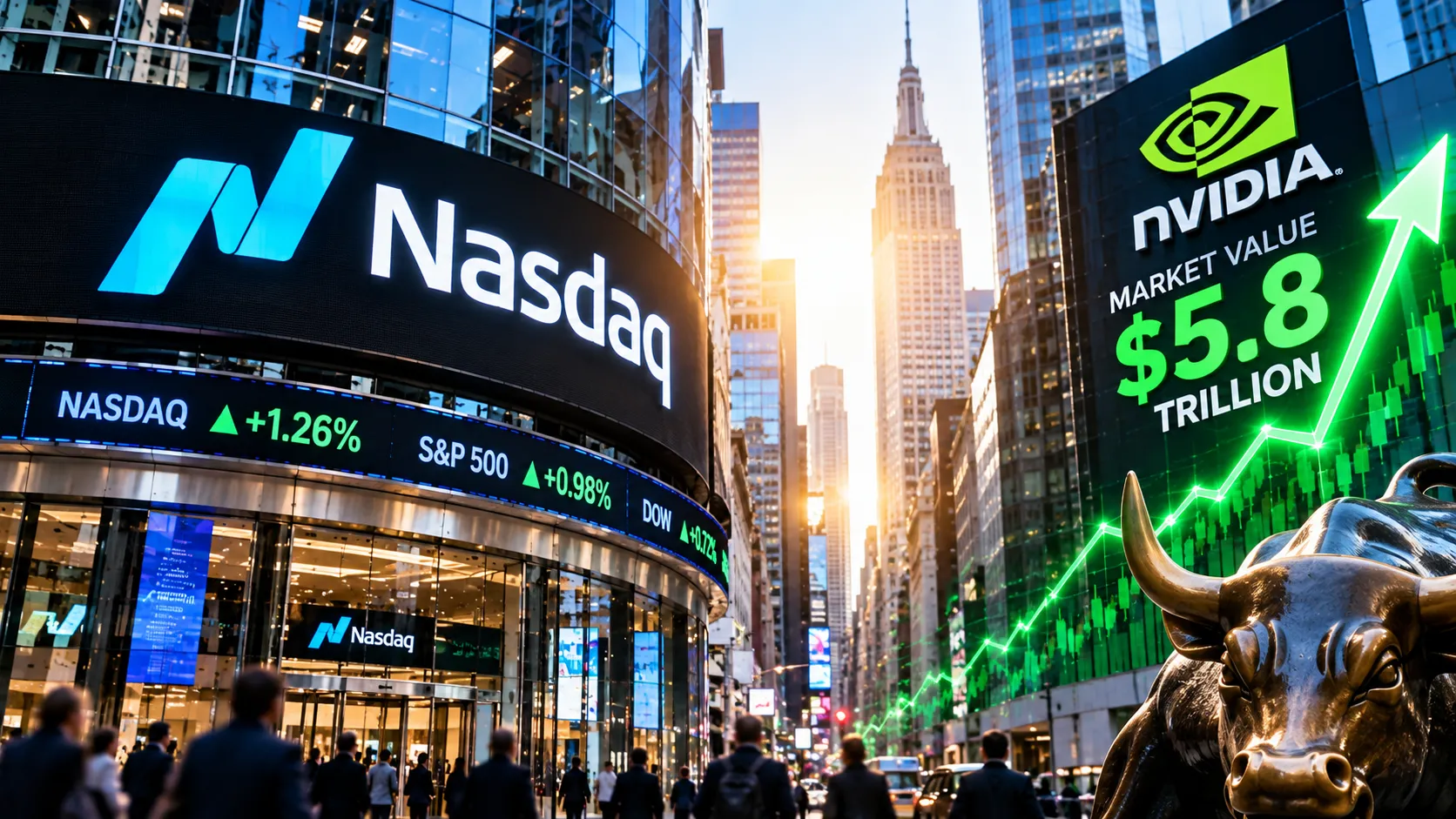
The Nasdaq Composite closed at a record high on Monday, 5 October 2026, as investors piled back into the artificial intelligence trade and looked past Treasury yields that remain near their highest levels in years.
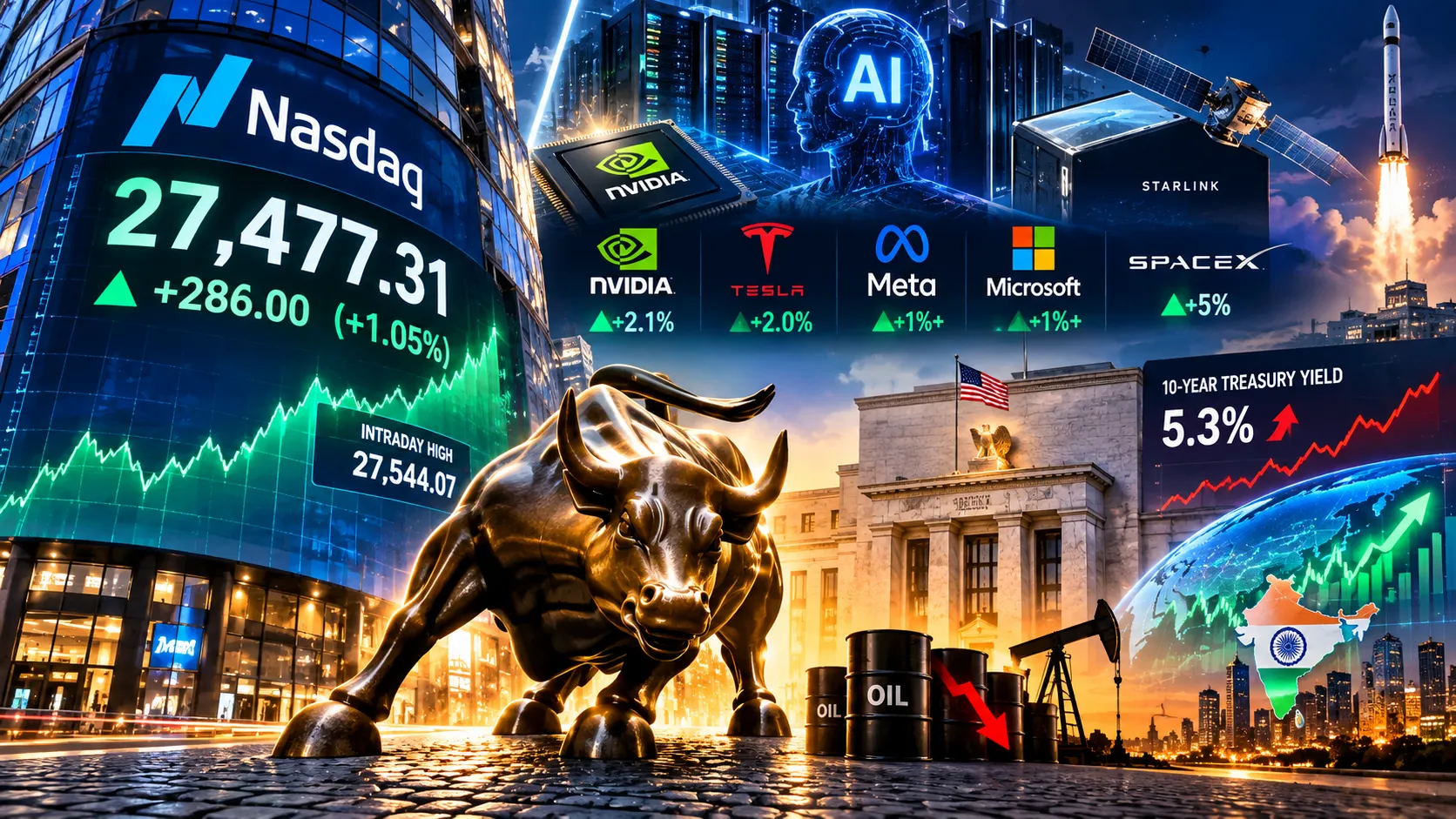
The technology-heavy index rose 1.05%, or about 286 points, to finish at 27,477.31, surpassing its previous record close set in September. It touched an intraday high of 27,544.07. The Nasdaq-100, which tracks the largest non-financial companies on the exchange, also set a fresh record, while the broader S&P 500 gained 0.66% to 7,773.95, bringing it back within striking distance of its own all-time high. The Dow Jones Industrial Average ended little changed.
The rally extended a recovery that began on Friday, when a weaker-than-expected US jobs report eased concerns that the Federal Reserve might raise interest rates again this month. Lower oil prices added to the improved mood.
AI leaders in front
The advance was led by the companies most closely associated with artificial intelligence. Nvidia rose about 2.1% to a record closing high, lifting the chipmaker's market capitalisation to approximately $5.76 trillion. Tesla gained about 2%, while Meta Platforms and Microsoft each rose more than 1%.
SpaceX was among the strongest contributors to the Nasdaq's advance, climbing roughly 5% during the session, according to market reports. The rocket and satellite company has become one of the most closely watched stocks on the exchange, its valuation tied to both its launch business and its Starlink satellite internet service.
Software stocks were notably strong. The S&P 500's software and services index rose 1.4% in early trade, buoyed in part by deal activity. PTC, the industrial software maker, was the S&P 500's best performer of the day after France's Schneider Electric agreed to buy it for $22.6 billion, a reminder that strategic buyers still see value in software assets despite recent valuation pressure. Data storage companies Western Digital and Seagate Technology, beneficiaries of the AI infrastructure build-out, also advanced.
The yield paradox
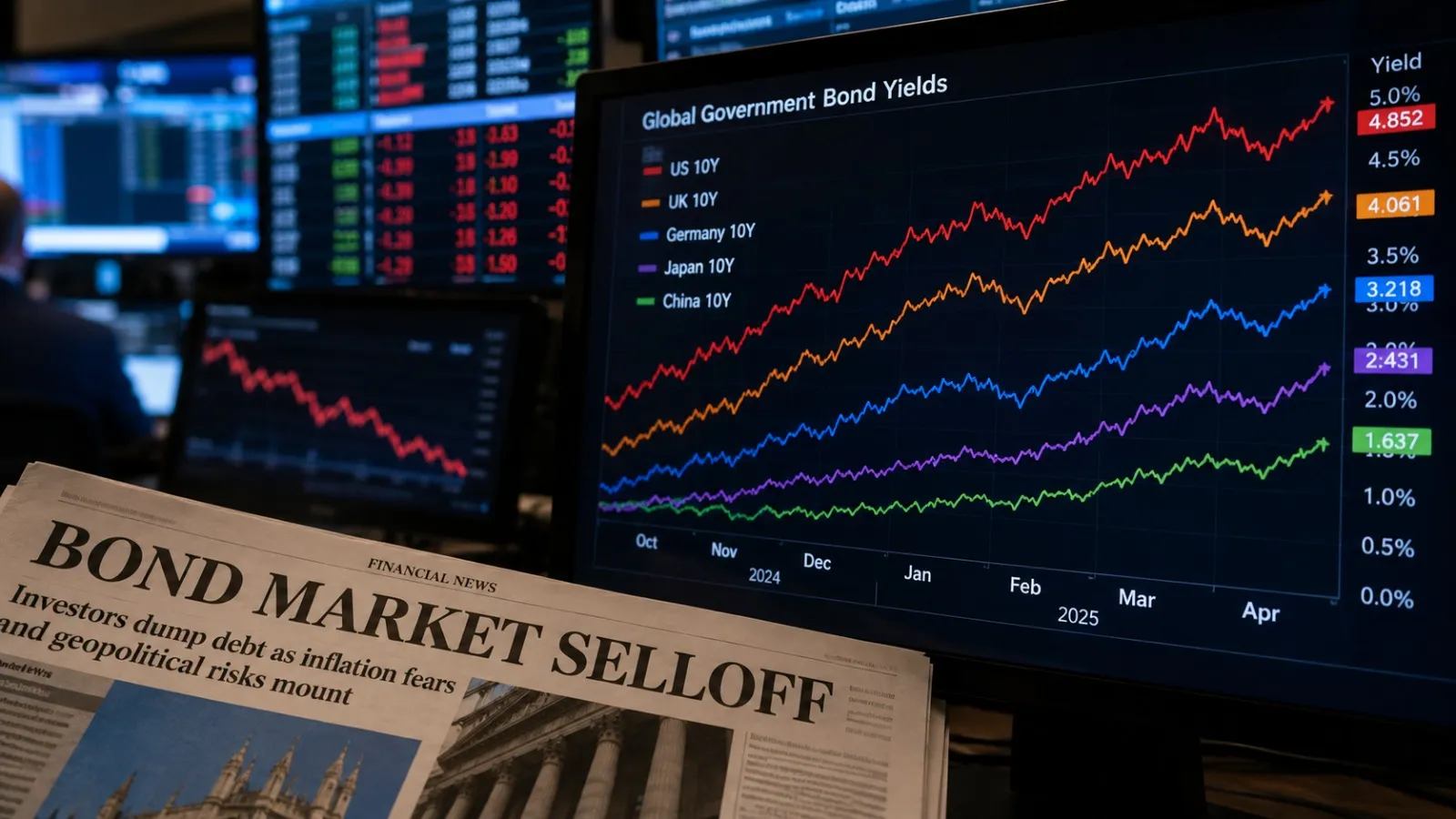
What made the record notable was the backdrop in bond markets. The yield on the 10-year US Treasury note held near 5.3%, a level that in most periods would weigh heavily on high-valuation technology stocks. Higher yields raise the discount rate that investors apply to future earnings, reducing the present value of companies whose profits are expected to grow strongly over many years.
Yields had climbed to multi-year highs in recent weeks on concerns that stubbornly high inflation would force the Federal Reserve to keep policy restrictive for longer, or even tighten further. The softer jobs data offered relief by suggesting that the labour market is cooling, which reduces the likelihood of an imminent rate increase.
Economic data released on Monday added nuance. A survey of purchasing managers showed that activity in the US services sector slowed in September, reinforcing signs that the economy is losing some momentum. For equity investors, that combination of moderating growth and reduced pressure for rate hikes was enough to sustain buying, at least in the largest and most profitable technology companies.
Breadth beneath the surface
The rally was broader on the S&P 500 than at the extremes of the market. Advancing stocks outnumbered decliners within the index by about 1.7 to 1 by the close, with materials up about 1.2% and communication services up about 1.1%. Early in the session, however, the Nasdaq recorded far more new 52-week lows than new highs, a sign that many smaller companies remain under pressure even as the largest names push the index to records.
That divergence is a familiar feature of the AI era. A relatively small group of very large companies, with strong cash flows and clear exposure to AI spending, has driven a disproportionate share of index gains. Smaller companies, more dependent on borrowing and more sensitive to economic slowdowns, have struggled in a high-rate environment.
Chip stocks were mixed early in the session, with the Philadelphia semiconductor index slipping before Nvidia's late strength. Investors have become more selective within the sector, distinguishing between companies with clear AI demand and those exposed to more cyclical markets such as personal computers and smartphones.
What investors are watching
The immediate focus is on the Federal Reserve. Markets were awaiting the release of minutes from the central bank's most recent meeting for clues about policymakers' thinking on inflation and the path of rates. Any suggestion that officials remain inclined to tighten could quickly reverse the improvement in sentiment.
Corporate earnings for the third quarter will begin arriving in the coming weeks, giving investors a fresh read on whether AI spending continues to translate into revenue and profit growth. Expectations are high for the largest technology companies, which means that even small disappointments could trigger sharp moves.
Oil remains a wild card. Energy prices had climbed above $100 a barrel earlier in the period amid geopolitical tensions, feeding inflation concerns around the world. Monday's pullback helped, but a renewed spike would complicate the outlook for both inflation and interest rates.
The global ripple effect
The strength on Wall Street fed through to markets in Asia on Tuesday, where shares opened higher. In India, benchmark indices extended a rebound that had begun on Monday, with the Sensex and Nifty both opening in positive territory. Indian technology and AI-adjacent stocks often take cues from the Nasdaq, and global risk appetite has a direct bearing on flows from foreign portfolio investors, who have been net sellers of Indian equities in recent weeks.
A record built on conviction
The latest high underscores how strongly investors believe that artificial intelligence will drive corporate earnings in the years ahead. That conviction has repeatedly overcome concerns about valuations, interest rates and economic growth.
Some strategists question how long that resilience can last. Historically, sustained periods of elevated bond yields have eventually pressured equity valuations, and the market's dependence on a narrow group of companies leaves it vulnerable to disappointments in any one of them. Others argue that the earnings power of the largest AI companies justifies their valuations, even at higher interest rates.
For now, the market has delivered its verdict. With the Nasdaq at a record and the S&P 500 close to one, investors are betting that the AI boom has further to run, and that the Federal Reserve will not stand in its way.