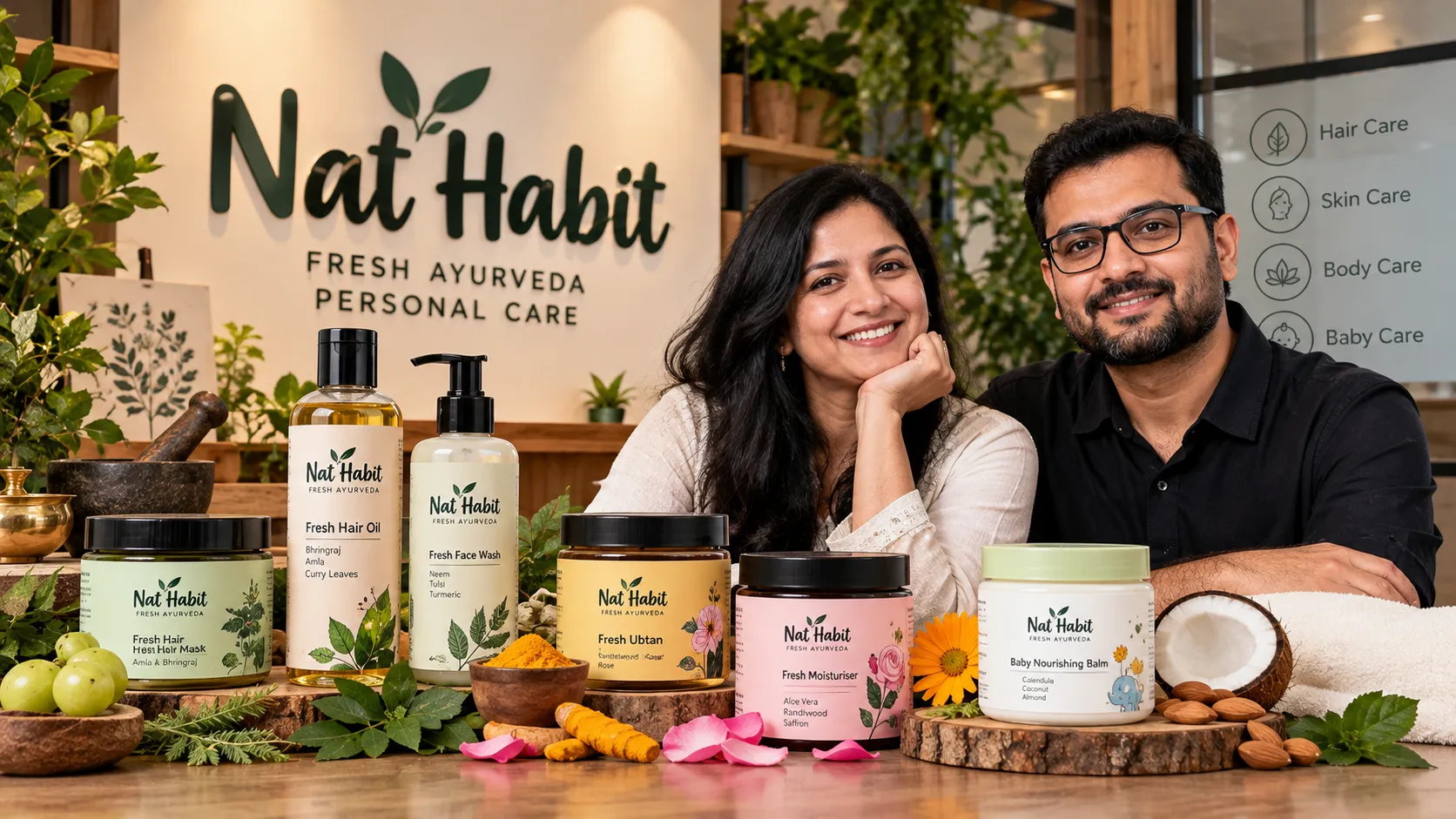
Nat Habit, the Ayurvedic personal-care brand co-founded by Swagatika Das and Gaurav Agarwal, has raised ₹142 crore in a Series C funding round led by Trident Growth Partners, the latest sign that investors see durable demand for Indian beauty and wellness brands rooted in traditional formulations.
Existing investors Bertelsmann India Investments, Mirabilis Investment Trust and Sharrp Ventures participated in the round. Physis Capital and Hero Family Office joined as new investors.
The company says it currently has an annualised gross revenue of about ₹330 crore and is targeting growth of 60% to 70% this financial year. The new capital will be used to expand its product range, strengthen manufacturing and grow its presence in quick commerce and physical retail.
A woman-led brand in a crowded category
Nat Habit was founded in 2019 and sells Ayurvedic products across hair, skin, body and baby care. Its positioning centres on “fresh” formulations, products made in small batches with natural ingredients and shorter shelf lives than conventional cosmetics, which it develops and manufactures in-house.
That vertically integrated model is unusual in India’s direct-to-consumer beauty sector, where many brands outsource manufacturing to contract producers. Control over production allows Nat Habit to manage freshness, quality and cost more tightly, and to bring new products to market faster, though it requires more capital than an asset-light approach.
Swagatika Das’s role as co-founder places Nat Habit among a still relatively small group of women-led Indian consumer startups to reach a Series C round. Women-founded companies continue to receive a small share of total venture funding in India, and growth-stage rounds of this size remain rare. Each successful raise adds to the evidence that women-led consumer brands can scale and attract institutional investors.
Why Ayurveda is having a moment
Indian consumers’ appetite for Ayurvedic and natural personal care has grown steadily over the past decade. Patanjali’s rapid expansion in the 2010s demonstrated mass-market demand for products positioned as natural and Indian, and legacy companies such as Dabur and Himalaya have long built businesses around herbal formulations.
A newer generation of digital-first brands has since targeted younger, urban consumers who want traditional ingredients with modern packaging, transparent labelling and evidence of efficacy. Nat Habit sits in this segment alongside a growing roster of startups selling Ayurvedic hair oils, face packs, cleansers and baby-care products online.
The category also has global appeal. Interest in Ayurveda, turmeric, neem, amla and other traditional ingredients has spread among wellness consumers in the United States, the Gulf and Europe, often led by the Indian diaspora. That provides an export opportunity for brands that can meet international regulatory and quality standards.
Quick commerce and retail
The decision to direct funds towards quick commerce reflects one of the biggest shifts in Indian consumer retail. Platforms such as Blinkit, Zepto and Swiggy Instamart, which deliver within minutes, have become important discovery and sales channels for personal-care brands, particularly in large cities. Products with high repeat purchase, such as shampoos, oils and skincare staples, perform well on these platforms.
Physical retail is the other pillar. Despite the growth of online channels, most beauty and personal-care purchases in India still happen offline, through general trade, modern retail chains and pharmacies. Digital-first brands that want to scale beyond a few hundred crore in revenue typically need a strong offline presence.