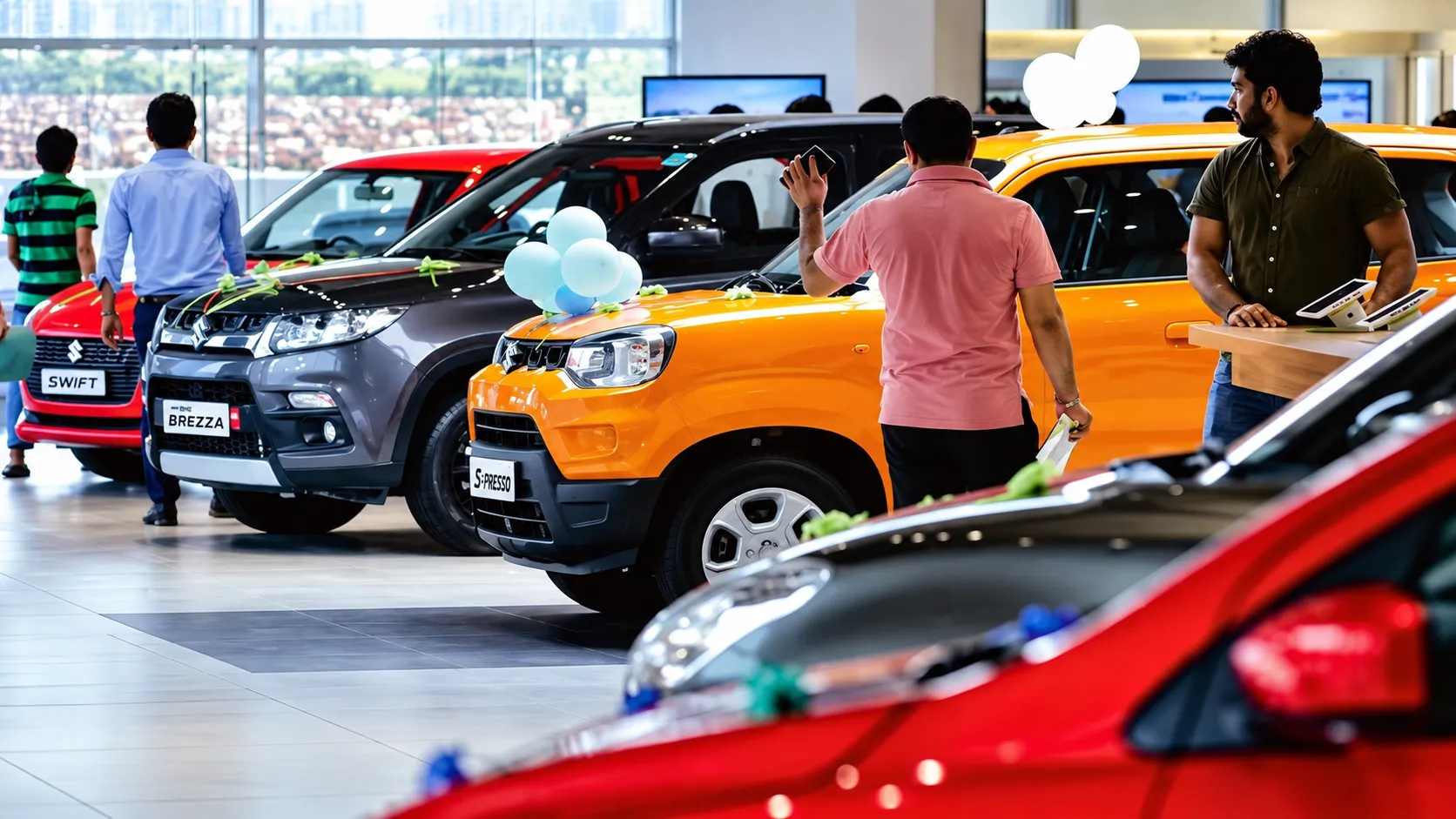
India's festive season vehicle sales have started on a mixed note. Retail sales of vehicles during Navratri rose 2% to 1.032 million units from 1.012 million a year earlier, according to provisional data from the Federation of Automobile Dealers Associations (FADA) reported by Business Standard on October 20.
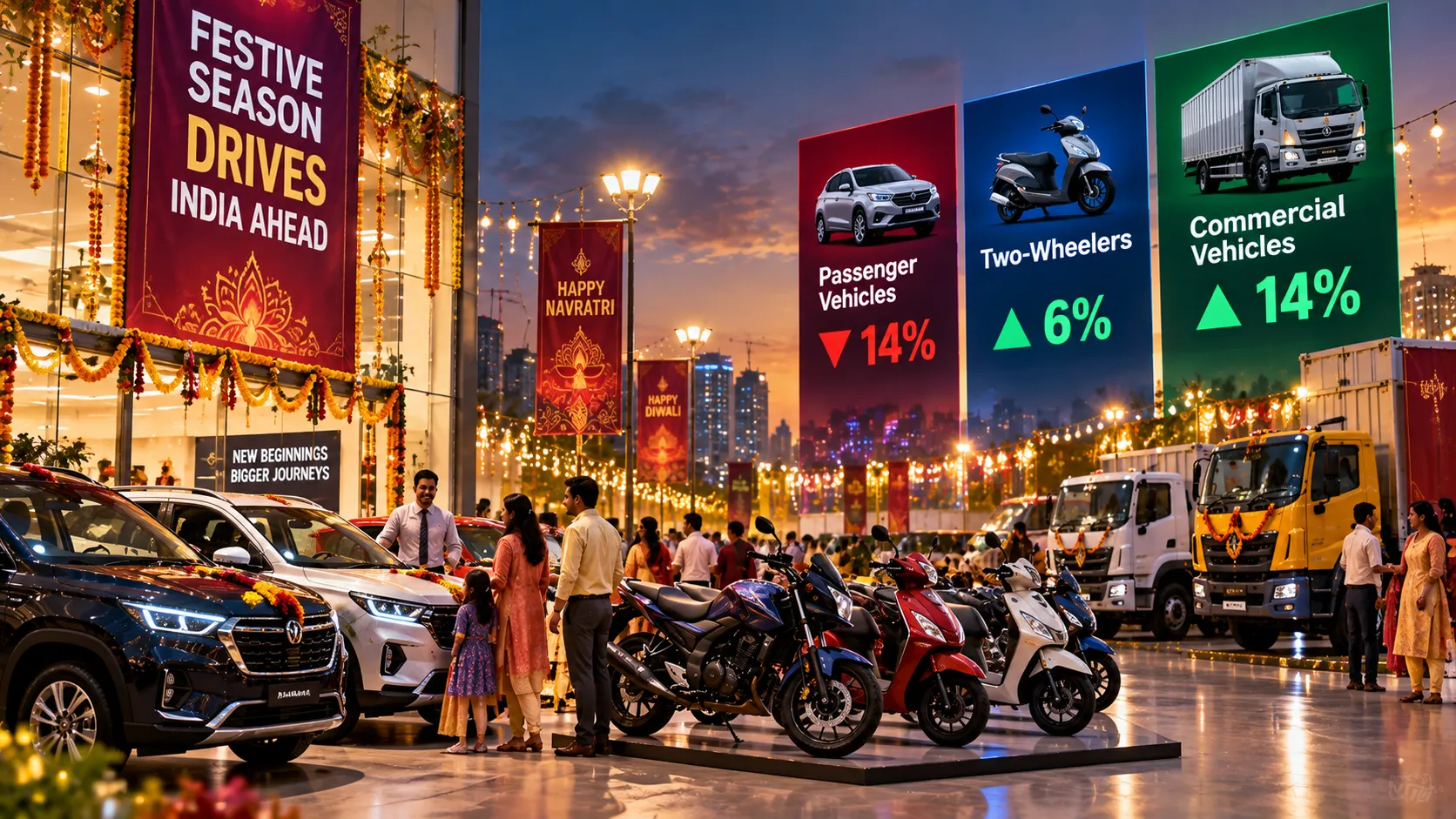
The modest overall increase masks sharply divergent trends. Two-wheeler sales grew 6% and commercial vehicle sales rose 14%, while passenger vehicle sales fell 14%. The 2026 Navratri period, from October 11 to 19, was also one day shorter than last year's, which ran from September 22 to 30.
Dealers and analysts say the comparison is distorted by an exceptional 2025 festive season, when the auto industry enjoyed a surge in demand following the government's GST reforms.
The GST base effect
On August 15, 2025, the government announced GST 2.0 reforms that lowered tax rates on many goods, including vehicles. Anticipating lower prices, many buyers postponed purchases until the reforms took effect, creating pent-up demand that was released during the 2025 festive season. Overall retail vehicle sales rose 34% during that period.
"The industry had an exceptional year in 2025 due to the GST boost," said Sai Giridhar, president of FADA, adding that sales this year were expected to be marginally down. "Hence, comparing last year to this year is not a fair comparison," he said.
The base effect weighed most heavily on passenger vehicles, where the tax reduction had a large impact on prices and where buyers had the most reason to wait. Passenger vehicle sales fell to 1,72,087 units from 1,99,320 units in the Navratri period.
Two-wheelers and rural demand
In contrast, two-wheelers, the backbone of India's vehicle market, grew 6% to 7,59,684 units from 7,18,179 units. Tractors rose 9% to 20,912 units, while construction equipment sales increased 11% to 2,185 units.
Two-wheeler and tractor sales are closely tied to rural incomes, and their growth suggests that demand in villages and small towns remains healthy. An industry expert quoted by Business Standard said strong two-wheeler growth in states such as Andhra Pradesh indicated that "rural India may be performing well."
Rural demand has been supported by agricultural output and government spending, although concerns remain about food inflation and slower growth in rural wages. Honda's Indian two-wheeler arm recently said it is considering expanding capacity beyond its planned 8 million units as demand grows.
Three-wheeler sales dipped 1.65% to 43,057 units.
Commercial vehicles signal economic activity
Commercial vehicle sales rose 14% to 34,120 units from 29,874 units. Trucks and buses are often seen as a barometer of economic activity, as businesses invest in vehicles to transport goods and passengers. Strong sales suggest that freight demand, infrastructure construction and business investment remain robust.
The government's continued focus on infrastructure, including roads, ports and logistics parks, has supported demand for commercial vehicles and construction equipment.
Data caveats
FADA's figures are provisional. Registrations from rural areas may appear on the government's Vahan portal later, which could revise the totals. Business Standard's own analysis of Vahan data suggested that the final two days of the 2025 period, which recorded 1,89,387 units, are unlikely to be matched this year.
Retail sales, measured by vehicle registrations, differ from the wholesale figures reported by manufacturers, which track dispatches from factories to dealers. Retail data gives a more direct picture of consumer demand.
The rest of the festive season
Navratri marks the beginning of India's festive season, which continues through Dussehra and Diwali, traditionally the busiest period of the year for vehicle purchases. Many buyers consider these festivals auspicious times to buy vehicles, and manufacturers and dealers offer discounts and financing schemes to attract customers.
The weeks leading up to Diwali, which falls in November this year, will determine whether the industry can match or exceed last year's festive performance. Dealers will be watching for a pickup in passenger vehicle demand and the continuation of strength in two-wheelers.
Headwinds and tailwinds
The auto industry faces a mix of pressures. High fuel prices, driven by conflict in the Middle East, raise running costs for vehicle owners. Interest rates have risen, increasing the cost of vehicle loans. Inflation, particularly in food, squeezes household budgets.
On the other hand, the lower GST rates introduced in 2025 have made vehicles more affordable over the longer term. Improving rural incomes, continued infrastructure investment and the growing availability of vehicle financing support demand. Electric vehicle adoption is also rising, particularly in two-wheelers and three-wheelers, as rising petrol and diesel prices strengthen the case for EVs.
Why festive sales matter
The festive season, stretching from Navratri through Dussehra and Diwali, is the most important period of the year for India's automobile industry. Many households consider it auspicious to buy vehicles during this time, and manufacturers and dealers offer discounts, financing deals and new launches to capture demand. Festive sales can account for a significant share of annual retail volumes for some segments, particularly two-wheelers.
Dealers typically build up inventory ahead of the festive season, and strong sales are needed to clear stock and maintain healthy finances. When sales disappoint, dealers can be left with excess inventory, forcing them to offer bigger discounts or carry higher costs. That is why industry bodies such as the Federation of Automobile Dealers Associations track festive retail sales closely.
The role of financing
Vehicle loans play a central role in India's auto market, with a large share of cars and two-wheelers bought on credit. Interest rates, loan availability and lenders' appetite for risk therefore have a significant influence on demand. Banks and non-bank lenders often offer special festive financing schemes, and their willingness to lend, particularly to rural and first-time buyers, can shape sales trends.
What it means
For investors in auto stocks, the Navratri data offers a nuanced picture. Two-wheeler, tractor and commercial vehicle makers appear to be benefiting from healthy rural and business demand, while passenger vehicle makers face a tough comparison with last year's exceptional season.
For India's broader economy, the figures suggest that consumption is steady rather than spectacular. The full festive season results, due after Diwali, will provide a clearer verdict on the strength of consumer demand heading into the end of 2026. The final festive season tally after Diwali will offer a fuller picture of consumer demand.