Navrina Singh, the Indian-origin founder and chief executive of AI governance company Credo AI, has been named among the winners of the University of Wisconsin–Madison Alumni Association's 2026 Luminary Award, an honour reserved for alumni whose accomplishments are considered aspirational examples for others across the university's global network.
The recognition places Singh alongside a select group of UW–Madison graduates chosen for the depth and originality of their professional impact, and marks a notable moment for a founder who has spent the past several years building one of the more closely watched companies in the fast-growing field of responsible artificial intelligence.
For the broader Indian American diaspora community, the award adds to a growing list of recognitions that highlight how immigrant-founded companies are increasingly shaping the guardrails of frontier technology, rather than simply building on top of it.
The award also lands at a moment when questions of AI accountability have moved firmly into mainstream boardroom and regulatory conversations, giving added resonance to the specific framing of Singh's recognition as tied to her work unlocking AI's potential responsibly rather than simply at scale.
Singh's path to Wisconsin began far from Madison. Born and raised in India, she left home on a scholarship to pursue a master's degree in electrical and computer engineering at UW–Madison, a decision she has described as shaped by a restless curiosity and a desire to build things that could create meaningful change. Her father's decades of service in the Indian military instilled in her an early sense of discipline and public purpose, while watching her mother reinvent her own career from teaching to fashion design left a lasting impression about the value of reinvention.
At Wisconsin, Singh immersed herself fully in the university's research culture, assisting professors and eventually working as a teaching assistant while completing her graduate studies. Drawn initially to hardware engineering for its ability to turn abstract ideas into physical reality, she went on to spend more than a decade at Qualcomm, where she helped shape some of the company's most consequential product and technology strategy decisions during a period of rapid growth in mobile and connected computing.
Colleagues from her Qualcomm years have described Singh as someone who consistently pushed technical teams to think beyond immediate product cycles toward longer-term platform implications, an orientation that would later prove foundational to her thinking about AI governance as a category. Her time at the company coincided with a period of rapid expansion in mobile computing and connected devices, giving her direct exposure to the kind of large-scale technology deployment challenges that would inform Credo AI's eventual product architecture.
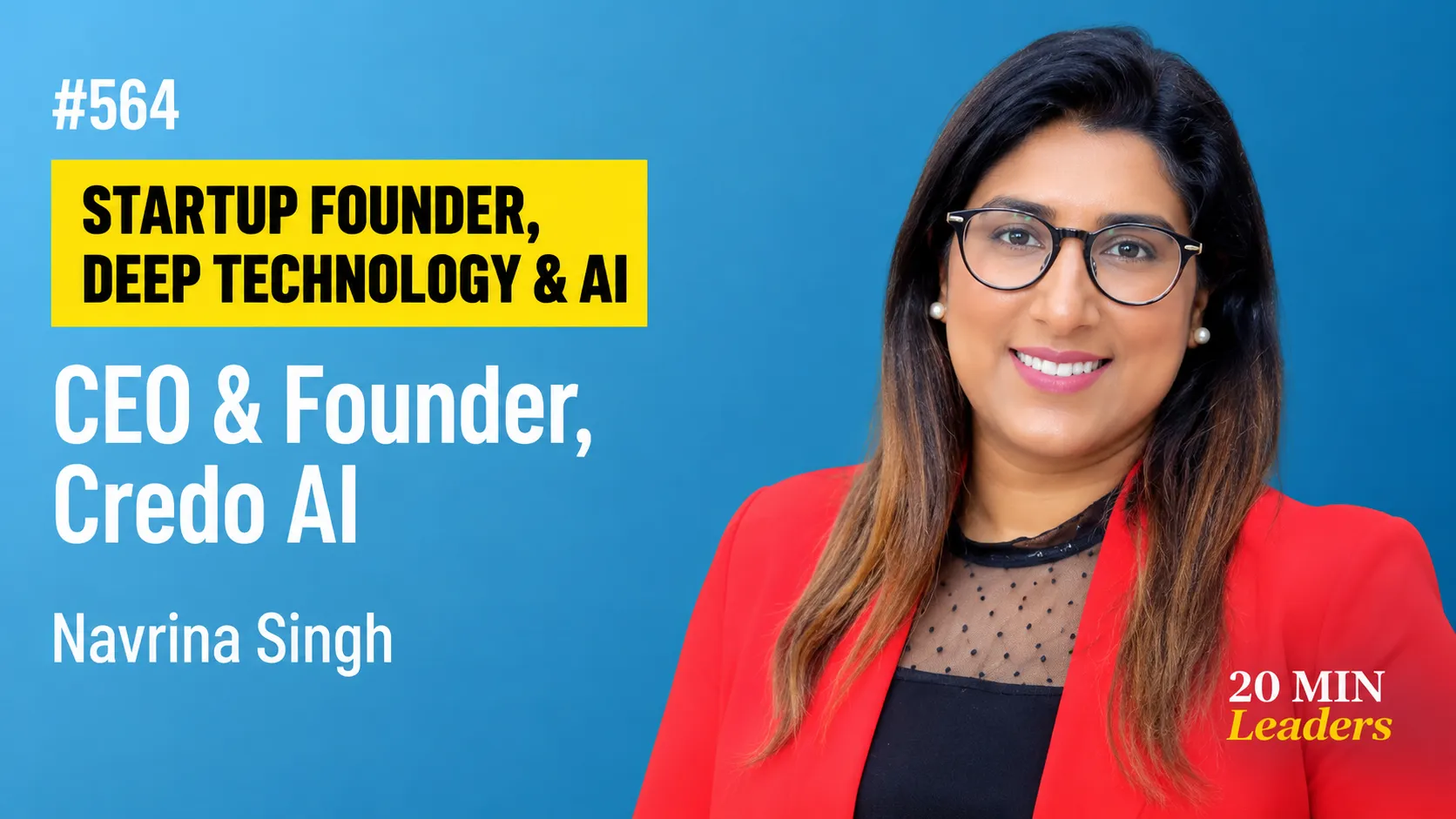
Singh has spoken publicly about the particular vantage point her immigrant journey afforded her: arriving in the United States with limited financial resources but strong family support, she has described building Credo AI as an extension of the same reinvention instinct she watched her mother model years earlier, treating career and company-building not as linear paths but as a series of deliberate, sometimes risky pivots toward greater impact.
That corporate experience ultimately became the launchpad for Credo AI, the company Singh founded to help organisations assess, manage and govern the risks associated with deploying artificial intelligence systems at scale. As enterprises and governments alike have raced to adopt AI tools faster than most internal governance frameworks can keep pace with, Credo AI's proposition — building the infrastructure to make AI use auditable, accountable and trustworthy — has moved from a niche compliance concern to a boardroom-level priority for many of the world's largest organisations.
Singh has often described herself as a 'renegade' by temperament, someone who has consistently sought to create her own path rather than follow an established one. That instinct is visible in Credo AI's positioning: rather than building another AI model or application, the company has staked its future on becoming essential infrastructure for the AI economy's next phase, one increasingly defined by regulatory scrutiny, algorithmic accountability and public trust concerns rather than raw model capability alone.
The Luminary Award citation specifically highlighted Singh's sustained contribution to unlocking the potential of artificial intelligence responsibly, a framing that reflects a broader shift in how the technology industry — and increasingly its funders and regulators — think about AI's next chapter. Where the past several years have been dominated by a race for scale and capability, a growing chorus of voices, Singh's among the most prominent, has argued that long-term adoption depends equally on organisations' ability to manage AI's risks credibly.
Credo AI's growth has coincided with an increasingly complex global regulatory landscape for artificial intelligence, spanning the European Union's AI Act, a patchwork of emerging US state-level AI regulations, and growing corporate governance expectations from boards and institutional investors increasingly wary of AI-related legal, reputational and operational risk. Singh has positioned the company to serve as connective infrastructure across this fragmented landscape, helping enterprise customers translate rapidly evolving regulatory requirements into practical, auditable internal processes.
The Luminary Award joins a growing list of recognitions Singh has received over recent years as her public profile within AI policy and governance circles has expanded, including invitations to testify before policymakers and participate in international forums shaping the emerging global consensus around responsible AI deployment standards.
For the university's global alumni network, which spans thousands of graduates across technology, medicine, public policy and the arts, Singh's recognition reinforces Wisconsin's standing as a training ground for founders who go on to shape entire industries rather than simply participate in them. For India's diaspora entrepreneurship story more broadly, it adds another data point to a now well-established pattern: immigrant founders, often shaped by formative years split between two countries and two very different professional cultures, building companies that end up defining the technological and ethical infrastructure the rest of the world eventually adopts.
As AI governance continues to move from an afterthought to a first-order business consideration, Singh's recognition by her alma mater serves as a marker of how far both the technology and its earliest evangelists for responsible deployment have travelled in a remarkably short period of time.
For the wider community of Indian-origin founders building at the frontier of artificial intelligence, Singh's trajectory, from a Wisconsin graduate assistantship to a company now regularly consulted by regulators and Fortune 500 boards alike, offers a template that increasingly resonates: technical depth combined with a willingness to build the unglamorous but essential infrastructure that makes transformative technology safe enough for mainstream adoption.