FundingLatest Deals5 MIN READ

Singapore's NEU Battery Materials Raises $7.6 Million to Scale LFP Battery Recycling That Recovers Battery-Grade Lithium

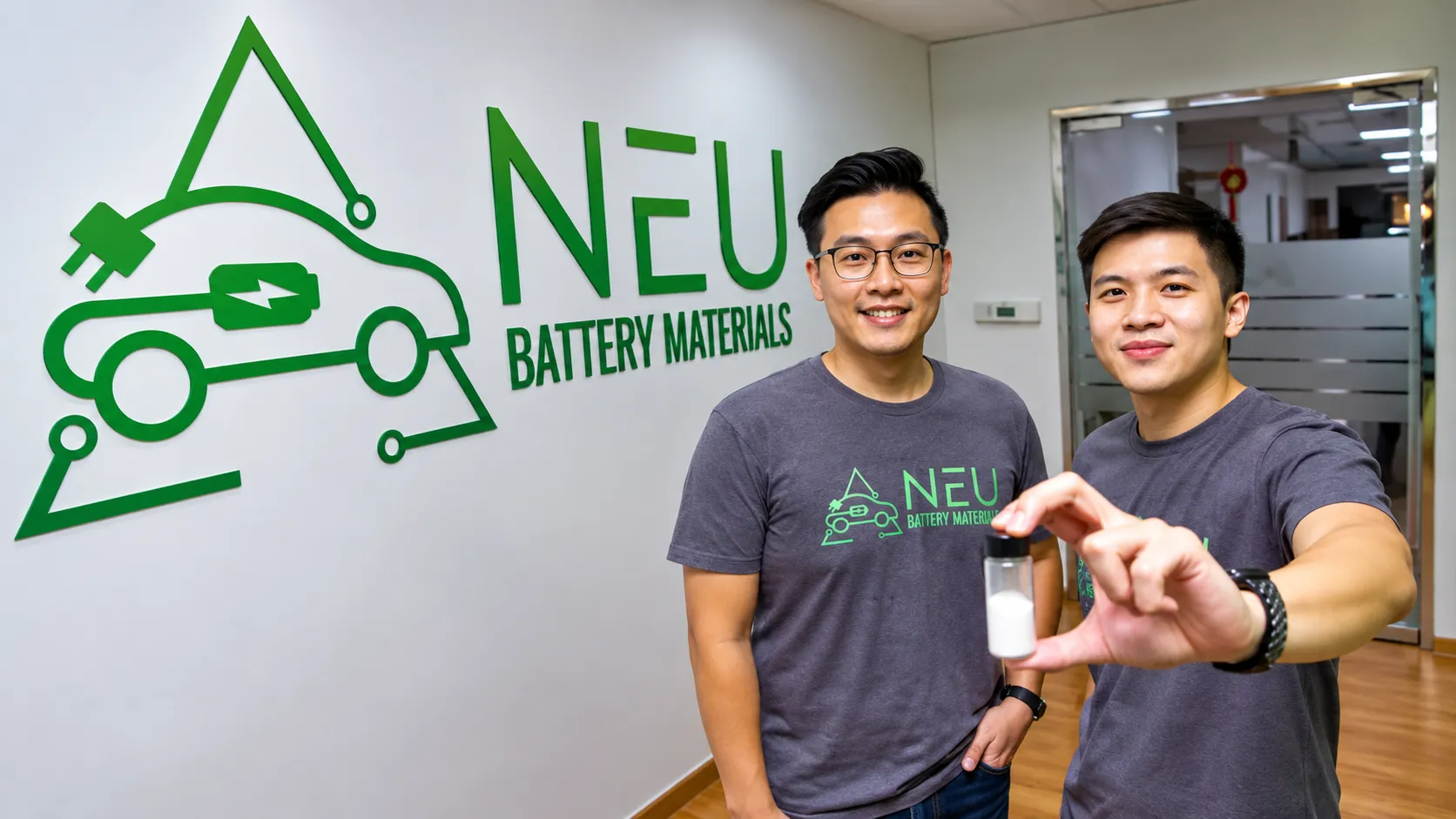
Singapore-based NEU Battery Materials has closed an oversubscribed $7.6 million round co-led by Shift4Good and SGInnovate, with Lotus Singapore Group, M7 Holdings and existing backer Paragon Ventures I, to scale its electrochemical technology for recovering battery-grade lithium from lithium iron phosphate batteries. The raise follows the commissioning of its 1,300-tonne-a-year factory in Singapore.

By Nisha Omkumar · Author26 October 2026New
Singapore's NEU Battery Materials Raises $7.6 Million to Scale LFP Battery Recycling That Recovers Battery-Grade Lithium

As lithium iron phosphate batteries take over the electric vehicle and energy storage markets, a Singapore startup is betting that recycling them economically will become essential for securing lithium supplies.

NEU Battery Materials, which recycles lithium iron phosphate (LFP) batteries, has closed an oversubscribed funding round of $7.6 million, Evertiq reported on Monday, October 26. The round was co-led by Shift4Good, a global venture capital platform focused on decarbonising and building resilience in transport and energy, and SGInnovate, a deep technology investor backed by the Singapore government.

New investors Lotus Singapore Group and M7 Holdings also participated, along with existing investor Paragon Ventures I.

From factory to scale-up

The funding follows the commissioning of NEU's factory in Singapore, which has capacity to process 1,300 tonnes of material a year. The company will use the new capital to scale up production of battery-grade lithium from LFP feedstock, including scrap from cathode production and black mass from end-of-life batteries, and to expand internationally.

"The funding will catalyse the scale-up and deployment of our modular LFP recycling technology," said Bryan Oh, co-founder and chief executive of NEU. He said it would expand the company's output of battery-grade lithium at progressively lower costs for customers.

The technology

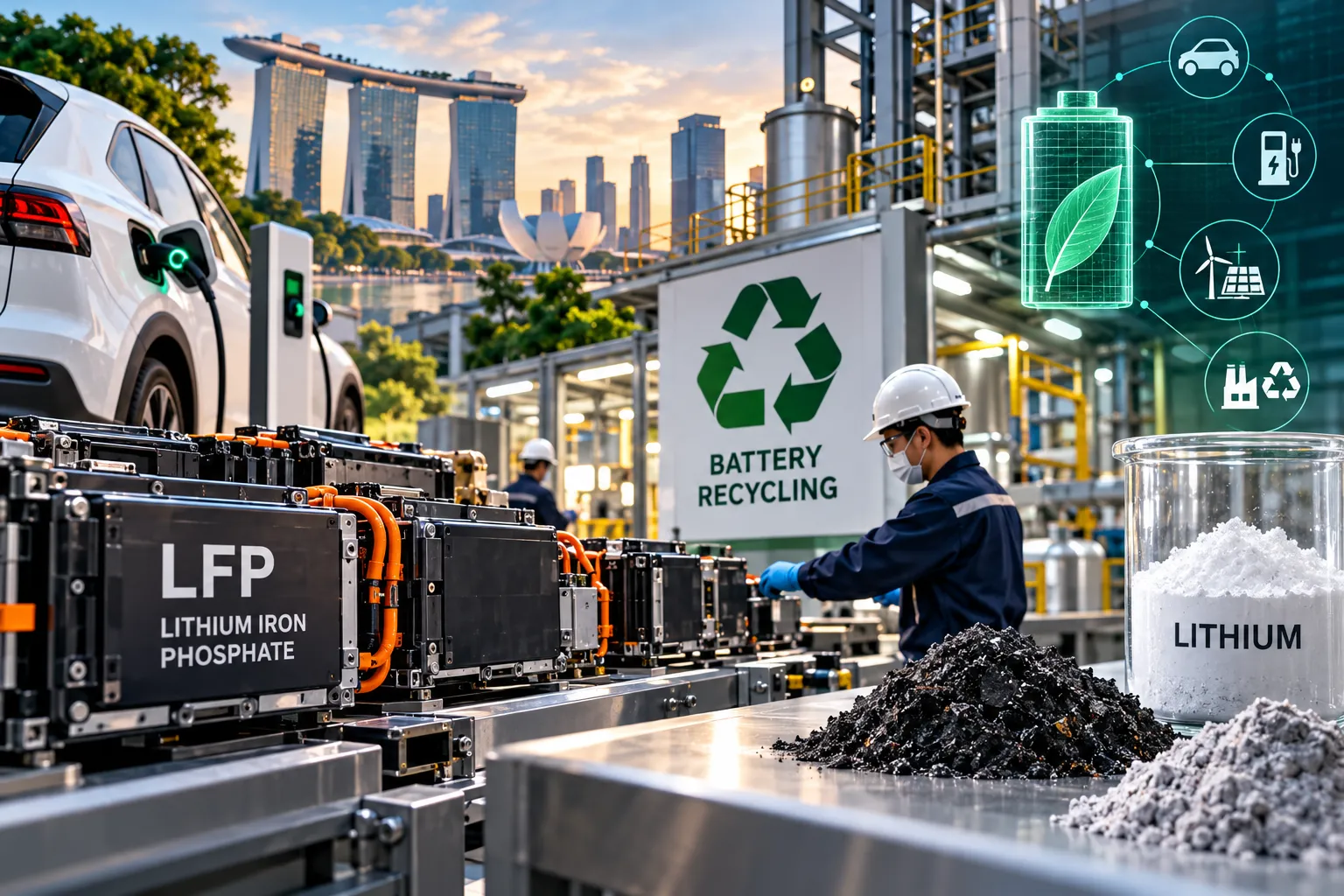
NEU has developed a patented technology it calls electrochemical redox targeting, which it describes as a modular approach to LFP recycling that makes lithium recovery scalable, cost-efficient and more sustainable.

Conventional battery recycling typically uses either high-temperature smelting, known as pyrometallurgy, or chemical leaching with strong acids, known as hydrometallurgy. Both methods can be energy-intensive and generate waste. Electrochemical approaches aim to selectively extract lithium using electricity, potentially with lower energy use and fewer chemicals.
4bcef6d8-2a2d-4ad9-9d8e-6e7e1d348c14.png

Why LFP recycling matters

LFP batteries have become the dominant chemistry for many electric vehicles and for grid energy storage, because they are cheaper, safer and longer-lasting than nickel-based alternatives, and do not use cobalt or nickel. Chinese manufacturers such as CATL and BYD have driven their adoption, and automakers worldwide have embraced LFP for mass-market vehicles.

But LFP batteries present a challenge for recyclers. Unlike nickel- and cobalt-based batteries, which contain valuable metals that make recycling profitable, LFP batteries contain mainly lithium, iron and phosphate. Iron and phosphate are cheap, so the economics of recycling depend almost entirely on recovering lithium efficiently.

As millions of LFP batteries reach the end of their lives in the coming years, efficient recycling will be important both for the environment and for securing lithium supplies.

Investor views

"NEU has developed a differentiated solution to recover battery-grade lithium from LFP feedstock," said Sebastien Guillaud, co-founder and managing partner at Shift4Good. He said the company is entering an industrial scale-up phase that supports more resilient supply chains.

"NEU plays a strategic role in the battery value chain, and we remain committed to supporting its growth," said Hsien-Hui, head of investments at SGInnovate.

Lithium supply security

Lithium is a critical mineral for the energy transition, and supply is concentrated in a few countries. Australia, Chile and China dominate production, and China controls much of the world's lithium refining capacity. Governments in the United States, Europe and Asia have sought to diversify supply chains and reduce dependence on China.


“The funding will catalyse the scale-up and deployment of our modular LFP recycling technology.”
— Bryan Oh, Co-founder and CEO, NEU Battery Materials

Recycling offers a domestic source of lithium for countries without significant mining resources. For Singapore, which has no mineral resources, recycling allows participation in the battery supply chain.

What it means for India

India is rapidly expanding electric vehicle adoption and battery manufacturing, and LFP batteries are widely used in Indian electric two-wheelers, three-wheelers and buses. The country has limited lithium resources, making recycling an important potential source of supply.

India introduced battery waste management rules in 2022 that make battery producers responsible for collecting and recycling batteries, creating a market for recycling companies. Indian startups such as Lohum, Attero and Recyclekaro are building battery recycling capacity.

Technologies like NEU's could be relevant for India's recycling industry, particularly as the volume of end-of-life LFP batteries grows.

The climate tech funding environment

NEU's oversubscribed round comes as climate technology startups face a mixed funding environment. Investors have become more selective, favouring companies with proven technology and clear paths to commercial scale. Companies addressing supply chain security and critical minerals have attracted interest because of their strategic importance.

Singapore's deep tech ecosystem

SGInnovate, one of the round's co-leads, was set up by the Singapore government to back deep technology startups built on scientific research, in areas such as advanced materials, artificial intelligence, quantum computing and medical technology. Singapore has invested heavily in research and development and in programmes to commercialise university research, positioning itself as a hub for deep tech in Southeast Asia.

NEU's technology originated from research into electrochemical processes, a path common among deep tech startups that spin out of universities. Turning laboratory innovations into commercial operations is one of the hardest stages for such companies, requiring capital for factories, engineering talent and customer relationships. The commissioning of NEU's Singapore factory marks progress through that stage.

The economics of lithium

Lithium prices have been highly volatile, surging during the electric vehicle boom of 2021 and 2022 before collapsing as new supply came online and demand growth slowed. Low prices make recycling less profitable, while high prices improve the economics. NEU's emphasis on progressively lower costs is aimed at making its process competitive across the price cycle, which will be essential for long-term success.

What comes next

NEU will focus on scaling production at its Singapore facility and expanding internationally. The company's ability to produce battery-grade lithium at competitive costs will determine whether its technology can be widely adopted.

As LFP batteries continue to dominate electric vehicle and storage markets, the race to recycle them economically will intensify, and NEU's progress will be watched as a test of whether electrochemical approaches can compete with established recycling methods. Battery recycling has also become a policy priority in several regions. The European Union's battery regulation sets targets for recycled content in new batteries and for lithium recovery from waste batteries, creating demand for efficient recycling technologies. Similar policies in other markets could open export opportunities for companies such as NEU as end-of-life volumes rise. Automakers and battery makers are also seeking long-term supply agreements for recycled materials to meet sustainability goals.

TagsNEU Battery Materialsbattery recyclingLFP batterieslithium iron phosphatelithiumShift4GoodSGInnovateSingaporeclimate techcircular economyelectric vehiclesenergy storageblack masscritical mineralsBryan Ohdeep techstartup fundingIndia battery recyclingsupply chainsustainability

Reader reviews

Sign in to rate and review this article.
Loading reviews…
