TechFuture Tech8 MIN READ

Nevada Approves Tesla for Up to 5,000 Robotaxis as Las Vegas Becomes a Testing Ground for Autonomy at Scale

Regulators have also authorised Waymo and Uber for fleets of up to 1,000 vehicles each, turning Las Vegas into one of the most closely watched autonomous-vehicle markets in the country.

By Shaym Kumar · Author22 August 2026Breaking
Nevada Approves Tesla for Up to 5,000 Robotaxis as Las Vegas Becomes a Testing Ground for Autonomy at Scale

Nevada regulators have approved permits that could allow Tesla to deploy as many as 5,000 robotaxis across the Las Vegas metropolitan area over the coming year, a scale of authorisation that dwarfs the permits granted to rival autonomous-vehicle operators in the same market and signals the state's willingness to let the sector expand rapidly rather than incrementally. Waymo and Uber were each authorised for fleets of up to 1,000 vehicles under the same regulatory process, according to reporting on the newly issued permits.

The scale of Tesla's approval stands out even within an industry accustomed to ambitious rollout plans. Where most autonomous-vehicle operators have historically expanded city by city, block by block, testing safety performance incrementally before scaling further, Nevada's decision to authorise a fleet potentially five times larger than its nearest competitors in a single metropolitan area represents a markedly different regulatory posture — one that treats Las Vegas as a genuine proving ground for whether robotaxi technology can move from carefully controlled pilots into mass-market transportation at meaningful scale.

Tesla has positioned robotaxis as central to the company's future valuation and growth narrative for several years, with chief executive Elon Musk repeatedly emphasising autonomy as a larger long-term opportunity than the company's core electric-vehicle manufacturing business. But the company has also faced persistent questions about the actual scale of its autonomous fleet deployments, the safety performance of its software without human supervision, and how quickly its camera-based, software-centric approach to autonomy can be validated against regulators' and the public's expectations for driverless safety.

Waymo, by contrast, has built its reputation on a more geographically incremental approach, expanding its operational footprint city by city while accumulating what the company describes as an extensive safety record across millions of autonomous miles driven without a human safety operator behind the wheel. The comparatively smaller 1,000-vehicle authorisation granted to Waymo in Las Vegas reflects that more measured expansion philosophy, even as the company continues to operate one of the largest autonomous-vehicle fleets in the United States nationally.
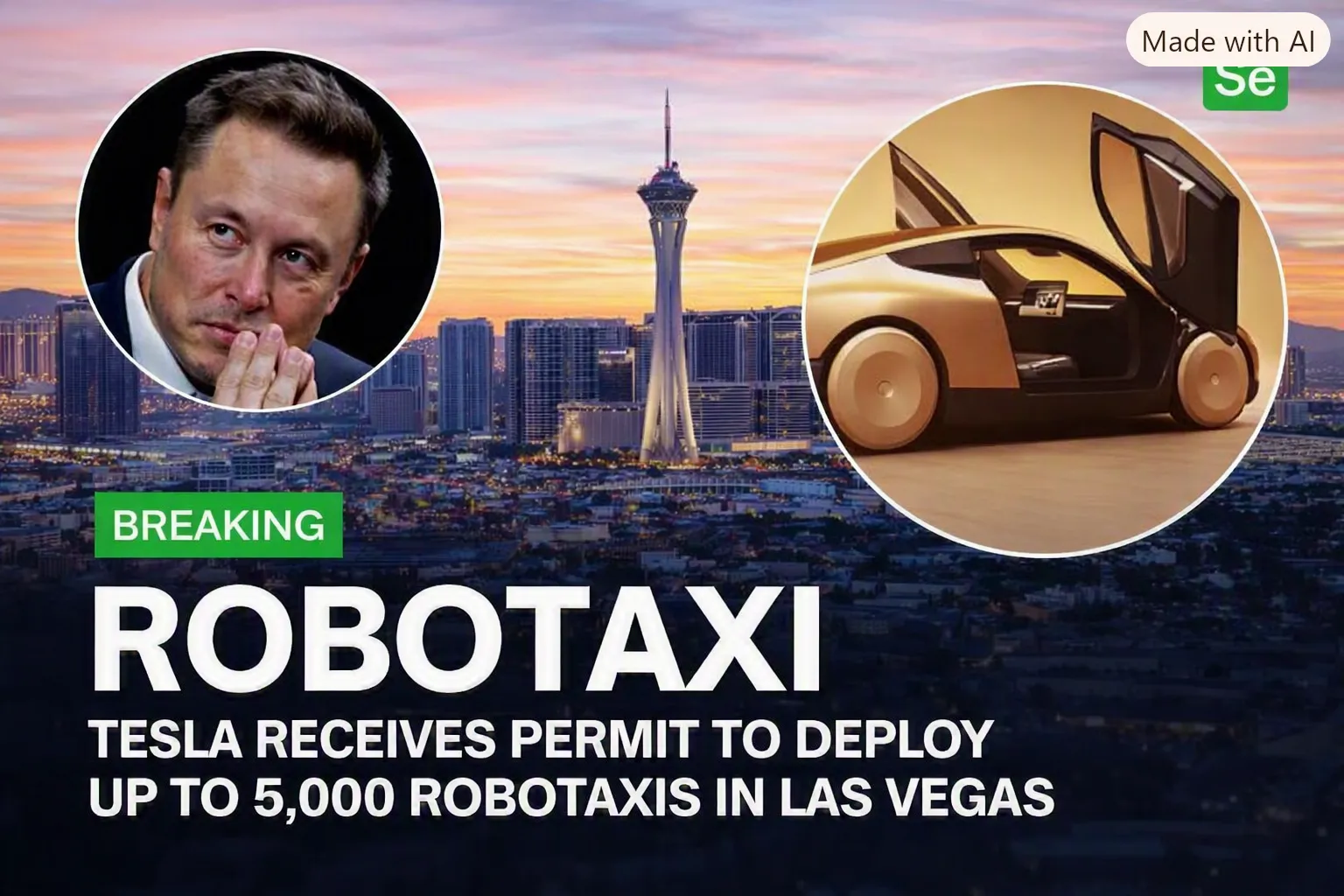

Las Vegas could become one of America's most closely watched autonomous-vehicle markets as Tesla, Waymo and Uber compete under a single regulatory framework.
Reporting on Nevada's robotaxi permit approvals

image.png

Uber's inclusion in the Nevada approvals, alongside its own 1,000-vehicle authorisation, reflects the ride-hailing giant's evolving strategy in the autonomous-vehicle era: rather than building its own self-driving technology from scratch, Uber has increasingly positioned itself as an aggregation layer, partnering with multiple autonomous-vehicle developers to offer robotaxi rides through its existing app and customer base — a strategy that allows the company to participate in the autonomy market's growth without bearing the full technological and capital risk of developing self-driving systems independently.

The competitive dynamics playing out in Las Vegas are also becoming increasingly ecosystem-driven rather than purely technology-driven, involving automakers, specialised autonomy developers, AI companies and ride-hailing platforms all competing and, in some cases, partnering simultaneously. How that competition unfolds in a single, tightly bounded metropolitan market — with three well-capitalised operators authorised to deploy meaningfully sized fleets within the same geography — is likely to offer some of the clearest real-world evidence yet of whether robotaxi technology, as currently deployed by leading operators, can genuinely scale to mass-market transportation.

For Las Vegas itself, a city whose economy has long been built around drawing large volumes of visitors into a relatively compact, high-density downtown and Strip corridor, the influx of thousands of additional autonomous vehicles carries implications well beyond the technology sector — for traffic management, existing taxi and ride-hailing workforces, and the city's broader positioning as a hub for emerging transportation technology alongside its more traditional identity as an entertainment and hospitality destination.

TagsTeslaRobotaxiNevadaLas VegasWaymoUberAutonomous VehiclesTechnology

Reader reviews

Sign in to rate and review this article.
Loading reviews…