
TechFintech5 MIN READ

Niyo Grows Revenue 80% and Cuts Losses by More Than Half as Travel Fintech Bet Starts to Pay Off

Bengaluru-based Niyo grew operating revenue about 80% to ₹158 crore in FY26 and cut its net loss to roughly ₹33 crore from ₹78 crore, as its focus on international travellers began to deliver operating leverage.

3 October 2026New
Niyo Grows Revenue 80% and Cuts Losses by More Than Half as Travel Fintech Bet Starts to Pay Off

Niyo, the Bengaluru-based fintech company that has built its business around Indians who travel and spend abroad, has posted sharply higher revenue and a much smaller loss for the financial year ended March 2026, strengthening its case as one of the more resilient players in India's crowded digital finance market.

Operating revenue rose about 80% year on year to ₹158 crore in FY26, Inc42 reported on 2 October, citing the company's financial statements. Including other income, Niyo's total income rose 78% to about ₹178 crore from roughly ₹100 crore in FY25, according to Entrackr.

Losses fell faster than revenue grew. The company's net loss narrowed by about 58% to roughly ₹33 crore, from ₹78 crore a year earlier. Its EBITDA loss stood at around ₹32 crore.

The results continue a trend. In FY25, Niyo had already cut its net loss by about 55%. Two consecutive years of narrowing losses alongside strong top-line growth suggest the company has found a model that scales without proportionate increases in spending.

From neobank to travel finance specialist

Niyo was founded in 2015 by Vinay Bagri and Viral Shah. Like many Indian neobanks, it does not hold a banking licence itself. Instead, it partners with regulated banks to offer savings accounts, cards and other products through its own app and brand.

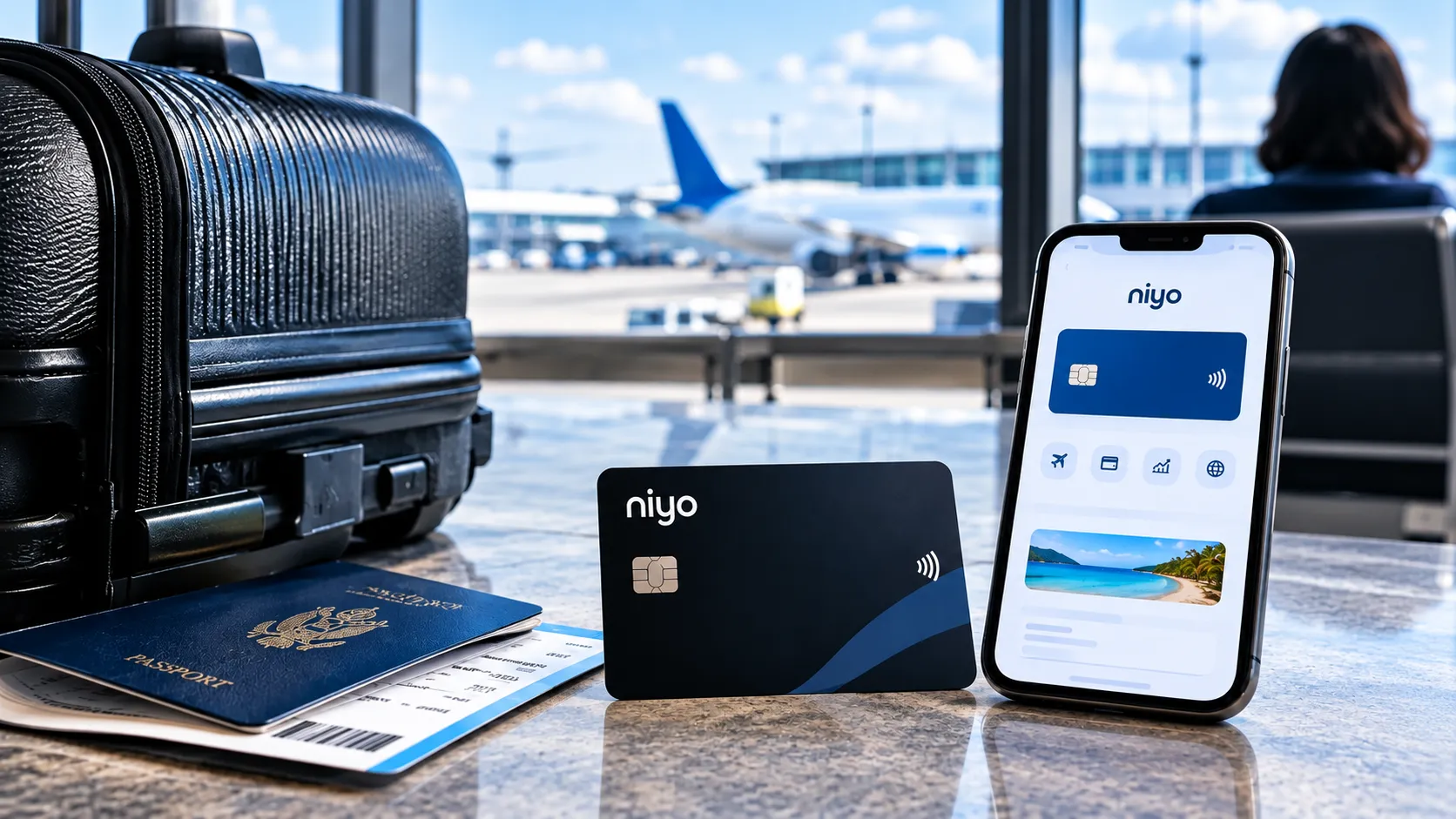
The company's most distinctive product has been its card for international travellers, which allows customers to spend abroad with low or no foreign exchange markups. That proposition resonated with a fast-growing segment: Indians travelling overseas for leisure, work and study, and families supporting students and relatives abroad.

Over time, Niyo has built a broader set of services around that customer. Its business now spans foreign currency cash services, remittances, flight and hotel bookings, forex operations and payment processing. It has also invested in Kanji Forex, extending its presence in the physical foreign exchange business that still serves many travellers.

That combination positions Niyo less as a general-purpose digital bank and more as a specialist in cross-border consumer finance. It is a narrower market than mass retail banking, but one with higher spending per customer and clearer monetisation through fees, spreads and commissions.

Squeezing more from existing customers

Management has framed its strategy around getting greater value from existing customers while maintaining steady growth on the path to profitability. In practice, that means selling additional products such as remittances, forex and travel bookings to people who already use the card, rather than spending heavily to acquire new users.

This cross-selling approach is a common route to profitability for consumer fintechs. Customer acquisition is often the largest cost for digital financial services, and companies that can increase revenue per user without matching increases in marketing spend tend to see margins improve quickly. Niyo's numbers fit that pattern: revenue nearly doubled while losses more than halved.

A sector under pressure to make money

Niyo's improvement comes against a tougher backdrop for Indian fintech. After the funding boom of 2021, investors became far more demanding about unit economics and profitability. Many neobanks and payment startups were forced to cut costs, narrow their focus or seek acquirers. The Reserve Bank of India has also tightened rules on digital lending, card issuance and partnerships between banks and fintechs, raising compliance costs and limiting some business models.

“The strategy is to extract greater value from existing customers while keeping growth steady on the path to profitability.”
— Summary of Niyo management commentary

Within that environment, travel and cross-border payments have emerged as one of the more attractive niches. Outbound travel from India has grown strongly, the number of Indian students overseas remains high, and remittance flows are large. Customers in this segment often pay more attention to exchange rates and fees than to brand loyalty, which gives digital players with transparent pricing an opening against traditional banks and money changers.

Competition is still intense. Banks have launched their own travel cards and multi-currency products, and other fintechs are targeting students and frequent travellers. Regulatory changes affecting tax collected at source on overseas spending and remittances have also altered how customers behave and how providers structure their products.

Funding and the road ahead

Niyo has raised more than $160 million from investors over its life. With losses now in the low tens of crores, the company is in a far stronger position than it was a few years ago, when cash burn was a central concern for fintech investors.

The next milestone the market will watch is profitability. A further year of similar progress would put Niyo close to breakeven at the operating level. Its management has emphasised steady growth rather than aggressive expansion, and the results suggest that discipline is working. ## The size of the cross-border opportunity

The market Niyo targets is substantial. India is the world's largest recipient of remittances, and outward flows have also grown as more Indians travel, study and invest abroad under the Liberalised Remittance Scheme. Spending on foreign travel and education has become one of the larger components of outward remittances, a category that barely registered for most households a generation ago.

That growth has attracted banks, global card networks and fintechs alike. Customers increasingly compare exchange rate markups, transfer fees and speed across providers, and digital apps make switching easier than it was when travellers relied on a bank branch or a money changer at the airport. For a company like Niyo, the opportunity lies in owning the relationship around a traveller's entire journey, from forex and insurance to bookings and spending abroad, rather than competing on a single product where margins can be competed away quickly.

bdbe6988-a62c-4b21-8243-df622ed3b0b1.png

What the numbers say about Indian fintech

Niyo's FY26 results add to a growing list of Indian startups that are showing that growth and discipline can coexist. Several fintech and consumer internet companies have reported narrowing losses this year as they prioritise revenue quality over raw user numbers. The successful stock market debut of lender Moneyview on 1 October, which listed at a premium of about 64% to its issue price, has also lifted sentiment around the sector and kept the path to public markets in view for mature fintechs.

For Indian travellers and the diaspora, the competitive pressure among banks and fintechs is good news: it is pushing down the cost of spending, saving and sending money across borders. For Niyo, the challenge now is to keep that customer proposition sharp while proving that a specialist cross-border model can deliver sustainable profits.

If it succeeds, the company will have taken a path that many early neobanks attempted but few completed: moving from an app built on partner banks to a focused financial services business with real earnings power.

TagsNiyoFintechNeobankTravel FintechForexRemittancesNiyo GlobalFY26 ResultsStartup FinancialsProfitabilityIndia StartupsCross-border Payments

Reader reviews

Sign in to rate and review this article.
Loading reviews…

