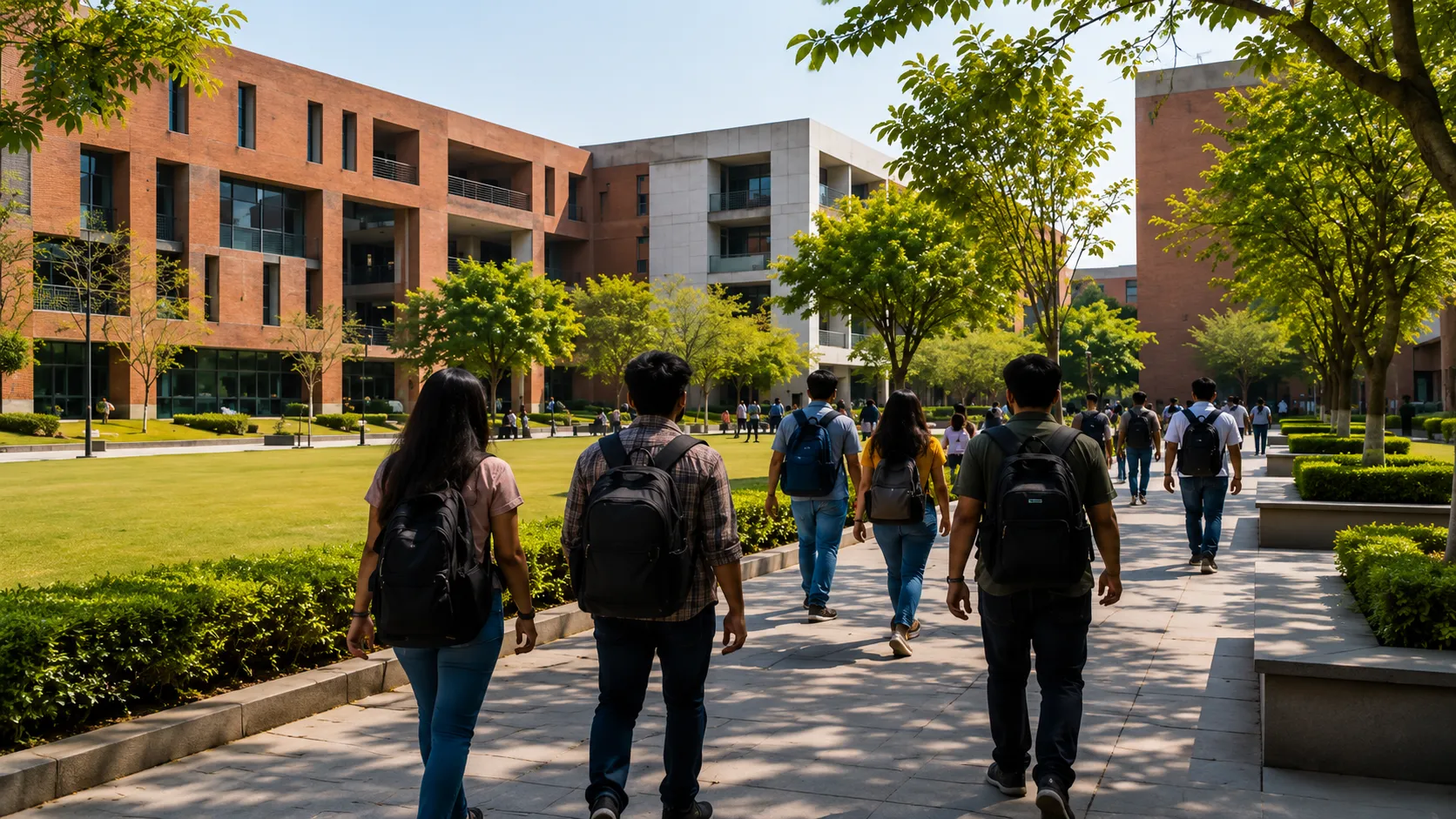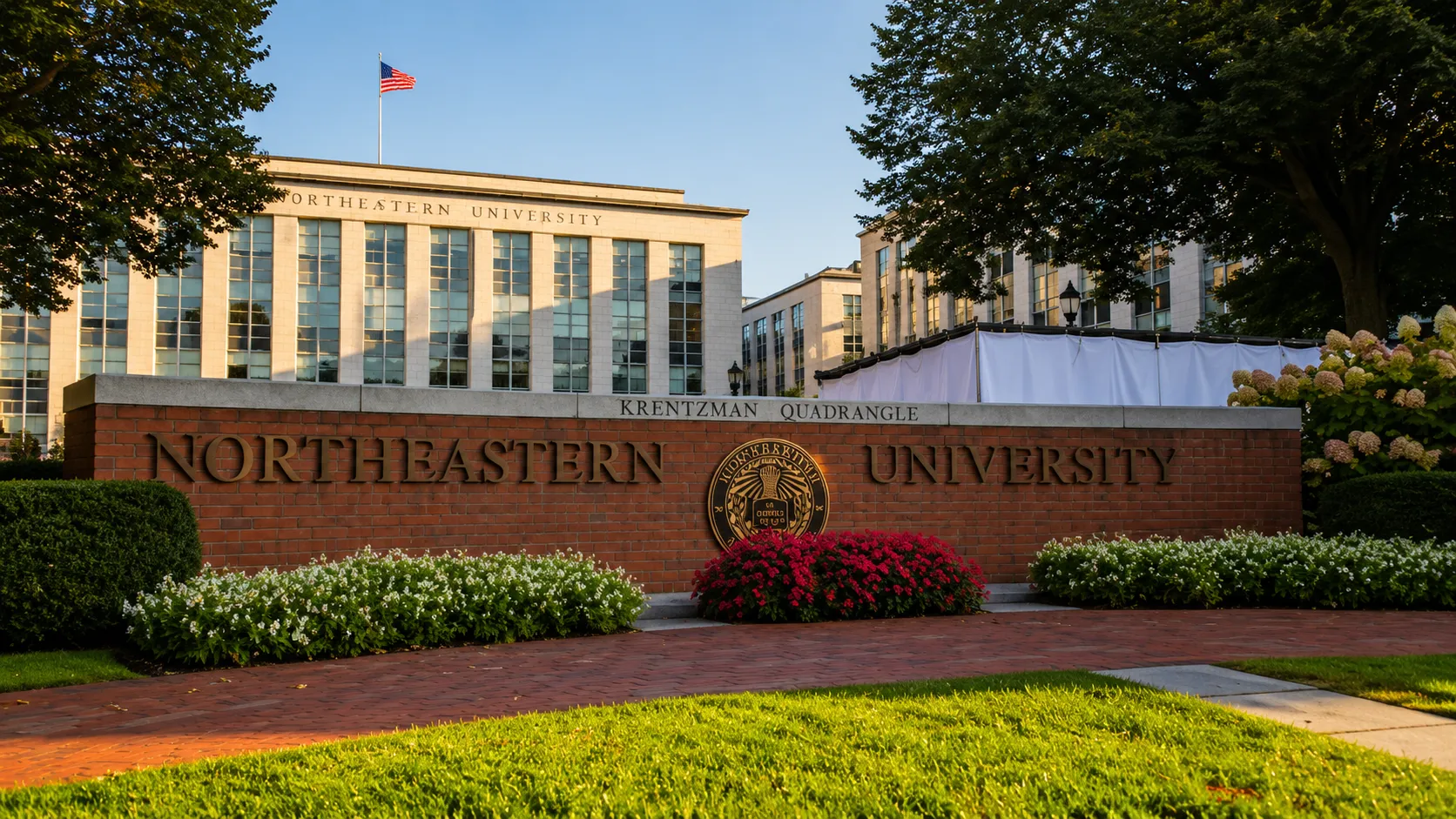
Northeastern University, the Boston-headquartered research institution known for its distinctive co-operative education model, has announced plans to open a campus in Hyderabad, marking its first physical academic presence in India and extending a global network that already spans North America, the United Kingdom and Canada. The move positions Northeastern among a growing cohort of international universities establishing standalone campuses in India rather than relying solely on twinning arrangements or recruitment offices, a shift accelerated by New Delhi's recent regulatory opening to foreign higher-education providers.
For Northeastern, the Hyderabad campus extends a network-university strategy that has already produced campuses in London, Toronto, Vancouver, Miami, Oakland, Portland, Arlington and Charlotte, among other locations, each designed to give students mobility across a shared curriculum, faculty pool and career-services infrastructure rather than functioning as an isolated satellite. Bringing that model to India allows the university to tap directly into one of the world's largest pools of university-age students without requiring every prospective student to first relocate abroad.
India's higher-education regulator has, over the past two years, cleared a path for foreign universities to establish full-fledged campuses on Indian soil, complete with degree-granting authority, a policy shift that followed years of Indian students spending tens of billions of dollars annually on overseas tuition and living costs. Northeastern's entry adds to a still-small but growing list of internationally recognised institutions moving to capture demand domestically, a trend Indian policymakers have explicitly courted as part of a broader effort to retain talent and tuition spending within the country.
Hyderabad's selection as the site for the campus reflects the city's established position as one of India's foremost technology and life-sciences hubs, home to a dense cluster of global capability centres, pharmaceutical manufacturers and software firms that could plausibly absorb graduates directly into co-op placements and full-time roles. Telangana's state government has actively pursued marquee international education and research investments in recent years, positioning Hyderabad as a counterweight to Bengaluru and the National Capital Region within India's innovation geography.
The university's co-operative education philosophy, under which students alternate classroom terms with full-time paid work placements at partner employers, has been central to Northeastern's brand differentiation among American research universities, and its transplantation to an Indian campus raises the prospect of co-op placements structured around India's own industrial base rather than requiring students to travel abroad for work experience. Details on the specific programmes, intake size and admissions timeline for the Hyderabad campus are expected to be confirmed in the coming months as the university finalises its India rollout.
The announcement lands at a moment of considerable flux in the broader landscape of Indian outbound student migration, with several major Western destinations tightening visa and post-study work rules even as demand among Indian families for globally recognised credentials remains structurally strong. A locally accredited Northeastern degree, carrying the same institutional name recognition as its US counterpart, offers a middle path for students and families increasingly wary of the cost, visa uncertainty and post-graduation employment risk associated with a fully overseas degree.