Nous Research, the open-source artificial intelligence lab behind the Hermes agent, has raised $90 million in a Series B round at a $1.5 billion valuation, confirming a deal that had been reported in July and giving the three-year-old company the capital to push its software into corporate workplaces.
Robot Ventures led the round, TechCrunch reported on 7 October. Nvidia, Union Square Ventures, Menlo Ventures, Samsung and 1789 Capital, the firm where Donald Trump Jr. is a partner, also invested. The new money takes Nous Research's total funding to $158 million.
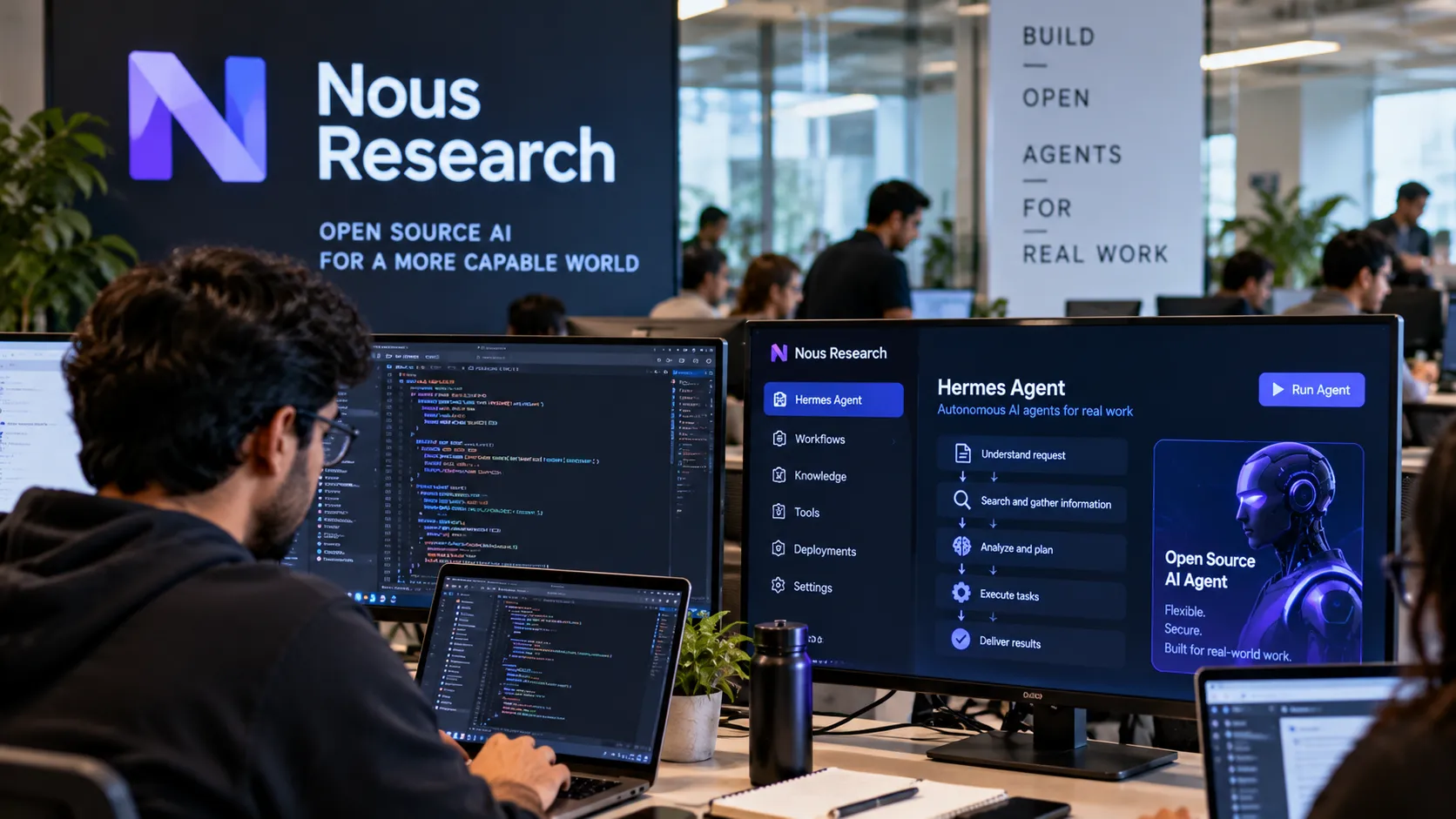
Alongside the raise, the company introduced Hermes for Businesses, a product that lets organisations deploy customised AI agents to carry out multi-step workflows while keeping their data private and secure. It is the clearest sign yet that Nous intends to turn a large following among developers and individual users into a paying enterprise business.
From a viral open-source agent to a sales pitch
Hermes Agent is the product that put Nous Research on investors' radar. By the company's own estimates, the agent has been cloned more than 24 million times and accounts for roughly 2.5% of global AI token usage, a measure of how much text AI models process on its behalf. Neither figure has been independently audited.
The agent arrived weeks after OpenClaw, a rival agent that runs locally on a user's computer, went viral, according to The Block. Hermes ships with built-in skills such as web search, coding and image understanding, and is designed to learn from how it is used and build new skills for itself. It can connect to messaging apps including Telegram and Discord and keep agents running remotely around the clock.
Users can run Hermes on their own desktop or on a virtual private server at no cost, or pay for a cloud-hosted version priced between $20 and $200 a month, The Block reported in July. At that point the project had about 214,000 stars and close to 40,000 forks on GitHub, the code-hosting platform where developers signal interest in and copy open-source projects.
Hermes for Businesses extends that model to organisations. TechCrunch did not report pricing or a general availability date for the enterprise product. Its core promise, agents that can handle chains of tasks without sending sensitive information outside the company, speaks to one of the main objections corporate technology buyers raise about generative AI: the risk of exposing customer records, source code or financial data to third-party model providers.
The Block reported in July that the new capital was meant to expand Hermes' products and its business model. Hermes for Businesses is the first concrete result of that plan, and it shifts the company's emphasis from a product best known among developers and individual users towards the procurement departments of larger organisations, where buying decisions take longer but contracts tend to be bigger and stickier.
That pitch puts Nous in a crowded market. The largest AI developers, along with established enterprise software vendors, are all selling agent products to large companies. Nous is betting that an open-source foundation, which customers can inspect and run on infrastructure they control, will appeal to businesses wary of locking themselves into a single closed platform.
Revenue is growing, but so is the price tag
The company is not short of momentum. According to The Wall Street Journal, as cited by TechCrunch, Nous had about $36 million in annualised revenue by mid-September and expects that figure to exceed $100 million before the end of 2026.
Those numbers help explain the valuation. Based on the mid-September figure, the $1.5 billion price is roughly 40 times annualised revenue, a multiple that is high by the standards of most software companies but not unusual for AI businesses growing at this pace. If Nous hits its year-end target, the multiple would fall to about 15 times, which is why investors appear willing to pay ahead of the results.
The round also grew during the negotiations. When TechCrunch and The Block first reported the talks in July, the deal was described as at least $75 million at the same $1.5 billion valuation, with Robot Ventures leading and Union Square Ventures participating. The final figure of $90 million suggests demand from investors exceeded the original target.
Nous was founded in 2023 by Jeffrey Quesnelle, Karan Malhotra, Ryan Teknium and Shivani Mitra, according to The Block. Before this round it had raised about $70 million, including a $50 million Series A led by crypto investor Paradigm that closed in April 2025. That earlier deal valued a token the company had not yet launched at $1 billion, reflecting the lab's roots in decentralised AI. Robot Ventures, North Island Ventures, OSS Capital and the investor Balaji Srinivasan were among its earlier backers.
The presence of Nvidia and Samsung in the new round is notable. Both companies sell the chips and hardware that AI workloads depend on, and both have reasons to support widely used open-source software that encourages more people and businesses to run models on their own infrastructure.
The wider investor list blends crypto-native backers with mainstream venture firms and corporate strategics. Union Square Ventures and Menlo Ventures are long-established venture investors, while 1789 Capital's participation adds a politically connected name to the shareholder register at a time when AI policy is a live issue in Washington.
The test ahead
The central challenge for Nous is one that many open-source companies have faced before: converting enthusiasm into dependable revenue. Developers who clone a free agent are not necessarily the same people who sign multi-year contracts, and enterprise buyers typically demand support, security certifications, uptime guarantees and integration with existing systems before committing.
Competition is another pressure point. Agents are now a priority for nearly every major AI developer, and many of them can bundle agent features into products that customers already pay for. A start-up selling agents on their own has to show that its software is meaningfully better, cheaper or more controllable than what comes built in.
There is also the question of how a lab that built its reputation on openness balances that identity with the commercial needs of a $1.5 billion company. Hermes Agent is an open-source project, and community listings describe it as carrying the permissive MIT licence, which allows anyone to use and modify the code. Keeping the community engaged while building paid features on top will require careful judgement about what stays free.
For now, investors have given Nous a substantial runway to make that case. With $158 million raised, a revenue target of $100 million within months and backing from two of the world's biggest hardware companies, the lab has moved from an open-source experiment to a commercial contender in the race to put AI agents to work.