
StartupsTrending6 MIN READ

Prediction Market Novig Credits Sydney Sweeney Campaign for Surge in Users as It Seeks a $2 Billion Valuation

Novig says first-time depositing users rose more than 218% and trading volume about 94% around the launch of its Sydney Sweeney campaign, as the sports prediction market raises money at a $2 billion valuation.

By Aravind Kumar · Author5 October 2026New
Prediction Market Novig Credits Sydney Sweeney Campaign for Surge in Users as It Seeks a $2 Billion Valuation

Novig, a US sports prediction market, has credited a provocative advertising campaign featuring actress Sydney Sweeney with a sharp rise in new users and trading activity, as the startup raises capital at a valuation reported to be about $2 billion, four times what it was worth in February.

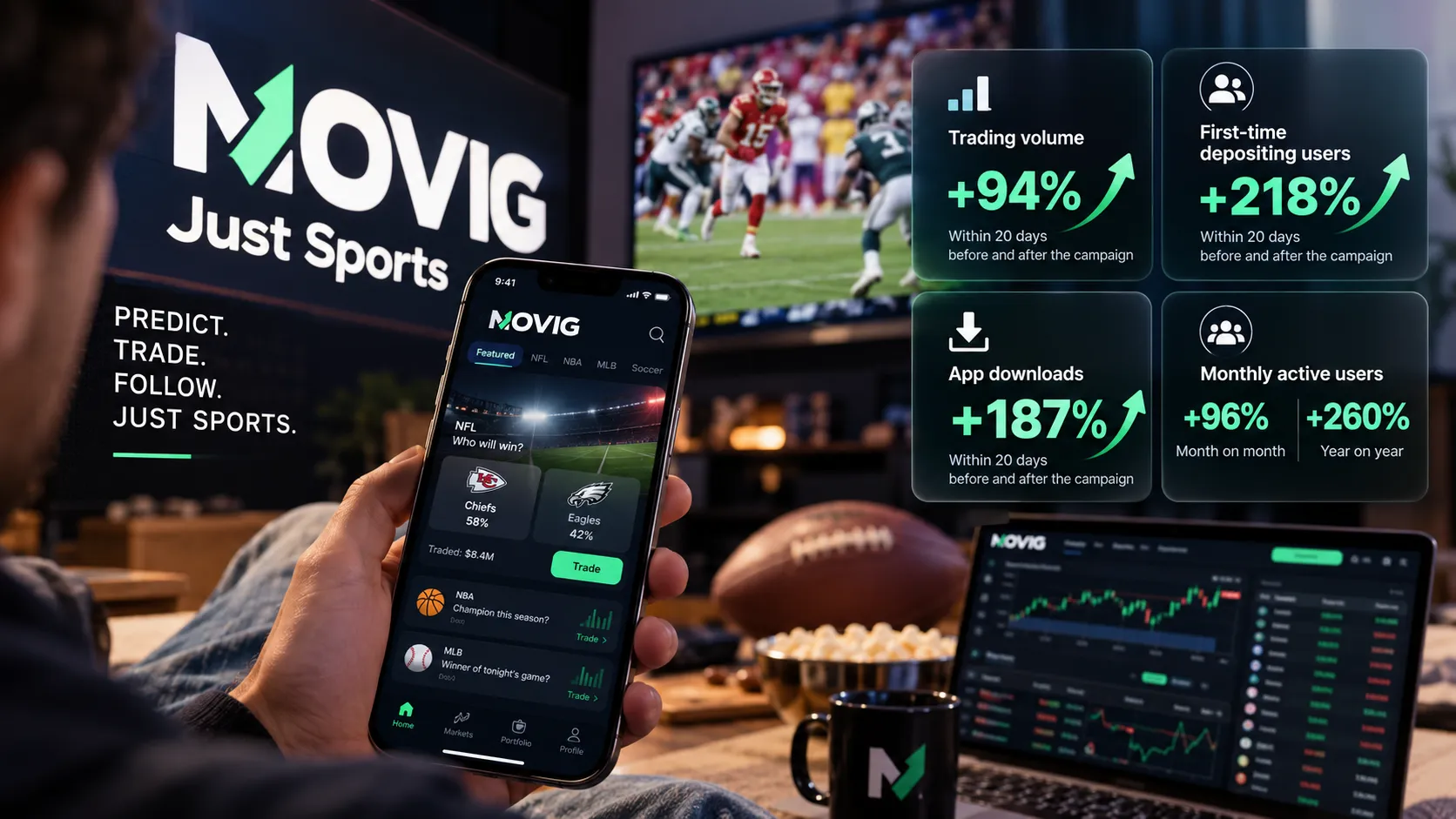
The campaign, branded around the slogan "Just Sports", launched on 9 September. Comparing the 20 days before and after the launch, Novig said trading volume rose about 94%, first-time depositing users increased by more than 218% and app downloads rose about 187%. Monthly active users grew 96% month on month and 260% year on year.

"Within 20 days before and after the ad campaign launched, Novig's trading volume surged nearly 94%, and first-time depositing users increased by over 218%," co-founder Jacob Fortinsky said.

Celebrity as equity partner

Sweeney's involvement goes beyond a typical endorsement. She has taken an equity stake in the company as compensation and has a creative director role, according to reports. The arrangement reflects a growing trend in consumer startups of offering ownership to celebrities rather than paying large upfront fees, aligning their incentives with the company's growth.

The campaign has run across digital, social, online video and outdoor placements during the NFL season. It has drawn more than 47 million views on Instagram and a ninefold increase in social media mentions of the company.

A controversial pitch

The campaign has also attracted criticism. Some female athletes and commentators argued that its approach undermined progress in women's sports and relied on sexualised imagery to sell a sports product. Sweeney reportedly lost more than 200,000 Instagram followers after the campaign launched, although she retains nearly 26 million.

Fortinsky defended the strategy. "The purpose of the ad was not to represent female athletes, but rather to focus more on the services Novig provides," he said. Speaking about the company's broader approach, he added: "We must be willing to take on greater risks relative to the size of the company."

The episode highlights a recurring tension in consumer marketing. Provocative campaigns can generate attention cheaply, but they risk alienating segments of the audience and drawing scrutiny, particularly in a sector such as sports wagering that already faces questions about its social effects.

From startup to regulated exchange

Novig's growth is tied to a significant regulatory shift. The company was designated as a contract market by the US Commodity Futures Trading Commission in June 2026 and launched its federally regulated market on 4 August. That status allows it to offer event contracts on sports outcomes across most of the United States, without obtaining a gambling licence in each state.

The company is available in 47 states, but not in Arizona, Michigan or Nevada. Unlike competitors Kalshi and Polymarket, which accept users from age 18, Novig requires users to be at least 21.

Prediction markets have become one of the most contested areas of US financial regulation. Supporters argue that event contracts are financial instruments that let people trade on their views about future outcomes. Critics, including several state gambling regulators, argue that sports contracts are betting by another name and should be subject to state gambling laws and consumer protections.

Rapid valuation growth
“Within 20 days before and after the ad campaign launched, Novig's trading volume surged nearly 94%, and first-time depositing users increased by over 218%.”
— Jacob Fortinsky, co-founder, Novig

Novig raised a $75 million Series B round in February 2026 at a valuation of $500 million. It is now raising at about $2 billion, primarily from existing investors, according to reports. Its backers include Pantera Capital, Multicoin Capital and NFX.

The fourfold increase in about seven and a half months reflects investor enthusiasm for prediction markets following the growth of Kalshi and Polymarket, and the opening created by federal regulation. Novig has also sought mainstream legitimacy through sports partnerships, including a deal with Major League Baseball's New York Mets announced on 30 July.

The market opportunity

Survey data cited in industry reports suggest that around 15% of Americans have bought prediction contracts, with much higher participation among young men. About a third of men aged 18 to 49 fall into that category.

That demographic concentration explains Novig's marketing choices. The campaign is aimed squarely at young male sports fans, a group that sports betting operators and prediction markets compete fiercely to attract.

What business leaders can learn

Novig's experience offers lessons for founders well beyond prediction markets. It shows how equity partnerships with celebrities can secure high-profile talent without large cash outlays. It demonstrates that a single well-timed campaign can change a startup's trajectory, especially when it coincides with a regulatory opening. ## How a prediction market earns money

Unlike a traditional sportsbook, which sets odds and profits when customers lose, a prediction market operates as an exchange. Users trade contracts with one another on the outcome of an event, and the platform earns fees on the trading. That structure is central to the regulatory argument that such markets are financial exchanges rather than gambling operators, and it means a platform's revenue depends directly on trading volume, which explains why Novig highlights volume growth so prominently.

It also shows the costs of controversy. The backlash from athletes and parts of the public may make it harder for Novig to broaden its audience or to partner with leagues and brands sensitive to reputational risk, particularly in women's sports, one of the fastest-growing segments of the sports business.

Global relevance

For India, where real-money gaming was sharply restricted by legislation in 2025 and sports betting is largely prohibited, a US-style federally regulated prediction market is not on the horizon. But the debate over whether event contracts are financial products or gambling is relevant to regulators and investors worldwide, including the many Indian-origin founders and engineers working in US fintech and gaming companies.

8dfc36f6-87a6-46cb-93f0-d4b0f1a9a7b8.png

What comes next

Novig's challenge now is to retain the users the campaign brought in. Advertising-driven spikes often fade, and the value of a prediction market depends on liquidity, which depends on sustained participation. Regulatory risk also remains, as states and federal regulators continue to contest the boundaries of event contracts.

If Novig can convert attention into a loyal user base while navigating that uncertainty, its $2 billion valuation may look like a stepping stone. If not, the campaign will be remembered more for the controversy than for the business it built.

TagsNovigSydney SweeneyPrediction MarketsSports BettingCFTCStartup FundingMarketingCelebrity EquityKalshiPolymarketWomen in SportsConsumer AppsFintechStartups

Reader reviews

Sign in to rate and review this article.
Loading reviews…


