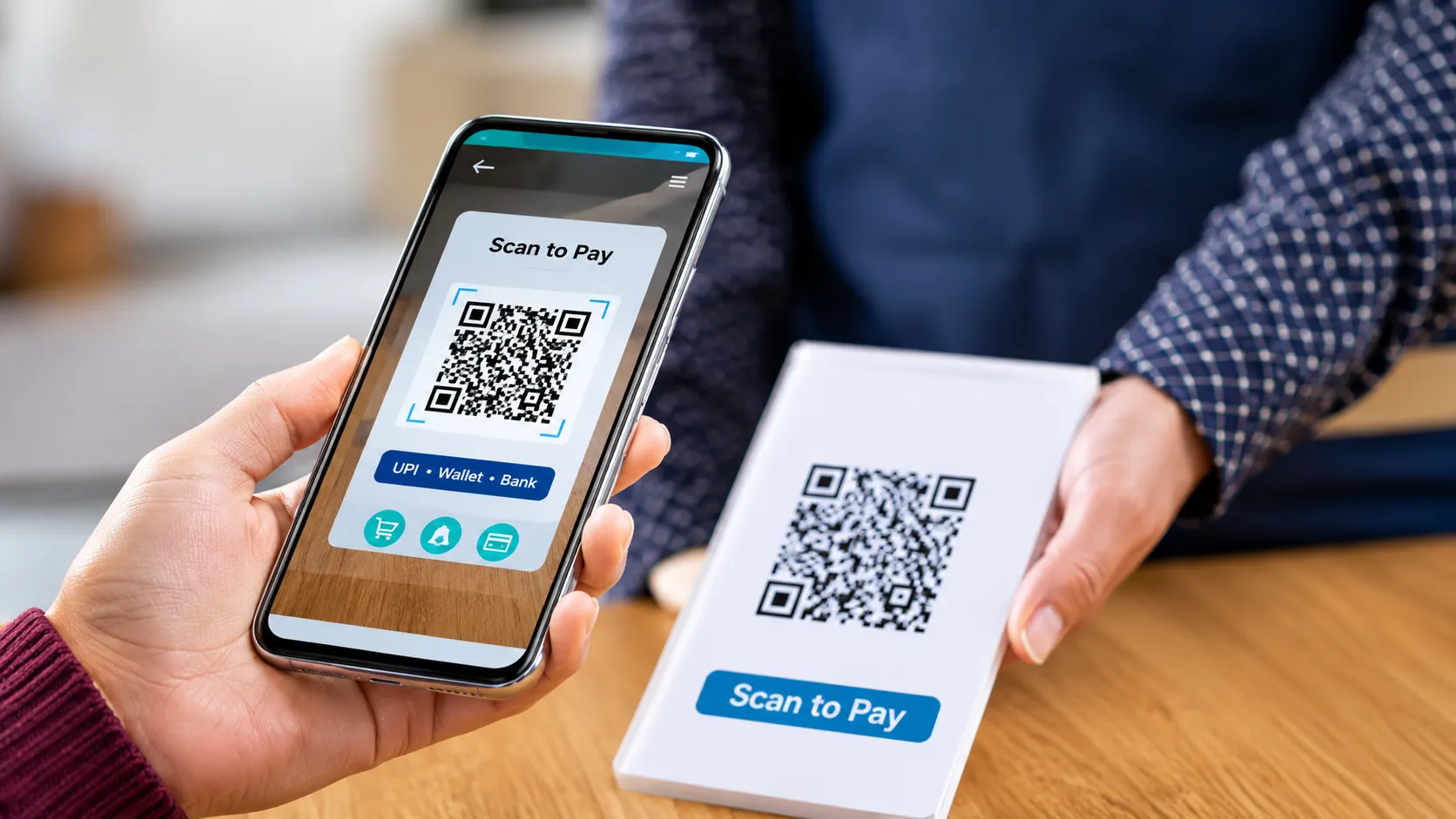
India's Unified Payments Interface has transformed how the country pays, but millions of small shopkeepers in smaller towns and remote regions still lack the basic tools to accept digital payments. A new scheme from the organisation that runs UPI aims to change that, using money from a controversial new fee.
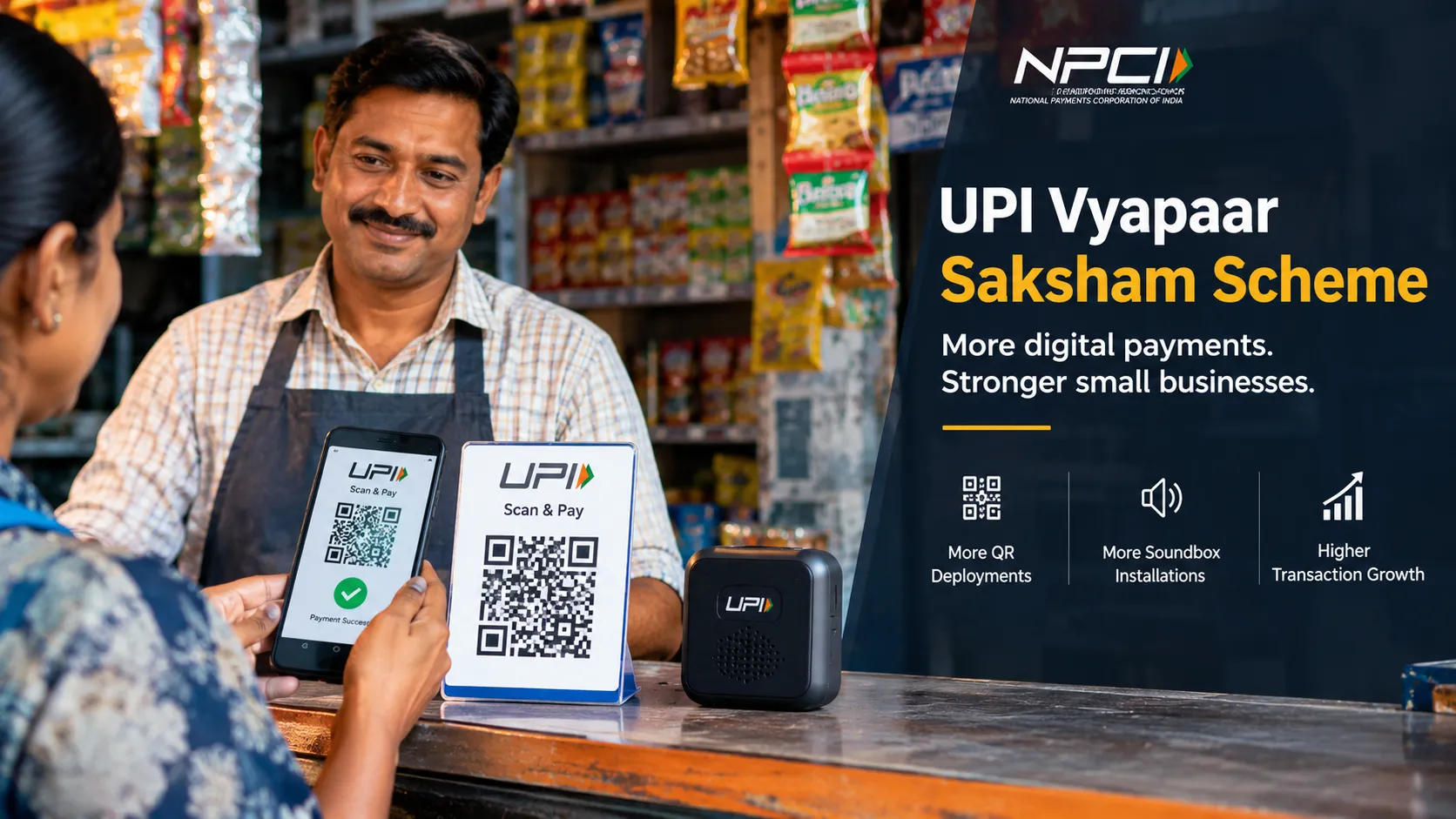
The National Payments Corporation of India (NPCI) has launched the UPI Vyapaar Saksham Scheme to expand digital payment acceptance among small merchants, particularly in smaller cities and towns, according to Inc42, which reported the circular on Thursday, November 12. The circular is dated November 11.
The scheme will run for three years from the date that a merchant discount rate (MDR) on certain UPI transactions takes effect. That date has not yet been notified.
Who qualifies
The scheme targets small merchants with annual turnover of up to ₹40 lakh in the previous financial year, according to Inc42. It applies to merchants in Tier III to Tier VI cities, the northeastern states, Jammu and Kashmir and Ladakh. Small merchants enrolled under the PM SVANidhi scheme for street vendors and the PM Vishwakarma scheme for traditional artisans are also eligible.
These are the businesses that have been hardest to bring into the digital payments system, often because of limited internet connectivity, low awareness, the cost of devices or concerns about fees.
Funded by MDR
The scheme's funding comes not from the government's budget but from MDR collections. Each issuing bank, acquiring bank, payer payment service provider and UPI app provider will contribute 5% of its share of the MDR to the fund, according to Inc42.
UPI payments have been free for merchants since January 2020, when the government mandated zero MDR to promote adoption. The government notified amendments to the Payment and Settlement Systems Act in September 2026, paving the way for MDR on certain transactions. Under NPCI's framework, person-to-merchant UPI payments above ₹2,000 will attract an MDR of 0.4%, capped at ₹300 for transactions of ₹75,000 and above.
Transactions of up to ₹2,000, person-to-person payments and small merchants receiving up to ₹1 lakh a month through UPI QR codes in the P2PM category remain exempt.
Three components
The fund is divided into three parts, according to Inc42.
The first component, accounting for 30% of the fund, pays acquiring banks ₹300 for each physical QR code and ₹750 for each soundbox deployed at an eligible new small merchant. To qualify, the merchant must complete at least 25 eligible transactions in any two months of a quarter, with a minimum monthly transaction value of ₹5,000.
The second component, worth 50% of the fund, rewards banks that achieve at least 5% quarter-on-quarter growth in eligible transaction volumes. They receive 0.03% of the aggregate value of eligible transactions, with merchants in targeted geographies earning an additional 50% incentive.
The third component, worth 20%, pays banks 0.2% of the incremental value of eligible transactions compared with the previous quarter in targeted geographies, on top of the second component.
Eligible transactions
Only successfully settled UPI payments of up to ₹2,000 at small merchants count. Reversed, refunded or cancelled transactions are excluded, as are artificial transactions created by splitting larger payments to stay under the ₹2,000 threshold, according to Inc42.
Ambitious targets
NPCI has set annual targets of between 6 lakh and 1 crore new physical QR code deployments, 5 lakh to 10 lakh new soundbox installations, and 30% to 50% growth in transaction volumes among existing small merchants, according to Inc42.
Banks will submit claims quarterly, and NPCI must process incentive payments within 30 days of a claim, subject to validation. Banks must report merchant locations, unique merchant identifiers and details of the QR codes and soundboxes deployed.
The MDR controversy
The return of MDR on UPI after nearly six years has been contentious. Banks and payment companies have long argued that zero MDR makes it impossible to recover the costs of building and running payment infrastructure, and that the government's subsidies have not been sufficient. Retailers and trade associations have pushed back against fees that would raise their costs.
The rollout has reportedly been deferred because of this pushback, with a possible implementation in January 2027, according to Inc42. NPCI has not announced a date.
The Vyapaar Saksham Scheme appears designed partly to address concerns that MDR could slow the spread of digital payments. By channelling part of the revenue back into expanding acceptance among small merchants, the government and NPCI aim to ensure that the fee supports, rather than undermines, financial inclusion.
The soundbox economy
Soundboxes, small devices that announce payments aloud when a customer pays by UPI, have become a familiar sight in Indian shops. Paytm, PhonePe and other payment companies have deployed millions of them, earning subscription fees from merchants. They are particularly valued by small shopkeepers who are busy serving customers and cannot check their phones for every payment.
The incentive of ₹750 per soundbox could encourage banks and their partners to deploy devices in areas where it has not been commercially viable.
What it means for fintech companies
For payment companies, the return of MDR creates a long-awaited revenue stream, while the incentive scheme offers additional income for expanding into underserved areas. Companies with large merchant networks, such as Paytm, PhonePe and BharatPe, along with banks, are well positioned to benefit.
However, the 5% contribution to the fund will slightly reduce their share of MDR revenue.
The financial inclusion goal
UPI processes billions of transactions a month and has become a model for digital payments around the world. But adoption is uneven, with large cities far ahead of smaller towns and rural areas. Bringing small merchants in remote regions into the digital economy can improve their access to credit, since digital transaction histories can be used to assess creditworthiness, and reduce the costs and risks of handling cash.
Measuring success
The scheme's targets are ambitious, and its success will depend on whether banks find the incentives attractive enough to invest in reaching remote merchants. Deploying and maintaining devices in small towns and hilly or remote regions can be costly, and merchants must be trained and supported to use them.
What comes next
The scheme will take effect once MDR is implemented. Banks, payment companies and merchants will watch for NPCI's announcement of an MDR start date and for detailed operational guidelines. The success of the scheme will be measured by whether it meets its targets for QR codes, soundboxes and transaction growth in the regions that need them most.