
DiasporaLeaders8 MIN READ

NRI Achievers Awards 2026 Honors Global Indian Excellence at a Landmark Singapore Gala

The fifth edition of the NRI Achievers Awards concluded at Singapore's St. Regis hotel, honoring diaspora leaders in business, technology, healthcare and entrepreneurship, and drawing delegates from the United Kingdom, United States, UAE, Australia and beyond.

By Shaym Kumar · Author8 August 2026
NRI Achievers Awards 2026 Honors Global Indian Excellence at a Landmark Singapore Gala

Singapore's iconic St. Regis hotel played host this week to the fifth edition of the NRI Achievers Awards, a gala evening that has grown, over five successive editions and multiple continents, into one of the more established recognition platforms dedicated specifically to celebrating the global Indian diaspora's contributions across business, technology, healthcare, research, entrepreneurship, education, the arts and community leadership. The Singapore edition drew participants and honourees from the United Kingdom, United States, Australia, New Zealand, Singapore itself, the United Arab Emirates, Zambia and Nigeria, underscoring the platform's ambition to function as a genuinely global rather than regionally confined recognition event.

The evening was organised by Eventinity Ventures Pvt. Ltd. and brought together an elite gathering of global business leaders, entrepreneurs, professionals, policymakers, diplomats and investors alongside members of the wider Indian diaspora community in Singapore, a city-state whose own deep historical and contemporary ties to India — spanning trade, finance, technology and a substantial resident Indian professional population — made it a natural setting for an event explicitly designed to celebrate cross-border diaspora achievement.

Proceedings were addressed by Johnson Paul, Director of Group Strategy and Business Development at Meinhardt Singapore Pte. Ltd., who attended the gala as chief guest. In his remarks to the assembled audience, Paul commended the evening's awardees for their individual achievements while situating those achievements within a broader narrative about the Indian diaspora's cumulative contribution to innovation, economic growth and social development across the many countries in which it has established roots — a framing that has become increasingly common at diaspora recognition events, which have moved over recent years from celebrating isolated individual success stories toward constructing a more explicit collective narrative about the diaspora's aggregate global impact.

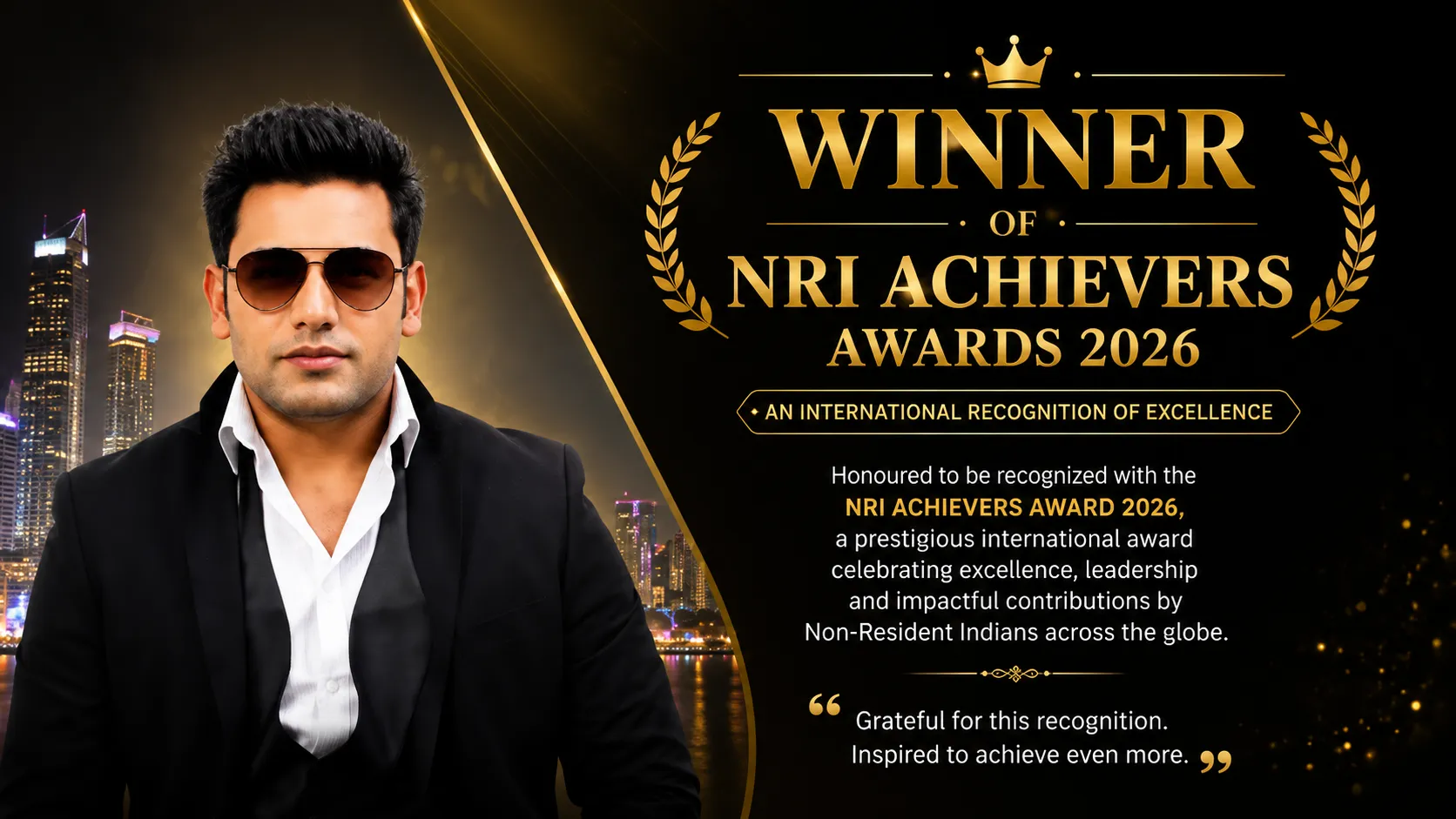
Among those recognised at the Singapore ceremony was Dr. Nobert Leo Raja Susai, honoured for Global Excellence in Sustainable Engineering and Infrastructure Leadership in recognition of his work based in the United Arab Emirates, and Dr. Bhawna Gautam, recognised for Excellence in Holistic Health and Community Empowerment for her contributions from Australia. The full roster of honourees spanned a deliberately wide range of professional categories, reflecting the organisers' stated intent to broaden the definition of diaspora achievement beyond the technology and finance sectors that have historically dominated diaspora recognition narratives, extending instead into engineering, healthcare, sustainability, the arts and community development work that often receives comparatively less mainstream attention despite its substantial on-the-ground impact.

The evening's programming combined a formal awards presentation with a series of keynote addresses, high-level networking sessions, media interactions and cultural performances, culminating in a gala dinner that organisers described as designed to create space for genuine relationship-building among attendees rather than functioning purely as a ceremonial recognition event. That dual function — part awards ceremony, part working networking platform — has become a defining characteristic of the NRI Achievers Awards format as it has evolved across its five editions, with organisers explicitly positioning the event as a global networking platform where distinguished leaders, entrepreneurs, innovators, policymakers, investors and professionals can exchange ideas and build collaborative relationships that extend well beyond the evening itself.

The Singapore edition builds directly on the platform's earlier international editions, which were previously held at the Radisson Blu London and the Hilton London Wembley, establishing the United Kingdom as the award programme's initial international base before its organisers made the deliberate decision to expand into Southeast Asia. That geographic progression — from an initial London base into a Singapore edition — mirrors a broader pattern visible across a number of diaspora-focused institutions and events over the past decade, as organisers increasingly recognise that the global Indian diaspora's own geographic centre of gravity has shifted considerably, with Gulf states, Southeast Asian financial hubs and a range of secondary markets now hosting Indian diaspora populations whose scale, economic influence and community infrastructure increasingly rival the more traditionally recognised diaspora hubs in North America and the United Kingdom.
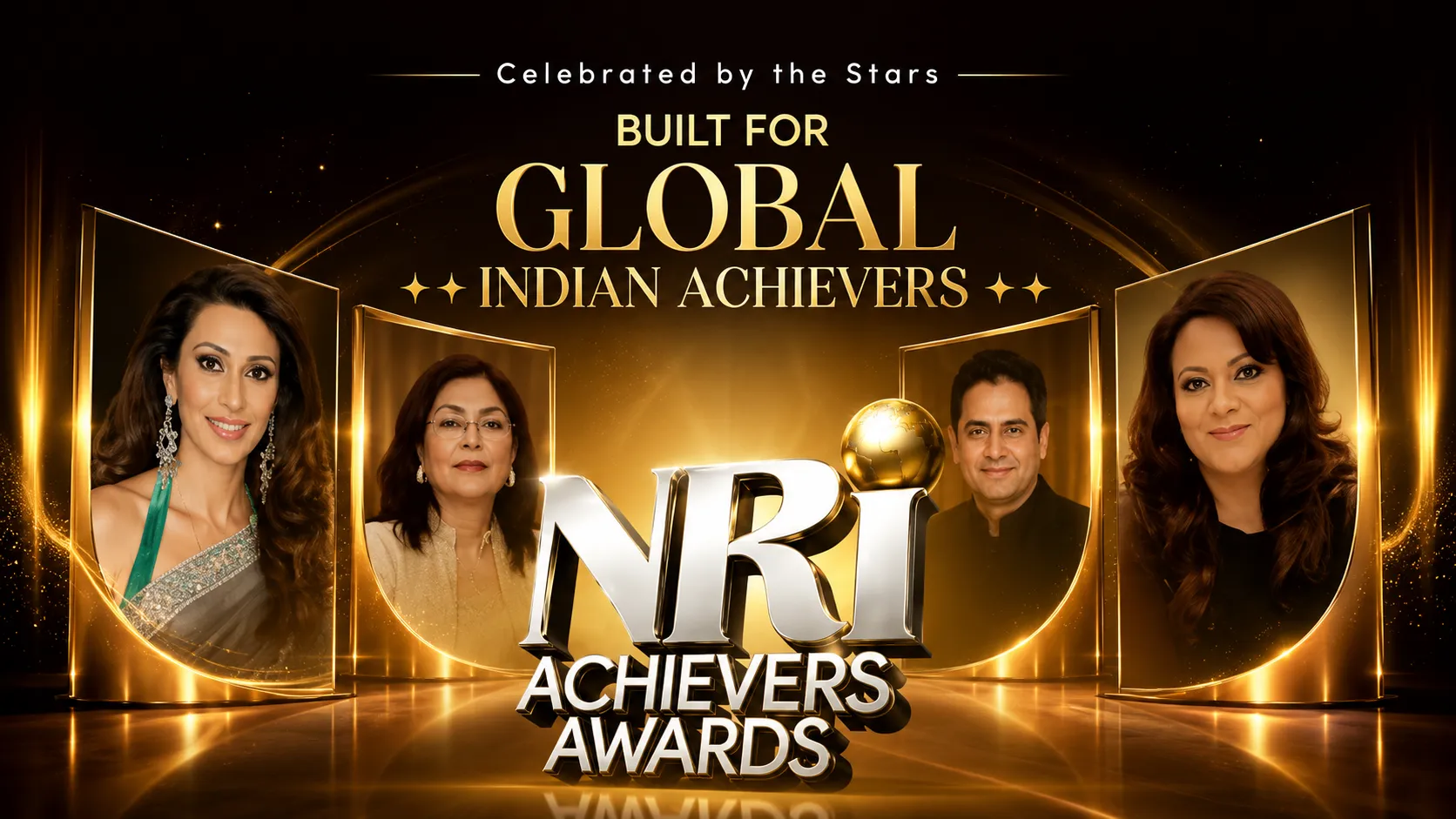
image.png

Singapore's own Indian community provided a particularly apt backdrop for this expansion. The city-state has long maintained one of the world's most economically significant and professionally concentrated Indian diaspora populations, spanning multiple generations of settlement that range from communities with roots dating back to Singapore's colonial-era trading history through to a more recent wave of professionals drawn by the city-state's status as a regional financial and technology hub. That layered demographic history has given Singapore's Indian community an unusually broad institutional infrastructure of its own, including established business associations, cultural organisations and, increasingly, events explicitly designed to connect Singapore's resident diaspora with the wider global Indian diaspora network, of which the NRI Achievers Awards Singapore edition now forms a visible part.

Organisers used the occasion to reiterate the broader mission underlying the awards platform: providing an international recognition mechanism that celebrates excellence within the global Indian diaspora while simultaneously fostering meaningful connections across the various national diaspora communities that the awards draw together at each edition. That mission statement reflects a growing recognition among diaspora institution-builders that the various national Indian diaspora communities — in the United States, the United Kingdom, the Gulf states, Southeast Asia, Africa and elsewhere — have historically operated with relatively limited direct connective infrastructure between them, each community having developed largely independently in response to its own specific migration history, local integration patterns and professional concentration. Platforms such as the NRI Achievers Awards represent a deliberate attempt to build connective tissue across those otherwise largely separate diaspora ecosystems, using a shared recognition and networking event as the mechanism for doing so.

The broader category of international diaspora recognition awards to which the NRI Achievers Awards belongs has itself grown considerably over the past decade, as a number of organisations — some rooted in India, others founded by diaspora entrepreneurs based abroad — have launched competing or complementary platforms aimed at celebrating global Indian achievement. That proliferation reflects genuine underlying demand: as the diaspora has grown wealthier, more professionally accomplished and more geographically dispersed, the appetite for formal recognition mechanisms that can validate and publicise individual and collective achievement has grown correspondingly. Award platforms of this kind also serve a less frequently discussed but commercially significant function for their organisers, generating revenue through a combination of ticket sales, sponsorship arrangements with companies seeking access to an affluent diaspora audience, and, in some cases, submission or nomination fees charged to prospective honourees or their nominating organisations.

The Singapore gala extended a platform that began in London into Southeast Asia — evidence that diaspora recognition events are following the same global dispersal pattern as the communities they celebrate.
TIGI Editorial Desk

Critics of the broader diaspora awards circuit have occasionally raised questions about the selection rigour and comparative prestige of the growing number of competing platforms, noting that the sheer proliferation of awards programmes risks diluting the significance of any individual recognition as the number of annual 'global Indian excellence' type honours multiplies across an increasingly crowded field. Organisers of established platforms such as the NRI Achievers Awards typically respond to such critiques by pointing to the calibre and international diversity of their honouree rosters, their track record across multiple editions, and the seniority of chief guests and keynote speakers willing to lend their participation to the events — factors that, cumulatively, are intended to signal a level of institutional credibility distinguishing longer-established platforms from more recently launched competitors.

For the honourees themselves, recognition through platforms such as the NRI Achievers Awards frequently carries value that extends well beyond the ceremonial evening itself. Award recipients commonly report that formal recognition of this kind translates into tangible professional benefits, including enhanced visibility within their specific industry or geographic community, invitations to participate in subsequent panels, advisory roles or speaking engagements, and, for entrepreneurs specifically, occasional interest from investors or potential business partners who first encounter the honouree's work through award programme publicity materials or the networking opportunities the ceremony itself provides. That practical value proposition has helped sustain demand for participation in established award platforms even as the broader category has grown more crowded and, in some cases, more commercially oriented over time.

Looking beyond this year's edition, organisers face the ongoing structural challenge common to all recurring international recognition platforms: sustaining quality and prestige while continuing to expand the programme's geographic reach and honouree diversity. Successive editions must balance the value of introducing new host markets and new honouree categories against the risk of diluting the platform's established identity, a tension that has shaped the strategic decisions of longer-running diaspora institutions across sectors well beyond awards programmes specifically, from diaspora business chambers to cultural festivals that have similarly had to navigate expansion decisions carefully as their founding communities have grown larger, wealthier and more geographically dispersed than the more modest circumstances many such institutions were originally established to serve.

The categories of achievement recognised across the awards programme's full honouree roster also reflect a deliberate curatorial choice by organisers to balance globally prominent business figures with individuals whose impact, while highly significant within their specific professional field or local community, might not otherwise receive comparable international recognition. That balance has become an increasingly common feature of diaspora recognition platforms more broadly, as organisers have grown more attentive to critiques that earlier iterations of diaspora achievement recognition tended to concentrate disproportionately on a narrow band of highly visible business and technology figures, at the expense of substantial diaspora contributions in fields such as healthcare delivery, education, sustainability and grassroots community organising that rarely generate comparable mainstream media attention despite their considerable on-the-ground impact within the communities they serve.

The Singapore edition's organisers also placed particular emphasis on the evening's media and public relations dimension, incorporating structured media interaction sessions alongside the formal awards presentation. That emphasis reflects a broader recognition among diaspora institution-builders that recognition events of this kind derive much of their lasting value not from the ceremony itself, but from the subsequent media coverage, social media amplification and professional network sharing that extends an honouree's visibility well beyond the evening's immediate attendee list. Organisers increasingly design their programming with this secondary amplification effect explicitly in mind, coordinating professional photography, video content and press access in ways that maximise the likelihood of sustained coverage across diaspora media outlets, industry publications and honourees' own professional and social networks in the days and weeks following the event.

Singapore's selection also carries a practical logistical dimension worth noting. As one of Asia's most internationally connected aviation hubs, the city-state offers considerably easier travel access for honourees and delegates arriving from across the Gulf, Australia, New Zealand and much of Asia than would a European or North American venue, a consideration that organisers of genuinely global diaspora events increasingly weigh carefully when selecting host cities for editions intended to draw participation from outside their platform's original geographic base. That accessibility factor, combined with Singapore's own reputation as a well-run, internationally oriented host city for large-scale business and cultural events, likely contributed to its selection as the platform's first stop outside the United Kingdom, and may inform future editions as organisers continue to weigh potential host cities across the Gulf, North America and elsewhere within the diaspora's expanding global footprint.

image.png

For members of the wider Singapore-based Indian professional community who attended without receiving a formal honour themselves, the evening's value proposition rested substantially on access — the opportunity to be present in a room with senior diplomats, established business leaders and honourees whose own networks might otherwise have taken years of independent relationship-building to access. That access function, organisers and attendees alike suggest, may ultimately represent the awards platform's most durable contribution to the communities it serves, extending its impact well beyond the specific individuals named as honourees in any given year to the much broader circle of attendees who leave such evenings with new connections, renewed motivation and a clearer sense of the scale and ambition of the global diaspora network to which they belong.

With its fifth edition now concluded, organisers indicated that the overwhelming success of the Singapore gathering reinforces the platform's growing international stature and its underlying mission of recognising individuals whose work has created lasting impact within their respective fields and communities. As the awards programme looks toward future editions, the pattern established across its first five iterations — an initial London base followed by expansion into Singapore, with delegates already being drawn from as far afield as Zambia, Nigeria, Australia and New Zealand — suggests an organisation increasingly comfortable positioning itself not as a regionally anchored diaspora institution, but as a genuinely global one, tracking the dispersal of the Indian diaspora itself across an ever-widening set of countries and regions worldwide.

TagsNRI Achievers AwardsSingaporeIndian DiasporaLeadershipRecognitionSt Regis SingaporeGlobal Indians

Reader reviews

Sign in to rate and review this article.
Loading reviews…

