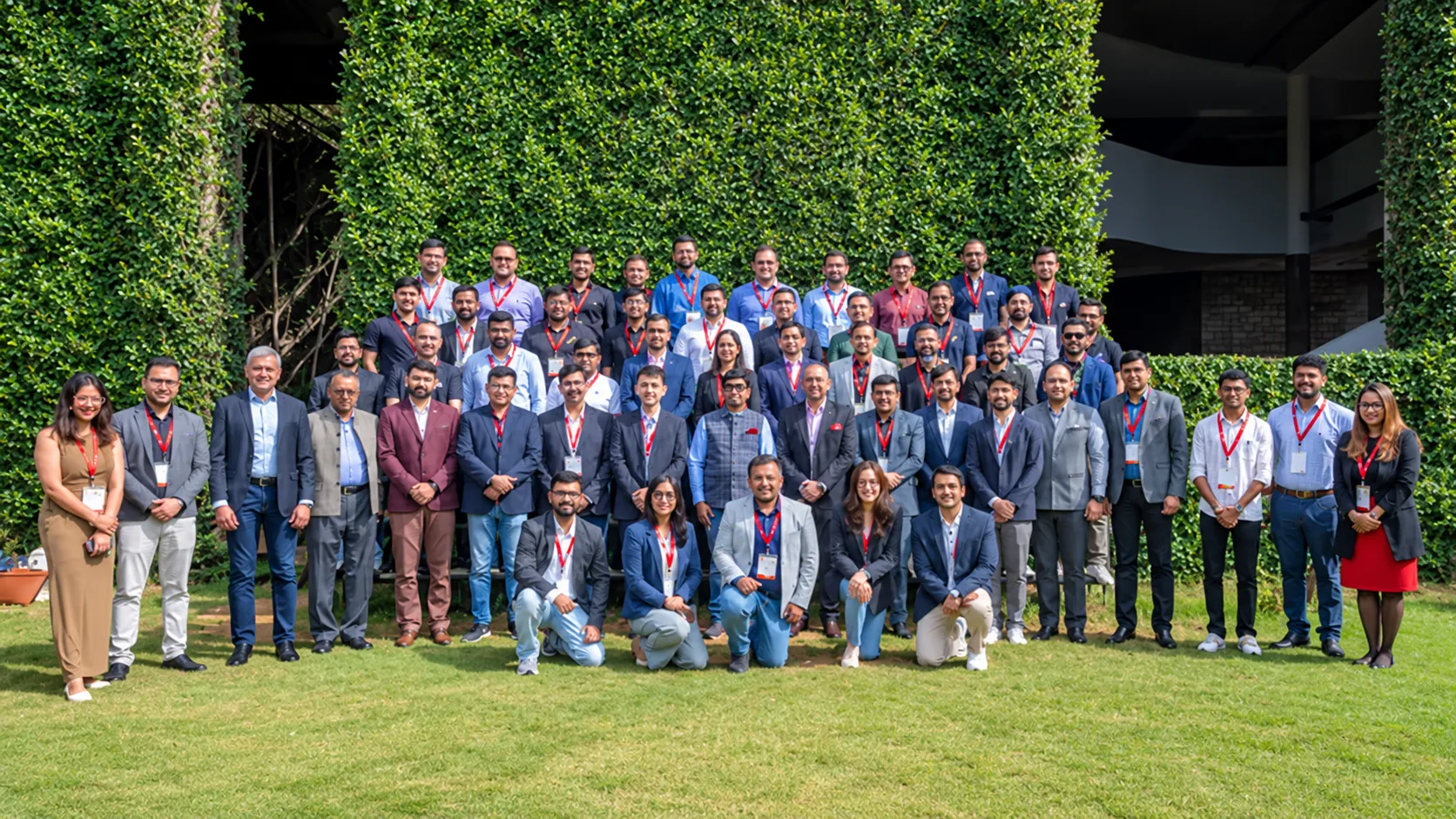
NSRCEL, the start-up hub of the Indian Institute of Management Bangalore, and Maruti Suzuki India have launched the seventh cohort of their Incubation Program for Mobility Startups, extending one of the country's longest-running collaborations between a large manufacturer and an academic incubator. The launch was announced on 28 September 2026.
The six-month programme targets start-ups at the early-revenue to scale-up stage. It is designed not as a classroom exercise but as a bridge between young companies with working products and a manufacturer with the scale to deploy them.
What the cohort focuses on
The seventh cohort covers five broad themes. The first is vehicle technology, the systems and components that go into cars themselves. The second is clean technology, including solutions that reduce emissions, energy consumption and waste. The third is mobility infrastructure, from charging to logistics and connectivity. The fourth is digital transformation, spanning what the organisers describe as Industry 4.0 and Industry 5.0 applications on the factory floor and across the supply chain. The fifth is green manufacturing.
That breadth reflects how the definition of "mobility" has expanded. A decade ago, automotive innovation programmes concentrated on connected-car apps and ride-sharing. Today, carmakers are just as interested in artificial intelligence for quality inspection, software that optimises supplier networks, battery recycling and technologies that cut the carbon footprint of their own plants.
What start-ups get
Selected start-ups receive incubation support from NSRCEL, including mentoring from industry experts, access to IIM Bangalore's networks and connections across the start-up ecosystem.
The most valuable element is likely to be commercial. Participants gain access to paid pilot opportunities with Maruti Suzuki. For an early-stage business-to-business company, a paid pilot with a manufacturer of Maruti's scale can be transformative. It provides revenue, a reference customer and, crucially, the chance to prove that a technology works in a real production or operating environment rather than in a demonstration.
The programme also offers incentives including eligibility for a Maruti Suzuki car, international immersion opportunities and prize money for top performers.
Why corporate incubation matters in India
India's start-up ecosystem has traditionally been strongest in consumer internet businesses: e-commerce, food delivery, payments and education technology. Industrial and deep-tech start-ups have faced a different problem. Their customers are large companies with long procurement cycles, stringent quality requirements and limited appetite for risk.
A young firm with a promising sensor, software tool or material might wait years to win its first enterprise contract. Many run out of money before they get there. Structured programmes that connect start-ups directly with corporate decision-makers can shorten that cycle dramatically.
For corporations, the benefit is access to innovation without building everything in-house. Carmakers globally face simultaneous pressure to electrify their fleets, digitise their operations, meet tougher emissions rules and cut costs. Working with start-ups allows them to test multiple ideas quickly and cheaply, adopting the ones that work and discarding the ones that do not.
Maruti Suzuki's innovation strategy
Maruti Suzuki, India's largest passenger vehicle maker, has built a structured approach to working with start-ups over several years. Beyond its partnership with NSRCEL, the company runs its own open-innovation initiatives, including the Mobility and Automobile Innovation Lab, which invites start-ups to co-develop solutions for its business.
That strategy has taken on greater significance as the Indian car market evolves. Maruti faces growing competition in sport utility vehicles and electric vehicles, and it has committed to expanding its electric range alongside hybrids and compressed natural gas models. Each of those shifts creates new needs in software, battery management, charging and manufacturing processes, areas in which start-ups can often move faster than traditional suppliers.
The company's scale also gives it a unique vantage point. With large factories in Haryana and Gujarat, an extensive supplier base and one of the country's largest dealer and service networks, even a small efficiency gain can deliver substantial savings. A start-up whose solution works in one plant can potentially be rolled out across many.
NSRCEL's role in India's start-up landscape
NSRCEL, formally the N S Raghavan Centre for Entrepreneurial Learning, is one of India's oldest academic incubators. It runs programmes for early-stage founders, women entrepreneurs and social enterprises, as well as sector-focused tracks developed with corporate partners.
Academic incubators bring a particular kind of value. They offer research-informed mentoring, credibility with investors and corporate partners, and a neutral space in which large companies and small ones can collaborate. For a start-up, association with IIM Bangalore can also help when approaching customers who might otherwise be sceptical of a young company.
A seven-cohort track record
Reaching a seventh cohort is itself notable. Many corporate start-up programmes in India have launched with fanfare and then quietly faded after one or two editions, often because internal champions moved on or pilots failed to turn into procurement contracts.
Sustained programmes tend to succeed because they solve that conversion problem. They create clear paths from pilot to purchase, give business units incentives to adopt start-up solutions and build a pool of alumni that can serve as references for later cohorts. The continuity of the NSRCEL and Maruti Suzuki partnership suggests both sides see enough value to keep investing in it.
What founders should consider
For start-ups weighing an application, the key questions are practical. Does the product address a problem Maruti Suzuki actually has at scale? Is the company ready to operate under the quality, safety and data-security requirements of a large manufacturer? And does it have the capacity to deliver a pilot without neglecting its other customers?
Founders should also think beyond the programme. A successful pilot is most valuable when it leads to a commercial contract and when the experience can be used to win business from other manufacturers and suppliers in India and abroad.
Why it matters
India's ambition to become a global hub for automotive manufacturing and exports depends not only on large factories but on an ecosystem of innovative suppliers. Programmes like this one help build that ecosystem by giving young companies access to the customers, data and environments they need to mature.
The seventh cohort will be judged, ultimately, by how many of its participants move from pilot projects to lasting commercial relationships. If the programme continues to deliver on that measure, it will remain one of the more effective models for connecting Indian start-ups with the country's industrial base.