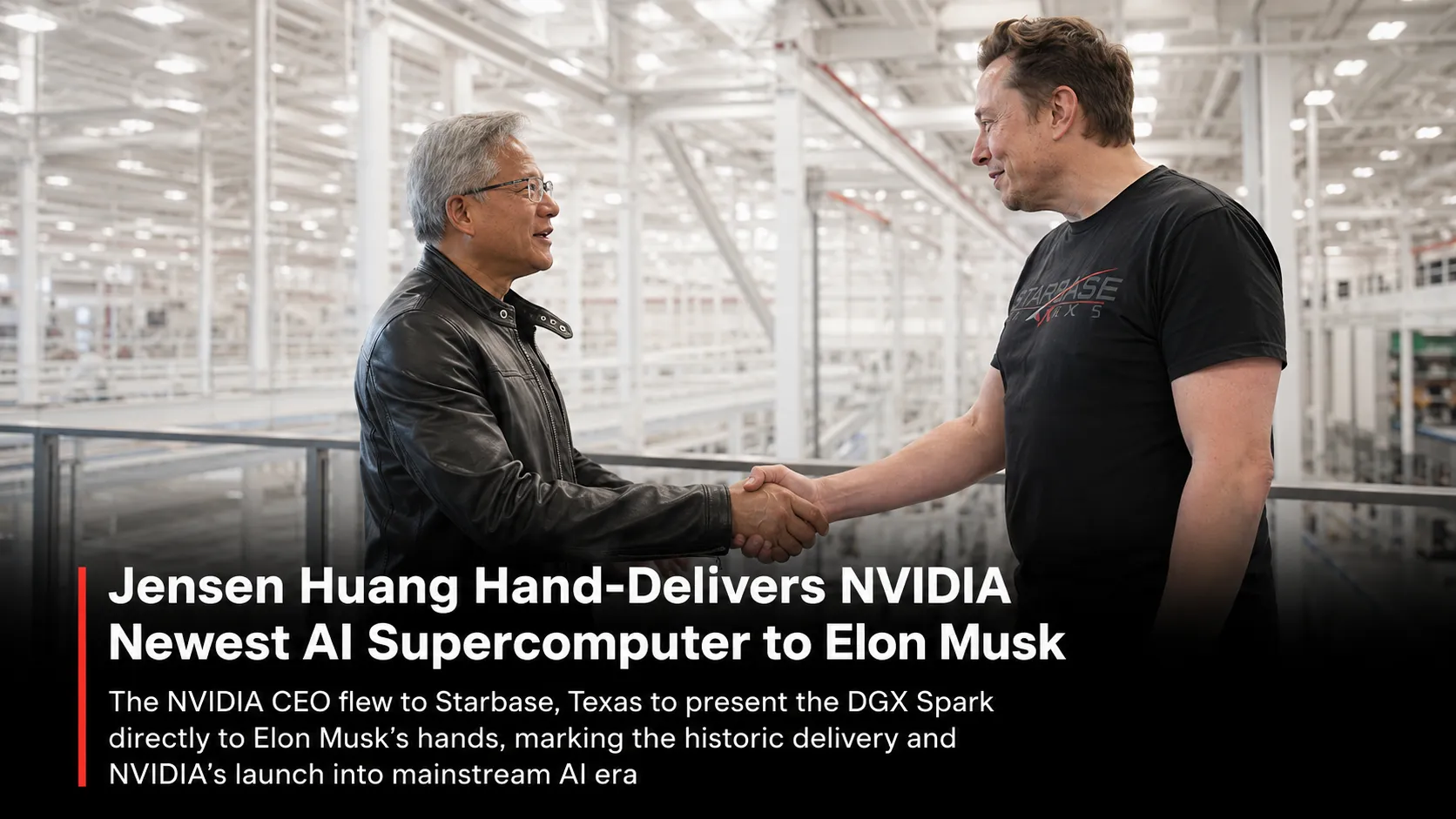
Nvidia disclosed on Friday, August 14, 2026, that its stake in Elon Musk's SpaceX was worth approximately $21 billion at the end of the second quarter, according to a 13F filing with the US Securities and Exchange Commission. The chipmaker reported owning 122.8 million Class A shares in the rocket and satellite company, making the position Nvidia's second-largest disclosed equity holding, trailing only its stake in Intel, which stood at roughly $22 billion at quarter-end, down from $30 billion when the period began.
The disclosure landed just weeks after SpaceX completed its long-anticipated Nasdaq debut in June 2026, one of the largest initial public offerings in history. SpaceX sold 555.6 million Class A shares at $135 apiece in that offering, raising roughly $75 billion and valuing the company at approximately $1.77 trillion — a scale that placed the IPO among the largest public market debuts ever recorded, and one that has kept SpaceX shares volatile in the two months since.
Nvidia's SpaceX shares did not originate from a direct investment in the rocket company itself, but rather trace back to a $10 billion investment Nvidia made in Elon Musk's AI venture xAI as part of a $20 billion funding round in January 2026. When SpaceX acquired xAI in February 2026 in a deal valued at $1.25 trillion, Nvidia's xAI equity converted into SpaceX shares, effectively transforming what began as an AI infrastructure bet into one of the largest corporate stakes in the world's most valuable private-turned-public space company.
The return profile on that original investment has been striking: Nvidia's roughly $5 billion effective cost basis in the position (accounting for the specific tranche that converted) has grown to a peak disclosed value of $21 billion at quarter-end — though the position's mark-to-market value has since declined alongside SpaceX's stock price. SpaceX shares closed at $140 on the Friday of the disclosure, down from $170.86 at the end of June, bringing the current value of Nvidia's holding to approximately $17.2 billion even as the 13F filing reflects the higher June 30 quarter-end valuation.
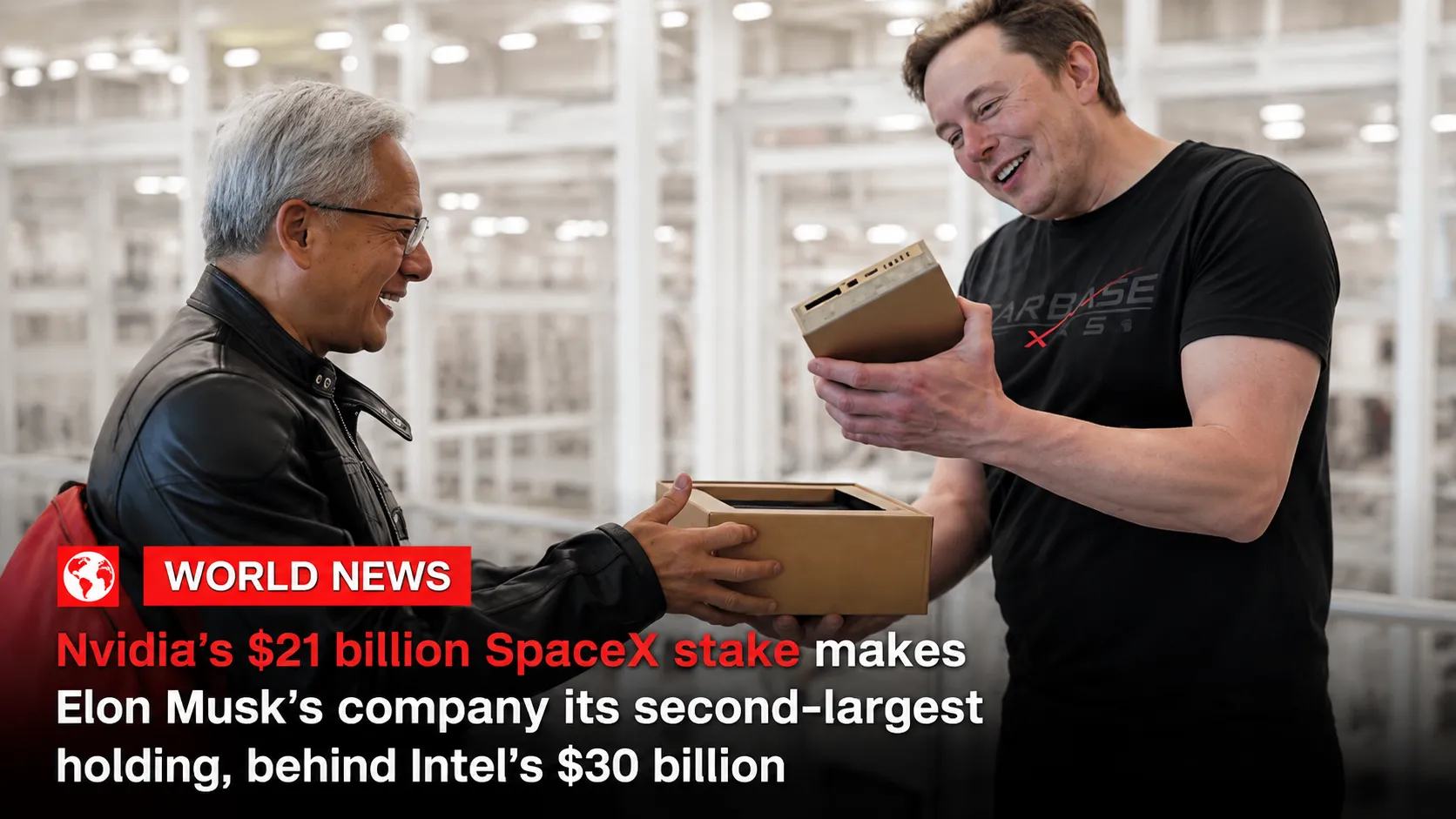
According to FactSet data cited alongside the disclosure, Nvidia ranks as SpaceX's sixth-largest investor. Musk himself remains by far the dominant shareholder, with a stake reported at approximately $850 billion, followed by Alphabet at roughly $78 billion and Advanced Micro Devices at just over $565 million — a shareholder roster that illustrates how deeply intertwined SpaceX's ownership structure has become with the AI chip and cloud computing industry more broadly, well beyond its traditional aerospace and satellite investor base.
A separate regulatory filing released the day before Nvidia's disclosure provided additional clarity on Musk's own ownership structure, showing he held an economic stake of 48.4 per cent in SpaceX as of June 30, with sole voting and investment control over 6.42 billion shares. Musk responded to the disclosed valuation on his social platform X, cautioning that the headline figure could overstate how much of the stake he fully controls, noting that a portion of his shares vest only upon SpaceX achieving what he described as extremely difficult performance milestones, meaning his actual fully-vested ownership percentage sits below the reported total.
The disclosure underscores how tightly Nvidia's fortunes have become entangled with the broader AI infrastructure buildout beyond its traditional chip-sales business, with the company increasingly using strategic equity stakes — in Intel, in xAI-turned-SpaceX, and in other AI infrastructure players — as a complementary growth lever alongside direct hardware revenue. That strategy has paid off spectacularly in the SpaceX case specifically, even accounting for the position's recent decline from its June 30 peak.
For SpaceX, the deepening relationship with Nvidia extends beyond passive equity ownership into operational dependency: the company has committed to exclusively use Nvidia's AI chips in its data centres and to power its AI frontier models going forward, including a stated commitment to Nvidia's next-generation Vera Rubin architecture across both terrestrial and orbital computing infrastructure, with a significant allocation of that hardware expected to begin arriving next year. That combination of equity stake and exclusive hardware commitment gives Nvidia an unusually direct financial and strategic interest in SpaceX's continued success as it scales both its rocket launch business and its rapidly expanding ambitions in AI infrastructure and orbital computing.