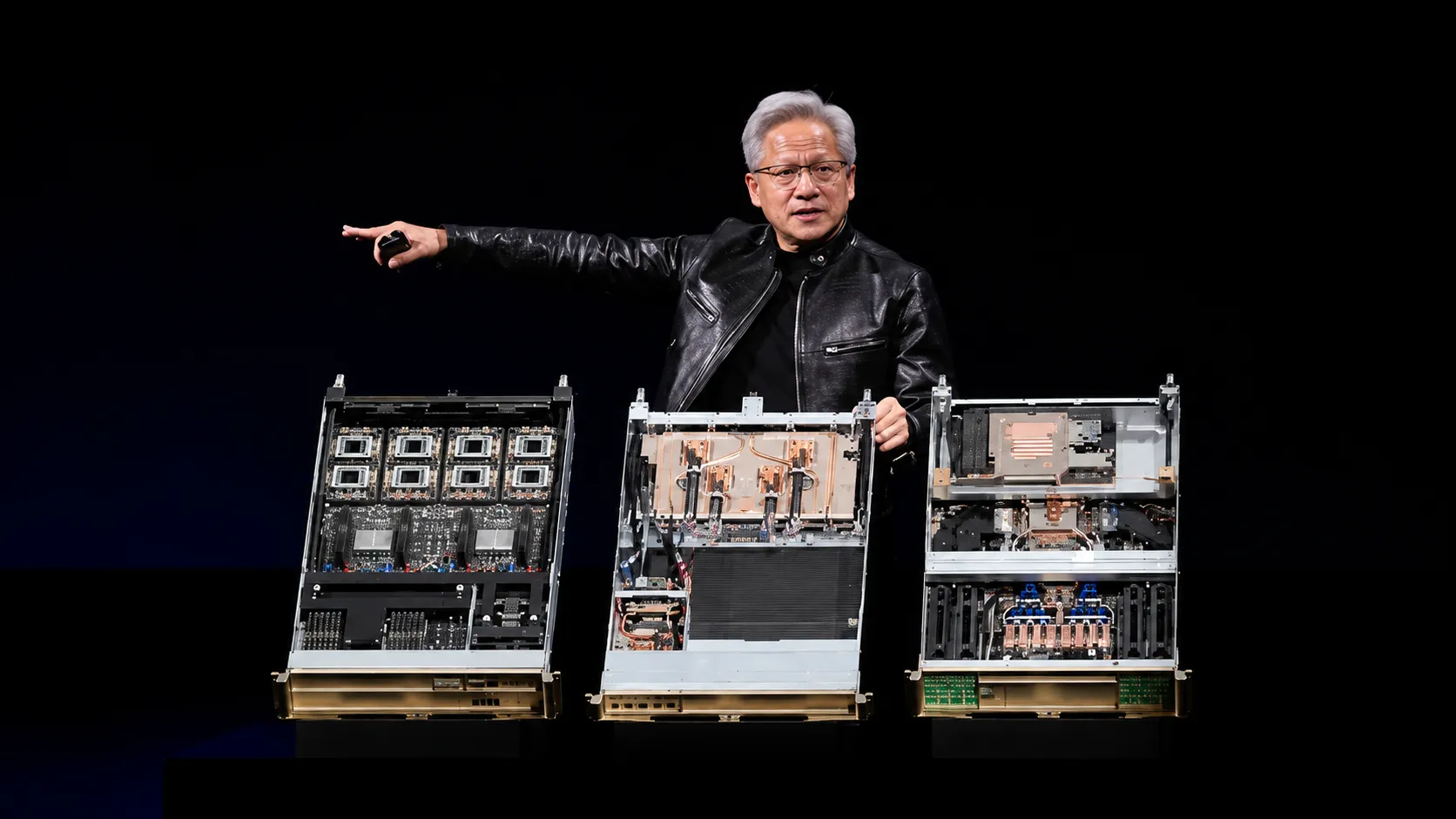
Nvidia has told some of its largest customers to expect price increases exceeding 15 percent on servers built around its flagship artificial intelligence processors, including the Vera Rubin and Grace Blackwell chip families, according to people familiar with the process. The increases will apply to systems shipped starting early next year and vary by chip generation and memory configuration, driven primarily by soaring memory chip costs working their way through the global AI hardware supply chain.
The scale of the underlying cost pressure is stark: server DRAM prices roughly doubled in the first quarter of 2026 alone, with Counterpoint Research reporting an 80 to 90 percent quarter-over-quarter increase across DRAM, NAND and high-bandwidth memory during the period, while other analysts have pegged conventional DRAM contract price growth at 58 to 63 percent quarter-over-quarter in the second quarter following a 90 to 95 percent surge in the first. Memory now accounts for roughly a quarter of the cost of a high-end AI server rack, and Deloitte has projected AI-server DRAM prices could quadruple over the course of 2026, with new supply not expected to meaningfully arrive until 2029 or 2030.
Samsung and SK Hynix, which alongside Micron dominate global memory production, have already raised HBM3E pricing by close to 20 percent for 2026 deliveries — an unusual increase for a memory generation that would typically be getting cheaper as its successor enters the market. Contract manufacturers that assemble servers on behalf of major data centre operators, including those serving Microsoft, Google and Oracle, have already passed Nvidia's pricing notice on to their own customers, according to people familiar with the process.
The cost pressure is not confined to AI infrastructure: Apple has raised product prices by as much as 20 percent and Amazon lifted Echo Dot pricing by 60 percent, with both companies citing memory cost spikes tied to AI data-centre demand. Nvidia itself has separately notified add-in board partners of price increases on GPU kits in each of the past several months, with server chips such as the H200 and B200 seeing increases of up to 15 percent in early 2026 alone, even before this latest round of AI-server pricing changes.
Nvidia's quarterly results, due August 26, are expected to draw close scrutiny of gross margins and Vera Rubin demand alongside the pricing news, with options traders pricing in a roughly 5.3 percent potential swing in Nvidia shares around the report. For the hyperscale cloud providers, sovereign AI initiatives and enterprise buyers who represent Nvidia's largest customers, a sustained 15-percent-plus increase translates into materially higher capital expenditure for already-committed data centre build-outs, at a moment when several buyers had locked in spending plans based on earlier, lower cost assumptions.
For enterprise customers, the price increase adds a new variable to AI infrastructure planning at a time when boardrooms are already under pressure to justify the return on massive AI capital expenditure commitments. Whether the higher pricing meaningfully slows the pace of data centre construction, or is simply absorbed as the latest cost of participating in the AI infrastructure race, will become clearer as hyperscalers report updated capital expenditure guidance in the coming quarters — guidance markets have shown themselves increasingly willing to scrutinise for signs that AI spending is outpacing the revenue it is expected to generate.


