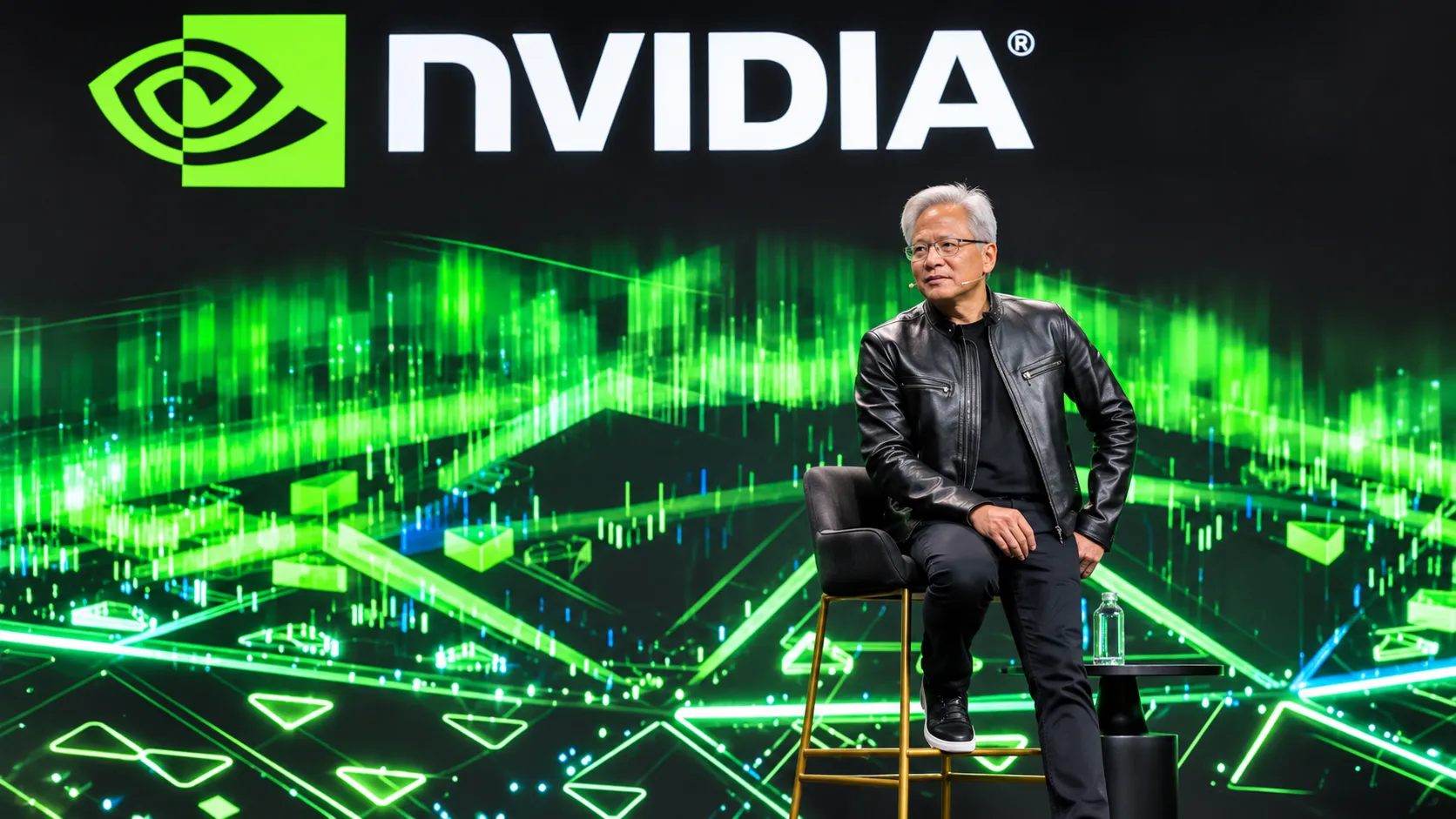
TechArtificial Intelligence6 MIN READ

Nvidia Sinks 8% After Hours on Report Its Board Is Preparing to Oust Jensen Huang, as Baird Issues a Rare Downgrade

Nvidia shares fell more than 8% in after-hours trading on November 11 after the Wall Street Journal reported that the chipmaker's board is preparing to remove chief executive Jensen Huang. Earlier in the day, Baird cut the stock to neutral and slashed its price target to $200 from $500, and Morgan Stanley dropped Nvidia as a top pick, as a probe into Huang's conduct deepened.

By Aravind Kumar · Author12 November 2026New
Nvidia Sinks 8% After Hours on Report Its Board Is Preparing to Oust Jensen Huang, as Baird Issues a Rare Downgrade

The leadership crisis at Nvidia, the world's most valuable semiconductor company and the engine of the artificial intelligence boom, escalated sharply on Wednesday when its shares tumbled in late trading on a report that the board is preparing to remove co-founder and chief executive Jensen Huang.

Nvidia shares fell more than 8% to about $159.50 in after-hours trading on November 11, according to CBS News, after the Wall Street Journal reported that the board was moving towards ousting Huang. The stock had closed the regular session at $173.73, according to 24/7 Wall St., after a rebound earlier in the day. At the after-hours price, Nvidia's market value stood at roughly $3.85 trillion, about $347 billion below Wednesday's close.

The slide extends a dramatic week for the company. Since Nvidia disclosed on November 8 that its board had opened an investigation into Huang's conduct, the stock has lost more than $450 billion in market value, CBS News reported.

How the crisis unfolded

The turmoil began on Sunday, November 8, when Huang told employees in an email that he had been unfaithful to his wife. The board opened an independent investigation the same day and said it had confidence in him, according to 24/7 Wall St.

The probe is examining reports that Huang may have been the target of a foreign intelligence operation. US intelligence agencies have linked Huang to Chinese business executive Alice Huang, who is not related to him and whom US officials suspect of being an asset of China's Ministry of State Security, CBS News reported. China has called the claim groundless, and Huang has not been accused of any crime. The board has hired Joon Kim, a former acting US attorney, and the law firm Wachtell, Lipton, Rosen & Katz, and has said it has no reason to believe national security or company secrets were compromised.

The pressure intensified on Wednesday after the New York Times reported that Huang had also had a relationship with a senior Nvidia executive, according to 24/7 Wall St. Nvidia has not publicly commented on that report.

A rare downgrade

Before the Journal's report, Wall Street had already begun to sour on the stock. Baird analyst Tristan Gerra downgraded Nvidia to neutral and cut his price target to $200 from $500, according to The National. The downgrade was described as rare for a stock that has been one of the most widely recommended on Wall Street.

Gerra cited both operational and leadership concerns. He delayed his 2027 data centre forecasts, saying supply issues are "mostly behind a potential slowdown, alongside potential demand softening," and suggested that growth in AI capital expenditure by large cloud providers could slow to around 40% or slightly less in 2027. Baird analysts said that a new leader, likely from outside the company, is needed "to re-establish trust both externally and internally."

Morgan Stanley analyst Joseph Moore removed Nvidia from his list of top picks, while keeping an overweight rating and a $300 price target, according to TheStreet. Moore said Huang's leadership is "crucial to the company's direction," The National reported.

Wedbush analyst Dan Ives estimated a 15% chance that Huang would be removed as chief executive, and said that if that happened, Nvidia would be "worth a lot less (25 per cent to 30 per cent) as a company/stock," according to The National.

Why Huang matters so much

Huang co-founded Nvidia in 1993 and has led it for more than three decades, transforming a maker of graphics chips for video games into the dominant supplier of the processors that train and run AI models. He is widely seen as the face of the AI industry, and his relationships with technology chief executives, governments and customers are considered central to Nvidia's commercial success.

That is why investors are so sensitive to any change in his position. Nvidia's chips, software platform CUDA and networking products underpin the data centres being built by Microsoft, Amazon, Alphabet, Meta, OpenAI and a growing roster of specialist cloud providers. A leadership vacuum at a moment of intense competition from rival chipmakers and in-house chips developed by its biggest customers could unsettle that ecosystem.
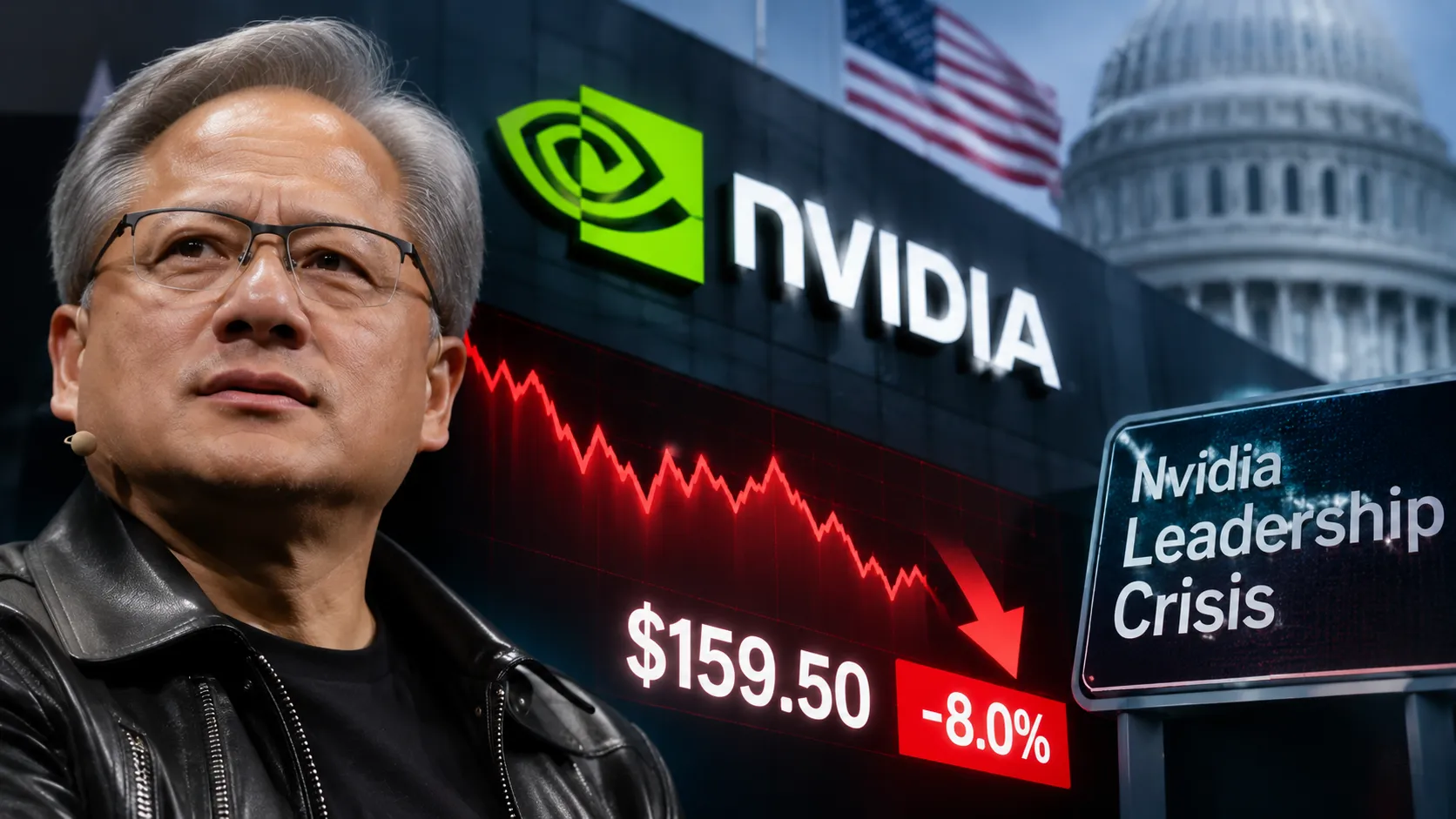

“A new leader is needed to re-establish trust both externally and internally.”
— Baird analysts Tristan Gerra and Tyler Bomba

Washington weighs in

The crisis has quickly become political. Senator Kevin Cramer has called for Huang to step down, and House committee chairmen have requested a closed-door briefing, saying subpoenas are ready if he declines, according to 24/7 Wall St. Representatives Brian Mast, John Moolenaar and Rick Crawford asked Huang to brief their committees by November 18, The National reported.

A proposed class action lawsuit was filed in San Jose on Monday, accusing Nvidia and Huang of hiding the relationship from shareholders, according to 24/7 Wall St. Corporate governance experts told CBS News that the alleged relationship appears to violate Nvidia's code of conduct, which warns that personal relationships could create conflicts of interest.

The scrutiny comes as US lawmakers debate how tightly to restrict sales of advanced AI chips to China. On the same day, Reuters reported that a Chinese university with ties to the People's Liberation Army had bought Nvidia H200 processors despite being on a US export blacklist, adding to the pressure on the company.

a5148315-4bea-4a0b-bc55-eaf610b550dc.png

Who could lead Nvidia?

Nvidia has not named any potential successor. Some insiders have raised the name of Ian Buck, a key architect of CUDA who runs Nvidia's hyperscale business, according to 24/7 Wall St., although his candidacy has not been confirmed. Baird's call for an outside leader suggests that some investors believe a clean break may be necessary to restore confidence.

Succession at founder-led technology companies is notoriously difficult. Huang's personal authority, technical knowledge and decades of relationships are difficult to replace, and any transition would be watched closely by customers and partners deciding how much to commit to Nvidia's roadmap.

The wider market impact

Nvidia's market value has been a key driver of the S&P 500 and Nasdaq during the AI boom, making its troubles a concern for the broader market. Despite the leadership turmoil, US stocks rallied on Wednesday, with the Nasdaq Composite rising 1.6% after CoreWeave, a major Nvidia customer, reported better-than-expected results and raised its guidance, according to TheStreet.

The stock had risen 2.48% at the open to $172.68 after closing 5% higher in the previous session, but it remains on course for a sixth consecutive weekly loss and is down about 8% for the year, The National reported. Its record close of $239.24 came on October 6, according to 24/7 Wall St.

What it means for India

India has become an important market and partner for Nvidia. Indian conglomerates and data centre operators are building AI infrastructure using Nvidia chips, the government's IndiaAI Mission has procured thousands of graphics processors, and Nvidia employs thousands of engineers in Bengaluru, Hyderabad and Pune. Indian companies building so-called neoclouds, which rent out AI computing capacity, depend heavily on Nvidia's supply and roadmap.

A prolonged leadership crisis is unlikely to change Nvidia's product plans in the short term, but it could affect the company's relationships with governments and partners, including in India, where Huang has met political and business leaders.

For Indian investors who hold Nvidia shares through international funds or direct overseas investment, the volatility is a reminder of the concentration risk in global technology stocks.

What comes next

Nvidia is scheduled to report its third-quarter results on November 16, according to The National, and Huang has been asked to brief lawmakers by November 18. Investors will watch for any board decision on his future, the findings of the independent investigation and whether the company's guidance reassures the market. Whatever the outcome, the episode has exposed how much of the AI industry's confidence rests on a single individual, and how quickly that confidence can be shaken.

TagsNvidiaJensen HuangCEO successioncorporate governanceboard investigationWall Street JournalBairdMorgan StanleyAI chipssemiconductorsNasdaqmarket valueUS-China tech rivalrynational securityAI stocksWall StreetBig TechIndia AIglobal marketsinvestors

Reader reviews

Sign in to rate and review this article.
Loading reviews…

