FundingMarket Data Women5 MIN READ

Oil Holds Steady Near $95 After Iran Strikes a US Base in Bahrain, as Rising Supply Caps the War Risk Premium

Oil prices were little changed on November 16 after Iran struck a US base in Bahrain on Sunday, its first attack on a Gulf state in several weeks. Brent traded around $95 a barrel, slightly lower, as rising supply, a recovery in shipments through the Strait of Hormuz and an IEA finding that supply now exceeds demand offset geopolitical risk.

By Shaym Kumar · Author16 November 2026New
Oil Holds Steady Near $95 After Iran Strikes a US Base in Bahrain, as Rising Supply Caps the War Risk Premium

A new Iranian attack in the Gulf would once have sent oil prices soaring. On Monday, the market barely moved.

Brent crude traded at about $95.11 a barrel early on Monday, November 16, down 0.76%, while another crude benchmark quoted by Angel One stood at about $88.19, down 0.42%. The muted move came after Iran struck a US helicopter base in Bahrain on Sunday, November 15, its first attack on a Persian Gulf state in several weeks, according to Angel One.

Newsquawk reported that WTI and Brent futures for January delivery fell 0.6% and 0.8% respectively in early Asian trading.

The attacks

Iranian state television also reported that five vessels had struck mines, according to Angel One. Maritime authorities confirmed an attack on a tanker, and all crew were reported safe.

Iran had claimed that it launched drones at a US air-defence radar at Bahrain's Al-Rifaa base, according to Upstox. Newsquawk reported that the aircraft carrier USS Roosevelt had arrived in the area of responsibility of US Central Command, bringing the number of carrier strike groups in the region to three.

Tehran said a diplomatic resolution remained possible, while US President Donald Trump said additional strikes against Iran might not be necessary, according to Angel One.

Why prices stayed calm

The main reason for the muted reaction is that supply has improved. The International Energy Agency reported last week that global oil supply had exceeded demand for the first time since the conflict began, and projected a surplus of about 2 million barrels a day in the current quarter, according to Angel One. Shipments through the Strait of Hormuz have been gradually recovering.

Major producers have increased output. Saudi Arabia reported a 26% increase in oil production in October, and Iraq raised production to a wartime record, according to Trading Economics. US crude inventories rose by about 4.7 million barrels in the week ended November 6, the largest increase since August.

"Strikes on bases or regional infrastructure that leave crude supply untouched have typically caused short-lived risk premia," Newsquawk said in its analysis, adding that premiums tend to persist only if transit through Hormuz or production is threatened.

A volatile year

Oil prices have swung sharply this year because of the conflict involving Iran. The Strait of Hormuz, through which a large share of the world's seaborne oil passes, was effectively blocked for a period, causing prices to surge and hitting importers such as Japan and India.

Brent fell to a ten-week low of about $91.50 on November 10 before recovering towards $96 later in the week, according to Trading Economics. It fell about 13% in the first week of November alone.

Analysts expect Brent could test the $90 to $92 range, with a downward bias but continued volatility linked to US-Iran tensions, according to Upstox.

Other commodities

Gold fell 0.2%, failing to break through resistance near $3,900 an ounce, while copper fell 1% ahead of Chinese economic data, according to Newsquawk. Chinese data released later showed weaker-than-expected retail sales and industrial output, which could weigh on demand for industrial commodities.

Why it matters for India

India imports most of its crude oil, making it one of the countries most affected by oil price movements. Higher prices raise the import bill, widen the trade deficit, put pressure on the rupee and add to inflation, which has already risen above the Reserve Bank of India's tolerance band.
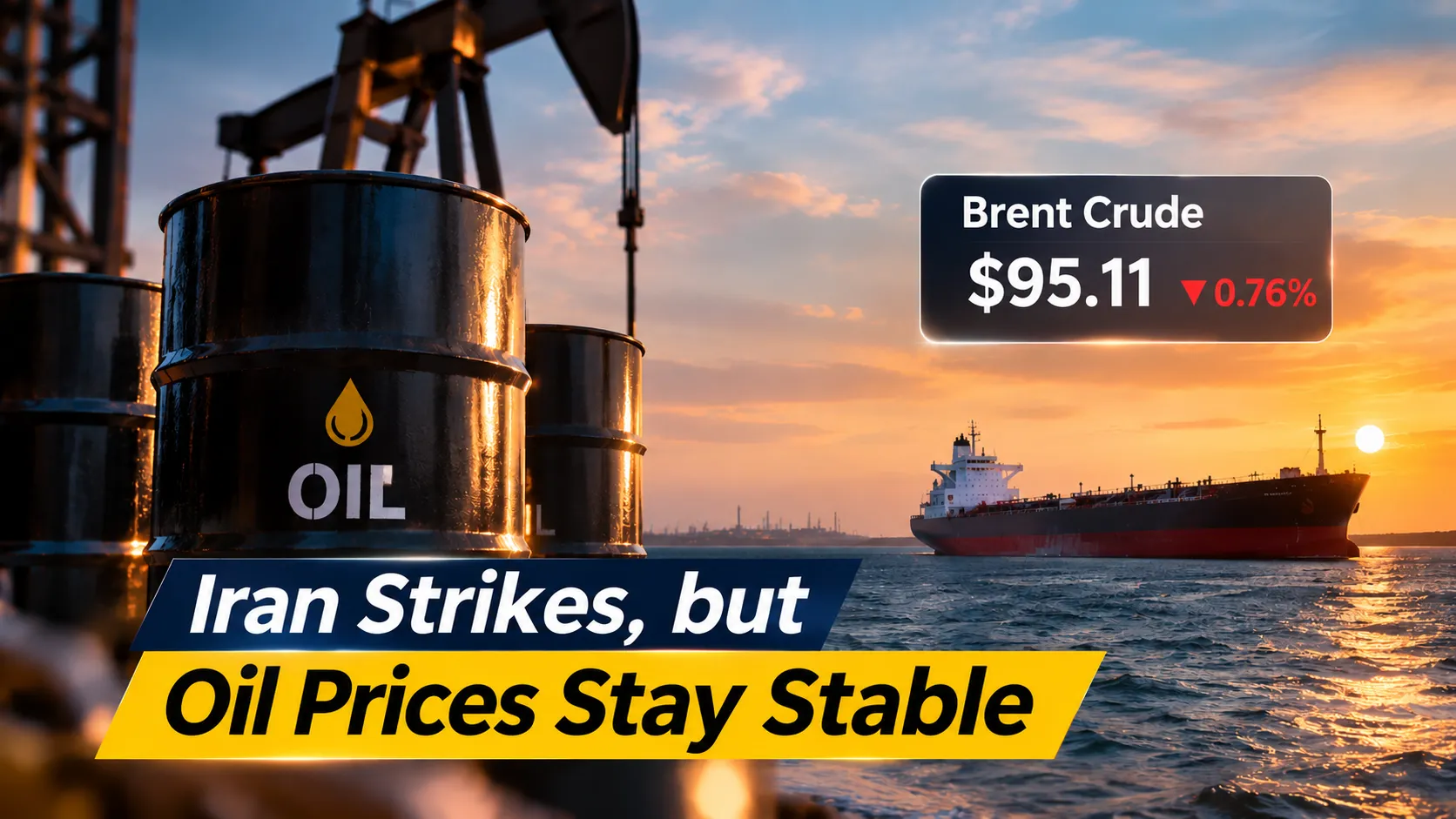

“Strikes that leave crude supply untouched have typically produced only short-lived risk premiums.”
— Newsquawk market analysis

Lower oil prices in November have helped attract foreign investors back to Indian equities and could ease inflationary pressures. Foreign portfolio investors bought about ₹84,290 crore of Indian shares between November 2 and 13, with analysts citing lower crude prices as a key factor.

Oil marketing companies such as Indian Oil, Bharat Petroleum and Hindustan Petroleum, as well as airlines, paint makers and chemical companies, are sensitive to crude prices.

b42a5dbf-5b82-41f7-b1ab-7e106ddd42ce.png

The diplomatic picture

The geopolitical outlook remains uncertain. Trump is due to meet Chinese President Xi Jinping and Russian President Vladimir Putin in Shenzhen on November 19, where he is expected to raise the conflict with Iran, according to AFP. A White House official said Trump will extend a shipping waiver for oil and fertiliser by 90 days, according to Newsquawk.

Any progress towards a diplomatic resolution could further reduce the risk premium in oil prices, while an escalation that threatens supply could send prices higher.

What it means for investors

For investors, the market's reaction suggests that supply fundamentals are now outweighing geopolitical headlines. However, the situation remains fragile. Analysts say the key signals to watch are tanker traffic through Hormuz, any Israeli response and changes in the shape of the oil futures curve.

OPEC+ and supply decisions

The OPEC+ group of oil producers, led by Saudi Arabia and Russia, plays a major role in setting supply. Its decisions on output targets can quickly shift the balance between supply and demand. With prices well above levels seen earlier in the year, some members have increased production, adding to the supply surplus projected by the IEA.

Inflation and central banks

Oil prices feed directly into inflation through fuel costs and indirectly through transport and production costs. Central banks, including the US Federal Reserve and the Reserve Bank of India, watch energy prices closely when setting interest rates. A sustained decline in oil prices could ease pressure on central banks to keep raising rates.

Traders also noted that the oil futures curve, which shows prices for delivery in future months, has been closely watched for signs of tightness. When near-term prices trade well above later contracts, a pattern known as backwardation, it usually signals strong current demand or supply concerns. A flattening of the curve would indicate easing tightness.

Shipping costs and insurance premiums for tankers in the Gulf have also been elevated because of the conflict, adding to the cost of oil for importers even when benchmark prices are stable.

Asian refiners, which buy much of the Gulf's oil, have also sought to diversify supplies, increasing purchases from the United States, Africa and Latin America to reduce their exposure to disruptions.

What comes next

Investors will watch the outcome of the Trump-Xi-Putin summit, developments in the Gulf, OPEC+ production decisions and inventory data. For oil-importing countries like India, a sustained period of stable or lower prices would provide welcome relief from inflation.

Tagsoil pricesBrent crudeWTIIranBahrainStrait of HormuzMiddle EastIEAoil supplyOPECSaudi Arabiageopolitical riskUSS Rooseveltgoldcopperenergy marketsinflationIndia oil importsrupeeinvestors

Reader reviews

Sign in to rate and review this article.
Loading reviews…

