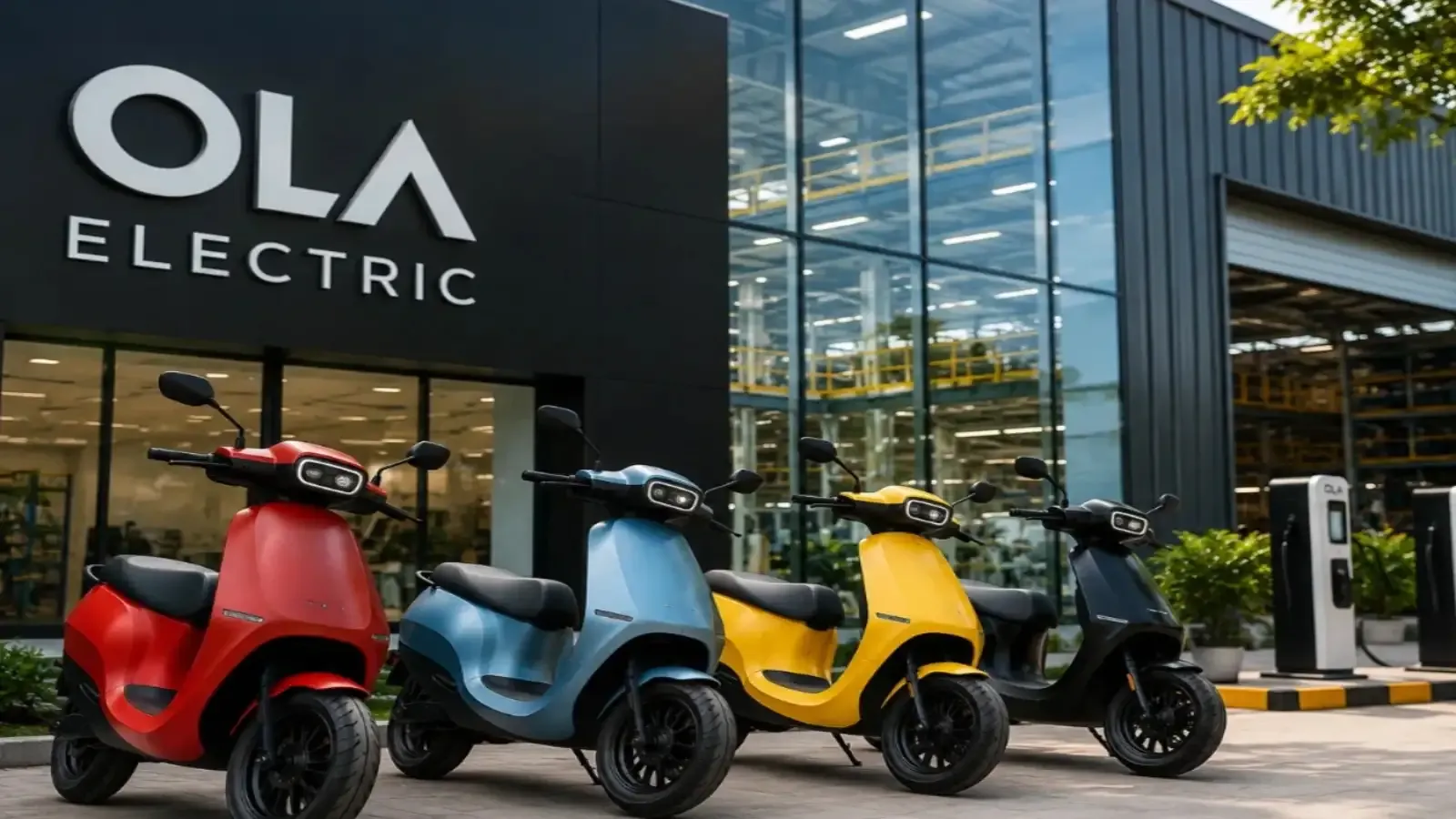
Ola Electric is building out its first wave of dealer-led retail stores across seven states, marking a significant strategic shift away from the company-owned outlet model that defined its early retail expansion. The electric scooter manufacturer is targeting approximately 500 dealerships within the next two quarters, a pace of expansion aimed at rebuilding local sales and service capacity at a moment when the company's market share has come under increasing pressure from rival two-wheeler manufacturers.
The pivot toward a dealer-led model reflects lessons drawn from more established automotive retail practices, where independent dealership partners typically bring local market knowledge, existing customer relationships and after-sales service infrastructure that can be considerably harder and more capital-intensive for a single company to replicate purely through company-owned stores.
The strategic pivot also comes against a backdrop of intensifying competition within India's electric two-wheeler market, where several established internal combustion engine manufacturers have accelerated their own electric vehicle launches over the past two years, leveraging pre-existing dealer networks and decades of built-up consumer trust that pure-play electric vehicle startups have had to build from scratch.
Automotive retail professionals note that India's two-wheeler dealership economics have traditionally relied on service revenue and spare parts sales as much as new vehicle margins, a business model that electric vehicles complicate given their simpler mechanical architecture and correspondingly lower routine maintenance requirements, meaning Ola Electric's new dealer partners will need carefully structured incentive and revenue-sharing arrangements to remain commercially attractive relative to traditional internal combustion engine dealership economics that many potential partners may be more familiar with.
For Ola Electric, the shift arrives at a critical juncture. The company built its early growth on a direct-to-consumer, largely online sales model paired with a network of company-owned experience centres, an approach that helped it capture significant early market share in India's electric two-wheeler category but has faced growing scrutiny as competitors with more traditional dealership networks have closed the gap on both sales volume and service quality perceptions.
Independent dealer partners are generally better positioned to provide the kind of localised after-sales service and spare parts availability that increasingly influences purchase decisions in the two-wheeler category, particularly as electric vehicle adoption moves beyond early adopters in major metros into smaller towns and cities where consumers place a premium on reliable, nearby service infrastructure.
Dealer partners typically bring not just physical retail infrastructure but also crucial local market knowledge, existing customer relationship networks built over years of serving a particular region, and after-sales service capacity that would take a single company considerably longer and more capital to replicate purely through company-owned outlets spread across similarly diverse geographic markets.
Industry data on India's two-wheeler retail sector consistently shows that after-sales service quality ranks among the top factors influencing repeat purchase and brand advocacy, ahead in many surveys of even initial purchase price sensitivity, reinforcing why Ola Electric's shift toward dealer partners with established local service reputations could prove more consequential to its recovery than pricing or product changes alone.
The move also signals a broader recalibration in how India's electric vehicle manufacturers are approaching retail distribution as the category matures beyond its initial hype cycle. Early-stage EV makers frequently favoured direct-to-consumer models partly to control brand experience and partly because building a full dealer network from scratch requires significant capital and time that early-stage companies often could not justify.
As the market matures and competition intensifies, however, the calculus shifts: scale and service density become more important competitive levers than the more curated brand experience that direct-to-consumer showrooms were originally designed to deliver, pushing companies like Ola Electric back toward the dealership model that has underpinned automotive retail in India for decades.
The broader shift also reflects lessons that several electric vehicle manufacturers globally have learned the hard way: that direct-to-consumer retail models, while attractive for controlling brand experience and pricing consistency in a company's earliest growth phase, often struggle to match the service density and geographic reach that traditional dealership networks can provide once a company needs to serve a much larger and more geographically dispersed customer base.
For investors and policymakers focused on India's electric mobility transition, Ola Electric's retail strategy pivot offers an important signal that even well-capitalised, high-profile electric vehicle companies are not immune to the basic retail and service infrastructure lessons that have long governed traditional automotive distribution in India, lessons that newer entrants ignore at their own commercial peril.
Whether the dealer-led pivot succeeds in reversing recent market share pressure will depend heavily on execution speed and the quality of dealer partners the company is able to onboard across its target states. Rebuilding trust with both dealers and consumers after a period of well-documented service complaints will require sustained investment beyond simply opening new outlet locations.
For India's broader electric two-wheeler industry, Ola Electric's retail strategy shift offers a useful signal of where the category is headed as it matures: away from pure direct-to-consumer disruption and back toward the kind of dealer-supported distribution and service infrastructure that has long underpinned consumer trust in traditional two-wheeler purchases.
Analysts covering India's electric vehicle sector will be watching closely to see whether the dealer-led pivot can meaningfully improve customer satisfaction metrics and after-sales service ratings, factors that have reportedly weighed on Ola Electric's brand reputation in various customer surveys over the past two years, alongside whether the expanded network can help the company recapture market share ceded to increasingly competitive rivals.
Business leaders across India's broader electric vehicle component and services ecosystem, including dealers themselves, are likely to watch closely how favourable the terms and support structures Ola Electric offers its new dealer partners prove to be, since the success or failure of this pivot could meaningfully influence how other electric vehicle manufacturers structure their own dealer network expansion strategies going forward.
The bottom line for TIGI's readers: Ola Electric's dealer pivot is a course correction that acknowledges service infrastructure, not just brand, now decides electric two-wheeler market share in India.
Analysts tracking the rollout will also be watching how quickly Ola Electric can train its new dealer partners on electric vehicle-specific service protocols, since inconsistent technical support at the dealership level could undermine the very trust the retail pivot is designed to rebuild.