StartupsLatest5 MIN READ

Ola Electric's Q2 Revenue Falls 39% to ₹421 Crore as Losses Widen Sequentially, Deepening Pressure on Bhavish Aggarwal's EV Maker

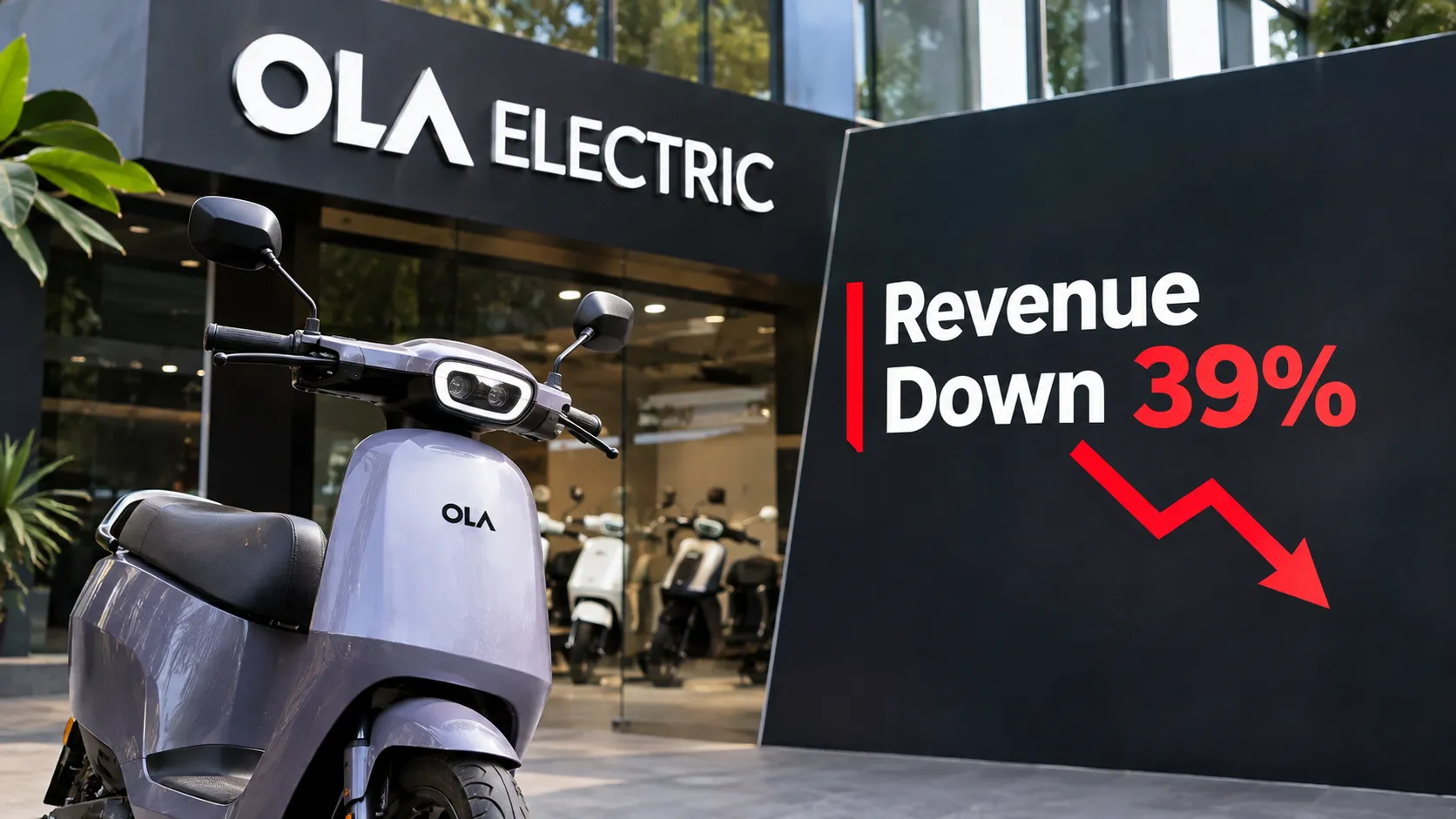
Ola Electric's operating revenue fell 39% year-on-year to ₹421 crore in the September quarter, and its net loss of ₹362 crore was 13% narrower than a year earlier but 8% wider than in the June quarter, according to Inc42's report on November 12. Total expenses fell 28% year-on-year to ₹639 crore, but rose 3% from the previous quarter, as the electric scooter maker struggles to regain market share.

By Nisha Omkumar · Author13 November 2026New
Ola Electric's Q2 Revenue Falls 39% to ₹421 Crore as Losses Widen Sequentially, Deepening Pressure on Bhavish Aggarwal's EV Maker

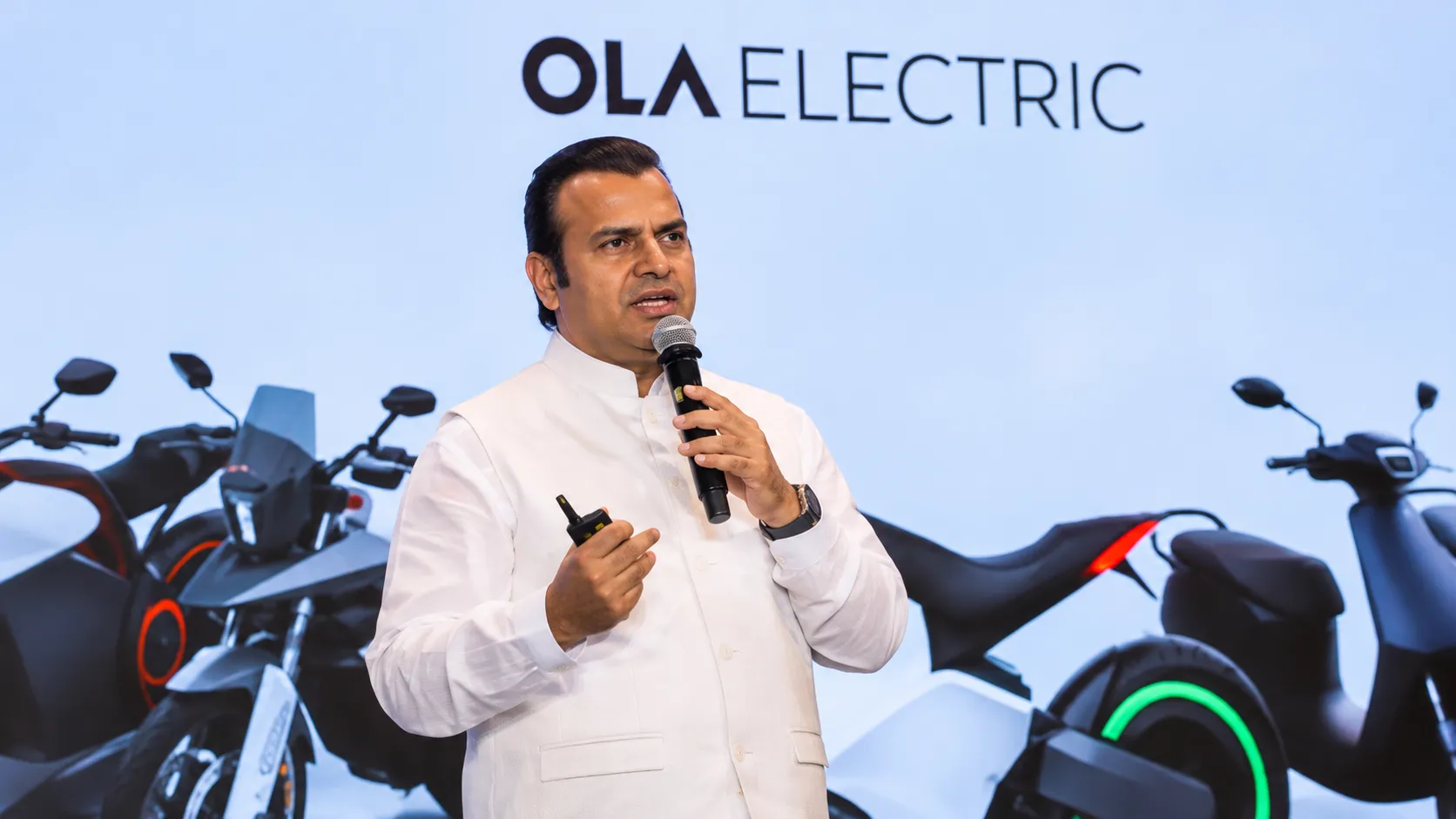
Ola Electric, once the undisputed leader of India's electric scooter market, reported another quarter of shrinking sales, underlining how far the company has fallen since its high-profile stock market debut.

The Bengaluru-based company's operating revenue fell 39% year-on-year to ₹421 crore in the July-September quarter, the second quarter of the 2026-27 financial year, from ₹690 crore a year earlier, according to Inc42, which reported the results on Thursday, November 12. Revenue was also down 7% from ₹455 crore in the June quarter.

The net loss narrowed 13% year-on-year to ₹362 crore from ₹418 crore, but widened 8% from ₹336 crore in the previous quarter. "The decline in revenue and sequential widening of losses point to continued pressure on the EV maker's financial performance," Inc42 noted.

Some other outlets reported a different loss figure: Upstox's results live blog cited a loss of ₹428 crore. Investors should consult the company's exchange filing for the definitive numbers.

Costs and income

Total income, including other income of ₹27 crore, was ₹448 crore, down 41% year-on-year from ₹756 crore, according to Inc42. Total expenses fell 28% year-on-year to ₹639 crore from ₹893 crore, reflecting cost-cutting efforts, but rose 3% from ₹620 crore in the June quarter.

The year-on-year decline in expenses shows that Ola Electric has reduced spending significantly, but revenue has fallen even faster, making it difficult to narrow losses.

A dramatic fall from leadership

Founded by Bhavish Aggarwal, who also co-founded ride-hailing company Ola, Ola Electric was India's largest seller of electric two-wheelers for much of 2023 and 2024. It listed on the stock market in August 2024 in one of the most anticipated IPOs of the year.

Since then, the company has lost substantial market share to established motorcycle and scooter makers such as TVS Motor, Bajaj Auto and Hero MotoCorp's Vida brand, as well as Ather Energy. These competitors have leveraged their large dealer networks, service infrastructure and reputations for reliability to win customers.

Ola Electric has faced complaints about service quality and product reliability, as well as scrutiny from regulators. Its shares have fallen sharply from their post-listing highs and hit record lows during the past year.

The profitability push

Over the past year, Ola Electric has pivoted from a strategy focused on market share to one focused on profitability, cutting costs, reducing discounts and restructuring operations. In the 2025-26 financial year, the company said its automotive business had turned EBITDA positive, a milestone it highlighted as evidence of improving unit economics.

But a smaller business with lower revenue makes it harder to cover fixed costs, including those of its large manufacturing facilities in Tamil Nadu.

The Gigafactory bet

A key part of Ola Electric's long-term strategy is its cell manufacturing Gigafactory in Krishnagiri, Tamil Nadu, where it is producing lithium-ion battery cells. The company has received support under the government's production-linked incentive scheme for advanced chemistry cell batteries.

Producing its own cells could reduce costs and dependence on imports, and Ola Electric has also explored energy storage as a new business. However, scaling cell production is technically challenging and capital-intensive, and the payoff may take years.

India's electric two-wheeler market

India's electric two-wheeler market continues to grow, driven by rising fuel prices, government incentives and greater consumer awareness. Electric scooters and motorcycles account for a rising share of two-wheeler sales, although they remain a minority of the total market.

“The decline in revenue and sequential widening of losses point to continued pressure on the EV maker's financial performance.”
— Inc42

Competition has intensified as legacy manufacturers have launched new models and expanded their networks. Government subsidies under the PM E-DRIVE scheme have been reduced over time, putting pressure on prices and margins across the industry.

Investor sentiment

Ola Electric's results come as investors scrutinise new-age technology companies' path to profitability. While many large new-age companies have turned profitable, Ola Electric remains loss-making with shrinking revenue.

On the same day, the Central Consumer Protection Authority fined Ola, the ride-hailing company also founded by Aggarwal, ₹10 lakh over prompts asking customers to pay tips in advance, according to Inc42, adding to the regulatory scrutiny facing his companies.

What it means for the EV transition

Ola Electric played an important role in accelerating India's shift to electric scooters, with aggressive pricing and marketing that brought electric two-wheelers into the mainstream. Its struggles do not signal a slowdown in the transition, as other manufacturers have taken up the slack. But they illustrate the challenges of building a manufacturing company at scale and the importance of after-sales service in the automotive industry.

b63dd9e2-063e-47e3-9add-c4cdf7d13049.png

Questions for management

Investors will want to know how Ola Electric plans to stabilise revenue, whether its new products can win back customers, how quickly its cell manufacturing business can scale and how much cash the company has to fund its operations until it becomes profitable.

The company's ability to rebuild consumer trust through better service and product quality will be crucial.

The service problem

Customer service has been one of Ola Electric's most persistent challenges. Electric scooters require specialised servicing, and the company built its sales network rapidly through experience centres and online sales, while its service infrastructure struggled to keep pace. Complaints about delays in repairs and spare parts damaged its reputation, and the Central Consumer Protection Authority has previously scrutinised consumer grievances against the company.

Competitors such as TVS, Bajaj and Hero have extensive service networks built over decades of selling petrol two-wheelers, giving them a structural advantage in reassuring buyers who are new to electric vehicles.

Cash and capital

Ola Electric raised substantial capital through its IPO, but continued losses and heavy investment in cell manufacturing consume cash. Investors will look closely at the company's cash position, its capital expenditure plans and whether it may need to raise more funds, which could dilute existing shareholders.

The company's struggles also matter for the wider startup ecosystem, since Ola Electric was one of the most prominent new-age listings of 2024 and its share price performance has shaped investor sentiment towards other consumer technology and EV companies seeking to go public.

What comes next

Ola Electric will need to show that it can arrest the decline in sales during the festive season and beyond. Investors will watch its monthly vehicle registrations, market share data, progress on its Gigafactory and any updates on its financial position. For Bhavish Aggarwal, the coming quarters will determine whether Ola Electric can engineer a turnaround or will continue to cede ground to its rivals.

TagsOla ElectricBhavish Aggarwalelectric scootersEVelectric two-wheelersQ2 FY27 resultsTVS MotorBajaj AutoAther EnergyHero MotoCorpEV market shareGigafactorybattery cellsPLI schemeIndian startupsnew-age tech stocksBengaluruclean mobilityIndian stocksinvestors

Reader reviews

Sign in to rate and review this article.
Loading reviews…

