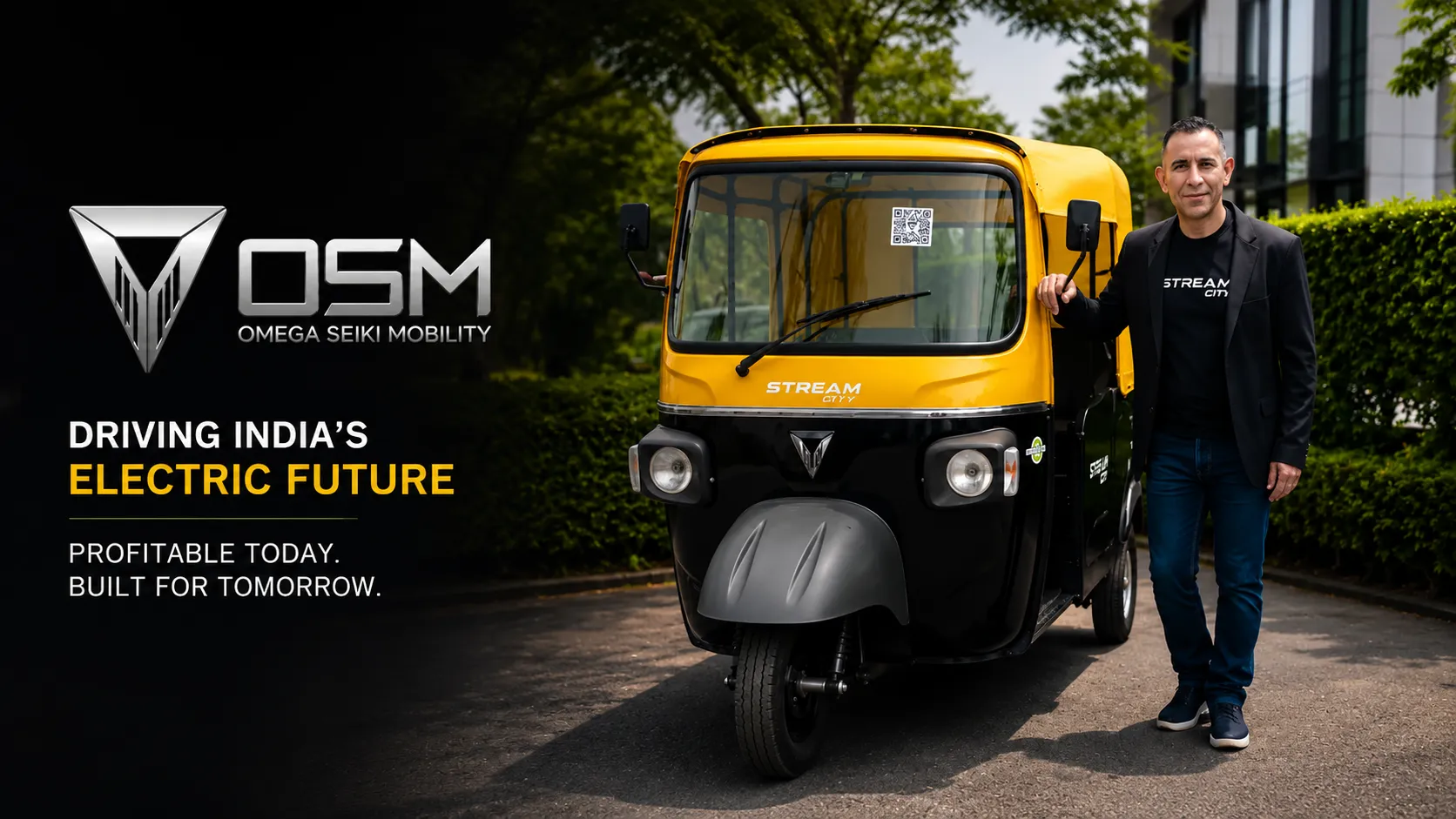
Omega Seiki Mobility, the Delhi-based electric vehicle manufacturer, has raised ₹50 crore in a fresh funding round co-led by Abhishek Misra of SKG Asset Management and Unistone Capital, with the Sanjeev Agarwal and Brijesh Parekh family offices also participating. Notably, this marks the second ₹50 crore round the company has closed within a span of just six weeks, following a mid-July raise from Securocorp Securities and a group of individual investors — bringing the combined total across both rounds to roughly ₹100 crore.
The rapid succession of similarly sized rounds suggests a company deliberately building funding momentum in tranches rather than pursuing a single larger raise, a structure that can allow a growth-stage business to demonstrate traction between closings while giving new investors comfort that earlier backers remain committed. Omega Seiki has indicated it is now actively weighing a public listing, a step that would make it one of the more prominent electric-vehicle manufacturers in India's commercial and light-mobility segment to test public markets.
Founded in 2018, Omega Seiki Mobility began its journey manufacturing electric cargo three-wheelers before expanding into passenger three-wheelers, premium electric two-wheelers and electric light commercial vehicles. The company now operates manufacturing plants in Faridabad and Pune within India, as well as a facility in Dubai, giving it a footprint that spans both India's domestic EV push and adjacent Gulf markets increasingly courting electric-mobility manufacturers.
Omega Seiki's distribution network currently spans 150 touchpoints across India, with a stated target of expanding to 250 locations by fiscal year 2028. Its customer base already includes several of India's largest e-commerce and quick-commerce operators — Amazon, Flipkart, Zomato and Porter among them — positioning the company as an infrastructure supplier to the last-mile delivery boom rather than solely a consumer-facing EV brand.
India's electric three-wheeler and light commercial vehicle segment has emerged as one of the more commercially mature corners of the country's broader EV transition, benefiting from strong total-cost-of-ownership economics for fleet operators even in the absence of the subsidy support that has propped up electric two-wheeler and passenger car adoption. That underlying demand has made the segment attractive to both strategic and financial investors seeking EV exposure with a clearer near-term path to profitability.
Should Omega Seiki proceed with a public listing, it would join a small but growing cohort of Indian EV manufacturers testing capital markets appetite for the sector, following high-profile listings elsewhere in the space. Investors will likely scrutinise the company's path from serial private funding rounds to public-market readiness closely, given the compressed timeline between its recent raises and any prospective listing process.
The electric three-wheeler segment, in particular, has benefited from a combination of favourable unit economics and structural demand tailwinds that have made it one of the more commercially proven corners of India's broader EV transition. Cargo and passenger three-wheelers operate predominantly within urban and semi-urban zones with predictable daily mileage, conditions that favour electric propulsion's lower running costs even before accounting for any government incentives, unlike long-haul trucking or private passenger vehicles where range anxiety and charging infrastructure gaps remain more significant barriers.
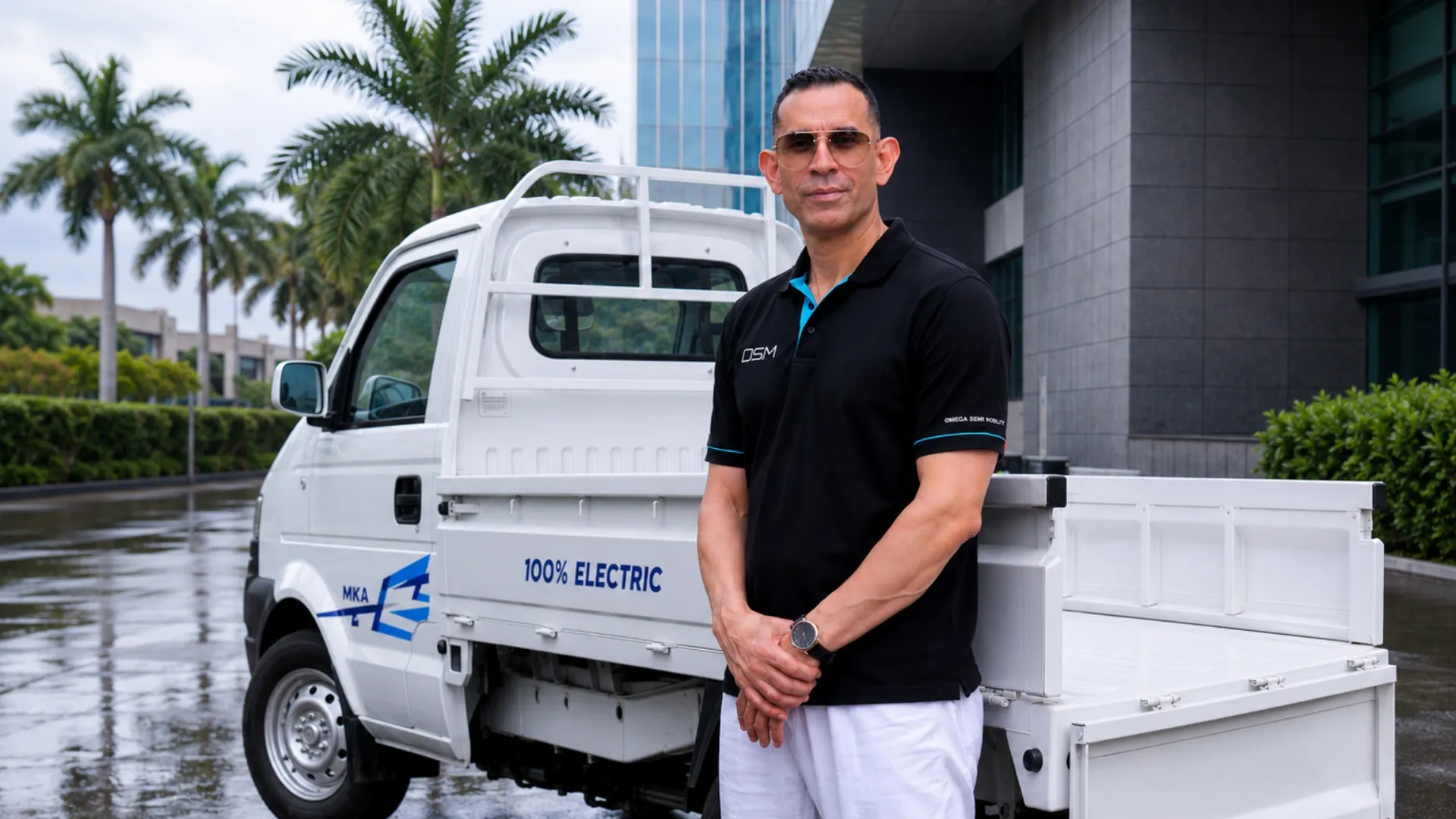
Omega Seiki's expansion into premium electric two-wheelers represents a strategic diversification beyond its cargo and commercial vehicle origins, positioning the company to capture a broader slice of India's rapidly growing electric two-wheeler market — a segment that has attracted intense competition from both established two-wheeler manufacturers pivoting to electric and dedicated EV-first startups, making differentiation increasingly important for any player seeking meaningful market share.
The company's Dubai manufacturing facility signals ambitions extending beyond India's domestic market, positioning Omega Seiki to serve Gulf markets that have begun actively courting electric-mobility manufacturers as part of broader economic diversification strategies away from oil dependency. Establishing manufacturing presence in the region, rather than exporting finished vehicles from India, could offer meaningful advantages in navigating local content requirements and import considerations that many Gulf states have begun implementing to encourage domestic industrial development.
Its blue-chip customer base — spanning Amazon, Flipkart, Zomato and Porter — provides Omega Seiki with a degree of revenue visibility and validation that many EV manufacturers, particularly those focused on individual consumer sales, have struggled to achieve. Fleet contracts with large logistics and delivery operators typically involve longer sales cycles but offer more predictable, recurring demand than consumer retail, a dynamic that may prove attractive to public-market investors evaluating the company's revenue quality ahead of any listing.
As Omega Seiki weighs its next steps, the compressed timeline between its recent funding rounds suggests a company under some pressure to demonstrate continued growth momentum ahead of a public listing process, a dynamic that will require careful navigation to avoid signalling financial strain to prospective public-market investors evaluating the company's fundamentals.
Should the company proceed toward a listing, prospective investors will likely scrutinise its margin trajectory across its diversified vehicle portfolio — cargo three-wheelers, passenger three-wheelers, two-wheelers and light commercial vehicles — closely, given that product mix and manufacturing scale typically determine profitability more than revenue growth alone in capital-intensive vehicle manufacturing. How Omega Seiki balances continued geographic and product-line expansion against the disciplined unit economics public markets typically demand will shape whether its planned listing draws the kind of investor enthusiasm needed for a successful public debut.
The participation of family offices linked to Sanjeev Agarwal and Brijesh Parekh alongside institutional-style investors such as SKG Asset Management points to a hybrid capital structure increasingly common among India's growth-stage EV manufacturers, blending strategic industry relationships with more conventional financial backing ahead of a public listing. That blend can offer useful governance diversity heading into the scrutiny of public markets, provided the company can demonstrate consistent reporting discipline across its various stakeholder relationships.
Omega Seiki's eight-year operating history since its 2018 founding also distinguishes it from many newer entrants into India's crowded EV manufacturing space, giving the company a longer track record of navigating supply-chain disruptions, policy shifts around EV subsidies, and evolving battery-technology standards than younger competitors can claim, a maturity that may weigh favourably with public-market investors evaluating operational resilience.