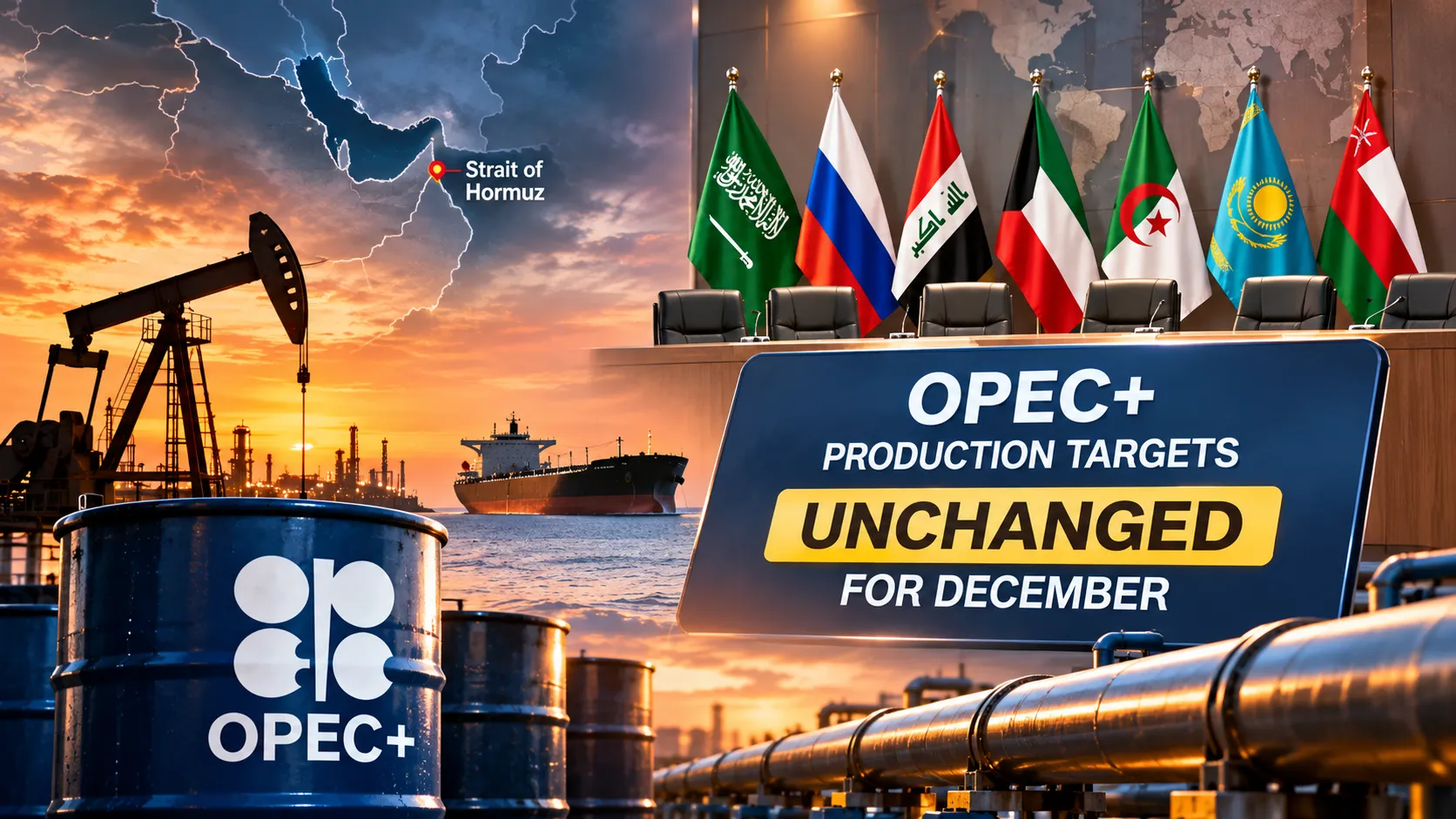
The world's most powerful group of oil producers has decided to stand pat for now, keeping its production targets unchanged for December while it grapples with a war that has thrown its members' output into disarray.
Seven core members of OPEC+, comprising Saudi Arabia, Russia, Iraq, Kuwait, Algeria, Kazakhstan and Oman, agreed to keep their output targets for December unchanged at an online meeting on Sunday, November 1, according to Reuters reporting published by the Honolulu Star-Advertiser. Further policy changes are not expected until next year.
"Today's decision was the easy one," said Jorge Leon, an analyst at Rystad Energy. "The much more important test comes at the November 29 ministerial meeting."
The war's disruption
Oil exports from the Gulf have been disrupted for months by the conflict between the United States and Iran, according to the report. Shipping through the Strait of Hormuz, the narrow waterway between Iran and Oman through which a significant share of the world's oil passes, has been severely affected, and attacks on energy infrastructure, including Houthi strikes on Saudi facilities, have added to the turmoil.
Gulf members have been increasing exports where possible, but most are still pumping well below their targets, according to Reuters. The war has also disrupted capacity expansion projects across the Middle East.
A changed OPEC
The meeting took place without the United Arab Emirates, which quit OPEC in May after years of tensions over its production quota, according to the report. The UAE had been part of the group's monthly decisions until its departure. Its exit removed one of the group's largest producers and raised questions about the alliance's cohesion.
During 2026, the seven core members had raised their output targets and completed the phasing out of a 1.65 million barrel-per-day cut from 2023 in September, according to Reuters. A further layer of cuts of about 2 million barrels per day covers most members through the end of 2026.
The capacity review
The group must complete a review of members' production capacity in the fourth quarter, which will set baselines for 2027 quotas and determine how remaining cuts are unwound. The review is now expected by mid-November, delayed because the war has disrupted capacity expansion projects, according to the report.
Capacity baselines are a perennial source of tension within OPEC+, because they determine how much each member is allowed to produce. Members that have invested in expanding capacity want higher baselines, while others resist changes that would reduce their share.
The 2027 dilemma
The full 21-country OPEC+ group will meet on November 29 to decide quotas for 2027. "OPEC+ faces an extremely difficult call for 2027," Leon said.
The challenge is the uncertainty over how quickly disrupted supply will return. If the conflict eases and flows through the Strait of Hormuz recover, large volumes of oil could return to the market, potentially creating a surplus and pushing prices down. If the disruption persists, the market could remain tight. Setting quotas without knowing which scenario will unfold is extremely difficult.
Oil prices and the global economy
Oil prices have been elevated throughout the autumn, with Brent crude trading above $110 a barrel for much of October. High prices have boosted the profits of oil companies such as ExxonMobil and Chevron, which reported bumper results last week, but have raised costs for consumers and businesses worldwide.