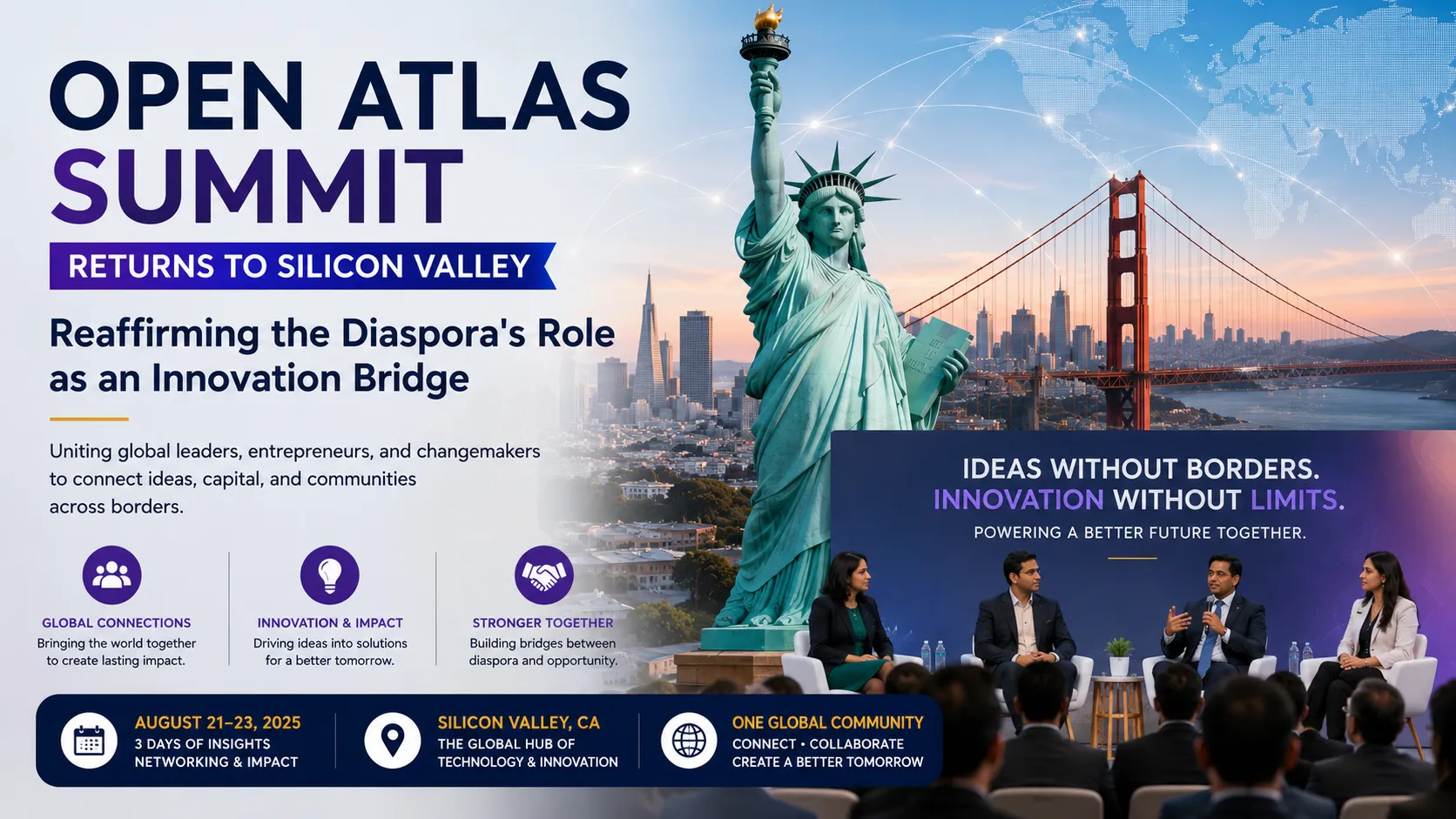
Silicon Valley's calendar of diaspora-focused technology gatherings will add another marquee date this month, with the Open Atlas Summit confirmed to return to the region on August 21. The announcement, made this week, continues a now-familiar rhythm for the Bay Area's Indian innovation community, which has over the past decade built an increasingly dense calendar of summits, founder gatherings and investor showcases that collectively function as informal infrastructure for a diaspora entrepreneurial ecosystem whose influence on American technology has grown far out of proportion to the community's overall population share.
The precise programming details for this year's edition are still being finalised, but organisers have indicated that the summit will continue its established format of bringing together entrepreneurs, senior technologists, venture investors and policy voices for a day of structured programming built around emerging technology themes, founder case studies and direct networking opportunities. That format has become something of a template across the broader category of diaspora technology summits that have proliferated across Silicon Valley over the past several years, reflecting both the maturity of the ecosystem these events serve and the recognition among organisers that structured, high-density networking remains one of the most valuable — and most difficult to replicate virtually — functions that an in-person summit can provide.
The significance of events like the Open Atlas Summit extends well beyond their single-day programming. For a substantial cohort of first-generation Indian immigrant entrepreneurs and early-career technologists in the Bay Area, such summits have increasingly come to function as entry points into a broader professional and social network that would otherwise require years to build organically. Attendees frequently describe the value of these gatherings less in terms of the formal panel discussions and keynote presentations that anchor the published agenda, and more in terms of the informal connections made in hallway conversations, post-session networking sessions and the kind of serendipitous introductions that dense, well-curated gatherings tend to produce far more efficiently than scattered individual outreach.
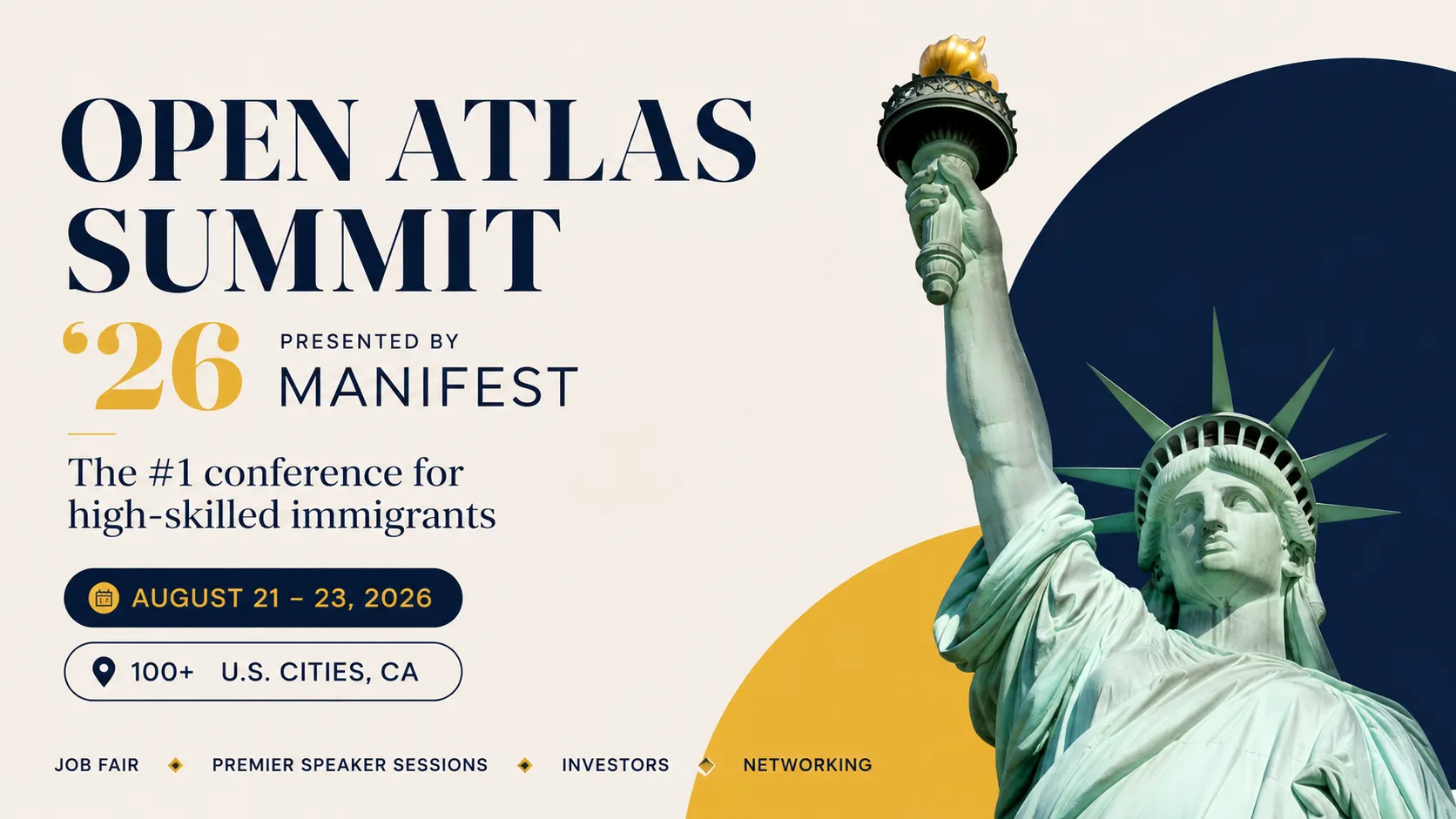
That networking function has taken on particular importance as Silicon Valley's Indian diaspora has grown increasingly diverse in its own right, spanning waves of immigration that range from long-established professionals who arrived decades ago and built careers at legacy technology companies, to more recent arrivals drawn by the current generation of artificial intelligence and enterprise software opportunities, to a growing cohort of second-generation Indian-Americans who were born or largely raised in the United States and bring a different cultural and professional orientation to their engagement with diaspora institutions. Summits such as Open Atlas increasingly serve as one of the relatively few spaces where these different generational and professional cohorts intersect directly, creating connective tissue across a community that might otherwise fragment into increasingly separate social and professional circles as it grows larger and more internally differentiated.
The broader context for the summit's return is a Bay Area technology ecosystem that has continued to attract substantial venture capital into artificial intelligence and adjacent categories even as overall startup funding volumes have moderated from the exceptional highs of the earlier part of the decade. Indian-origin founders have continued to raise a disproportionate share of that capital relative to their population representation, building on a now well-documented pattern in which Indian-American entrepreneurs have founded or co-founded a significant proportion of Silicon Valley's most highly valued technology companies over the past two decades. Summit organisers and participants alike frequently point to this track record as both a source of community pride and a practical asset — successful founders from earlier cohorts increasingly return to these events as speakers, mentors and, in a meaningful number of cases, as angel investors backing the next generation of founders they meet through exactly this kind of structured gathering.
Beyond its networking and mentorship functions, the Open Atlas Summit and its peer events have also increasingly become venues for substantive discussion of policy issues that directly affect the diaspora technology community, including immigration policy, visa processing timelines for skilled workers, and the broader regulatory environment governing artificial intelligence development in the United States. As federal immigration and technology policy has grown more volatile and consequential for the specific demographic of Indian-origin skilled workers who form a large share of the H-1B visa population, summits of this kind have taken on an additional function as informal forums where community members can access timely, practically oriented information about policy developments that might otherwise require navigating a confusing landscape of legal advisories and immigration attorney consultations.
The proliferation of such summits also reflects a broader institutional maturation within the Indian diaspora technology community, one that has moved over the past fifteen years from a landscape dominated by a handful of long-established professional associations toward a much more differentiated ecosystem of specialised organisations, each serving particular sub-communities defined by industry vertical, regional origin within India, career stage or specific professional interest. Where an earlier generation of diaspora professional organisations tended to organise primarily around broad ethnic or regional identity, the current generation of summits and gatherings increasingly organise around specific professional and industry interests, with diaspora identity functioning as an important but no longer singularly defining organisational principle.
For entrepreneurs specifically, the return of the Open Atlas Summit arrives at a moment when many founders in the artificial intelligence sector are grappling with a funding environment that, while still generous by historical standards, has grown considerably more selective about which categories of AI application companies can command premium valuations. Founders navigating that more discerning capital environment frequently describe peer networks built through summits and similar gatherings as an important source of practical guidance — sharing lessons learned on fundraising strategy, go-to-market approaches and operational scaling that are not always readily available through more formal advisory channels, and which benefit considerably from being shared among founders who share not only an industry but often a broader set of cultural and professional reference points.
The Bay Area's calendar of diaspora technology events has grown dense enough over the past several years that organisers of individual summits increasingly think carefully about differentiation — identifying a specific programming angle, audience segment or thematic focus that distinguishes their event from an increasingly crowded field of competing gatherings, many of which draw from an overlapping pool of prospective speakers, sponsors and attendees. That competitive dynamic has, on balance, benefited the broader ecosystem by pushing individual events toward greater programming specificity rather than generic networking formats, even as it has made it more difficult for any single summit to claim the kind of singular convening power that a smaller number of longer-established diaspora technology gatherings enjoyed in earlier years, before the current proliferation of specialised events took hold.
Corporate sponsorship has become an increasingly important funding pillar for summits of this kind, with major technology companies, venture capital firms and professional services providers frequently underwriting programming costs in exchange for visibility among an audience of technically sophisticated, often high-earning attendees who represent an attractive demographic for financial services, enterprise software and professional services marketing. That sponsorship dynamic has allowed many diaspora technology summits to offer relatively accessible or even free attendance for individual participants, lowering barriers to entry for early-career technologists and first-time founders who might otherwise find the cost of attending numerous industry conferences prohibitive, while simultaneously creating commercial incentives for organisers to continue expanding and professionalising their events year over year.
The specific timing of the Open Atlas Summit's return, coming as it does during a period of continued, if more selective, enterprise investment in artificial intelligence infrastructure and applications, positions the event to capture attendee interest from a technology community still processing a rapid succession of major AI product launches and competitive shifts over the preceding twelve months. Founders and technologists attending summits during periods of rapid technological change frequently describe an particular appetite for the kind of practically oriented, peer-to-peer knowledge sharing that well-curated in-person events can provide — direct exposure to how peer companies are actually navigating specific implementation challenges, rather than the more abstract strategic framing that dominates much published commentary on emerging technology trends.
Finally, the return of the summit invites a useful comparison with the broader trajectory of diaspora technology gatherings over roughly the past fifteen years. Early iterations of such events, dating back to the mid-2000s and early 2010s, tended to focus heavily on celebrating diaspora achievement in relatively general terms, often organised around broad themes of entrepreneurship or professional networking without the more specific technical and thematic programming focus that characterises the current generation of events. That evolution toward greater specificity — AI-focused tracks, infrastructure-focused sessions, policy-focused panels — mirrors the broader maturation of the diaspora technology community itself, which has grown large enough and technically differentiated enough to sustain programming tailored to specific sub-disciplines rather than relying on the more generalised networking format that served a smaller, less specialised community adequately in earlier years.
Investor participation at events such as the Open Atlas Summit also merits separate attention, given the specific and evolving role diaspora-focused venture funds have come to play within the broader Silicon Valley capital ecosystem. A number of venture firms founded or led by Indian-origin general partners have built investment theses explicitly oriented around identifying promising founders from within diaspora professional networks, on the reasoning that such networks offer differentiated deal flow and, in many cases, a level of trust-based diligence advantage relative to founders sourced through more conventional, arm's-length channels. Summits of this kind function as an important sourcing and relationship-building venue for these diaspora-focused funds, complementing more formal pitch events and accelerator programmes with the kind of lower-pressure, relationship-first interactions that many investors describe as producing better long-term investment decisions than compressed, high-stakes pitch formats alone.
Venue and format choices for events of this kind have also evolved considerably over the past several years, with organisers increasingly experimenting with hybrid formats that combine in-person flagship gatherings with year-round virtual programming, smaller regional meetups and dedicated online community platforms intended to sustain engagement between annual flagship events. That evolution reflects lessons learned during the pandemic period, when many diaspora technology organisations were forced to move entirely online and, in the process, discovered that certain forms of community engagement — smaller, more frequent virtual gatherings in particular — could complement rather than simply substitute for large annual in-person summits. Organisers of the Open Atlas Summit, like many of their peer institutions, are understood to maintain some degree of year-round community programming alongside the flagship August gathering, reflecting this broader shift toward treating the single annual summit as the centrepiece of a more continuous community engagement strategy rather than as an isolated, standalone event.
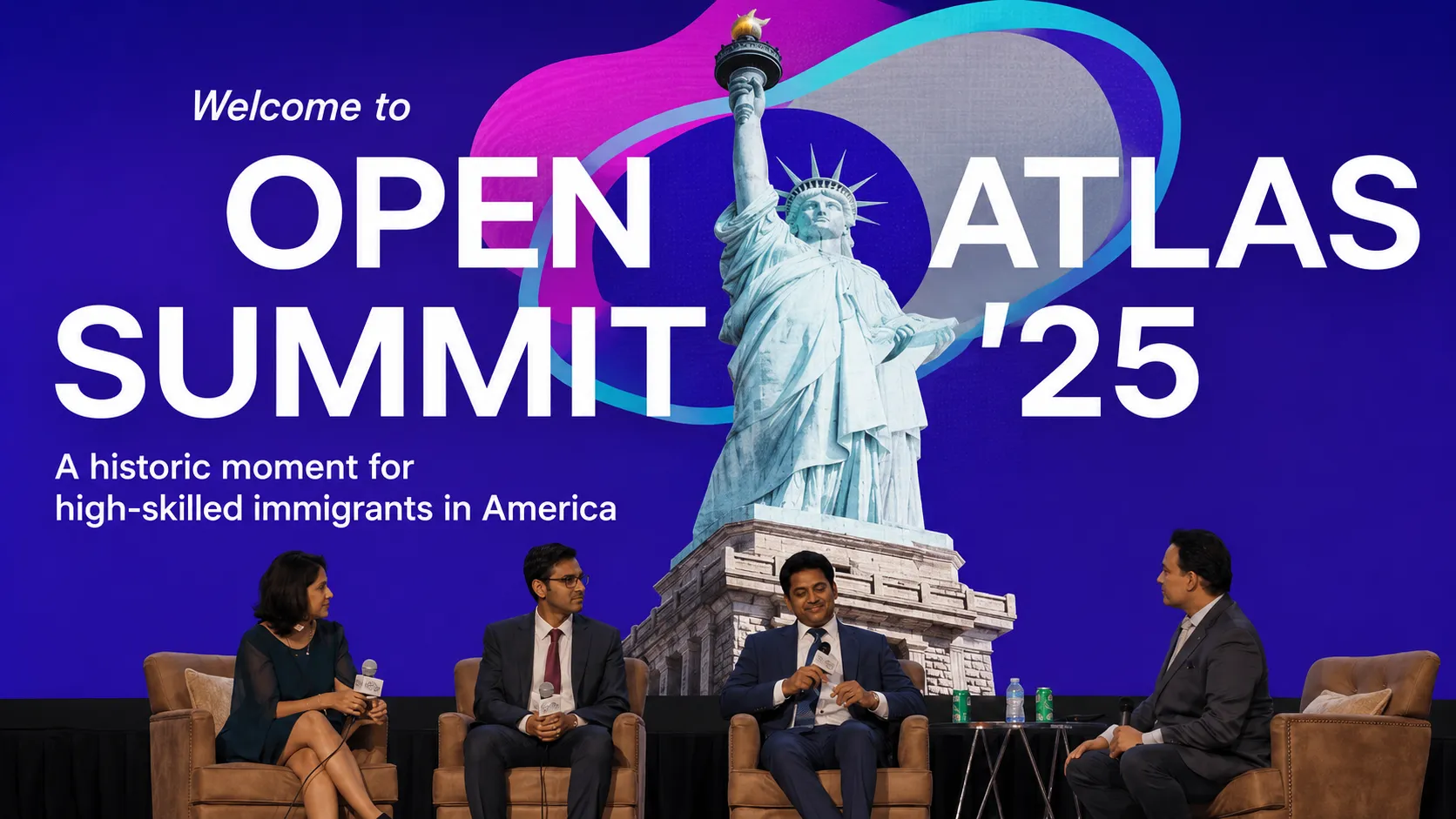
It is worth noting, too, how the Open Atlas Summit and its peer gatherings fit within the broader financing lifecycle of a typical diaspora-founded startup. Founders frequently trace a fairly consistent pattern across these events: early-career technologists first attend as employees or aspiring founders seeking exposure and mentorship, later return as first-time founders seeking angel investment or early customer introductions, and in a meaningful number of cases return again years afterward as successful operators or investors themselves, closing a loop that summit organisers explicitly try to cultivate through structured alumni programming and returning-speaker invitations. That multi-year relationship-building function is difficult to replicate through any single event and depends heavily on an event's ability to sustain itself, edition after edition, long enough for individual attendees to progress through the full arc of that founder journey while remaining engaged with the same community platform throughout.
As the August 21 date approaches, organisers are expected to release further details on confirmed speakers and specific programming tracks. But even before that additional detail emerges, the summit's return offers a useful reminder of how thoroughly diaspora-organised gatherings have become embedded in the operational fabric of Silicon Valley's broader innovation ecosystem — not as a parallel or separate track running alongside the region's mainstream technology culture, but as an increasingly integral part of how that culture itself sources talent, allocates capital and builds the professional relationships that, cumulatively, continue to shape which companies get built, which ideas get funded, and which entrepreneurs get the crucial early introductions that so often determine a startup's trajectory in its earliest and most fragile stages.