OpenAI is closing in on a new funding round that would value the ChatGPT maker at more than $1 trillion, cementing its position as the world's most valuable private company even as the price tag comes in below earlier expectations.
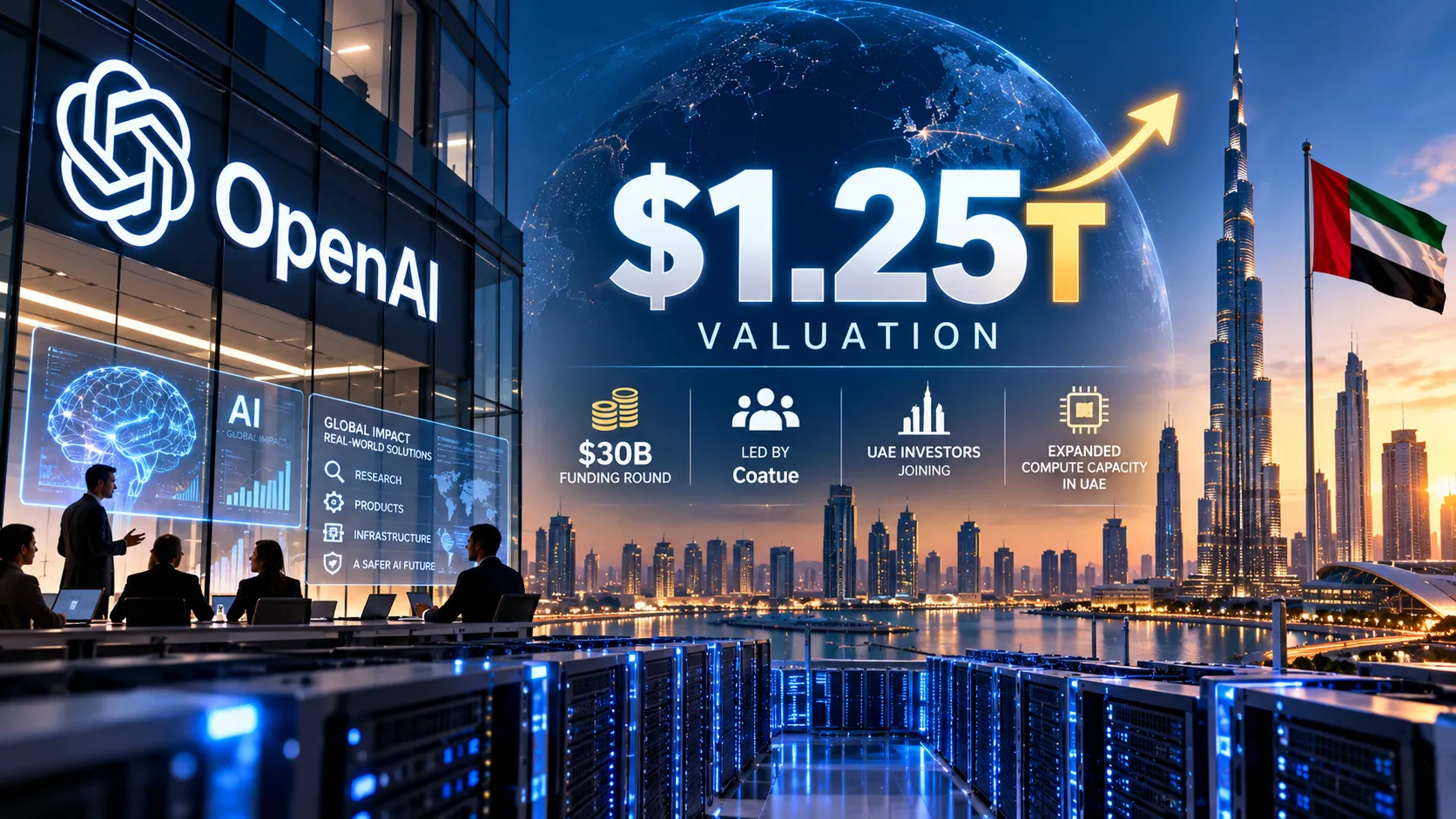
The company is working on raising up to $30 billion at a $1.25 trillion pre-money valuation, CNBC reported on Thursday, October 22, citing people familiar with the matter. The round is being led by Coatue, with investors from the United Arab Emirates also participating, according to CNBC. Bloomberg reported that OpenAI had shifted its valuation to $1.25 trillion as funding talks were finalised.
The UAE funding could be paired with a deal for OpenAI to secure more computing capacity in the UAE, according to CNBC. Terms are still being negotiated and could change, TechCrunch reported. OpenAI declined to comment.
A lower number than expected
The reported valuation is lower than the figure discussed a month ago. In September, Bloomberg reported that OpenAI was seeking at least $30 billion at a valuation of about $1.4 trillion.
Even so, $1.25 trillion would represent a sharp increase from OpenAI's last funding round in March 2026, which valued the company at $852 billion after the investment. A valuation above $1 trillion would make OpenAI the most valuable private company in history.
The adjustment comes amid a more cautious mood towards AI valuations in public markets. Technology stocks have been volatile in recent weeks as investors question whether the massive sums being spent on AI infrastructure will generate adequate returns, and several AI-related IPOs have struggled.
A round instead of an IPO
OpenAI filed confidential paperwork for an initial public offering in June 2026. Raising a large private round now suggests the company is not rushing to list, TechCrunch noted, and that it can still access vast sums of private capital.
Staying private gives OpenAI more flexibility to invest heavily without the scrutiny of quarterly public reporting. However, private funding at this scale is available from only a limited pool of investors, including sovereign wealth funds, large technology companies and crossover funds.
The Anthropic comparison
OpenAI's fundraising is unfolding alongside that of its main rival, Anthropic. In May 2026, Anthropic raised $65 billion at a $965 billion valuation, a round that many viewed as its last major private raise before an IPO. Anthropic also filed confidential IPO paperwork in June, and CNBC has reported that it is seeking a valuation of $1.5 trillion to $2 trillion in a public debut. Speculation has grown that Anthropic could file its public registration statement soon.
The competition between the two companies extends from AI models and enterprise customers to talent and computing resources. Both are spending enormous sums on data centres and chips to train and run increasingly capable models.
Why the UAE matters
The participation of UAE investors highlights the Gulf state's ambitions in artificial intelligence. The UAE has invested heavily in AI through state-backed entities and has sought to position itself as a global hub for AI infrastructure, with large data centre projects powered by its energy resources.
A deal linking investment with computing capacity would fit a broader pattern in which AI companies secure both capital and infrastructure from partners. OpenAI has previously announced plans for large-scale data centre projects in the UAE as part of its global infrastructure expansion.
The economics of AI at scale
OpenAI's need for capital reflects the extraordinary cost of developing frontier AI. Training advanced models requires vast clusters of specialised chips, and serving hundreds of millions of users demands ongoing computing capacity. The company has committed to spending hundreds of billions of dollars on infrastructure over the coming years through agreements with chipmakers, cloud providers and data centre developers.
Investors are betting that OpenAI's revenue, driven by ChatGPT subscriptions, enterprise products and its developer platform, will grow fast enough to justify these investments. The company has not disclosed recent revenue figures in connection with the round.
What it means for India
India is one of OpenAI's largest markets by users, and the company has expanded its presence in the country, including offering lower-cost plans to Indian users. Indian businesses and developers are significant users of its models and tools.
The scale of capital flowing into frontier AI companies also highlights the challenge for India's own AI ambitions. While the government's IndiaAI Mission is funding domestic foundation models and computing capacity, the investments are small compared with those of leading US companies. Indian startups are increasingly focusing on applications built on top of global models, alongside efforts to develop models suited to Indian languages and needs.
The trillion-dollar club
Only a handful of public companies have ever been valued at more than $1 trillion, including Apple, Microsoft, Nvidia, Alphabet, Amazon, Meta and Saudi Aramco. That OpenAI and Anthropic are approaching or exceeding that threshold as private companies underlines the extraordinary expectations investors have for frontier AI.
Critics argue that such valuations reflect speculative enthusiasm that may not be justified by revenue and profits, drawing comparisons with the dot-com bubble. Supporters counter that AI could transform virtually every industry and that the leading model developers could capture enormous value. The truth will become clearer as these companies face public market scrutiny.
Investor concentration
The pool of investors able to write cheques of this size is small. Sovereign wealth funds from the Gulf, large technology companies such as Microsoft, Nvidia and Amazon, and a few large investment firms have become key sources of capital for AI companies. That concentration gives these investors significant influence and raises questions about the strategic interests that accompany their funding.
What comes next
If the round closes as reported, OpenAI will have one of the largest war chests in the technology industry. Investors will watch whether it uses the capital to accelerate infrastructure spending, pursue acquisitions or prepare for an eventual IPO.
The final valuation will also serve as a benchmark for the AI sector. A figure below earlier expectations may signal that even the most prominent AI companies are facing tougher negotiations, while a successful raise at $1.25 trillion would show that investor appetite for leading AI companies remains strong. Either way, the outcome will shape how investors value the entire AI sector in the months ahead.