StartupsLatest5 MIN READ

Otter.ai Raises $320 Million Without Selling Shares, Using General Catalyst Financing to Double Down on Enterprise AI

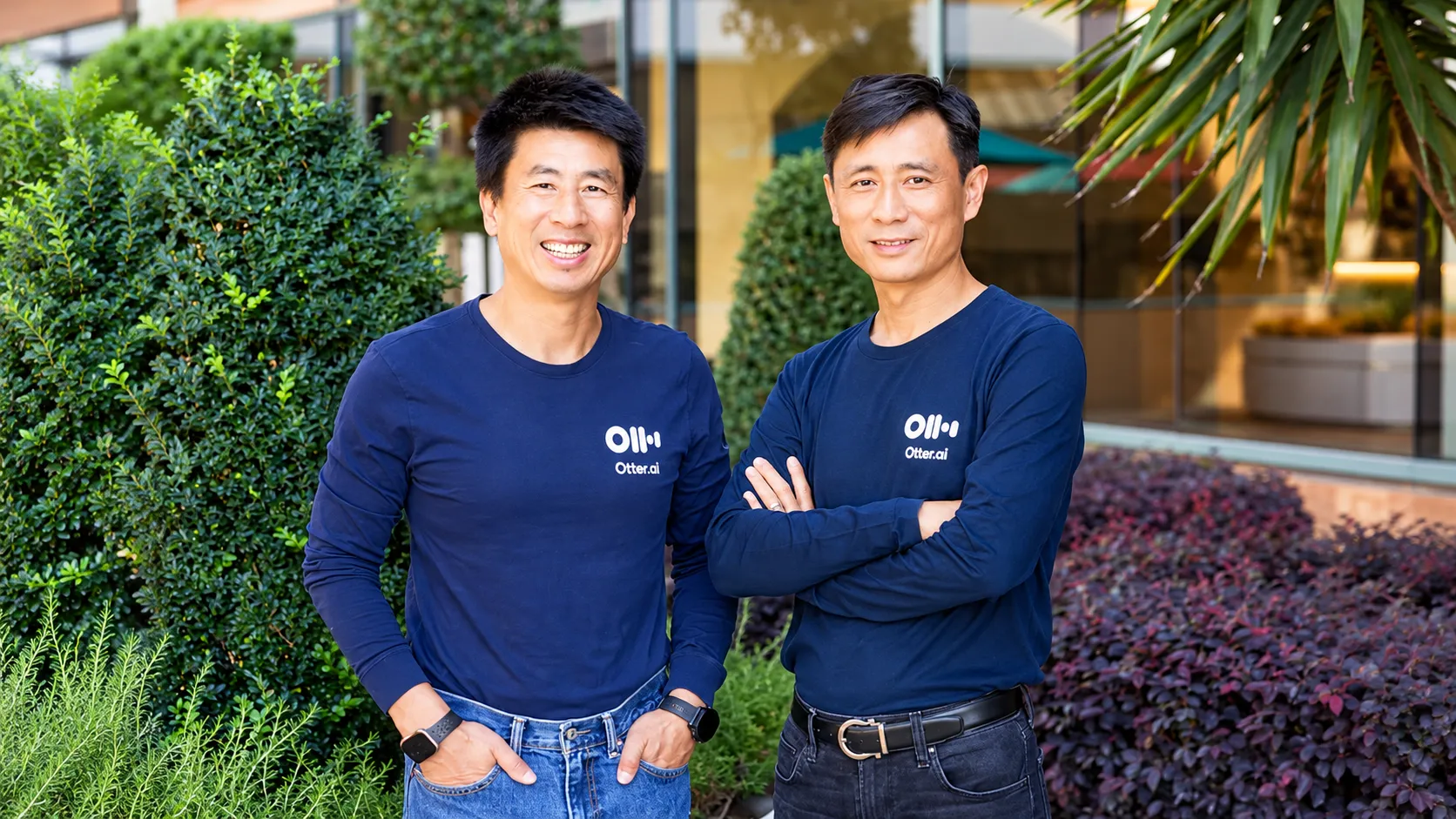
AI meeting assistant Otter.ai has raised $320 million in repayable growth financing from General Catalyst's Customer Value Fund, avoiding shareholder dilution, to expand its enterprise business. Chief executive Sam Liang said Otter, which has more than 40 million users and counts India among its top markets, aims to double or triple sales and marketing spending.

By Aravind Kumar · Author21 October 2026New
Otter.ai Raises $320 Million Without Selling Shares, Using General Catalyst Financing to Double Down on Enterprise AI

Otter.ai, the artificial intelligence meeting assistant used by tens of millions of people to record and summarise conversations, has raised $320 million in a funding arrangement that reflects a growing shift in how technology startups finance growth.

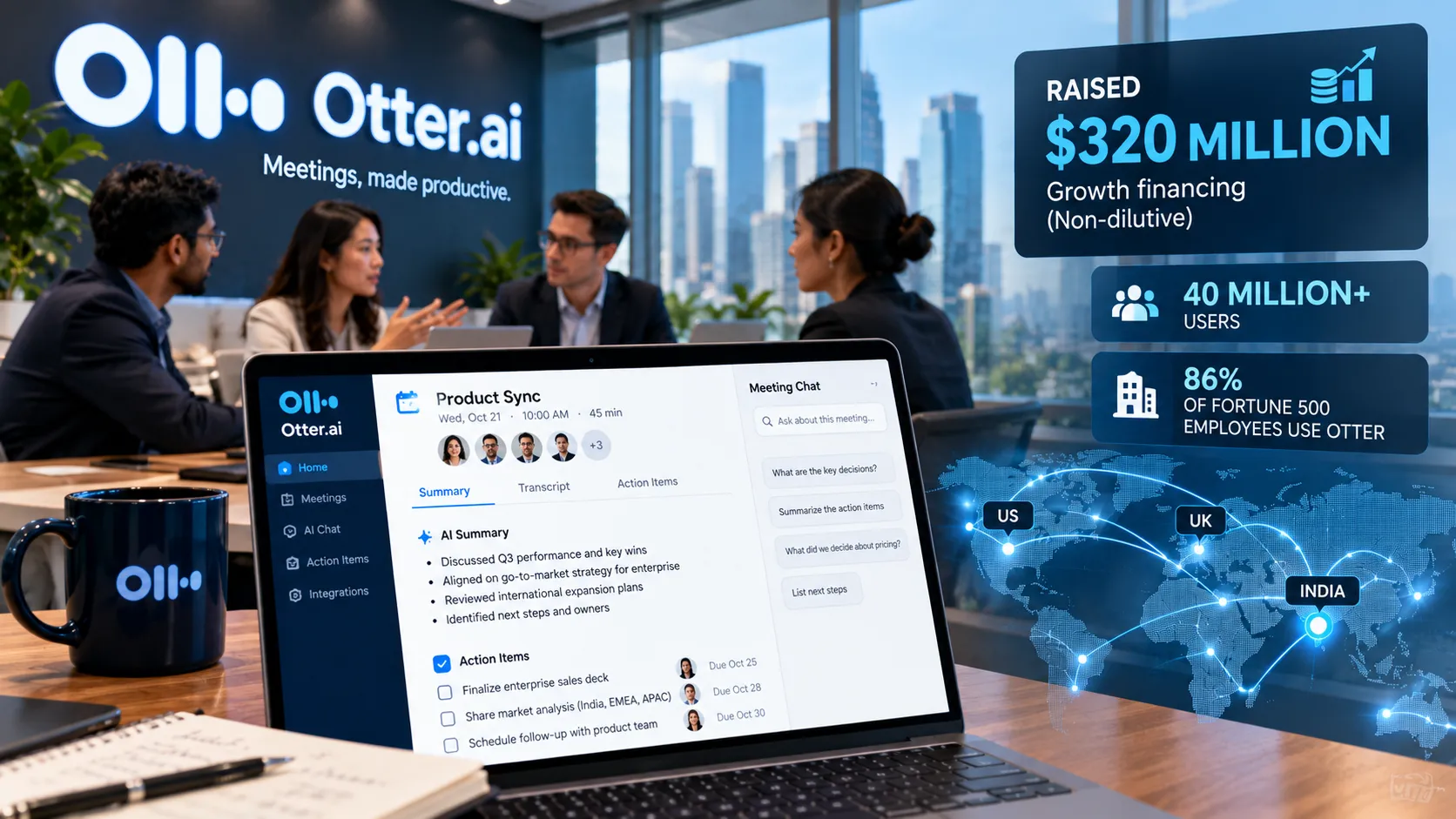
The money, announced on Tuesday, October 20, comes in the form of growth financing from General Catalyst's Customer Value Fund, Reuters reported. Unlike a traditional venture capital round, the funding is repayable rather than exchanged for equity, meaning existing shareholders do not see their stakes diluted.

"We do need to pay them back," Otter co-founder and chief executive Sam Liang said, explaining that the company will repay the capital with interest as its sales and marketing spending generates revenue. He said the fund could provide more capital once the initial amount is spent.

How the financing works

General Catalyst's Customer Value Fund provides capital to companies specifically to fund sales and marketing, on the basis that every dollar spent acquiring customers generates predictable revenue over time. The fund is repaid from that revenue, typically with a return linked to the growth it helps create.

The model is designed for companies with proven customer economics, where data shows how much revenue each new customer generates and how long they stay. For such businesses, borrowing to fund customer acquisition can be cheaper than selling equity, especially if the company believes its valuation will rise.

Non-dilutive financing has become increasingly popular among startups since the venture capital boom of 2021 ended. With investors more cautious and valuations under pressure, many founders have sought alternatives to equity rounds that would reduce their ownership or set lower valuations.

Otter did not disclose its valuation in connection with the financing.

The enterprise push

Otter plans to use the money to expand its enterprise business and international reach. Liang said the company intends to double or triple its sales and marketing budget and grow its small sales team.

Enterprise is Otter's fastest-growing segment, Liang said, although he declined to disclose enterprise revenue. He said he hopes to triple enterprise revenue next year, and the company aims to at least double it.

Otter began as a consumer app, offering automatic transcription of conversations, lectures and meetings. It has since added AI features that summarise meetings, identify action items and answer questions about past conversations. The company has more than 40 million users, and about 86% of Fortune 500 companies already have employees using Otter, largely through organic adoption, according to Reuters.

That bottom-up adoption gives Otter a foothold inside large organisations. Converting individual users into company-wide enterprise contracts, with administrative controls, security features and integrations, is the strategy the new funding is designed to accelerate.

India among top markets

The United States is Otter's largest market, followed by Canada, Britain and India, according to Liang. The company plans to market more heavily abroad as part of its international expansion.

India's large English-speaking professional workforce, its vast IT services and global capability centre sectors, and its growing startup ecosystem make it a natural market for productivity tools such as Otter. Many Indian professionals work on calls with colleagues and clients around the world, creating demand for transcription and meeting summaries.

“We do need to pay them back.”
— Sam Liang, Co-founder and CEO, Otter.ai

A competitive field

Otter faces intense competition. Video conferencing platforms such as Zoom, Microsoft Teams and Google Meet have built AI meeting assistants directly into their products, often bundled with existing subscriptions. Startups such as Fireflies.ai, Fathom and others offer similar services, and general-purpose AI assistants are increasingly capable of summarising conversations.

To stand out, Otter emphasises accuracy, cross-platform support and features designed for enterprise teams, such as shared meeting notes, searchable archives and integrations with CRM and collaboration tools. Its large user base also provides data and brand recognition that newer entrants lack.

Why the model matters

Otter's financing illustrates how AI companies with established revenue are exploring new ways to fund growth. While the largest AI developers, such as OpenAI and Anthropic, raise tens of billions of dollars through equity and public markets, many application-layer AI companies are focused on efficient growth and preserving ownership.

Growth financing linked to customer acquisition can be powerful when it works, but it also carries risks. If new customers do not generate the expected revenue, companies may struggle to repay. Lenders typically protect themselves through covenants and by limiting financing to companies with strong data on customer economics.

Who is Sam Liang

Sam Liang co-founded Otter.ai in 2016 with Yun Fu. Before starting Otter, Liang led the team that built the location platform for Google Maps and later co-founded a location-based startup that was acquired by Alibaba. He holds a PhD in electrical engineering from Stanford University. His background in data and location technology informed Otter's focus on using AI to capture and organise information from conversations.

The market for AI meeting tools

The market for AI meeting assistants has expanded rapidly since the pandemic made video calls a fixture of working life. Hybrid working has kept virtual meetings central to how many companies operate, and the volume of calls creates demand for tools that capture what was said and turn it into usable records.

Generative AI has expanded what these tools can do. Instead of simply transcribing conversations, they can produce summaries, draft follow-up emails, answer questions about past meetings and integrate with other business software. That makes them more valuable to businesses, but it also means competition from much larger technology companies that can bundle similar features into widely used products.

Pricing pressure is a key concern. When video platforms include AI summaries at little or no extra cost, standalone providers must demonstrate clear advantages to justify their subscriptions.

5523dc46-99c4-47f9-8354-ffccbe1d0048.png

What comes next

With $320 million to deploy, Otter is set to significantly expand its sales and marketing efforts, particularly among enterprises and in international markets. Its progress in converting widespread individual use into enterprise contracts will determine whether the bet pays off.

For the startup ecosystem, Otter's raise is a sign that capital remains available for AI companies with proven traction, and that founders have more options than ever for financing growth without giving up equity. Otter's choice of financing may also encourage other mature AI startups to consider alternatives to equity rounds.

TagsOtter.aiSam LiangGeneral CatalystCustomer Value Fundnon-dilutive financingAI meeting assistantenterprise AItranscriptionSaaSstartup fundingrevenue-based financingFortune 500productivity softwareAI agentsventure capitalIndia marketsales and marketinggrowth capitalSilicon ValleyAI startups

Reader reviews

Sign in to rate and review this article.
Loading reviews…

