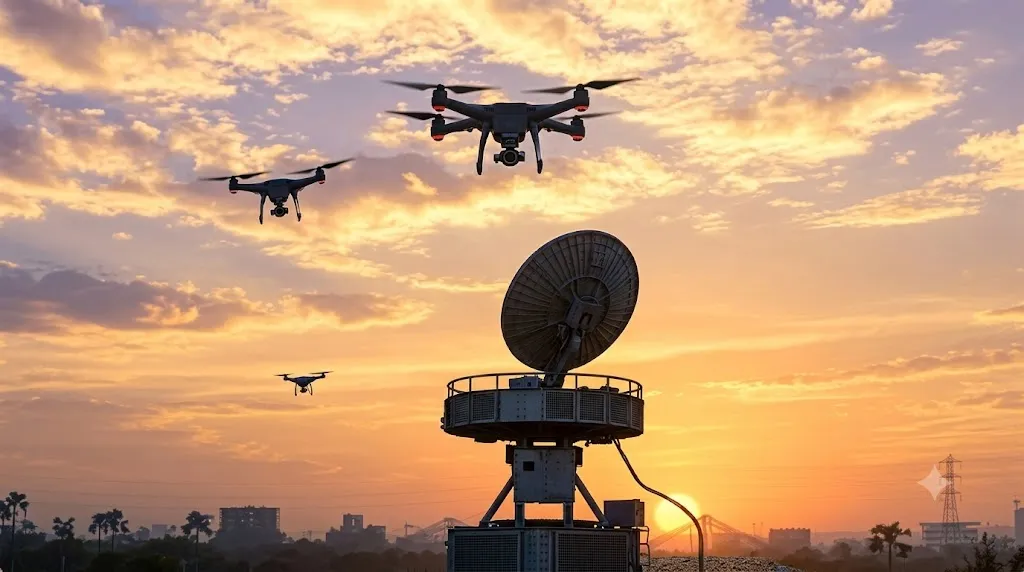
Paar Autonomy, a Bengaluru-based defence technology startup, has raised ₹10 crore in a funding round led by AdvantEdge Founders to develop navigation systems and drone cameras designed to operate in environments where satellite navigation is unavailable or jammed.
The funding, announced on 26 October, follows a ₹3.5 crore pre-seed round led by Venture Catalysts. The company was founded in June 2024 by Vignesh Sivaram Jayaraman.
Paar Autonomy develops the Sentinel series of drone cameras and GPS-free navigation systems, technologies that have become increasingly important as modern conflicts demonstrate the vulnerability of drones and other systems that rely on satellite positioning.
Why GPS-Free Navigation Matters
Most drones and many military systems rely on global navigation satellite systems, such as the US Global Positioning System, to determine their location and navigate. But these signals are relatively weak and can be jammed or spoofed, with false signals misleading receivers about their position.
The war in Ukraine has demonstrated how extensively electronic warfare can disrupt drones. Both sides have deployed jamming systems that interfere with satellite navigation and radio links, forcing drone makers to develop alternatives that allow systems to navigate using cameras, inertial sensors and onboard computing.
Technologies that allow drones to navigate visually, by comparing camera images with maps or terrain, or by tracking movement using inertial measurement units, can make systems far more resilient in contested environments. Such capabilities are increasingly seen as essential for military drones.
India's Defence Drone Push
India has made drones a priority in its defence modernisation. The armed forces have expanded procurement of surveillance, logistics and strike drones, and the government has encouraged domestic production through policies that restrict imports of certain drones and offer incentives for local manufacturing.
Recent security challenges along India's borders have underscored the importance of drones for surveillance and reconnaissance, as well as the need to counter adversary drones. The Defence Acquisition Council has approved large procurement programmes in recent months, with a strong emphasis on sourcing from domestic companies.
Startups have become important players in this ecosystem. Companies such as ideaForge, which listed on the stock market in 2023, have shown that Indian drone makers can build significant businesses supplying the armed forces and paramilitary organisations.
The Sentinel Series
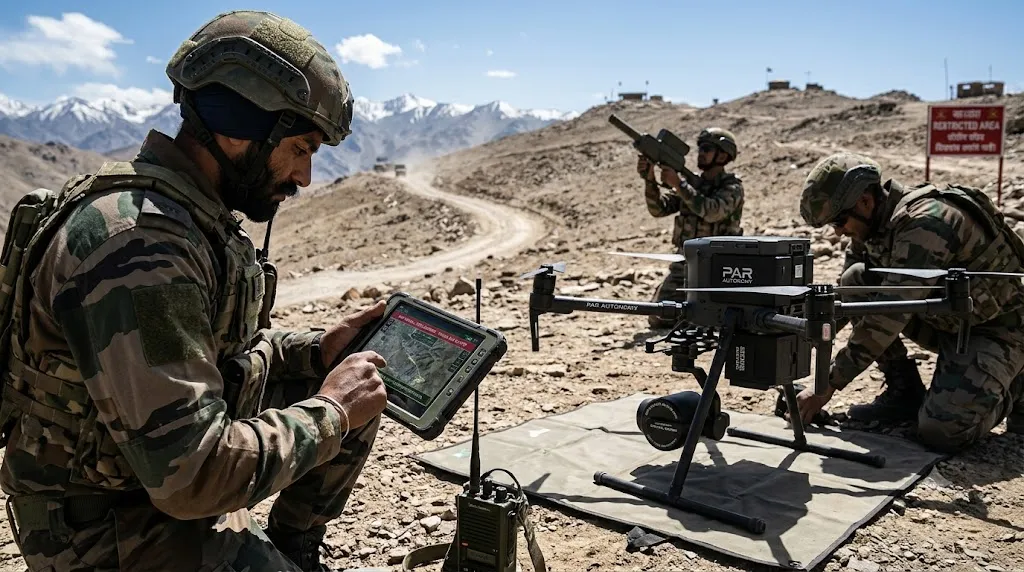
Paar Autonomy's Sentinel products include drone-mounted cameras designed for surveillance and navigation applications. Cameras play a dual role in modern drones: they provide the imagery operators need for reconnaissance, and they can also feed visual navigation systems that allow drones to determine their position without satellite signals.
Developing these systems requires expertise in optics, computer vision, embedded computing and sensor fusion, the combining of data from multiple sensors to produce accurate position estimates. Hardware must also be rugged enough to operate in harsh conditions, from high-altitude cold to desert heat.
Investor Interest in Defence Tech
Indian defence technology has attracted growing investor interest. Venture capital firms that once avoided defence because of long procurement cycles and regulatory complexity are now backing startups building drones, counter-drone systems, sensors, communications equipment and software for the armed forces.
Several factors have driven the shift. Government policies under the Aatmanirbhar Bharat self-reliance initiative have opened procurement to private and startup suppliers. Programmes such as iDEX, Innovations for Defence Excellence, provide grants and contracts to startups solving specific military problems. Rising defence budgets and geopolitical tensions have also increased demand.
AdvantEdge Founders, which led Paar Autonomy's round, is a venture fund that invests in early-stage technology startups, while Venture Catalysts, which backed the pre-seed round, is one of India's largest angel and early-stage investment platforms.
Dual-Use Potential
GPS-free navigation also has civilian applications. Drones used for infrastructure inspection, mining, agriculture and delivery may need to operate in areas where satellite signals are weak, such as under bridges, inside tunnels or in dense urban canyons. Indoor drones used in warehouses and factories cannot rely on satellite navigation at all.
Dual-use technologies, which serve both defence and civilian markets, can help startups diversify revenue and reduce dependence on lengthy military procurement cycles.
Challenges Ahead
Defence startups face distinctive challenges. Military procurement involves rigorous testing, certification and trials that can take years. Companies need to demonstrate reliability in demanding conditions and often need to invest in manufacturing capacity before receiving large orders.
Supply chains present another challenge. Many drone components, including sensors, chips and motors, have historically been imported, often from China. India has sought to reduce such dependence for security reasons, encouraging domestic production of critical components.
Lessons From Recent Conflicts
Military analysts have closely studied the role of drones in recent conflicts, from Ukraine to the Middle East. Small, inexpensive drones have been used for reconnaissance, artillery spotting and strikes, while electronic warfare systems have sought to neutralise them by jamming navigation and control signals. The result has been a rapid cycle of innovation, with each side adapting its technology in response to the other's countermeasures.
For India, these lessons have reinforced the need for drones that can operate in electronically contested environments, particularly along its northern and western borders. Indigenous development offers advantages beyond cost: it allows the armed forces to modify systems quickly in response to new threats and reduces the risk that critical technology could be denied by foreign suppliers during a crisis. Startups such as Paar Autonomy aim to contribute to that capability by developing core navigation and sensing technologies domestically.
The company's early backing from Venture Catalysts and now AdvantEdge Founders reflects a pattern seen across Indian defence technology, where startups typically raise modest early rounds to build prototypes and complete trials before larger investors commit. Demonstrating performance in field trials with the armed forces is often the milestone that unlocks larger contracts and funding. For Paar Autonomy, successful trials of its navigation systems in demanding terrain and electronic warfare conditions would be the clearest proof that its technology can meet military requirements and compete with established suppliers.
What Comes Next
With ₹10 crore in new funding, Paar Autonomy will look to advance its products, conduct trials and secure orders from defence and security agencies. Its progress will reflect the broader question of whether India's defence startup ecosystem can scale quickly enough to meet the armed forces' growing demand for advanced, domestically developed technology.
For a company founded little more than two years ago, the funding provides runway to prove its technology in an area that has become central to modern warfare.