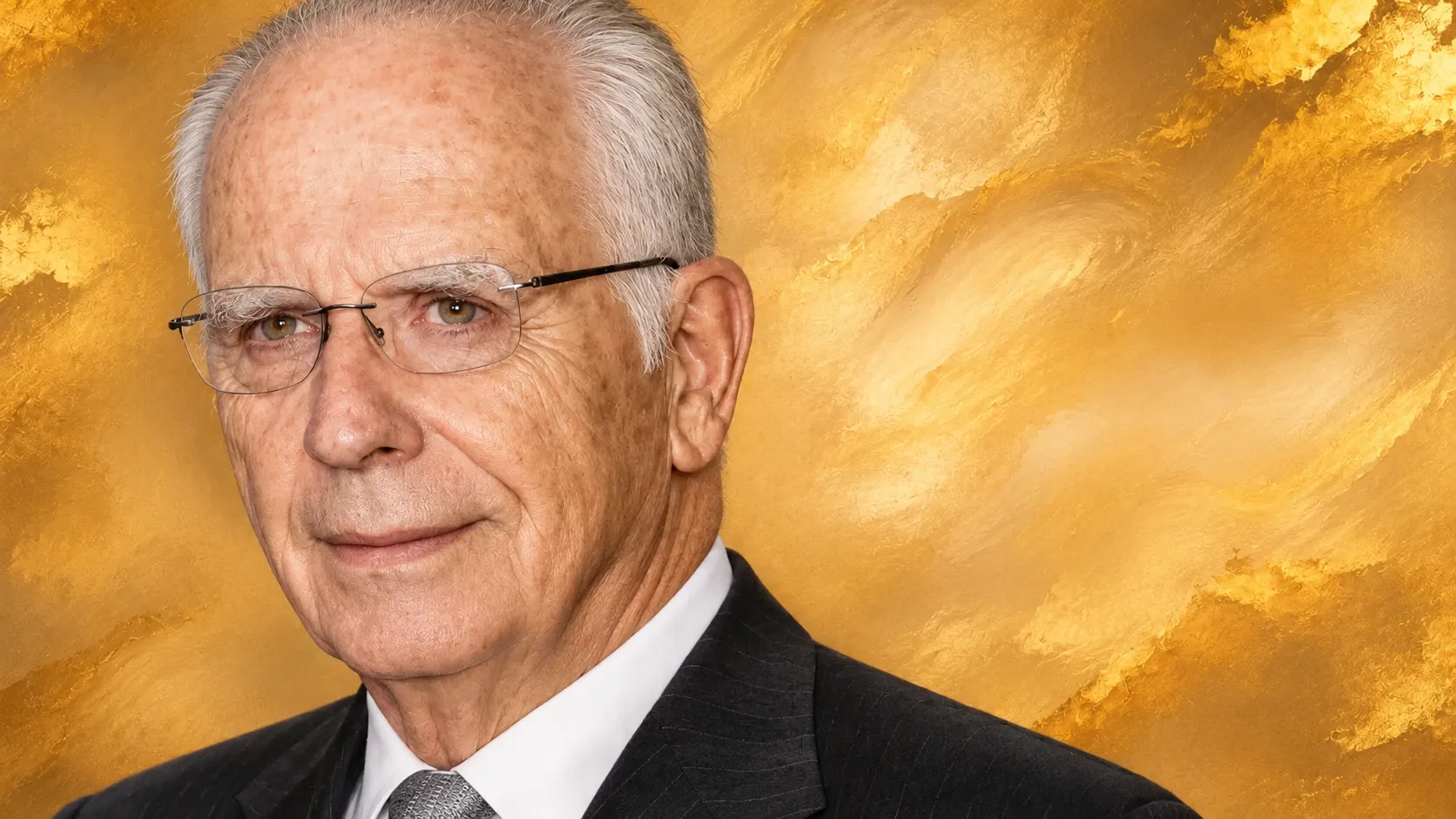
Paolo Bulgari, the gem expert who helped transform his family's Roman silver shop into one of the world's most famous luxury jewellery brands, has died in Rome at the age of 89. His family announced his death on Saturday, November 21.
The family described him as "the greatest jeweller of our time." His death marks the end of an era for a house whose name became synonymous with bold Italian design, coloured gemstones and Hollywood glamour.
A family business with Greek roots
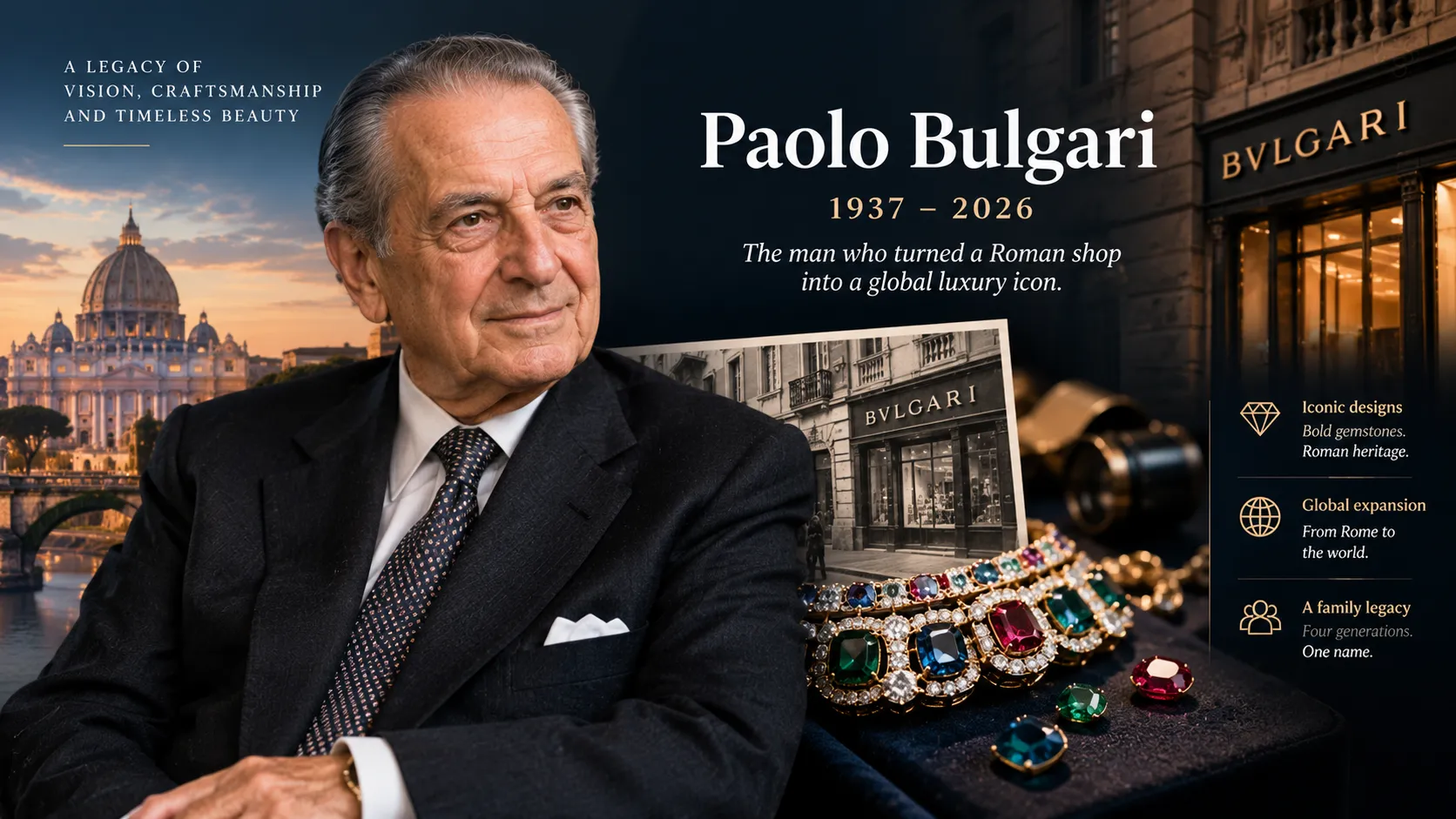
The Bulgari story began with Paolo's grandfather, Sotirios Voulgaris, a Greek silversmith who settled in Rome in the late 19th century and opened a shop selling silver objects. Over the following decades, the business grew into a jewellery house, and the family name was Italianised as Bulgari. The brand is styled Bvlgari, using the classical Latin letter "V."
Paolo joined the business in 1960, working alongside his father, Giorgio. He focused on the creative side of the company, particularly gemstones and design. His brothers, Gianni and Nicola, were also key figures in the business. Gianni led the company's international expansion for many years, while Nicola became known for his work on the brand's heritage and archives.
Paolo became chairman in the 1980s and remained in that role after the company's sale to LVMH.
Building a global brand
Under the leadership of Paolo and his brothers, Bulgari grew from a respected Roman jeweller into a global luxury house. Its designs became known for vibrant coloured gemstones, bold proportions and a distinctively Roman aesthetic, in contrast to the more restrained French jewellery houses that dominated the market.
The house became famous for its use of the cabochon cut, in which gemstones are polished into smooth, rounded shapes rather than faceted. This style became one of Bulgari's signatures.
Bulgari's jewellery attracted a glamorous clientele, including film stars of Rome's "Hollywood on the Tiber" era. Elizabeth Taylor, in particular, became one of the brand's most famous clients, and her collection of Bulgari jewellery remains legendary.
The company listed on the stock market in 1995 and expanded beyond jewellery into watches, perfumes, leather goods and accessories. It also moved into hospitality, opening luxury Bulgari hotels and resorts around the world.
The LVMH deal
In March 2011, the Bulgari family agreed to sell control of the company to LVMH, the French luxury conglomerate led by Bernard Arnault. The family signed the agreement on March 5, and the deal was announced on March 7. It valued Bulgari at about €3.7 billion.
Rather than taking cash, the family exchanged its roughly 50.4% stake for shares in LVMH, becoming significant shareholders in the French group. The deal was seen as a major coup for Arnault, giving LVMH a leading position in high-end jewellery, a category in which it had previously been relatively weak.
Under LVMH ownership, Bulgari has grown substantially and become one of the group's most important brands. Paolo Bulgari remained chairman, providing continuity and preserving the family's influence on the brand's creative direction.
A mentor and gem expert
Paolo was widely regarded as one of the world's foremost experts on gemstones. He was known for his eye for exceptional stones and for travelling widely to source them.
He also mentored the next generation of talent at the house. One of his most notable protégés was Lucia Silvestri, whom he trained as a gem buyer, a role traditionally reserved for the Bulgari brothers. Silvestri rose to become the house's creative director for jewellery, one of the most prominent women in the luxury jewellery industry.
India and the world of coloured gemstones
The world of coloured gemstones that Paolo Bulgari championed has deep connections to India. Historically, India was one of the world's most important sources of gemstones, including legendary diamonds, and the Mughal and Maharaja eras produced some of the most spectacular jewellery in history. Bulgari, like other European houses, drew inspiration from Indian design traditions and gem-setting techniques.
Today, Jaipur is one of the world's leading centres for cutting and trading coloured gemstones, and Surat processes the vast majority of the world's diamonds. India's gems and jewellery industry is a major exporter and employs millions of people.
The luxury industry today
Paolo Bulgari's death comes at a time of change in the luxury industry. After years of strong growth, luxury brands have faced slower demand in some markets, including China. Jewellery has generally performed better than fashion and leather goods, as consumers view fine jewellery as a lasting store of value.
A legacy of family and craft
Paolo Bulgari had six children from two marriages. His family's involvement in the business spans more than a century and four generations.
For The Impactful Global Indian's readers, the Bulgari story offers lessons about how a family business can grow from a single shop into a global brand by combining craftsmanship, a distinctive identity and international ambition. It is a journey that resonates with many Indian family enterprises, including in the jewellery sector, that aspire to build global luxury brands.
Paolo Bulgari's death marks the passing of one of the last great figures of the family era in luxury jewellery. His influence on the design and the global reach of the brand that bears his name will endure.
The family era in luxury
Paolo Bulgari's career spanned an era in which many great luxury houses were family-run businesses. Over recent decades, most of these companies have been absorbed into large luxury conglomerates such as LVMH, Kering and Richemont, which provide capital, global distribution and management expertise. Families often remain involved, as the Bulgaris did, but the shift has transformed the industry from a collection of family workshops into a global business dominated by a few groups.
For Indian jewellery companies, the trajectory of houses like Bulgari offers both inspiration and a cautionary note. Several Indian jewellers have built strong domestic brands and expanded into international markets, and the country's craftsmanship is world-renowned. Building a global luxury brand, however, requires decades of investment in design, heritage, marketing and retail. Tata's Tanishq and other Indian brands have been expanding overseas, particularly in markets with large Indian diaspora populations.


