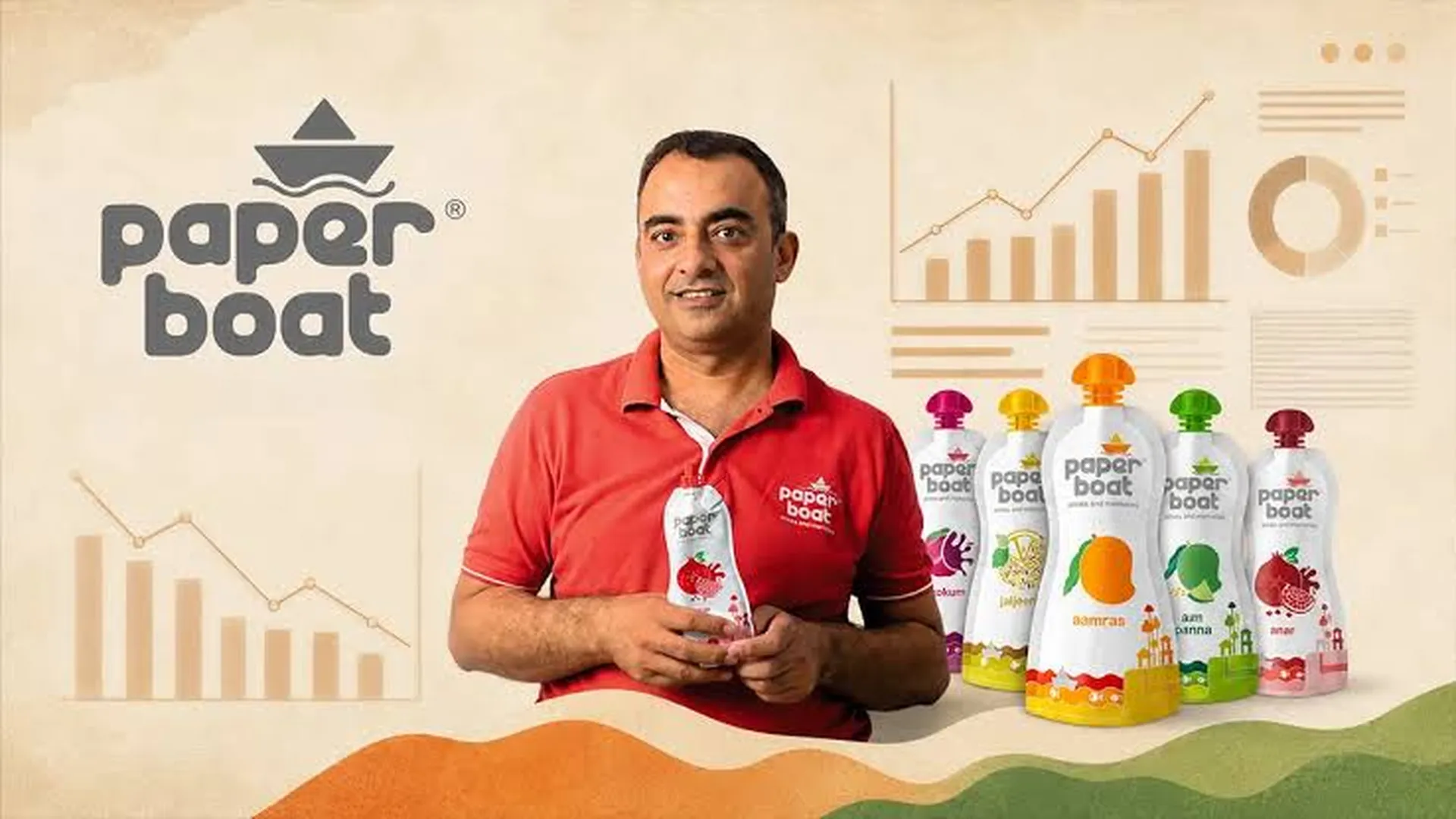
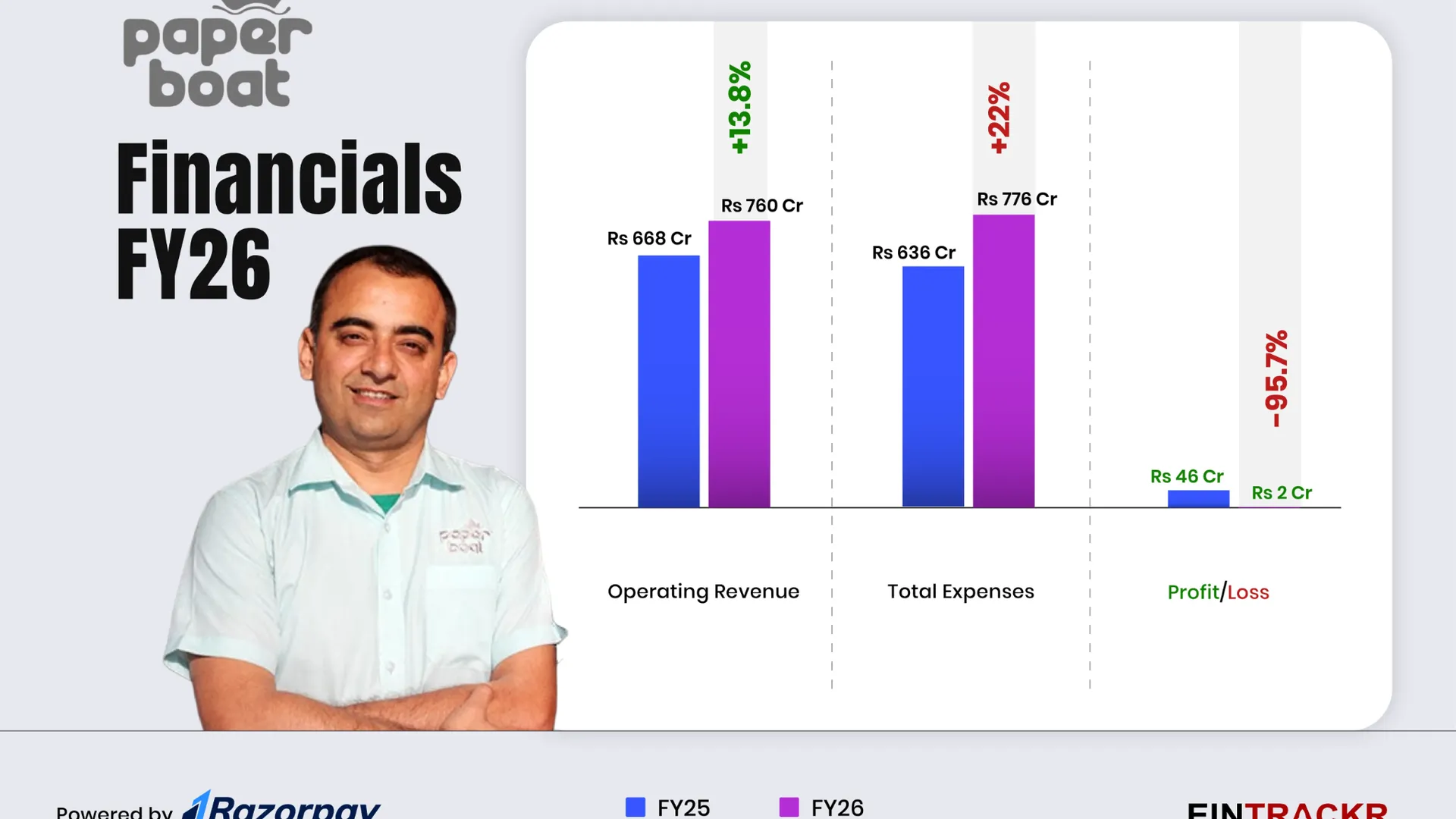
Hector Beverages, the Bengaluru-based parent company of Paper Boat, reported FY26 revenue of ₹760 crore, a 13.8% year-on-year increase from ₹668 crore in FY25 — but the company's profitability told a far less encouraging story, with net profit after tax collapsing 96% to just ₹2 crore, down from ₹46 crore the previous year. The results, filed with the Registrar of Companies, mark a sharp reversal for a company that had only recently turned a corner: FY25 had represented Hector Beverages' first genuinely strong profitable year after a ₹334 crore loss in FY23, and the FY26 numbers raise fresh questions about whether that profitability was durable or a temporary function of favourable cost conditions that have since reversed.
The revenue growth itself, on the surface, continued a now well-established pattern: Hector Beverages has posted double-digit revenue growth in each of the past several fiscal years, expanding from ₹503.96 crore in FY23 to ₹584.85 crore in FY24, ₹668.28 crore in FY25, and now ₹760 crore in FY26. But the composition of that growth has shifted meaningfully, and it is that shift — not simply rising costs in isolation — that explains much of the profit collapse.
The most significant change in Hector Beverages' FY26 financials is the growing dominance of traded goods within its revenue mix. Revenue from traded goods — products sourced through third-party manufacturers and imports rather than made directly by the company — rose 30.2% to ₹574 crore in FY26, up from ₹441 crore in FY25, and now accounts for more than three-quarters of the company's total operating revenue. By contrast, revenue from manufactured goods — products the company makes itself, historically the higher-margin, brand-differentiated core of the Paper Boat business — declined 18.6% to ₹184 crore from ₹226 crore in FY25. That inversion, from a business historically anchored in its own manufacturing to one increasingly dependent on trading lower-margin, externally sourced products, carries direct implications for profitability, since traded goods typically carry thinner margins, different working-capital requirements and less brand differentiation than a company's own manufactured product line.
EBITDA fell nearly 40% to ₹41.4 crore in FY26, pulling EBITDA margin down to 5.4% from 10.3% in FY25 — a compression that maps closely onto the shift toward traded goods, even before accounting for the broader increase in distribution and promotional spending the company has undertaken as it competes for shelf space and consumer attention in India's increasingly crowded packaged beverage and snacking category. Total expenses grew considerably faster than revenue during the year, a pattern that, combined with the margin-diluting shift in product mix, explains how a 13.8% revenue increase translated into a 96% profit decline rather than continued profit growth in line with the company's FY25 trajectory.
Founded in 2009 by former Coca-Cola and PepsiCo executives Neeraj Kakkar, Neeraj Biyani, Suhas Misra and James Nuttall, Hector Beverages launched its first product, a protein drink called Frissia, before pivoting to the energy drink brand Tzinga in 2011 and, in March 2013, the Paper Boat brand that has since become the company's primary identity. Paper Boat's positioning around traditional Indian flavours — aam panna, jaljeera, aam ras and similar regionally rooted recipes — built a genuinely differentiated brand in a beverage category otherwise dominated by international soft drink and juice majors, and the company has expanded from its original single-serve flexible pouches into one-litre Tetra Pak cartons and a broader snacking portfolio spanning nuts and trail mixes.


