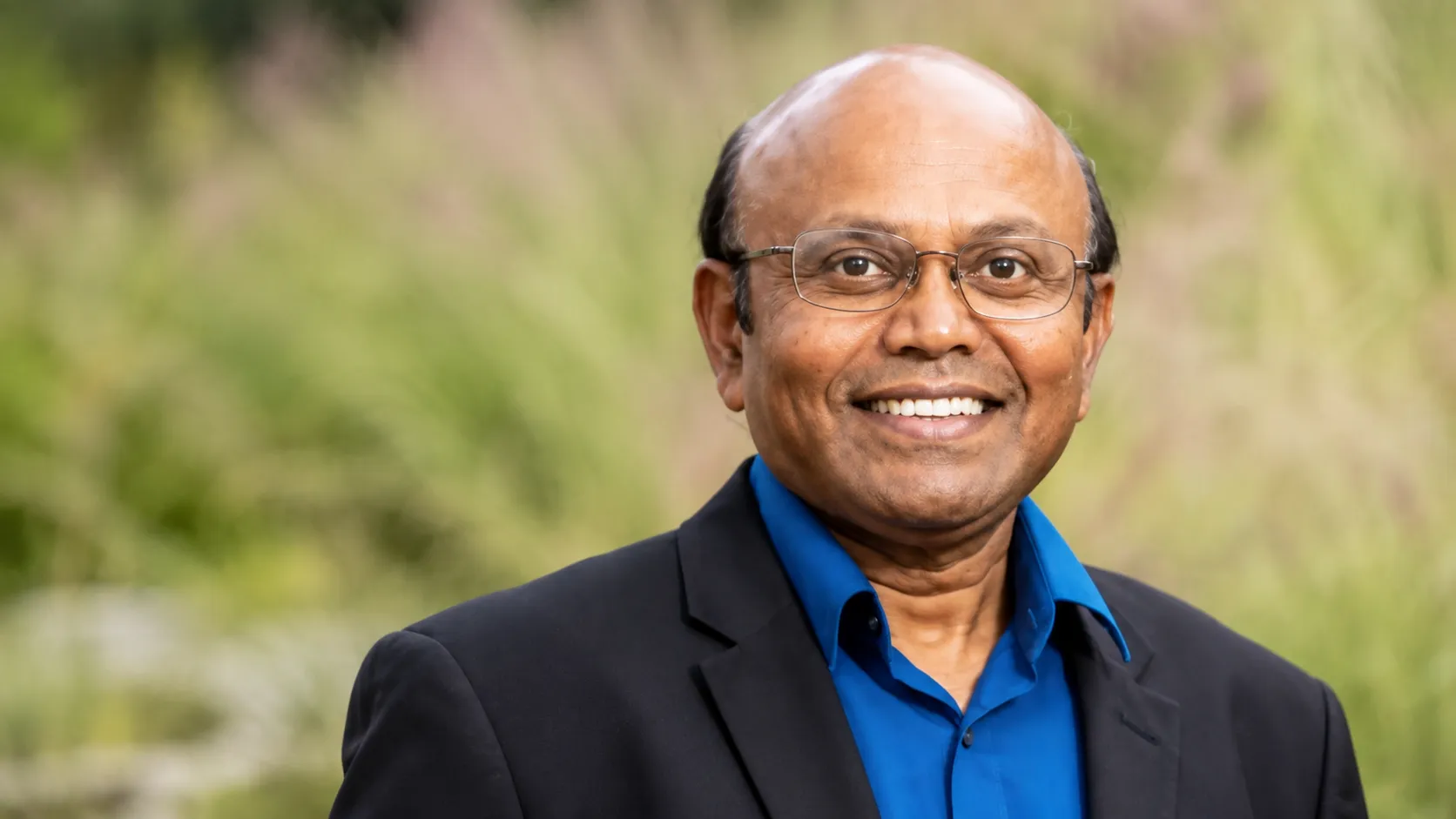
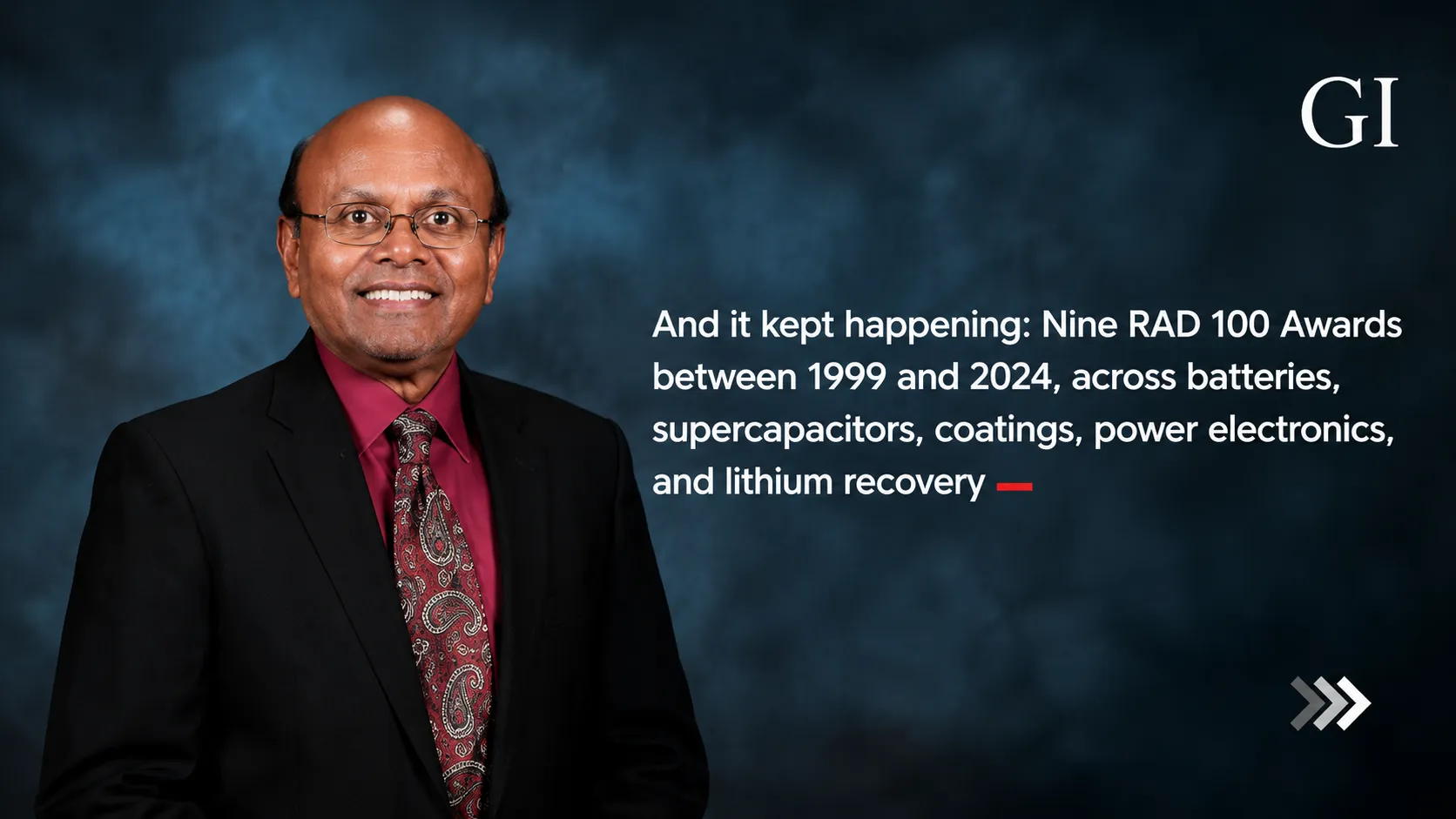
Parans Paranthaman, a materials scientist and IIT Madras alumnus who has spent decades at the frontier of American applied research, has been named the 2026 R&D 100 Researcher of the Year, one of the most prestigious individual honours in US science and technology. The award, announced August 18, 2026, recognises Paranthaman's sustained contribution to materials innovation over more than two decades, a body of work that has earned him nine separate R&D 100 Awards between 1999 and 2024 — a record that places him among the most decorated researchers in the programme's history.
Paranthaman's laboratory affiliation places him among a distinguished group of Indian-origin scientists who have built defining careers within the US Department of Energy's national laboratory network, an ecosystem that has historically attracted top international scientific talent through its combination of long-term research funding stability and access to world-class experimental infrastructure unavailable at most university settings.
The R&D 100 Awards, often referred to within the scientific community as the 'Oscars of Invention,' have for nearly six decades recognised the most significant new products and technologies emerging from corporate, government and academic research laboratories across the United States. Winning a single R&D 100 Award is considered a career milestone for most scientists; Paranthaman's nine awards reflect a research career defined by sustained, repeatable innovation across multiple distinct materials science breakthroughs, spanning superconductivity, battery technology and advanced energy materials.
Peers within the American materials science community describe Paranthaman's career trajectory as emblematic of a broader pattern among Indian-origin scientists who trained at India's premier technical institutions before building multi-decade research careers within US national laboratories and universities. His journey from IIT Madras to the upper echelons of American applied science research mirrors that of thousands of Indian engineers and scientists who have shaped the country's national laboratory system since the 1980s and 1990s.
The R&D 100 Awards programme has, since its founding in 1963, recognised innovations that later became household or industry-standard technologies, from the fax machine to the halogen lamp and, more recently, a wide range of advanced battery and materials science breakthroughs. Winning even once places a researcher in a highly select company; Paranthaman's nine victories across a career spanning superconducting wire technology, lithium-ion battery materials, and advanced ceramic and composite systems reflect an unusually broad technical range for a single research career.
Paranthaman's research has focused heavily on materials that underpin next-generation energy technologies, an area of growing strategic importance as the United States and other major economies race to secure supply chains for the advanced materials needed in batteries, superconducting systems and renewable energy infrastructure. His sustained productivity across nearly three decades — earning R&D 100 recognition across multiple distinct technology cycles, from early superconductivity research through to modern battery chemistry — reflects an unusually adaptable research career, one that has tracked and anticipated shifting national priorities in materials science.
The Researcher of the Year distinction specifically honours not a single invention but a career-long record of innovation, making it a notably different kind of recognition from the individual R&D 100 Awards that populate Paranthaman's résumé. Award organisers noted that his body of work reflects the kind of long-horizon, cumulative scientific contribution that is increasingly difficult to sustain within research funding environments that reward short-term, high-visibility breakthroughs over patient, multi-decade programmes.
Colleagues within the US national laboratory system note that Paranthaman's sustained productivity reflects an institutional environment increasingly rare within American applied research: a career built almost entirely within mission-driven national laboratory settings rather than the more common trajectory of academic-to-industry transitions that characterise many prominent American scientists' careers. This distinction, several peers suggest, has allowed him to pursue longer-horizon research questions than would typically be tolerated within corporate R&D environments driven by quarterly product cycles.
For the Indian American scientific diaspora, Paranthaman's recognition adds to a growing list of honours accumulated by Indian-origin researchers across US national laboratories, university research centres and corporate R&D divisions in materials science, energy technology and advanced manufacturing. Community organisations tracking Indian-origin scientific achievement in the United States point to this steady accumulation of top-tier awards as evidence of the diaspora's deepening institutional presence within America's applied research infrastructure, a presence that extends well beyond the technology and software sectors more commonly associated with Indian American professional success.
Colleagues note that Paranthaman has also invested significant effort in mentoring younger scientists, including a number of Indian and Indian American researchers now building their own careers within the US national laboratory system. This mentorship legacy, several collaborators suggest, may prove as consequential to American materials science over the coming decades as any single one of his individual patented innovations.
The Department of Energy's national laboratory system, within which much of Paranthaman's career has unfolded, has increasingly emphasised the importance of sustained individual research careers as a strategic asset amid growing concerns about scientific talent retention within federal research institutions, particularly as private sector compensation for top materials scientists has risen sharply alongside growing corporate investment in battery and energy storage technology.
As the United States continues to prioritise domestic materials innovation amid intensifying global competition over energy technology and advanced manufacturing supply chains, Paranthaman's recognition as 2026 Researcher of the Year underscores the outsized role Indian-origin scientists continue to play within America's applied research ecosystem. His career, spanning nine R&D 100 Awards and multiple technology cycles, offers a rare portrait of sustained scientific contribution — one that both honours a distinguished individual career and reflects the broader, decades-long story of Indian scientific talent shaping US technological competitiveness.
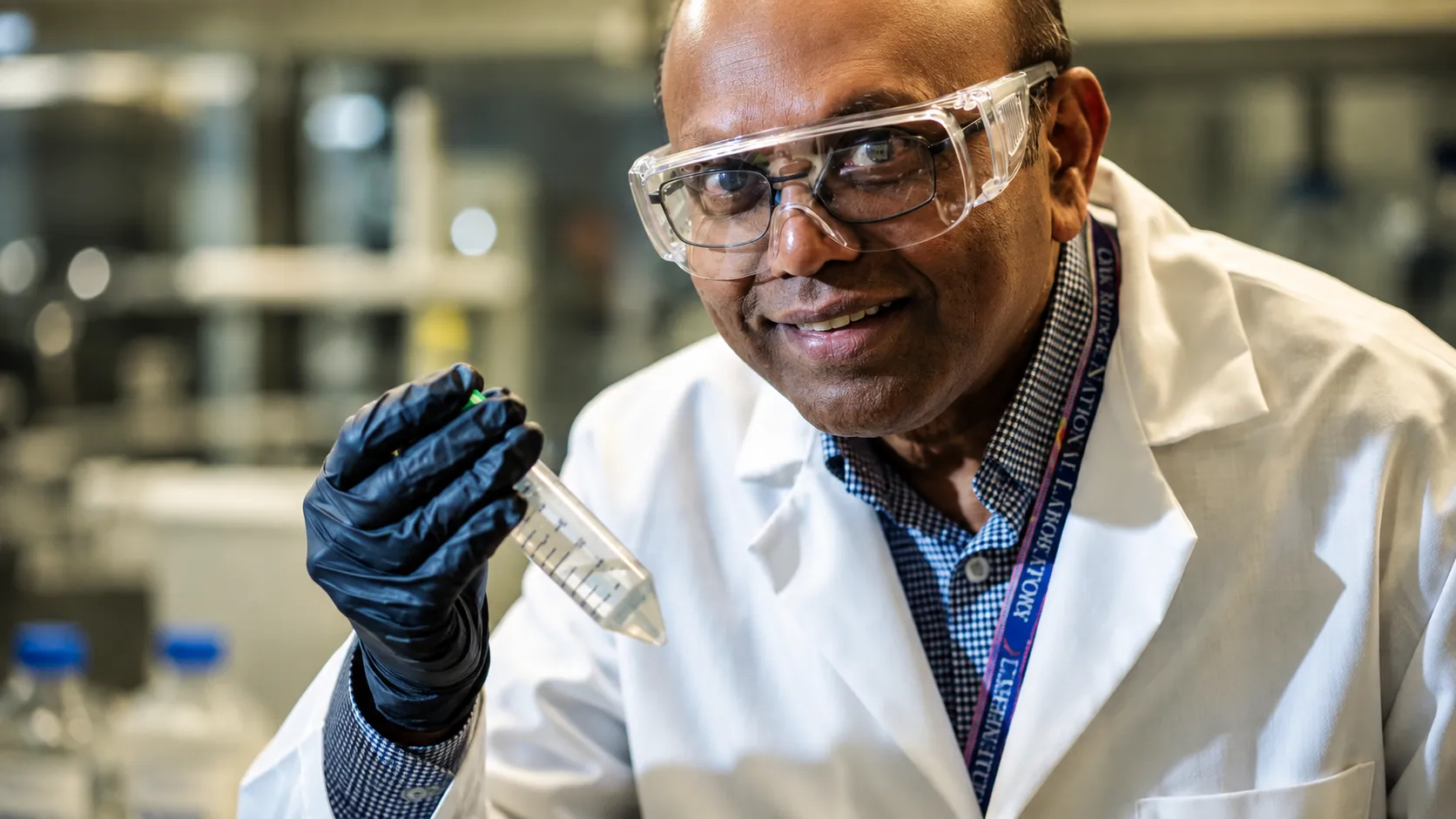
Looking ahead, colleagues suggest Paranthaman's continued research productivity, even as he approaches three decades within the national laboratory system, offers a valuable case study for policymakers seeking to understand what sustains long-horizon scientific careers within an increasingly short-termist federal research funding environment.
The award adds further momentum to the broader case, made increasingly often by science policy advocates, that the United States' scientific competitiveness depends significantly on its ability to attract and retain top international research talent — a policy debate given added weight by Paranthaman's own career trajectory from an Indian engineering education to the pinnacle of American applied materials science recognition.


