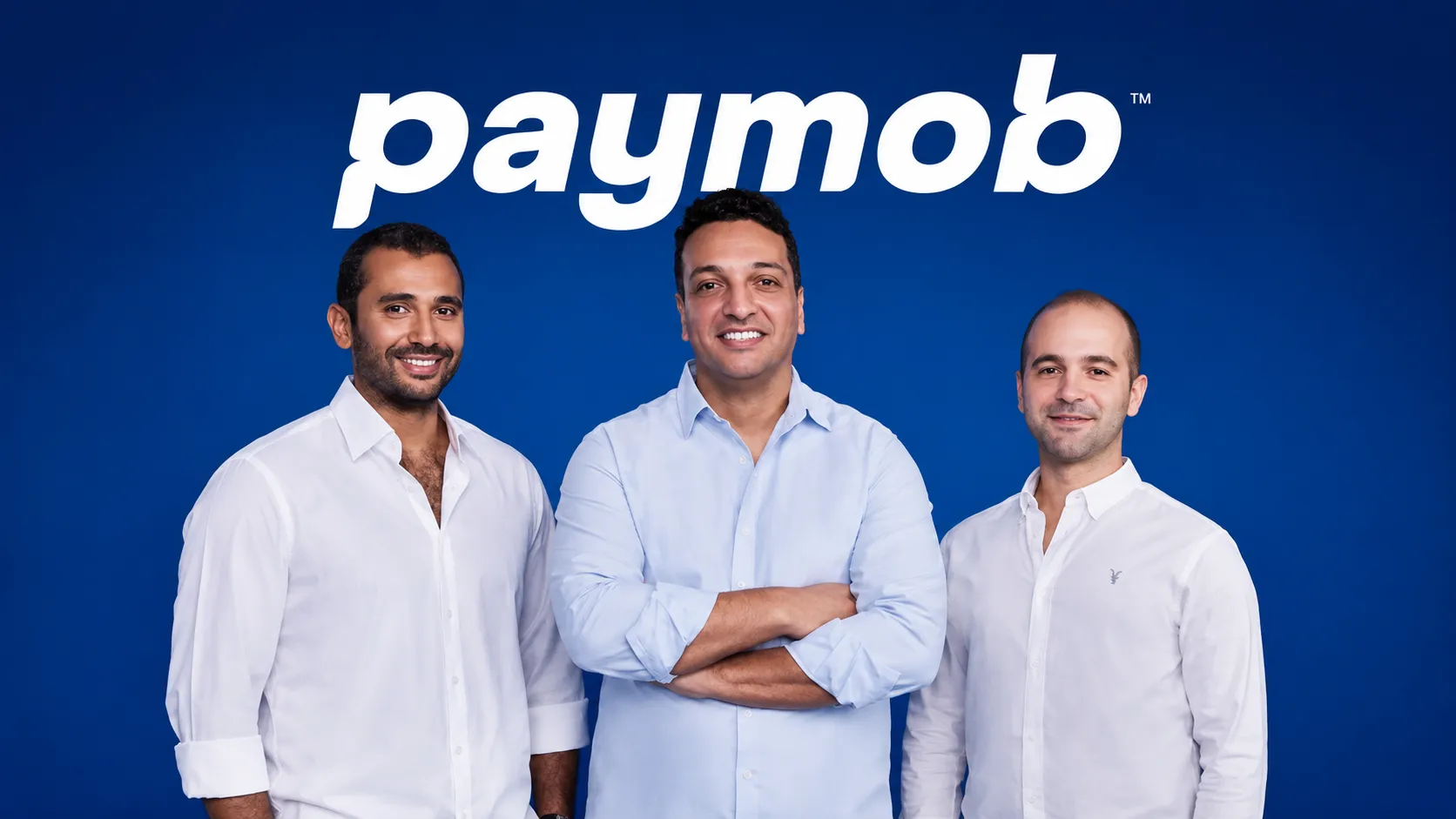
Paymob, the Cairo-founded fintech company, has raised $35 million in pre-Series C funding co-led by sovereign investor Mubadala and the European Bank for Reconstruction and Development, with British International Investment, Global Ventures and DPI Ventures also participating, according to a disclosure reported on September 21, 2026. The round pushes the company's total disclosed funding above $125 million.
Founded in Cairo in 2015, Paymob has built its business around a deceptively simple but operationally complex problem: giving merchants across the Middle East and North Africa access to more than 60 payment methods through a single integration. In a region where merchants expanding across borders have historically needed to separately integrate with local card networks, buy-now-pay-later providers and bank-installment products in each new market, Paymob's consolidated infrastructure removes a significant technical and operational barrier to regional expansion.
The timing of Mubadala's entry as co-lead investor reflects Paymob's accelerating growth trajectory. The company reports that its consolidated revenue has tripled over the past 18 months, while revenue from Gulf Cooperation Council markets specifically has grown sevenfold and now accounts for close to half of the group's total revenue. Since securing its UAE Retail Payment Services License in January 2025, Paymob says it has added roughly 20,000 merchants across its three GCC markets and now serves more than 390,000 merchants across the broader MENA region.
That shift toward Gulf markets carries strategic significance beyond simple revenue diversification. The GCC's payments infrastructure, while more developed in some respects than markets like Egypt, remains similarly fragmented across multiple local networks, card schemes and installment-payment providers — precisely the kind of complexity Paymob's consolidated integration model is designed to abstract away for merchants operating across multiple Gulf markets simultaneously.
Paymob's growth also illustrates a broader pattern across MENA fintech more generally, where regulatory licensing has become an increasingly important competitive moat as the region's payments landscape has matured beyond its earlier, more fragmented early-stage period. Securing a UAE Retail Payment Services License required Paymob to satisfy a rigorous set of compliance, capital-adequacy and operational requirements — a process that smaller, less well-capitalised competitors have often struggled to complete, effectively narrowing the field of credible regional payments-infrastructure providers.

Beyond its core merchant-payments business, Paymob is positioning its platform for what industry participants increasingly describe as agentic commerce — a future in which AI systems, rather than human shoppers, search for products and potentially initiate transactions autonomously. The infrastructure challenge in that scenario, Paymob's leadership has argued, is not whether an AI agent can decide what to purchase, but whether the resulting transaction can be reliably authenticated, routed, settled and reconciled across multiple countries and payment rails — precisely the kind of cross-border payments orchestration the company has spent nearly a decade building.
That strategic framing places Paymob among a growing cohort of payments infrastructure companies globally repositioning themselves not merely as processors of human-initiated transactions, but as the foundational rails upon which an emerging generation of AI-driven commercial activity will eventually depend — a bet that, if it materialises as many industry participants expect, could significantly expand the addressable market for companies with Paymob's existing merchant and payment-rail relationships.
That licensing barrier, combined with the deep integration work required to support more than 60 distinct payment methods across multiple jurisdictions, has increasingly positioned Paymob and a small handful of similarly scaled competitors as the default infrastructure layer for merchants seeking genuine cross-border reach across MENA, rather than having to piece together market-by-market payment integrations independently.
With $35 million in fresh capital and accelerating momentum across the Gulf, Paymob's next phase of growth will test whether the company can maintain its pace of GCC expansion while continuing to defend its position in its home Egyptian market — all while building toward the agentic-commerce infrastructure layer its leadership has identified as the company's longer-term strategic opportunity.