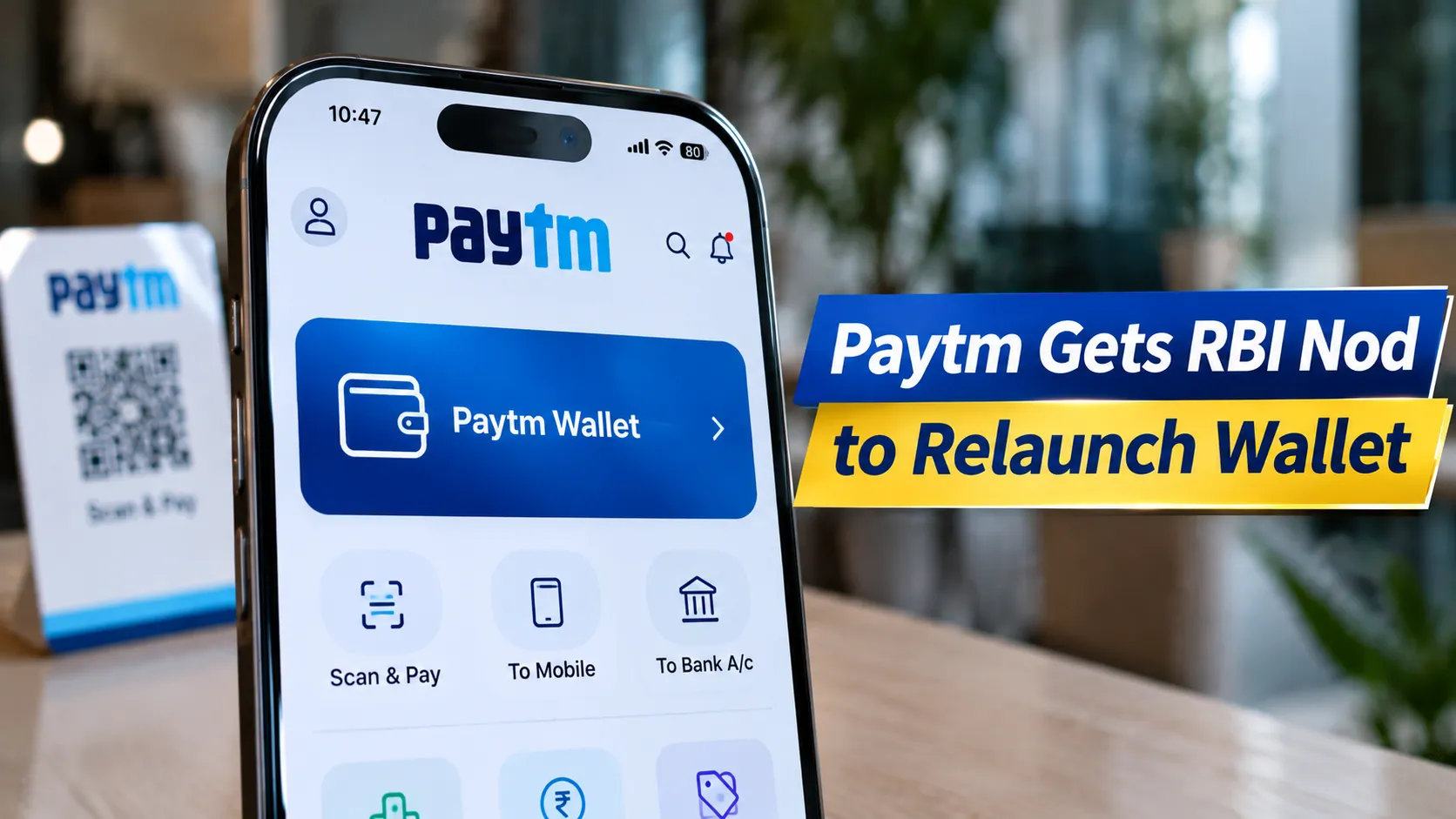
The product that made Paytm a household name in India is on its way back.
Paytm Payments Services Limited (PPSL), a wholly owned subsidiary of Paytm parent One97 Communications, has received in-principle authorisation from the Reserve Bank of India to set up and operate a payment system for prepaid payment instruments (PPIs), including digital wallets, according to Inc42, which reported the disclosure on Thursday, November 13. The authorisation was granted under the Payment and Settlement Systems Act, 2007.
The approval marks a significant step towards reviving Paytm's wallet business, which was effectively shut down in 2024 after the RBI took action against Paytm Payments Bank.
Conditions attached
The in-principle approval is not the final step. PPSL cannot start operations until it meets the RBI's conditions and receives final authorisation, known as a Certificate of Authorisation, according to Inc42.
PPSL must complete a system audit, including a cybersecurity audit, by an eligible auditor and submit the report within six months. If it misses the deadline, the in-principle approval lapses and final authorisation will not be considered. The company also needs the RBI's prior approval for any change in its shareholding or ownership, under the central bank's 2022 directions on changes in control of non-bank payment system operators.
PPSL applied for the fresh PPI licence on December 31, 2025, which Paytm disclosed in its first-quarter earnings release. Management has not given a timeline for the wallet's return.
The 2024 crackdown
Paytm's wallet business was disrupted in January 2024, when the RBI barred Paytm Payments Bank from accepting fresh deposits, credit transactions and top-ups into customer accounts and wallets. The restrictions took effect on March 15, 2024. The RBI cited persistent non-compliance and supervisory concerns.
The action was a major blow to Paytm. The wallet, which allowed users to store money and make payments, had been the company's original product, popularised during India's 2016 demonetisation when people sought alternatives to cash. Paytm Payments Bank had held the wallets, and the restrictions forced Paytm to move users and merchants to partner banks for UPI payments.
A long road back
Since the crackdown, Paytm has worked to rebuild its relationship with regulators and restore its business. In 2025, the RBI granted PPSL final authorisation to operate as an online payment aggregator, allowing it to onboard new merchants again after nearly three years. Paytm also shifted its UPI operations to partner banks, including Axis Bank, HDFC Bank, State Bank of India and Yes Bank.
The PPI approval is another milestone in this recovery. A licensed wallet would allow Paytm to offer stored-value products again, which can be useful for small payments, transit, gifting, and for users who prefer not to link bank accounts directly.
Financial turnaround
Paytm's finances have improved significantly. In the second quarter of the 2026-27 financial year, its net profit rose to ₹225 crore from ₹21 crore a year earlier, and operating revenue grew 28% year-on-year to ₹2,648 crore, according to Inc42. Financial services distribution, including lending in partnership with banks and non-banking financial companies, now accounts for a significant share of revenue.
The company has also benefited from cost cuts, higher merchant subscription revenue from devices such as Soundbox, and growth in payment processing.