StartupsLatest6 MIN READ

Peeko Raises $7 Million Series A to Scale Bengaluru's Babycare Quick-Commerce Bet

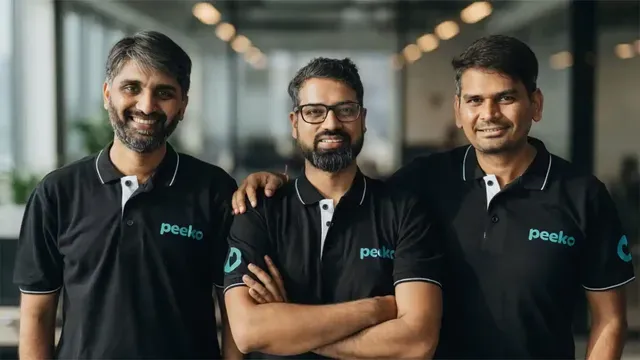
Bengaluru-based babycare quick-commerce platform Peeko has closed a Rs 67.4 crore ($7 million-plus) Series A round led by Chiratae Ventures and Inflection Point Ventures, as competition intensifies in India's fast-delivery parenting category.

By Aravind Kumar · Author21 August 2026New
Peeko Raises $7 Million Series A to Scale Bengaluru's Babycare Quick-Commerce Bet

Peeko, a Bengaluru-headquartered quick-commerce platform built specifically for new and expecting parents, has raised Rs 67.4 crore, worth just over $7 million, in a Series A funding round led by Chiratae Ventures and Inflection Point Ventures. The round, disclosed this week, is among the more closely watched early-stage deals in India's crowded quick-commerce sector, where investors have grown increasingly selective after a period of aggressive, undifferentiated expansion across grocery and general retail.

The company's pitch is narrower than that of the horizontal quick-commerce giants it operates alongside. Rather than compete on the breadth of a catalogue spanning everything from snacks to electronics, Peeko has built its business around the specific, recurring, and emotionally charged needs of parents managing infants and toddlers: diapers, formula, wipes, feeding accessories and paediatric essentials delivered within minutes rather than hours.

The round underscores a broader pattern playing out across India's consumer technology landscape: after two years in which quick-commerce capital concentrated almost entirely around a handful of horizontal players competing on catalogue breadth, investors are once again willing to back founders who can prove that a narrower, deeper category focus can generate stronger retention and unit economics than a scattergun approach to assortment.

For TIGI readers tracking India's consumer technology landscape, the round is a reminder that category depth, not just delivery speed, is increasingly the metric investors use to separate durable quick-commerce businesses from those simply riding a broader industry wave.

According to people familiar with the transaction, the fresh capital will be directed toward three priorities: expanding Peeko's dark-store footprint within Bengaluru, investing in technology to sharpen demand forecasting for perishable and time-sensitive baby products, and preparing the groundwork for entry into additional Indian metros over the next twelve to eighteen months. The company had previously raised $3.2 million in a seed round, giving it roughly two years of operating history to refine its category-specific logistics before this larger institutional round.

India's quick-commerce market has expanded rapidly over the past three years, with platforms racing to compress delivery windows and widen catalogues in pursuit of scale. But that same speed has left gaps in specialised categories where trust, product authenticity and consistency matter more than sheer selection — a gap that vertical-focused challengers like Peeko are attempting to exploit. Parents, particularly first-time parents in urban India, have shown a willingness to pay a premium for reliability when it comes to their children's essentials, a dynamic that investors say underpins the unit economics case for a narrower, deeper platform over a broad, shallow one.

Founders building in the babycare vertical argue that the category rewards operational discipline in ways that general grocery delivery does not. Shelf life management, batch traceability and strict quality control matter enormously to parents buying formula or feeding accessories, and a single quality lapse can permanently damage a brand's credibility with a customer base that talks to other parents constantly, whether in WhatsApp groups, parenting forums or paediatrician waiting rooms.

Peeko's leadership has previously indicated that the company views customer lifetime value, rather than order frequency alone, as its primary north-star metric, betting that a family which trusts the platform during a child's first eighteen months will continue purchasing across an expanding range of categories as that child grows older.

Bengaluru's dense dark-store network, built up over successive waves of quick-commerce investment across grocery, pharmacy and now babycare, gives Peeko a logistics advantage that would be considerably harder and more expensive to replicate from scratch in a new city, a factor investors say weighed heavily in favour of a Bengaluru-first expansion strategy before pursuing broader national scale.
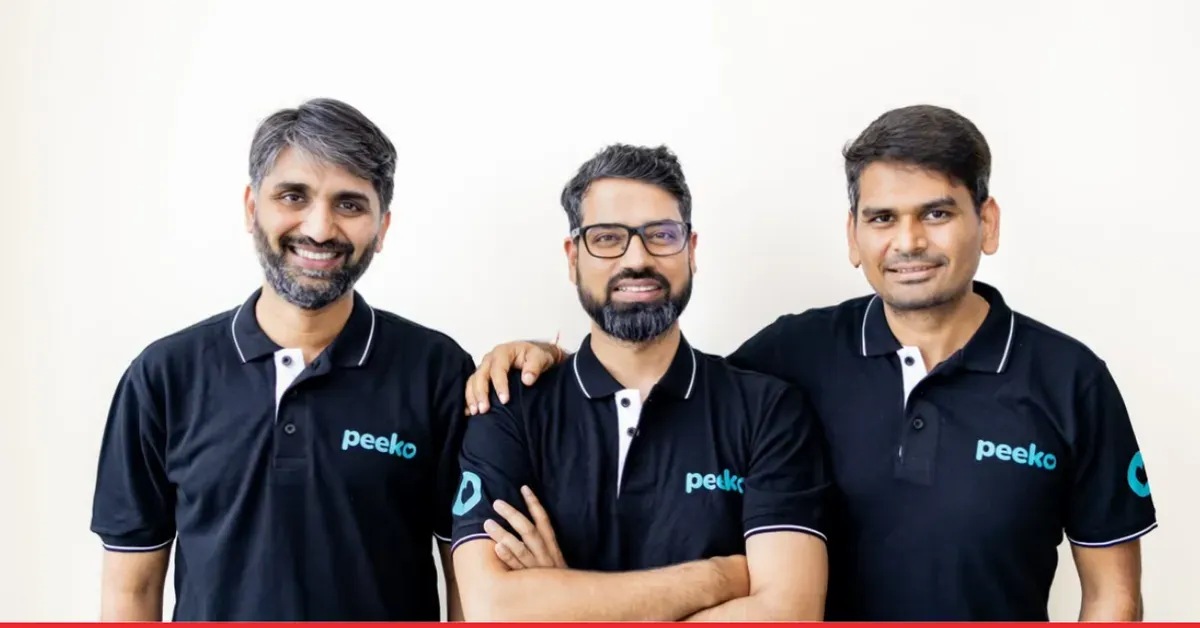

Vertical, trust-driven commerce categories are proving that scale is not the only path to investor confidence in India's crowded quick-commerce market.
TIGI Funding Desk

image.png

Chiratae Ventures and Inflection Point Ventures, the two lead investors in this round, have both built reputations for backing early-stage Indian consumer and technology companies through their first phases of scale. Their involvement signals a degree of institutional confidence in Peeko's ability to defend a defensible niche even as larger horizontal players such as Blinkit, Zepto and Instamart continue to add babycare assortments to their own catalogues. Analysts tracking the category note that the real test for Peeko will be whether it can maintain delivery speed and product freshness as it expands beyond its home market, where dark-store density and last-mile logistics are already tightly optimised.

The funding round also arrives at a moment when Indian startup investors are demonstrating renewed appetite for consumer businesses with clear, repeatable purchase behaviour, after a period in which capital was concentrated disproportionately in enterprise software, fintech infrastructure and artificial intelligence. Peeko's ability to raise a Series A of this size for a relatively young, geographically concentrated business suggests investors are willing to back founders who can demonstrate strong retention metrics within a tightly defined customer segment, even before national scale is achieved.

The Series A also lands against a backdrop of renewed merger and consolidation speculation in India's broader quick-commerce sector, as smaller regional players weigh whether to raise fresh growth capital independently or seek acquisition by larger, better-capitalised platforms. Vertical specialists like Peeko occupy an interesting position in that landscape: attractive as potential acquisition targets for horizontal players seeking to deepen category expertise, but also increasingly confident in their ability to raise independent growth capital on the strength of demonstrated category leadership.

Investors involved in the round have pointed to India's still-low per-capita spending on organised, branded babycare products relative to more mature markets as evidence of a long runway for category expansion, suggesting that even modest increases in the share of Indian parents purchasing through organised, quality-assured channels could support a considerably larger addressable market than Peeko currently serves.

The company's next twelve months will likely be defined as much by execution discipline as by fundraising success, with investors and market watchers alike expecting Peeko to demonstrate that its Bengaluru unit economics can be replicated, rather than diluted, as it enters new geographies with different demographic profiles, logistics costs and competitive intensity.

For India's broader babycare and parenting commerce ecosystem, Peeko's raise is a signal that specialised, trust-driven verticals still have room to attract serious institutional capital, even in a funding environment that has otherwise turned more cautious. Whether the company can translate a strong Bengaluru base into a multi-city network without diluting the reliability that differentiates it from horizontal competitors will determine if this Series A becomes the first step toward category leadership, or simply a well-funded regional experiment.

Founders and investors in the space will also be watching how quickly larger horizontal quick-commerce platforms respond competitively, whether through deeper babycare assortments of their own, dedicated sub-brands, or acquisition interest in specialists like Peeko, any of which would materially reshape the competitive calculus for the round's backers over the coming eighteen months.

Investors who sat out this round will also be watching to see whether Peeko's babycare focus proves durable against horizontal platforms that can bundle diapers and formula into a much larger basket of household goods at effectively zero incremental delivery cost, a structural advantage vertical specialists everywhere must continually work to offset through superior service and trust.

TagsPeekoQuick CommerceBabycareSeries AChiratae VenturesBengaluruIndia Startups

Reader reviews

Sign in to rate and review this article.
Loading reviews…