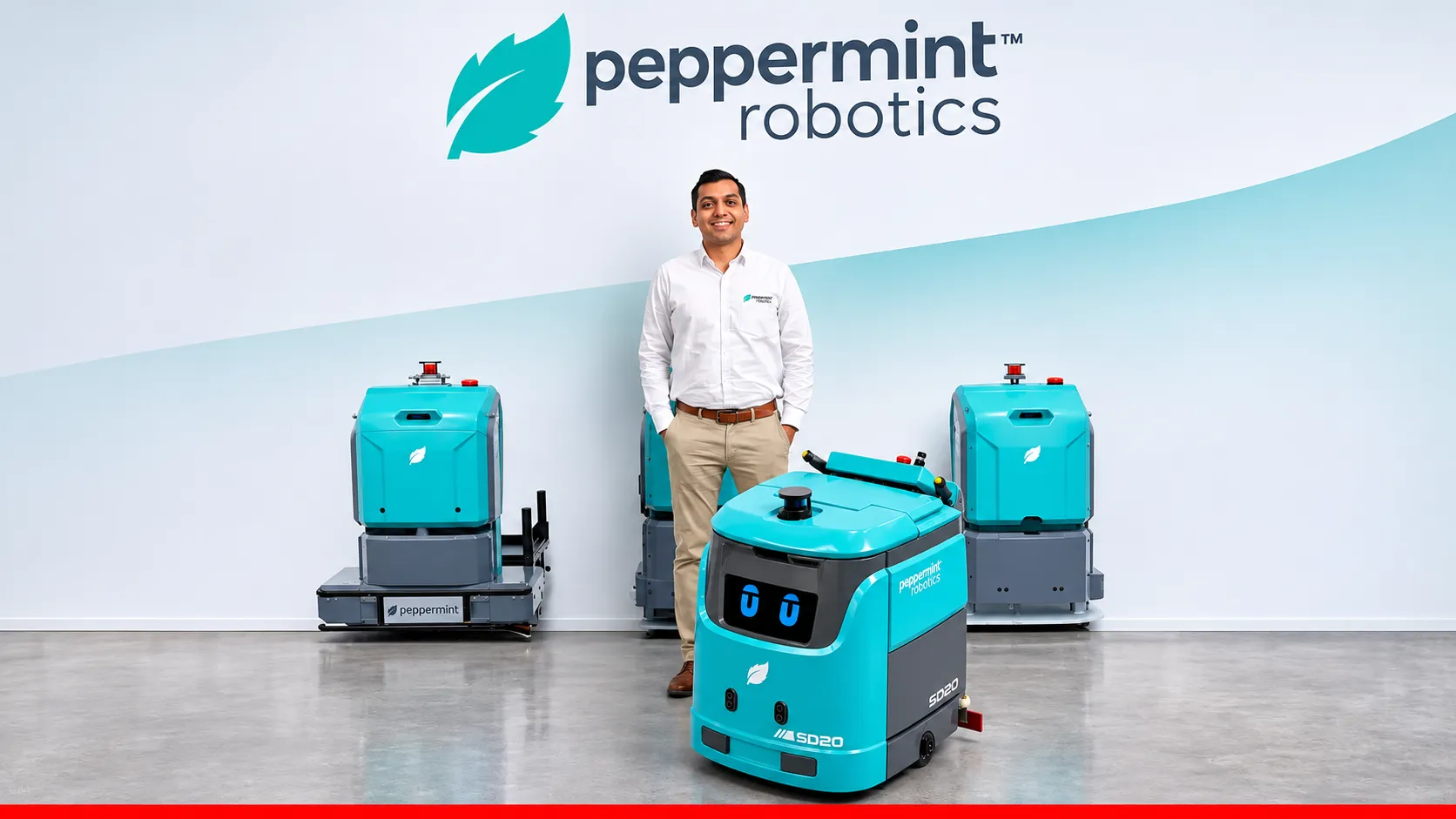
Peppermint Robotics, a Pune-based maker of autonomous robots for commercial and industrial floors, has raised ₹100 crore in fresh funding, one of the larger rounds for an Indian hardware robotics startup this year.
The round includes pi Ventures, Crane Venture Partners and Asiana Fund, according to reports published on November 4. It takes Peppermint's total capital raised to about ₹150 crore. The company plans to use the money to expand its manufacturing capacity and international operations.
The deal stands out because it is a big bet on hardware in a funding market that has largely rewarded software. Building robots requires precision manufacturing, supply chains for motors, sensors and batteries, and long sales cycles with enterprise customers. Few Indian startups have tried to build that capability at home and sell it abroad.
From an IIT Bombay incubator to six countries
Peppermint began its journey in 2019 at the Society for Innovation and Entrepreneurship (SINE), the business incubator at IIT Bombay. Its founder and chief executive is Runal Dahiwade. The company operates through Aubotz Labs Private Limited and designs and builds autonomous robots for labour-intensive tasks such as floor cleaning and material handling in factories, warehouses, hospitals, airports and commercial buildings.
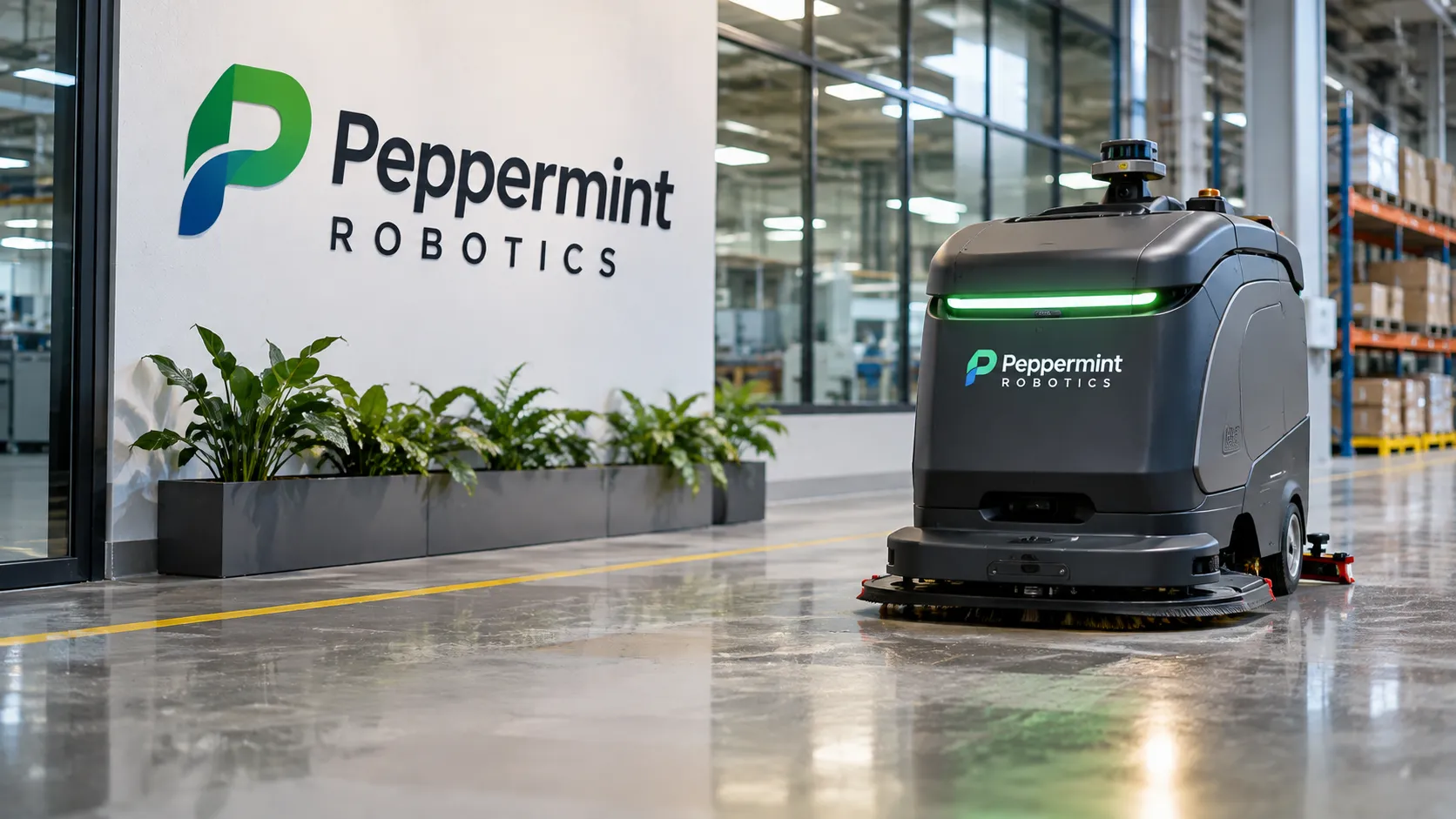
Its product range has included robotic scrubber-driers, sweepers, moppers and carpet cleaners. These are machines that take on repetitive work that facilities managers increasingly struggle to staff consistently. Behind the hardware is a proprietary software stack, Peppermint OS, and a modular electronics framework the company calls "Skateboard". The design lets it build different robot types on a common foundation.
That platform approach matters. Rather than building every product from scratch, Peppermint can reuse navigation, safety and fleet-management software across machines and offer the platform to original equipment manufacturer (OEM) partners. That creates a potential second revenue stream beyond selling its own robots.
A steady funding ladder
The company's capital history has grown alongside its ambitions. In September 2021, Peppermint raised ₹5 crore in a round co-led by Venture Catalysts and the Indian Angel Network, with participation from Vinners and a group of angels that included a former Castrol executive. At the time, it was operating in India and the UAE.
In April 2025, it closed a ₹34 crore (about $4 million) Series A backed by JDSS, Enrission India Capital, the Indian Angel Network, Vinners and angel investors. That took total funding to around ₹49 crore and was earmarked for expansion into Europe, Japan and the wider Asia-Pacific region. By then, the company had entered the US market, had an annual recurring revenue of about ₹18 crore and served more than 180 enterprise users across manufacturing, healthcare and commercial real estate, according to Entrackr.
Financial data compiled by Inc42 shows the company's revenue rose roughly 234% to ₹21 crore in FY25 from ₹6.3 crore a year earlier, with a net loss of about ₹6 crore. Those are the economics of a young hardware company in a rapid scale-up phase: steep revenue growth alongside continued investment in engineering, manufacturing and international market entry.
The new ₹100 crore round is roughly double the company's entire previous funding, marking a step change in scale.
Who is backing it
The investor line-up suggests the round is aimed at turning a promising product into an international business.
pi Ventures is one of India's best-known deeptech-focused venture capital firms, with a portfolio built around artificial intelligence, robotics, biotech and other science-led businesses. Crane Venture Partners is a London-based firm that invests in early-stage enterprise technology companies, giving Peppermint a backer with European networks as it pushes deeper into that market. Asiana Fund adds further growth capital.
Why commercial cleaning robots are a serious market
Autonomous cleaning robots may sound like a niche, but they address a structural problem facing building owners worldwide: labour shortages and rising wages for repetitive, physically demanding work. Facilities in Europe, North America, Japan and the Gulf face persistent difficulty in hiring and retaining cleaning staff. At the same time, hospitals, airports, factories and logistics hubs demand consistent hygiene standards that are easy to audit.
Robots that can clean large floor areas autonomously, log their work and operate overnight allow companies to redeploy human staff to tasks that need judgment and dexterity. Material-handling robots, which move goods around factories and warehouses, address the same pressures on productivity.
Global competition is fierce. Established players from the United States, Europe, China and Singapore already sell commercial cleaning robots, often backed by far larger balance sheets. Peppermint's argument rests on a combination of cost efficiency from Indian engineering and manufacturing, a flexible platform, and the ability to tailor products to customers' workflows.
The 'Make in India' angle for robotics
The funding also comes as India tries to build a deeper base in advanced manufacturing and deep technology. Government incentive programmes have so far focused largely on electronics, semiconductors and electric vehicles. Robotics companies argue that the country's engineering talent, cost structure and growing component ecosystem position it to become an exporter of automation hardware, not just a buyer.
Indian deeptech startups have historically struggled to raise large rounds, because investors worry about long development cycles and capital intensity. A ₹100 crore round for a robotics company with revenue, customers and international operations offers evidence that the funding gap is beginning to narrow, at least for companies that have moved beyond prototypes.
What to watch next
The key test for Peppermint will be execution in manufacturing and international sales. Scaling hardware production without sacrificing quality, building service and maintenance networks in overseas markets, and managing component supply chains will all demand capital and operational discipline.
The company has also previously signalled plans to expand its product range, including a restroom-cleaning robot. Further products built on its common platform would help it sell more to each customer and improve unit economics.
For India's startup ecosystem, Peppermint's raise is a reminder that some of the most interesting stories are being written outside software and consumer apps, on factory floors, in hospital corridors and in warehouses across the world. If the company can convert this round into scaled international revenue, it could become a reference point for a new generation of Indian robotics companies building for global markets from day one.


