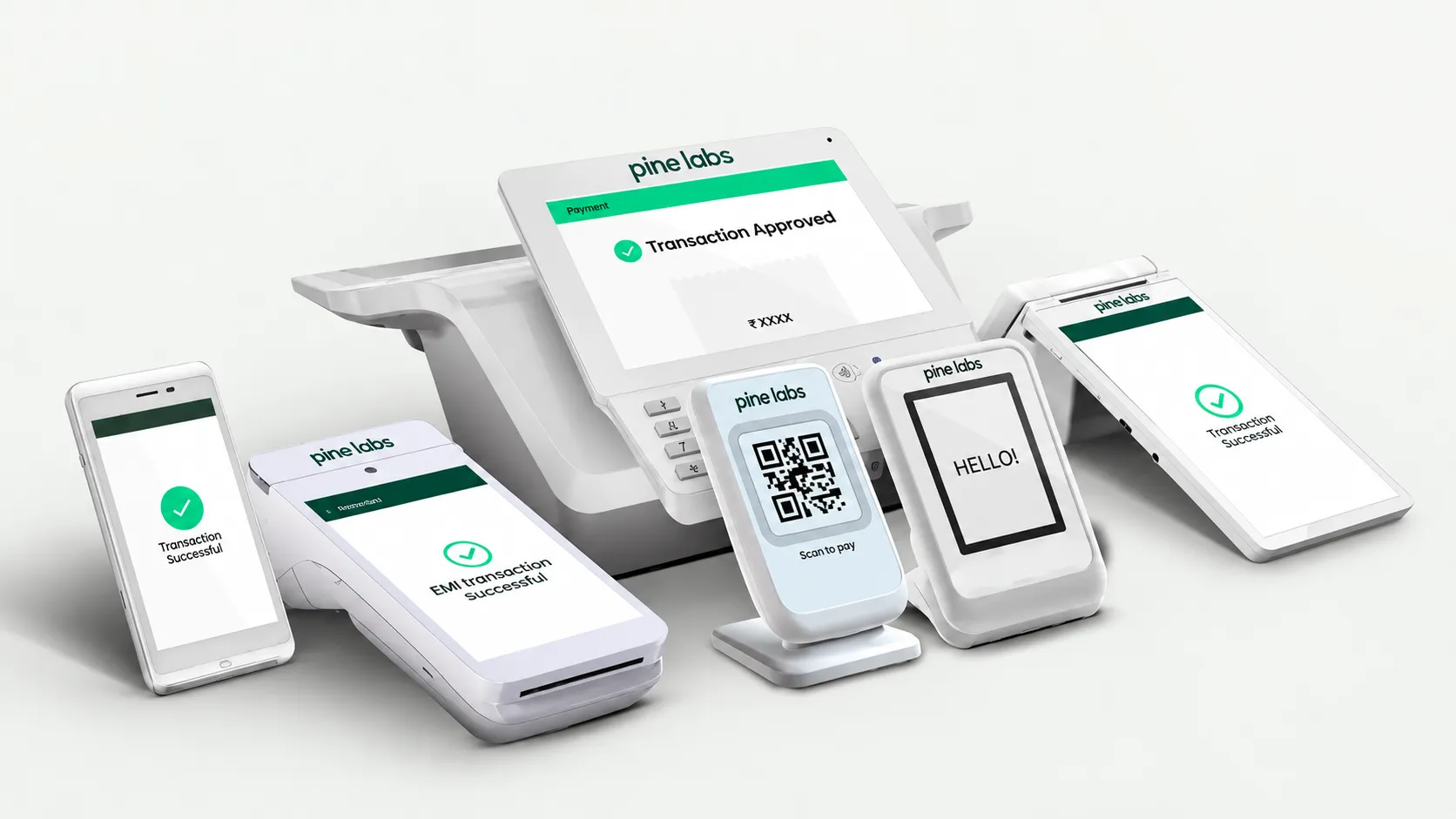
Pine Labs, the commerce and payments technology company best known for its card terminals in India's shops and malls, is making a large bet on the device that has become the symbol of the UPI revolution: the humble soundbox.
The company announced on Thursday, September 24, that it will deploy 10 lakh, or one million, soundboxes across India. The rollout is designed to strengthen the country's digital payments infrastructure and push UPI adoption beyond small-ticket transactions into new markets and business segments, according to the company's announcement, reported by IndianWeb2 and YourStory.
The move puts Pine Labs in direct competition with some of India's biggest fintech names for the loyalty of the country's merchants, and it came on the same day that PhonePe said it would deploy more than 5 million payment devices over the next year.
A reinvestment, not just an expansion
Pine Labs chief executive B Amrish Rau framed the rollout as a response to a changing business environment.
"With new monetization levers emerging, we want to walk the talk by investing back into the ecosystem and deepen digital payments adoption," Rau said.
The reference to monetisation is significant. For much of UPI's history, merchant payments through the system have carried no merchant discount rate for most businesses, which has made it hard for payment companies to earn revenue from the transactions they enable. Soundboxes became one of the few ways to generate income, through device rental or subscription fees. As new ways to earn from UPI emerge, companies such as Pine Labs have a stronger case for investing heavily in merchant infrastructure.
What the device does
A soundbox is a small speaker, typically placed near a shop's billing counter, that announces aloud each payment a merchant receives. The concept is simple, but its impact has been large. It allows a shopkeeper to confirm a payment instantly without checking a phone, which reduces fraud from fake payment screenshots and speeds up busy checkouts.
Pine Labs' version is built on a cloud-first architecture. According to the company, the devices provide real-time audio confirmation of payment transactions and support remote device management, over-the-air software updates and centralised monitoring.
Those features matter at scale. When a company operates a million devices spread across the country, the ability to update software remotely, diagnose problems without sending a technician and monitor the network from one place can significantly reduce operating costs and improve reliability.
Beyond small-ticket payments
The most important part of Pine Labs' strategy may be its focus on moving UPI beyond small-ticket transactions.
UPI's early growth was driven by everyday purchases: tea, groceries, auto-rickshaw fares and small retail payments. But UPI is increasingly being used for larger payments, including in electronics stores, pharmacies, fuel stations and larger retail outlets. These are segments where Pine Labs already has a strong presence through its point-of-sale terminals, which handle card payments, EMI financing and other services.
By adding soundboxes to its portfolio, Pine Labs can offer merchants a single provider for both cards and UPI, and follow UPI's expansion into higher-value retail categories where its existing relationships are strongest.
A crowded market
The soundbox market has become one of the most competitive corners of Indian fintech. Paytm popularised the device and built a large installed base, while PhonePe, Google Pay, BharatPe and a number of banks have all launched their own versions.
The announcements from Pine Labs and PhonePe on the same day show that this competition is entering a new phase. Both companies are expanding their networks at a time when the economics of merchant payments appear to be improving, and both are targeting merchants who have not yet been fully brought into the digital payments system.
What distinguishes the current round of expansion is its target. Earlier soundbox rollouts concentrated on dense urban markets, where a single field agent could sign up dozens of shops in a day. The next set of merchants is more dispersed, more cash-dependent and often less familiar with digital tools. Reaching them requires patient field work, local-language support and devices that keep working with patchy connectivity — which is why features such as remote management and over-the-air updates are becoming competitive advantages rather than technical details.
For merchants, the competition could mean better devices, lower rental fees and more bundled services. For payment companies, the risk is that aggressive expansion drives up costs before new revenue streams fully materialise.
Pine Labs' wider ambitions
Pine Labs describes itself as a provider of a "Commerce OS", offering integrated payments, issuing, credit and other fintech services. It operates across South Asia, Southeast Asia, the Middle East, Africa, Australia and the United States, and its technology is used by large retailers, brands and banks.
The company, founded in 1998, started as a provider of payment solutions for fuel stations before becoming one of India's largest merchant payment networks. Over the years, it has expanded into consumer financing at the point of sale, gift cards, prepaid cards and payment software for businesses. Its move into the mass merchant market through soundboxes marks an important extension of that strategy.
As a listed company, Pine Labs will face close investor scrutiny over how this investment affects its margins. Shares of the company were in focus following the announcement, according to Angel One.
What it means for India's payments ecosystem
UPI has become one of India's most successful public digital infrastructure projects, processing billions of transactions every month. But its long-term sustainability depends on payment companies having a viable business model.
The announcements by Pine Labs and PhonePe suggest that model may be taking shape. If payment providers can earn revenue from certain categories of merchant transactions, they will have stronger incentives to invest in devices, service networks and merchant support in parts of the country that have so far been underserved.
For small businesses, that could mean more reliable payment infrastructure and access to additional services such as credit. For consumers, it means being able to pay digitally in more places and for larger purchases.
Pine Labs' million-soundbox rollout is, in that sense, more than a hardware deployment. It is a bet that India's payments market is entering a phase in which infrastructure investment will once again be rewarded — and that companies willing to build the rails now will be best placed to profit from the next decade of digital commerce.