TechFuture Tech5 MIN READ

Pixxel Founder Awais Ahmed Says the Spacetech Startup Is Indian-Owned and Controlled Amid a Backlash Over Its US Government Push

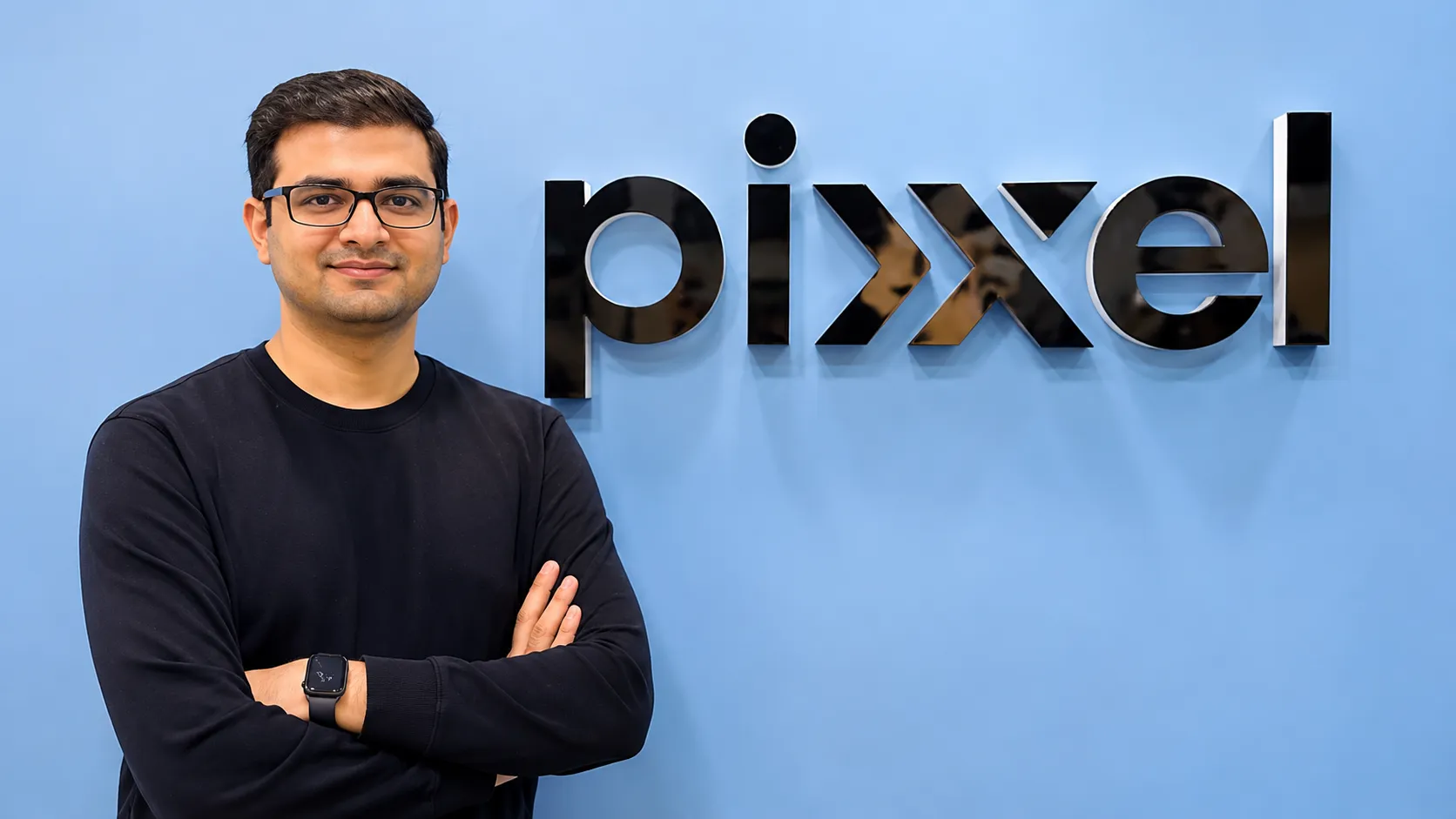
Bengaluru-based Pixxel's co-founder and chief executive Awais Ahmed said on November 2 that the hyperspectral satellite company is "Indian-HQed, Indian owned, Indian-managed and Indian-controlled," after online criticism of its new US subsidiary, Pixxel Federal, which will pursue American defence and intelligence contracts. The episode highlights the tensions facing Indian deeptech startups that seek global customers.

By Aravind Kumar · Author3 November 2026New
Pixxel Founder Awais Ahmed Says the Spacetech Startup Is Indian-Owned and Controlled Amid a Backlash Over Its US Government Push

One of India's most prominent space startups has found itself defending its national identity, in a debate that goes to the heart of how Indian deeptech companies can expand globally without losing the trust of customers and policymakers at home.

Awais Ahmed, co-founder and chief executive of Bengaluru-based Pixxel, said on Monday, November 2, that the hyperspectral satellite company remains firmly Indian, after online criticism of its newly announced US subsidiary, Pixxel Federal. "First, Pixxel is Indian-HQed, Indian owned, Indian-managed and Indian-controlled," Ahmed said, according to Inc42.

Ahmed said Pixxel had faced "targeted social media attacks, anonymous emails to government customers, and attempts to cast doubt on its ownership, technology, and credentials," according to the report.

What triggered the backlash

The controversy followed the announcement of Pixxel Federal, a US subsidiary that will pursue contracts with American government agencies across civilian, defence and intelligence sectors. Pixxel Federal will offer Earth observation technology, satellite mission systems and geospatial intelligence services, and plans to open an office near Washington, DC.

Critics on social media questioned whether a company working on sensitive Indian government and defence programmes should also be serving US defence and intelligence agencies, and raised doubts about who ultimately controls the company.

Ahmed's response

In his statement, Ahmed set out the structure of Pixxel's corporate group. The primary Indian entity was incorporated in 2018, before its international entities, and is not a subsidiary of any US company, he said. The Indian entity handles Pixxel's Indian government, space and defence programmes, and intellectual property from Indian government projects remains under Indian ownership and is governed by Indian laws, according to Inc42.

Pixxel Federal's board and chief executive have authority only over the US subsidiary, Ahmed said. Indian investors, including the founders, hold the largest share of the company, followed by investors from Singapore, the United Kingdom and the United States, and no international investor has unilateral control beyond customary investor protections.

Ahmed defended the use of separate legal entities in different countries. "Having several isn't evidence of questionable patriotism," he said, citing the requirements of national security, export controls, licensing and customer confidentiality in regulated sectors. He added that Pixxel plans to list in India in a few years, at which point its full corporate structure would be disclosed.

A rival's message

The episode drew a pointed response from GalaxEye, another Bengaluru-based spacetech startup, which said it had chosen to remain headquartered in India. "Every contract and every bid we have applied for has come from a single entity: GalaxEye," the company said, according to Inc42, without naming any other company.

The exchange highlighted the competitive and reputational stakes in India's growing space sector, where startups compete for government contracts and investor capital.

Pixxel's business

Founded by Awais Ahmed and Kshitij Khandelwal, who began working on the idea as students at BITS Pilani, Pixxel builds hyperspectral imaging satellites. Hyperspectral imaging captures data across hundreds of narrow bands of the light spectrum, far more than conventional satellite cameras, allowing users to detect details such as crop health, soil composition, mineral deposits, pollution and methane leaks.

Pixxel has existing engagements with US government agencies, including a contract with NASA under its Commercial SmallSat Data Acquisition Programme and a Strategic Commercial Enhancements contract with the National Reconnaissance Office, according to Inc42.
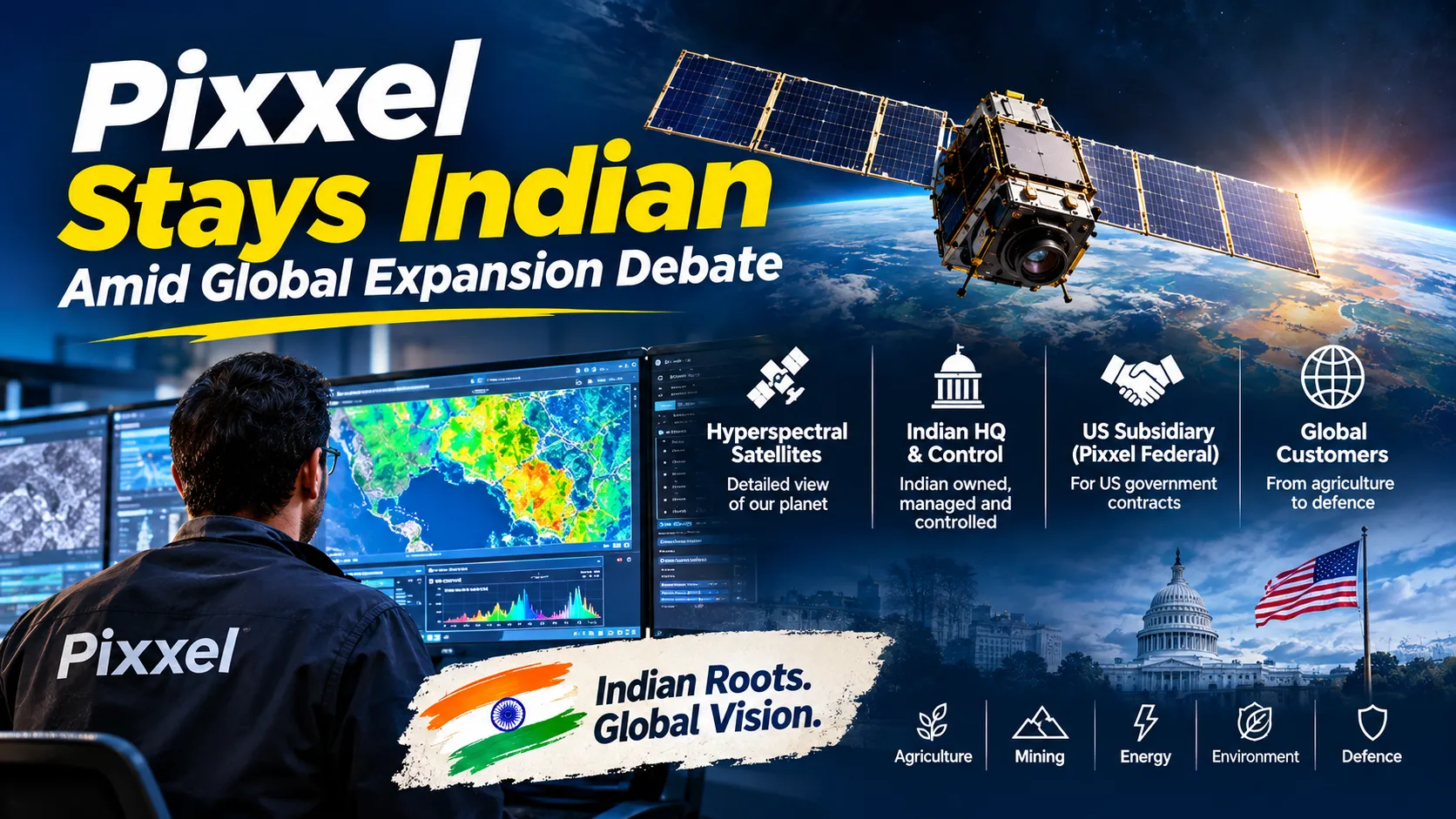

“First, Pixxel is Indian-HQed, Indian owned, Indian-managed and Indian-controlled.”
— Awais Ahmed, Co-founder and CEO, Pixxel

In India, a Pixxel-led consortium is building a 12-satellite Earth observation constellation under a public-private partnership initiative with IN-SPACe, India's space regulator and promoter.

1c17a084-dd85-4fb0-b306-0006631fd355.png

Funding

In September, Pixxel raised $100 million in a Series C funding round co-led by Singapore's Temasek and space investor Seraphim, bringing its total funding to about $195 million, according to Inc42. It is among the best-funded space startups in India.

The global expansion dilemma

Pixxel's situation reflects a broader challenge for Indian deeptech companies, especially those in strategic sectors such as space, defence and semiconductors. To grow, many need access to global markets, particularly the United States, which is the world's largest buyer of space and defence technology. But US government contracts often require domestic entities, security clearances and local management, which can raise questions at home about loyalty and control.

Indian startups have long used overseas holding structures, often in the United States or Singapore, to access foreign capital and customers. A growing number have recently "flipped" back to India, moving their domicile home ahead of planned listings on Indian exchanges. Pixxel says its primary entity has always been Indian.

India's space ambitions

India opened its space sector to private companies in 2020, creating IN-SPACe to authorise and support private space activities. Since then, the number of space startups has grown rapidly, with companies working on launch vehicles, satellites, ground stations and data services. The government has set a goal of significantly expanding India's share of the global space economy.

Private investment in Indian space startups has also grown, with companies such as Skyroot Aerospace, Agnikul Cosmos, Digantara, GalaxEye and Pixxel attracting funding from domestic and international investors. However, Indian venture capitalists' ability to fund capital-intensive deeptech companies remains limited, and many space startups rely on foreign investors for large rounds.

The trust question

For companies working on sensitive government programmes, trust is essential. Indian government customers need assurance that data, technology and intellectual property developed for national programmes will remain secure and under Indian control. At the same time, international customers, particularly in the United States, need assurance that their data and projects are protected from foreign access.

Managing these competing requirements through separate legal entities, ring-fenced data and governance structures is common among global defence and aerospace companies. Pixxel's statement suggests it is adopting a similar approach.

Investors watch closely

Pixxel's investors, which include Temasek and Seraphim, have backed the company's dual-track strategy of serving Indian and US government customers alongside commercial clients in agriculture, mining, energy and environmental monitoring. Hyperspectral data has applications ranging from detecting crop disease to identifying mineral deposits and monitoring pollution.

How the company manages its corporate structure and government relationships will matter to investors as it moves towards a planned listing in India, when its full structure would be disclosed.

What comes next

Pixxel will continue to build its satellite constellation and pursue contracts in India and the United States. The company's planned Indian listing would provide greater transparency about its ownership and structure. The episode is likely to fuel a wider debate about how India's strategic technology startups should balance global ambitions with national interests, a question that will become more pressing as more Indian deeptech companies expand abroad.

TagsPixxelAwais AhmedKshitij KhandelwalPixxel FederalspacetechIndian space startupsEarth observationhyperspectral imagingsatellitesGalaxEyeIN-SPACeNASANational Reconnaissance OfficeUS defence contractsTemasekSeraphimdeeptechBengaluru startupsspace economyinvestors

Reader reviews

Sign in to rate and review this article.
Loading reviews…

