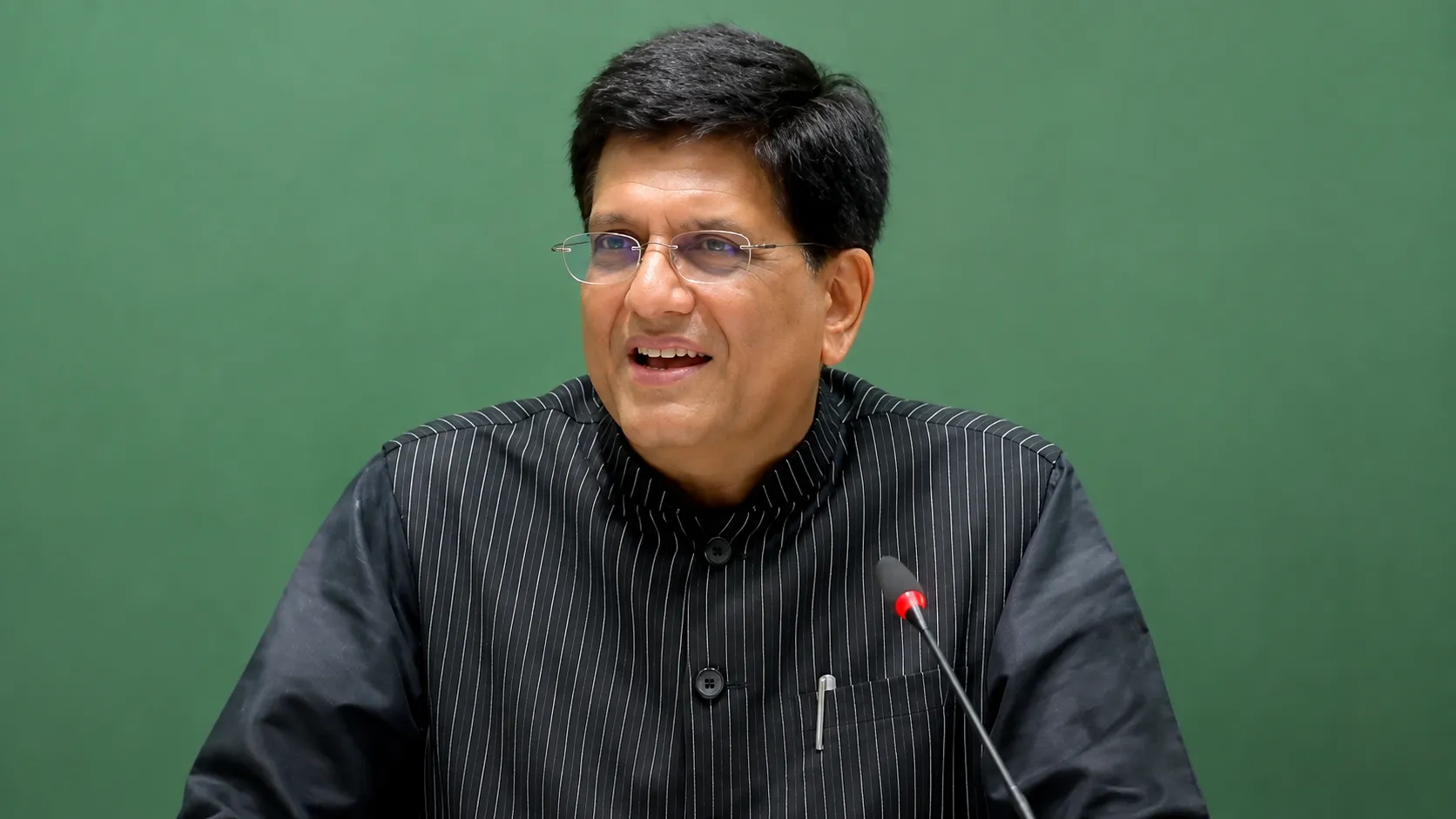
India's Minister of Commerce and Industry, Piyush Goyal, led an approximately 70-member Indian business delegation to Singapore this week as part of the fourth India-Singapore Ministerial Roundtable, a high-level platform that has become one of the most consequential recurring mechanisms for advancing economic cooperation between the two countries.
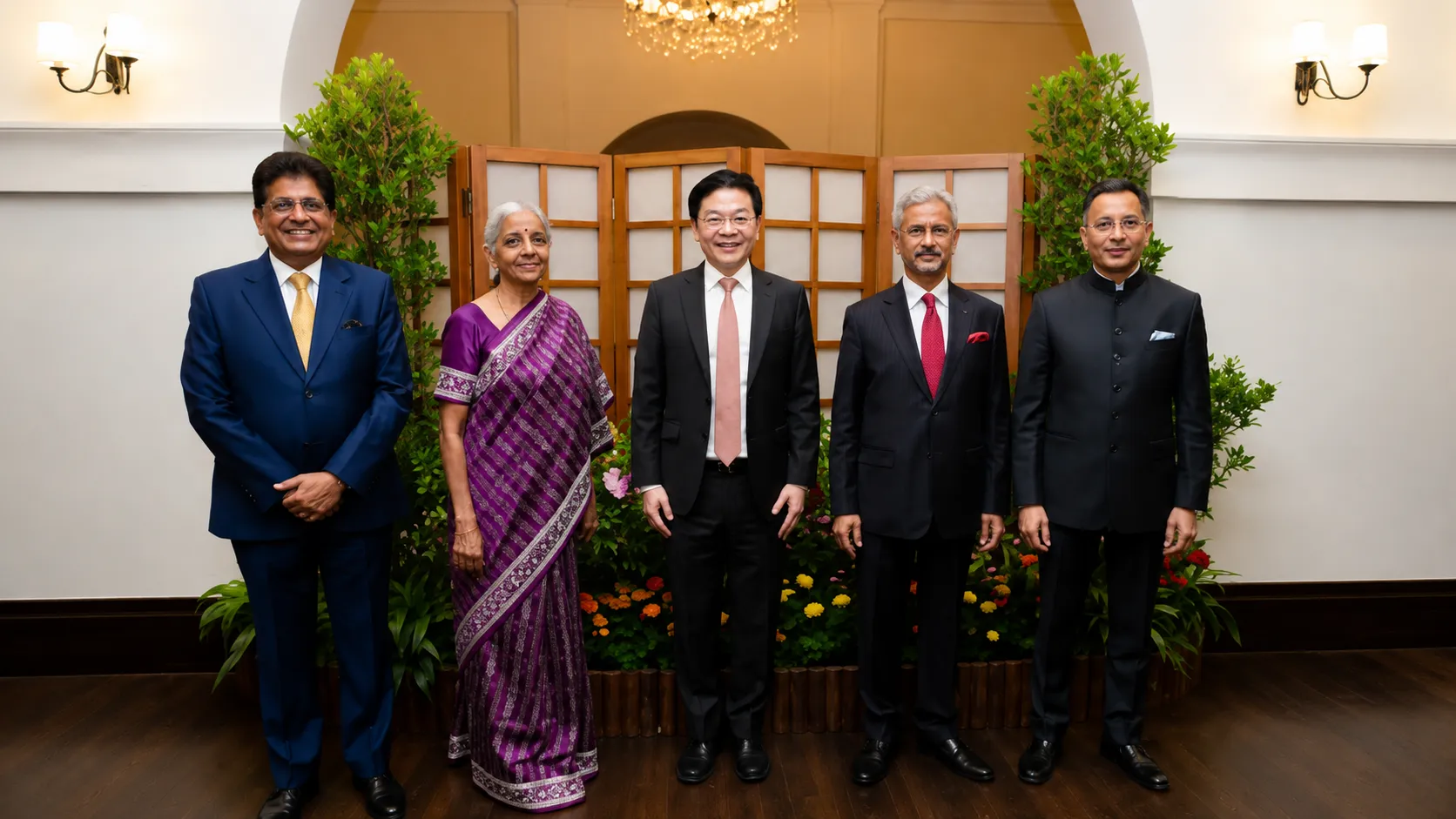
The roundtable brought together a broader Indian ministerial delegation that included Finance Minister Nirmala Sitharaman, External Affairs Minister Dr S Jaishankar, and Minister of State for Commerce, Industry, Electronics and IT Jitin Prasada, alongside their Singaporean counterparts, for a day of government-to-government and government-to-business engagements aimed at translating the countries' Comprehensive Strategic Partnership into tangible commercial outcomes.
For the sizeable Indian business community and diaspora resident in Singapore, the scale of this year's business delegation, and the range of sectors it represented, signalled a deliberate effort by New Delhi to move the bilateral relationship beyond diplomatic symbolism toward measurable trade and investment activity.
Officials on both sides characterised the visit as among the most substantive editions of the roundtable to date, citing both the seniority of the accompanying ministerial delegation and the breadth of sectors represented within the accompanying business contingent.
The Indian delegation's programme extended well beyond the ministerial roundtable itself. Goyal held a series of high-level government-to-business discussions during the visit and paid a visit to an APEDA-FairPrice initiative, a partnership between India's Agricultural and Processed Food Products Export Development Authority and Singapore's largest supermarket chain, underscoring the growing role Indian agricultural exports play in Singapore's food security strategy. The Indian ministers also called on Singapore's Prime Minister and Minister for Finance, Lawrence Wong, and were hosted to lunch by Deputy Prime Minister Gan Kim Yong, reflecting the seniority of engagement extended to the visiting delegation.
The fourth edition of the India-Singapore Ministerial Roundtable, known by its acronym ISMR, continues a mechanism first established in New Delhi in September 2022, with subsequent editions held in Singapore in August 2024 and again in New Delhi in August 2025. The consistency and regularity of the roundtable's cadence has, over its four editions, allowed both governments to move from broad framework discussions toward more granular, sector-specific cooperation across areas both countries have identified as strategically important for the coming decade.
The APEDA-FairPrice visit carried particular symbolic weight, illustrating how Indian agricultural exports have moved beyond bulk commodity trade toward more sophisticated retail partnerships with Singaporean supermarket chains, a shift that reflects both rising quality standards among Indian exporters and growing Singaporean consumer familiarity with, and demand for, Indian food products. Officials involved in the visit noted that such retail partnerships also serve Singapore's own food security diversification strategy, reducing dependence on any single sourcing market for essential food categories.
Beyond the formal government engagements, the scale of the accompanying business delegation reflected sustained private-sector interest in deepening commercial ties, with participating companies spanning financial services, digital infrastructure, agri-trade, advanced manufacturing and logistics sectors, according to people familiar with the delegation's composition.
Beyond the formal ministerial sessions, the 70-member business delegation engaged in business-to-business and institutional meetings intended to connect Indian companies directly with Singaporean counterparts across sectors ranging from financial services and digital infrastructure to agri-trade and advanced manufacturing. For the substantial population of Indian-origin business owners, professionals and entrepreneurs already established in Singapore, delegation visits of this scale typically translate into renewed momentum for cross-border deal-making, provided the government-level engagement is followed through with concrete commercial follow-up in the months after ministers return home.
The visit also included a symbolically significant moment for Singapore's Indian community: EAM Jaishankar and his Singaporean counterpart laid the foundation stone for a new Chancery complex of the High Commission of India in Singapore, a project intended to consolidate and modernise consular and diplomatic services for the tens of thousands of Indian nationals and diaspora members resident in the city-state. Jaishankar expressed confidence that the new complex would reflect what he described as a new era in the bilateral relationship, and would strengthen the range of services available to the Indian community.
Singapore's High Commissioner to India, Simon Wong, and India's High Commissioner to Singapore, Dr Shilpak Ambule, were both closely involved in coordinating the visit, welcoming Finance Minister Sitharaman on arrival at Changi International Airport. The involvement of both countries' senior diplomatic representatives throughout the visit reflected the priority both governments continue to place on the relationship, even as broader global trade dynamics remain volatile.
Singapore's role as a financial and logistics gateway to the broader Southeast Asian region has made it a consistently important partner for Indian companies seeking regional expansion, a dynamic that has intensified as both governments have worked to formalise cooperation frameworks across emerging priority sectors including fintech, digital public infrastructure and clean energy transition technologies over successive ISMR editions.
The visit's diplomatic choreography, including calls on Singapore's Prime Minister and hosting by the Deputy Prime Minister, reflected a level of access typically reserved for close strategic partners, reinforcing the significance both governments continue to attach to the relationship even as global trade and geopolitical conditions remain uncertain.
For India's growing diaspora and business footprint across Southeast Asia, the scale and seniority of this year's delegation, coupled with the tangible commitment represented by the new Chancery complex, points to a bilateral relationship that both governments appear determined to deepen through sustained institutional engagement rather than episodic diplomatic gestures. Whether that translates into measurable increases in bilateral trade and investment flows over the coming year will offer the clearest test of the roundtable's effectiveness as a mechanism, but the breadth of this year's business delegation suggests both sides remain committed to giving the mechanism every chance to succeed.
Trade and investment officials on both sides indicated that specific sectoral outcomes from this year's roundtable, including any new memoranda of understanding or investment commitments, would be detailed in follow-up announcements over the coming weeks, a typical pattern for high-level bilateral engagements of this scale and scope.
Trade analysts note that the true measure of any ISMR edition lies less in the ceremony of the visit itself than in the specific commercial agreements, investment commitments and regulatory alignments that follow in the months afterward, a pattern both governments appear conscious of as they continue institutionalising the roundtable as a recurring, results-oriented mechanism rather than a purely symbolic annual gathering.