StartupsLatest5 MIN READ

Pluckk Takes Indian Clean-Label Food to Britain, Targeting 500 UK Stores Within a Year

Digital-first FMCG brand Pluckk has entered the UK, its first major international market, and says it plans to reach 500 stores and more than 50 products there within a year as it seeks a quarter of revenue from overseas.

By Nisha Omkumar · Author7 October 2026New
Pluckk Takes Indian Clean-Label Food to Britain, Targeting 500 UK Stores Within a Year

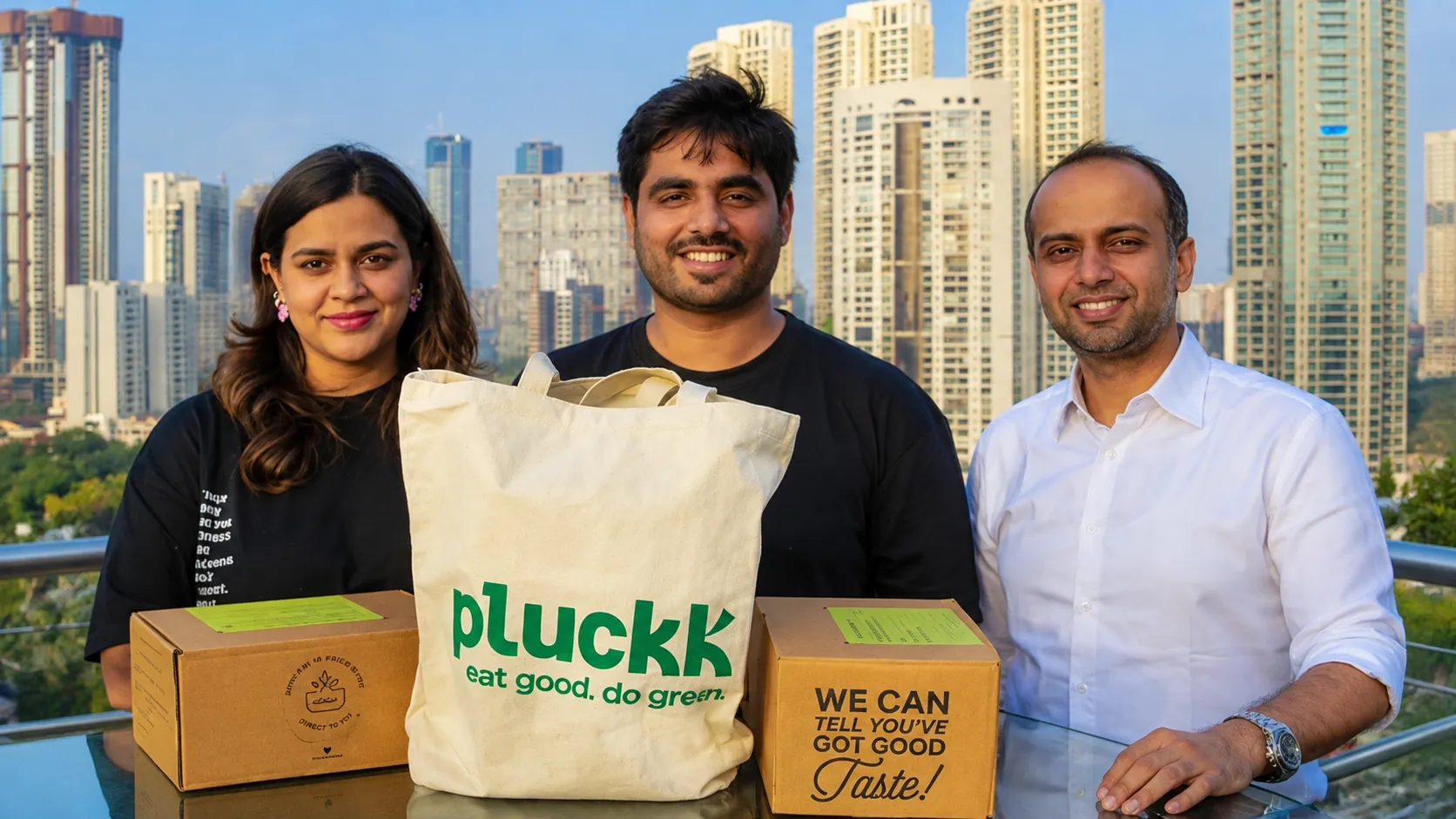
Pluckk, the Indian digital-first food and beverage brand known for clean-label juices, salads and snacks, has expanded into the United Kingdom, its first major international market, as a growing number of Indian consumer brands test whether products built for domestic shoppers can win shelf space abroad.

The company said on 6 October that it is currently available in 17 UK stores and has captured a 15 per cent share of the protein bar category within its first month there. It plans to reach 100 stores within three months and around 500 within a year.

Pluckk also intends to broaden its UK range from a handful of products to more than 50 stock-keeping units, spanning juices, functional drinks, snacks, salads and other clean-label categories. It has built a presence across England and Wales and is evaluating expansion into the United Arab Emirates, Saudi Arabia and the United States.

From fresh produce to packaged wellness

Pluckk began life in 2017 as a technology-led fresh produce business, operating under the company name Fruveggie Technology, and has since evolved into a broader food and beverage brand built around the idea of products with short, recognisable ingredient lists. Its portfolio now includes cold-pressed juices, ready-to-eat salads, snacks and nutrition products, and it also owns functional nutrition brand upnourish.

The business has grown quickly at home. Pluckk operates in more than 50 Indian cities and says its annualised revenue run rate exceeds ₹140 crore. According to data from Inc42, the company's revenue in FY25 was about ₹79.5 crore, more than double the previous year.

It has raised more than $25 million to date across several rounds, including a $10 million Series A in March 2025 and a $10.8 million extension in April 2026. Investors include Euro Gulf Investment and Exponentia Ventures, and actor Kareena Kapoor Khan has invested as an angel.

Its owned brand upnourish, which focuses on functional nutrition, has grown about fivefold in 18 months, according to industry reports in June, giving the group a second engine in a category where consumers are increasingly willing to pay for added protein, fibre and micronutrients.

That trajectory reflects a broader shift in Indian food consumption. Urban consumers, particularly younger ones, have become more attentive to sugar, preservatives and protein content, and quick-commerce platforms have made it easier for new brands to reach them without the expensive distribution networks that once protected incumbents.

Why the UK first

Britain is a logical first stop for an Indian consumer brand going abroad. The country has a large South Asian diaspora, with about 1.9 million people of Indian ethnicity recorded in England and Wales in the 2021 census, alongside a wider population already familiar with Indian flavours. It also has one of Europe's most developed markets for health-oriented snacks and drinks, from protein bars to functional beverages.

The protein bar category is a telling point of entry. It is crowded, competitive and dominated by established brands, but it is also a segment where shoppers actively compare ingredient lists and nutritional claims. A 15 per cent category share across a small initial store base is a promising early signal, though the true test will come as distribution widens and the product competes for attention in hundreds of outlets rather than a handful.
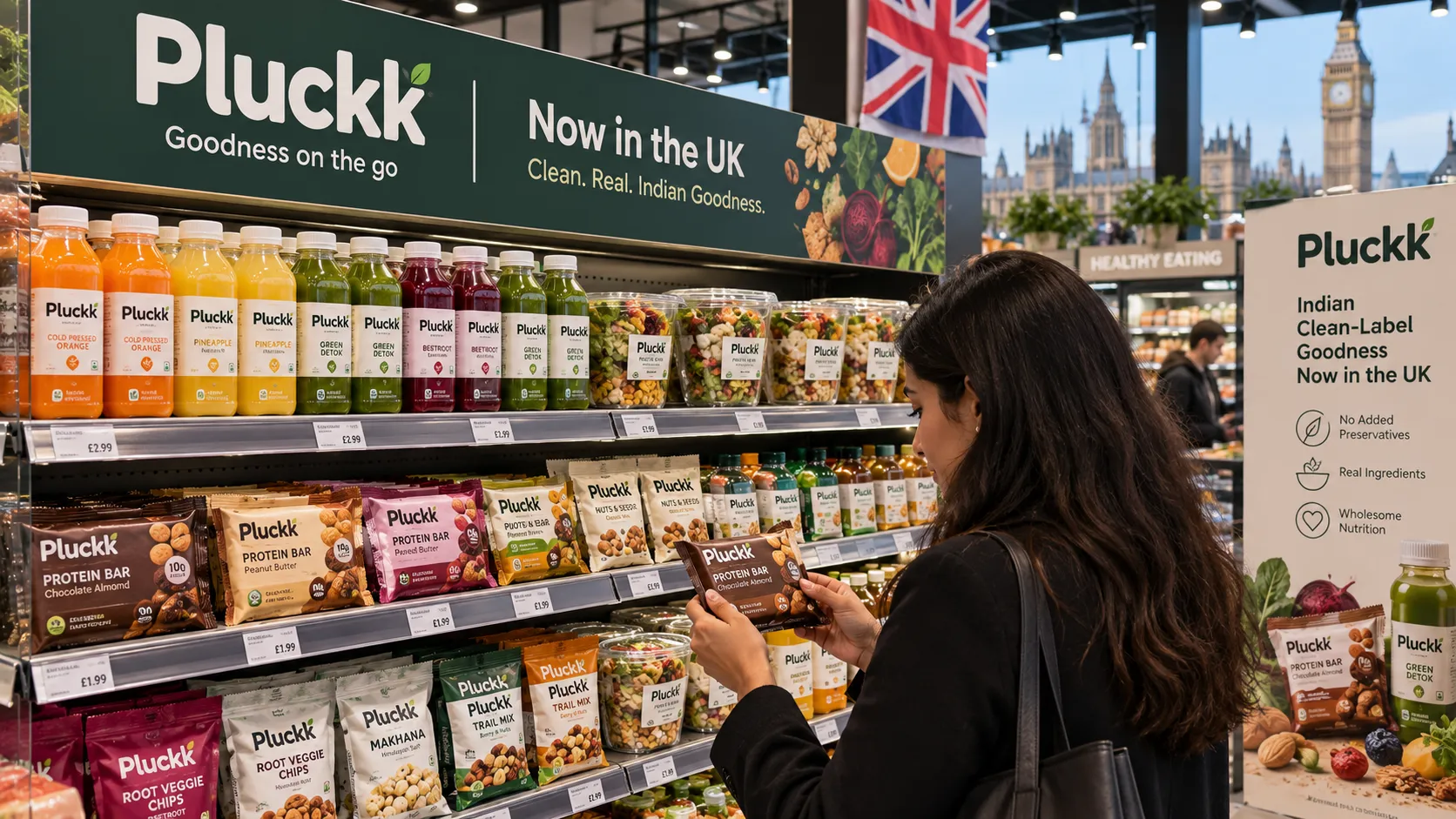

“Pluckk expects international markets to contribute 25 to 30 per cent of its overall revenue, an ambitious share for a brand that entered its first major overseas market only weeks ago.”
— TIGI Startups Desk

Expanding to 500 stores within a year will require strong relationships with retailers, reliable supply chains and investment in in-store marketing. The UK grocery market is concentrated among a few large chains, whose listing decisions can make or break a new brand, and regulations restricting the promotion of foods high in fat, sugar and salt have changed how packaged snacks are marketed.

Price is another variable. Indian brands entering Western markets often benefit from lower production costs at home, which can allow competitive shelf prices even after shipping and import duties. But retailers also expect marketing support, promotional funding and dependable replenishment, which can erode that advantage if volumes are slow to build.

Pluckk's clean-label positioning may help on that front. Products with lower sugar and simpler ingredient lists are better placed under such rules than conventional confectionery and snacks, and retailers have been looking for healthier options to fill shelf space.

a92c797b-587a-43d8-9d45-c77dab7441f3.png

The international ambition

Pluckk expects international markets to eventually contribute 25 to 30 per cent of its overall revenue, a significant share for a company whose overseas business is only weeks old. Its interest in the UAE and Saudi Arabia reflects the appeal of Gulf markets with large Indian populations and strong retail infrastructure, while the US would represent a much larger and more competitive prize.

The company joins a growing list of Indian consumer brands looking overseas, in categories ranging from snacks and beverages to personal care and Ayurveda. Some have built international businesses by first serving diaspora communities and then broadening their appeal; others have struggled with the cost of building brands in markets where they have no recognition.

Diaspora consumers often act as the bridge. Shoppers who already know a brand from visits home, or who seek out familiar flavours, can create the initial sales velocity that convinces retailers to extend listings. The harder step is crossing over to mainstream consumers who have no prior connection to the brand and judge it purely on taste, price and nutrition against well-funded local competitors.

There is also a trade dimension. The India-UK Comprehensive Economic and Trade Agreement, signed in 2025, is expected to reduce tariffs on a range of Indian processed foods once it takes effect, which could improve the economics for brands such as Pluckk that are building a UK business now.

Pluckk's challenge will be to maintain its momentum in India, where competition in clean-label and functional foods is intensifying, while funding an international expansion that will take time to reach scale. Exporting fresh or short-shelf-life products also requires careful supply-chain management, which may explain why the UK range begins with packaged categories such as protein bars before moving into juices and salads.

If the company can turn a promising first month into a durable presence on British shelves, it will offer a template for other Indian food brands considering the same journey. The next three months, as Pluckk aims to go from 17 to 100 stores, will provide the first real evidence.

TagsPluckkClean LabelFMCGD2CUK ExpansionProtein BarsFunctional FoodsIndian Brands AbroadDiasporaStartupsFoodIndia

Reader reviews

Sign in to rate and review this article.
Loading reviews…

